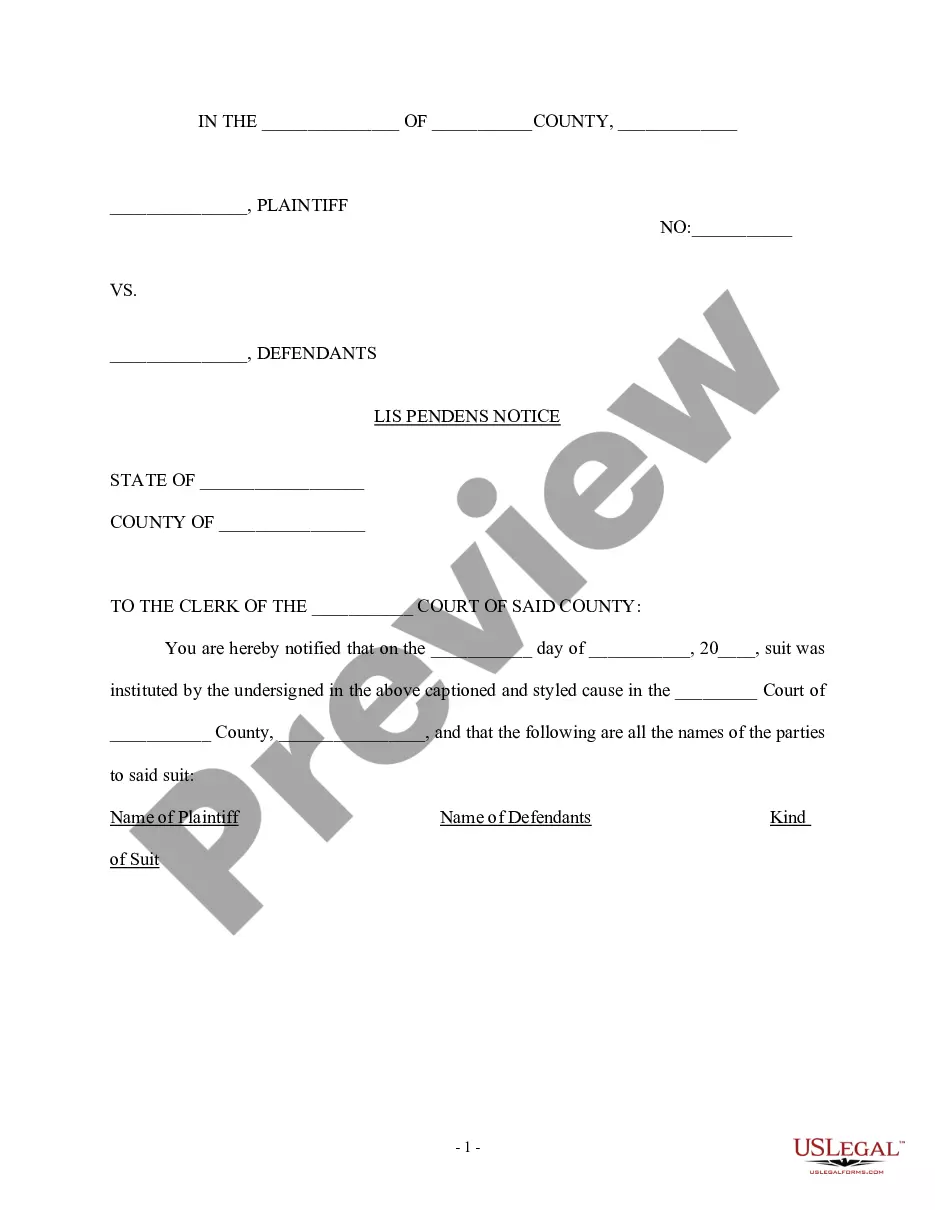
File Notice Lis Pendens Without Notice In Arizona
Description

Get your form ready online
Our built-in tools help you complete, sign, share, and store your documents in one place.
Make edits, fill in missing information, and update formatting in US Legal Forms—just like you would in MS Word.
Download a copy, print it, send it by email, or mail it via USPS—whatever works best for your next step.
Sign and collect signatures with our SignNow integration. Send to multiple recipients, set reminders, and more. Go Premium to unlock E-Sign.
If this form requires notarization, complete it online through a secure video call—no need to meet a notary in person or wait for an appointment.
We protect your documents and personal data by following strict security and privacy standards.

Make edits, fill in missing information, and update formatting in US Legal Forms—just like you would in MS Word.

Download a copy, print it, send it by email, or mail it via USPS—whatever works best for your next step.

Sign and collect signatures with our SignNow integration. Send to multiple recipients, set reminders, and more. Go Premium to unlock E-Sign.

If this form requires notarization, complete it online through a secure video call—no need to meet a notary in person or wait for an appointment.

We protect your documents and personal data by following strict security and privacy standards.
Looking for another form?









Form popularity
FAQ
The signature on the notice of release of a lis pendens must be notarized. The notice must then be recorded in the office of the county recorder for the county in which the original lis pendens was recorded.
Create a document to serve as the notice Use a title that clearly identifies the document as a Notice of Lis Pendens. Include all of the required information in the document, such as a legal description of the property, the names of the parties involved, and a statement of the claim.
The suit or proceeding must be pending before a competent court of jurisdiction. A right to immovable property is directly or specifically involved in the suit. The suit or proceeding must not be collusive. The property in dispute must be transferred or otherwise dealt with by any party to suit.
The purpose of a notice of lis pendens is to give the public notice that a lawsuit is pending that affects title to real property so as to preserve the plaintiff's right to obtain title if ordered by the Court.
Cancellation of lis pendens. Before final judgment, a notice of lis pendens may be cancelled upon order of the court, after proper showing that the notice is for the purpose of molesting the adverse party, or that it is not necessary to protect the rights of the party who caused it to be registered.
To begin the Quiet Title process in Arizona, the property owner or their attorney must file a lawsuit in the county where the property is located. The lawsuit must name all parties who have an interest in the property such as previous owners, mortgage holders, and any other parties who may have a claim to the property.
Short Answer: After filing a lis pendens, property sales may stall due to legal disputes impacting the title. Misfiling can result in sanctions or slander of title damages. Removal involves court-ordered expungement or voluntary discharge.
Prerequisites to Filing a Lis Pendens Pending Legal Action: A lawsuit involving a property claim, such as ownership or title, must be filed or about to be filed. Direct Connection to Property: The legal action must directly affect the property's title, ownership, or rights, not just financial disputes.
The legal term for recording false documents is slander of title. A person who causes a wrongful recording is not strictly liable for slander of title, because the property owner must also prove that the person knew or should have known that the document was groundless.
QUIET TITLE – ARIZONA When there are conflicting claims to Arizona real property, or to an interest in real property (such as an easement), a lawsuit can be brought to obtain a judicial declaration of the ownership and interests in the property. In Arizona, this is known as a Quiet Title action.

