Patent Drafting For Patent Agent Exam In Pennsylvania
Description



Get your form ready online
Our built-in tools help you complete, sign, share, and store your documents in one place.
Make edits, fill in missing information, and update formatting in US Legal Forms—just like you would in MS Word.
Download a copy, print it, send it by email, or mail it via USPS—whatever works best for your next step.
Sign and collect signatures with our SignNow integration. Send to multiple recipients, set reminders, and more. Go Premium to unlock E-Sign.
If this form requires notarization, complete it online through a secure video call—no need to meet a notary in person or wait for an appointment.
We protect your documents and personal data by following strict security and privacy standards.

Make edits, fill in missing information, and update formatting in US Legal Forms—just like you would in MS Word.

Download a copy, print it, send it by email, or mail it via USPS—whatever works best for your next step.

Sign and collect signatures with our SignNow integration. Send to multiple recipients, set reminders, and more. Go Premium to unlock E-Sign.

If this form requires notarization, complete it online through a secure video call—no need to meet a notary in person or wait for an appointment.

We protect your documents and personal data by following strict security and privacy standards.
Looking for another form?

Form popularity
FAQ
The patent bar generally has a lower pass rate than state bar exams and the Uniform Bar Exam. The pass rate has hovered around 45% for the last decade. That's even lower than the previous ten years, where the pass rate was around 58%.
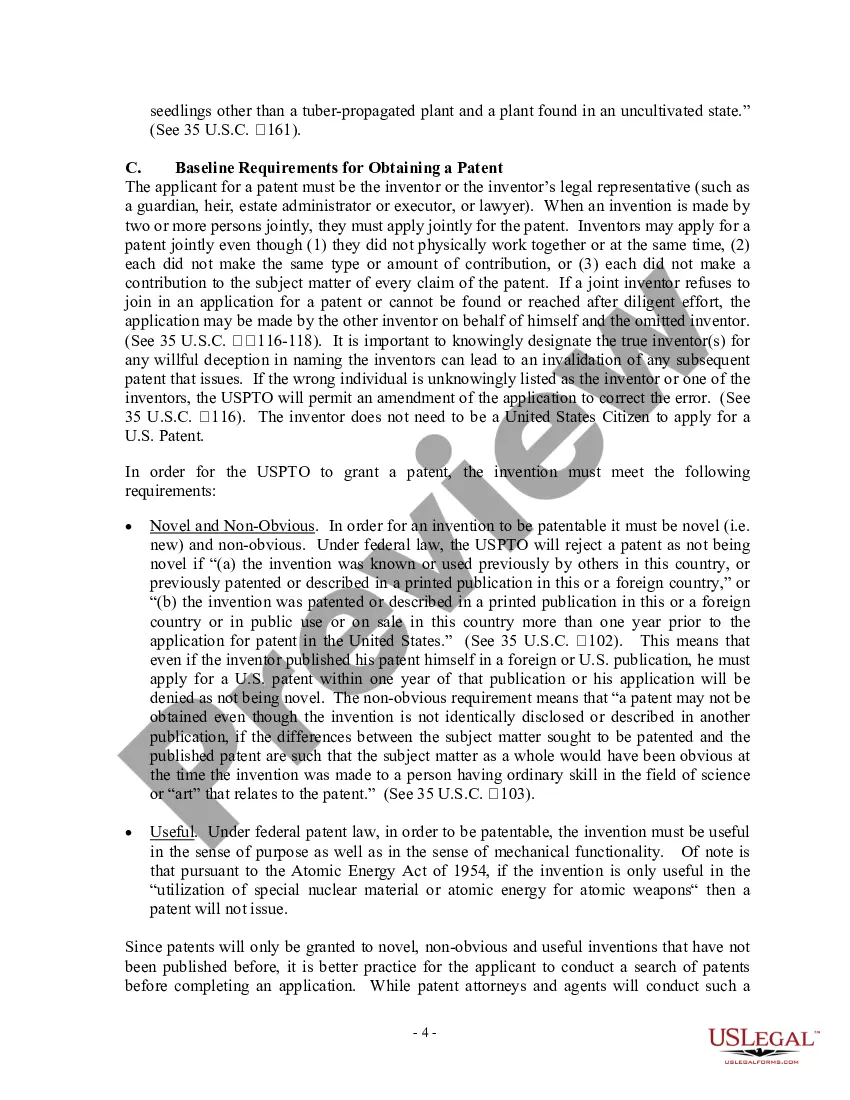
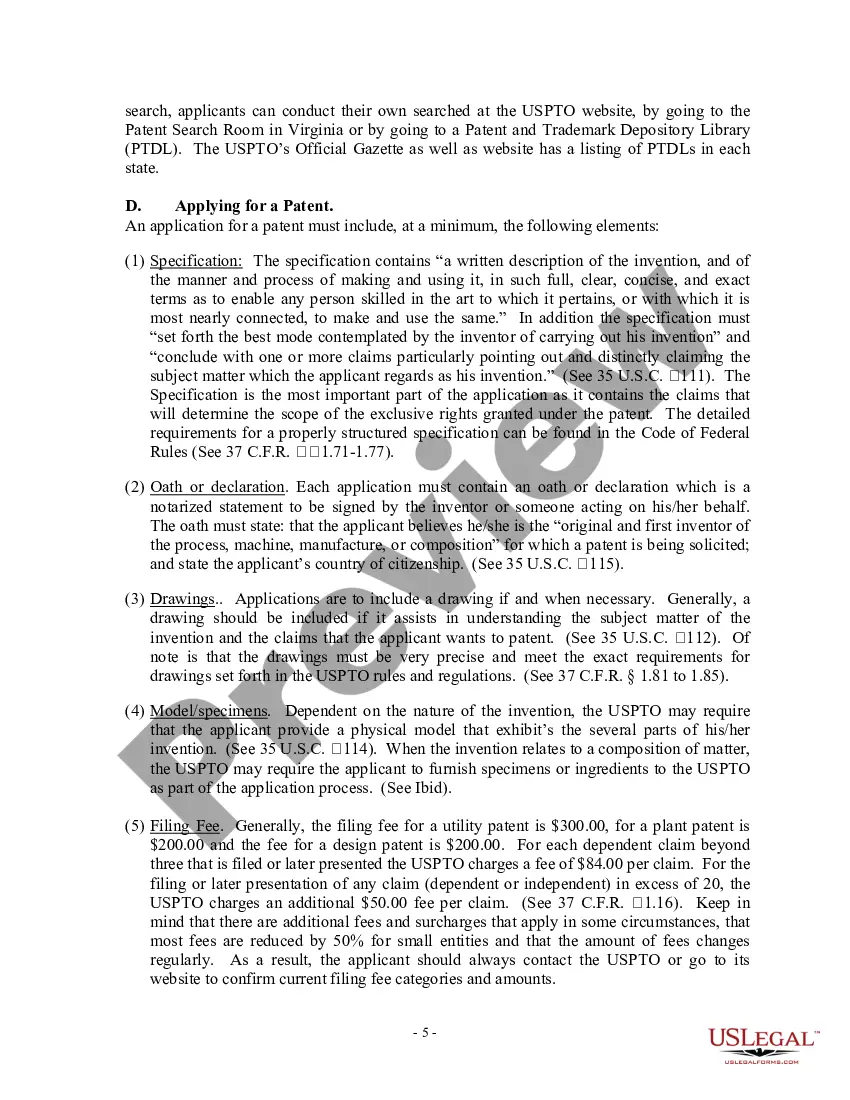
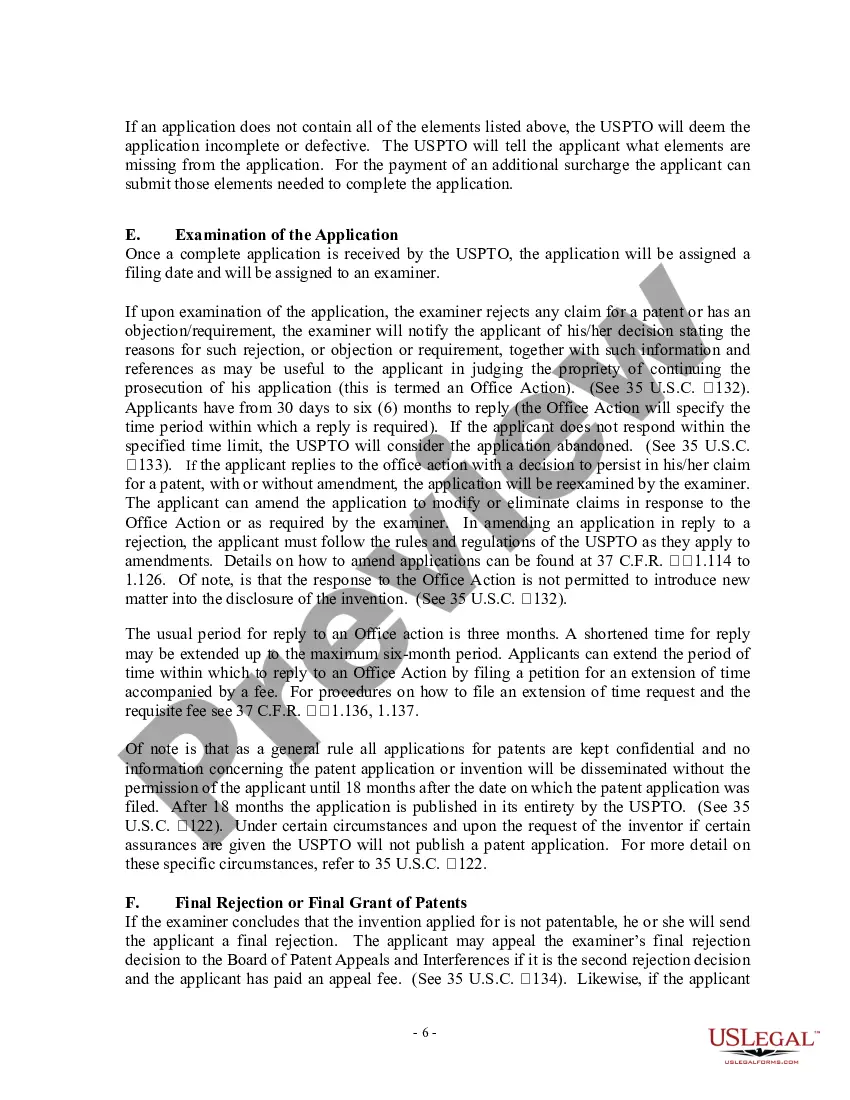
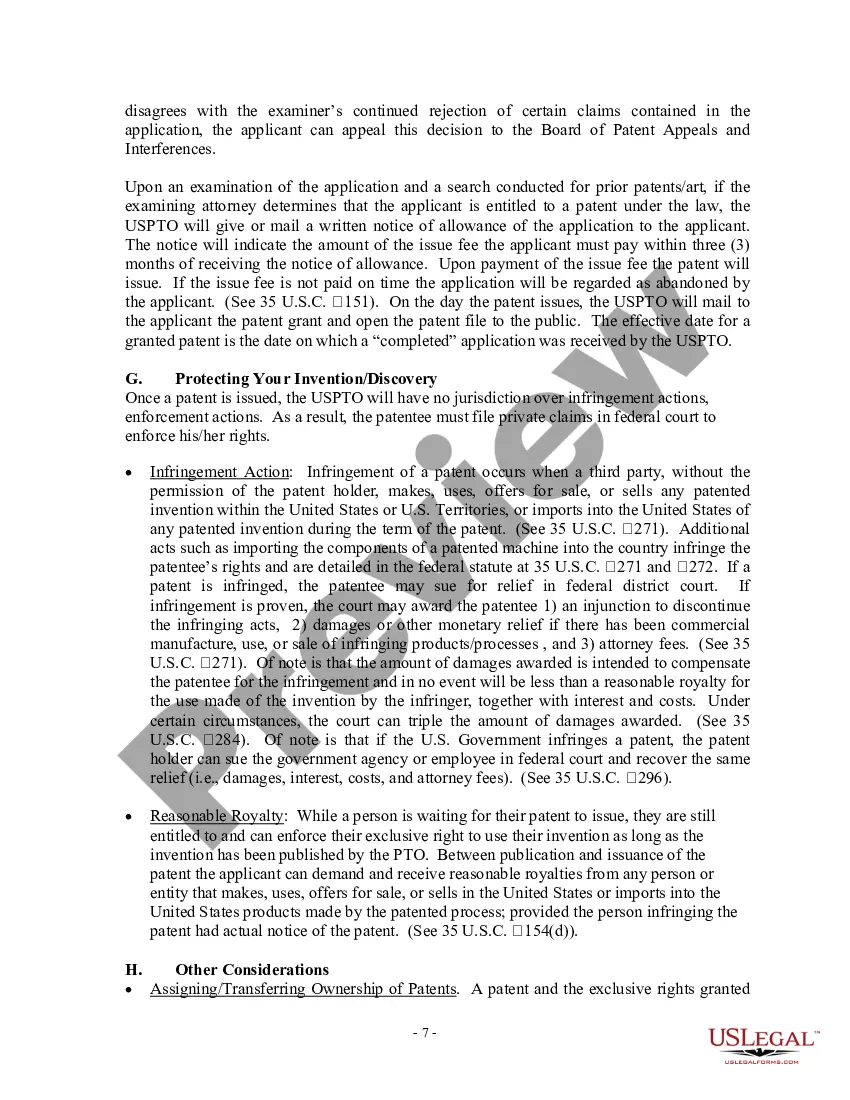
Parts of a Patent Specification Title of the invention; Field of the invention; Background of the invention; Object of the invention; Summary of the invention; Brief description of the drawing; Detailed description of the invention; Claim(s); and.
Drafting a Patent Specification: An Illustration Background of the Invention. Problems to be Solved. Prior Arts. Summary of the Invention. Brief Description of the Drawings. Detailed Description of the Invention. Claims. Abstract.
Filing for a patent includes a stringent process in which the inventor would have to provide a detailed description of their idea. This description must explain why the idea is original and innovative – chronicling all the necessary facets of the invention that make it so. This process is called patent drafting.
Applicants must have: Bachelor's level degree in law, and/ or in science and technology such as engineering, agriculture, environmental, information technology/ ICT, life sciences, medicine, physics, chemistry, communication sciences, biology, or biotechnology.