Forms For Patent Filing In India In Palm Beach
Description




Get your form ready online
Our built-in tools help you complete, sign, share, and store your documents in one place.
Make edits, fill in missing information, and update formatting in US Legal Forms—just like you would in MS Word.
Download a copy, print it, send it by email, or mail it via USPS—whatever works best for your next step.
Sign and collect signatures with our SignNow integration. Send to multiple recipients, set reminders, and more. Go Premium to unlock E-Sign.
If this form requires notarization, complete it online through a secure video call—no need to meet a notary in person or wait for an appointment.
We protect your documents and personal data by following strict security and privacy standards.

Make edits, fill in missing information, and update formatting in US Legal Forms—just like you would in MS Word.

Download a copy, print it, send it by email, or mail it via USPS—whatever works best for your next step.

Sign and collect signatures with our SignNow integration. Send to multiple recipients, set reminders, and more. Go Premium to unlock E-Sign.

If this form requires notarization, complete it online through a secure video call—no need to meet a notary in person or wait for an appointment.

We protect your documents and personal data by following strict security and privacy standards.
Looking for another form?









Form popularity
FAQ
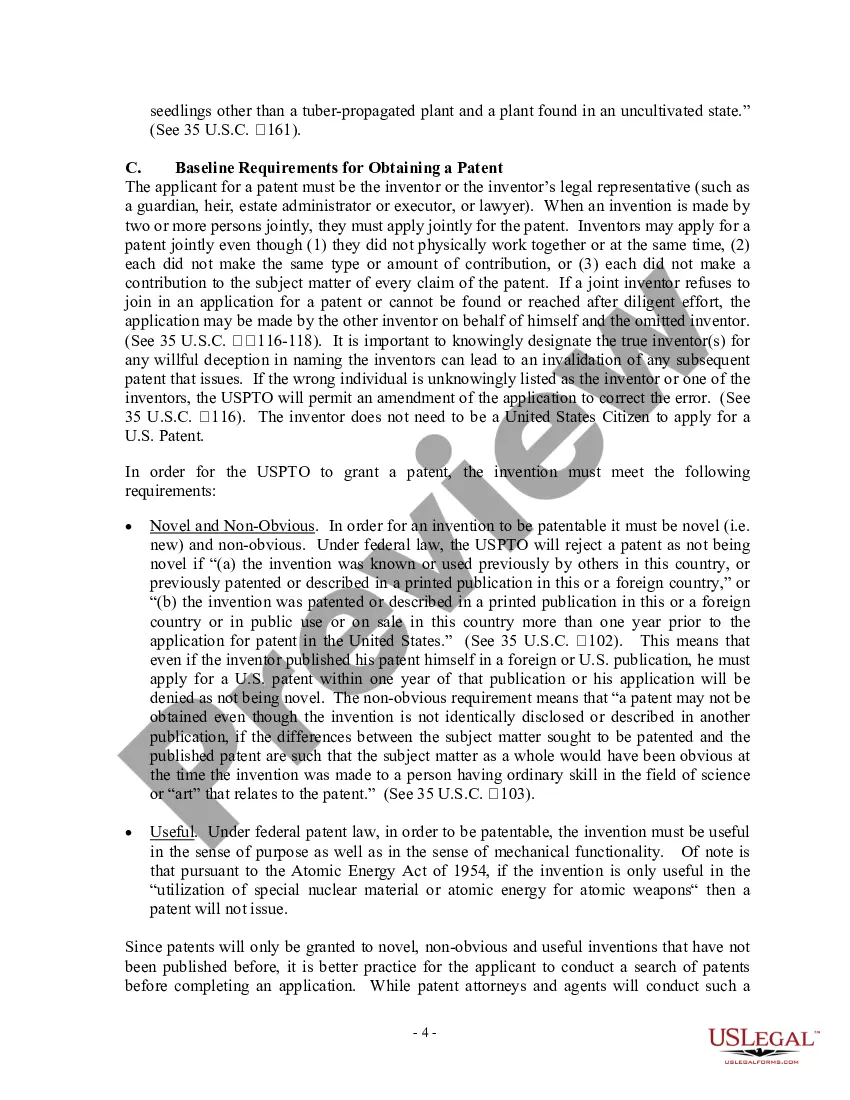
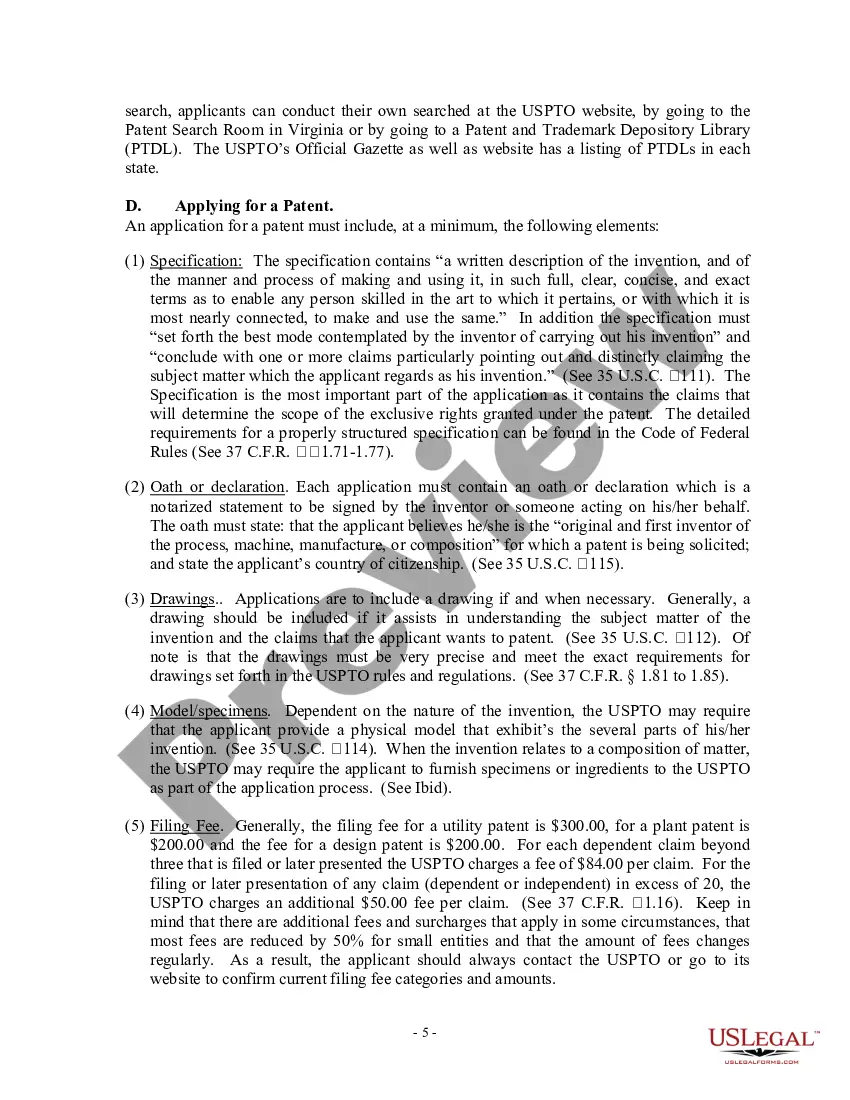
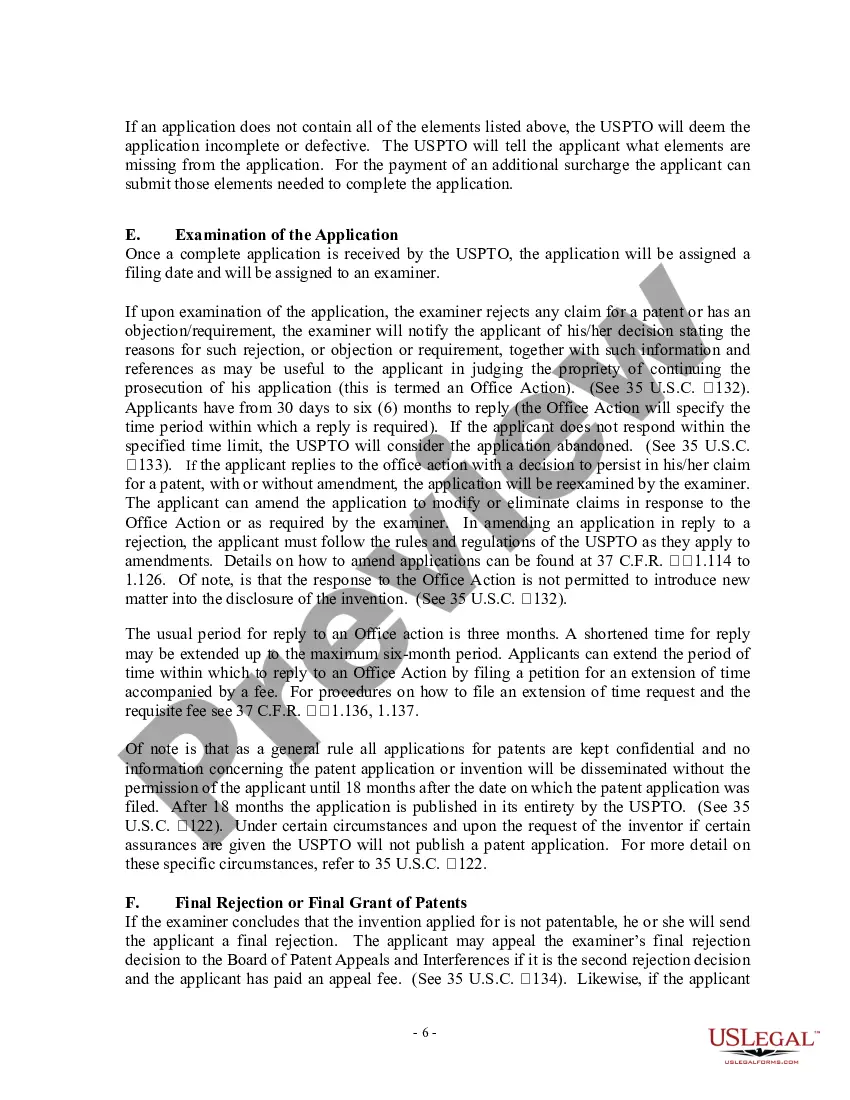
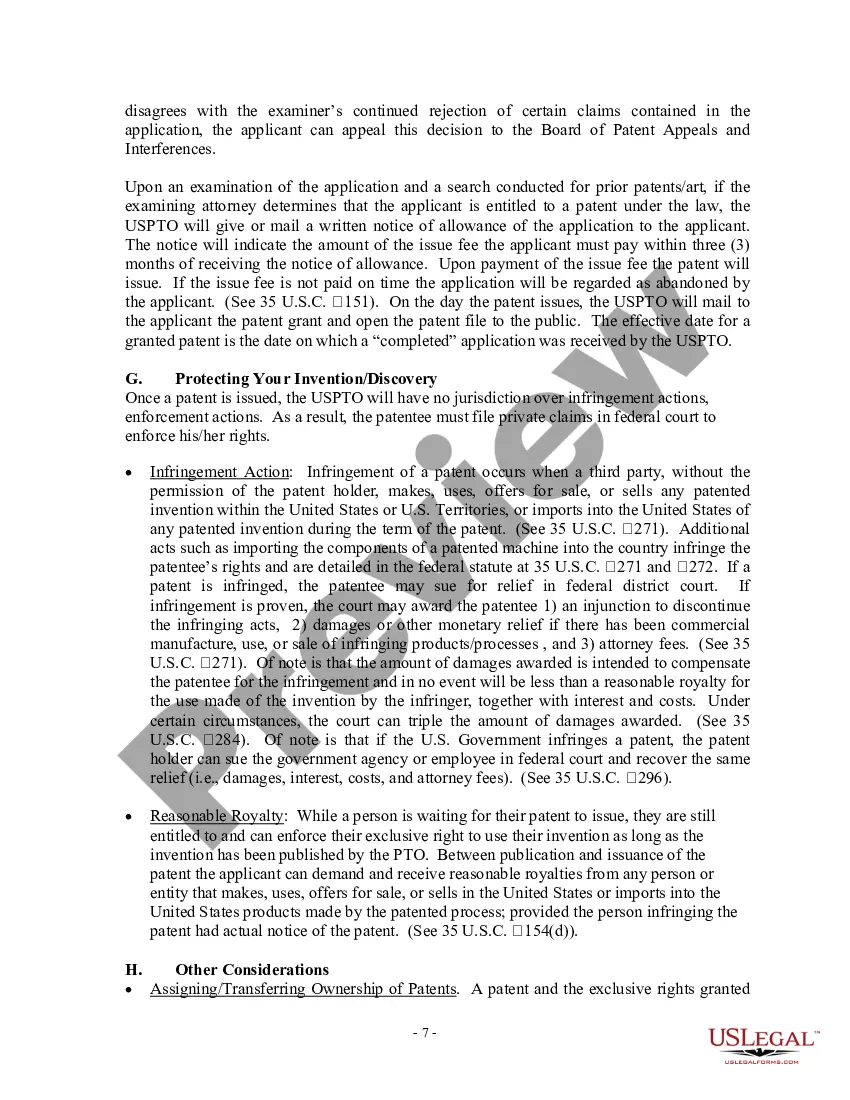
Some of the main forms patent applicants will have to submit include: Provisional Application for Patent Cover Sheet. Declaration for Utility of Design Application Using an Application Data Sheet. Information Disclosure Statement by Applicant. Certification of Micro Entity Status.
Download Forms for Filing Patent Application: Form-1:-APPLICATION FOR GRANT OF PATENT. Form-2:-PROVISIONAL/COMPLETE SPECIFICATION. Form-3:-STATEMENT AND UNDERTAKING UNDER SECTION 8. Form-5:-DECLARATION AS TO INVENTORSHIP. ANNEXURE-I. ANNEXURE-II. DECLARATION BY INVENTORS.
Form No.Title FORM 1 Application for grant of patent FORM 2 Complete Specification FORM 3 Statement and undertaking FORM 5 Declaration as to Inventorship5 more rows
Here is the procedure on how to apply for patent in India: STEP 1: Invention Disclosure. STEP 2: Patentability Search. STEP 3: Filing an Application for a Patent. STEP 4: Patent Drafting. STEP 5: Filing the Patent Application. STEP 6: Request for Examination. STEP 7: Responding to Objections (if any) ... STEP 8: Grant of Patent.
Form 3 is a declaration submitted by the inventor to the Indian Patent Office (IPO) in which the applicant provides all the information regarding foreign filing applications.
Form 16 is filed by a person/party who wants to register a title or interest in a patent or share in it or registration of any document purporting to affect proprietorship of the patent even if they are no the inventor.
Patent application forms can be found on the USPTO website. All of the forms related to patent applications can be found on the link here, or by navigating to the USPTO website and clicking on the “Forms” link under the “Apply for a Patent” section on the “Patents” page.
Here is the procedure on how to apply for patent in India: STEP 1: Invention Disclosure. STEP 2: Patentability Search. STEP 3: Filing an Application for a Patent. STEP 4: Patent Drafting. STEP 5: Filing the Patent Application. STEP 6: Request for Examination. STEP 7: Responding to Objections (if any) ... STEP 8: Grant of Patent.
So, let's get started. Step 1: Idea incubation phase. Step 2: Patentability search (optional step) ... Step 3: Patent drafting/writing. Step 4: Filing patent application. Step 5: Publication of application. Step 6: Request for examination (RFE) ... Step 7: Response to objections. Step 8: Grant of patent.