Patent Trademark Application Without Fees In New York
Description




Get your form ready online
Our built-in tools help you complete, sign, share, and store your documents in one place.
Make edits, fill in missing information, and update formatting in US Legal Forms—just like you would in MS Word.
Download a copy, print it, send it by email, or mail it via USPS—whatever works best for your next step.
Sign and collect signatures with our SignNow integration. Send to multiple recipients, set reminders, and more. Go Premium to unlock E-Sign.
If this form requires notarization, complete it online through a secure video call—no need to meet a notary in person or wait for an appointment.
We protect your documents and personal data by following strict security and privacy standards.

Make edits, fill in missing information, and update formatting in US Legal Forms—just like you would in MS Word.

Download a copy, print it, send it by email, or mail it via USPS—whatever works best for your next step.

Sign and collect signatures with our SignNow integration. Send to multiple recipients, set reminders, and more. Go Premium to unlock E-Sign.

If this form requires notarization, complete it online through a secure video call—no need to meet a notary in person or wait for an appointment.

We protect your documents and personal data by following strict security and privacy standards.
Looking for another form?










Form popularity
FAQ
You can get this for your brand by registering at the United States Patent and Trademark Office (USPTO). Anyone can use a TM symbol regardless of whether they've successfully registered the trademark, or whether they've applied for a trademark at all.
As of this writing, a California trademark filing costs $70.
Length of Protection: Patents are granted for a limited time (typically 20 years), while trademarks can last indefinitely if used continuously and maintained properly. Who They Protect: Patents protect the rights of inventors, while trademarks protect the reputation and goodwill of a business.
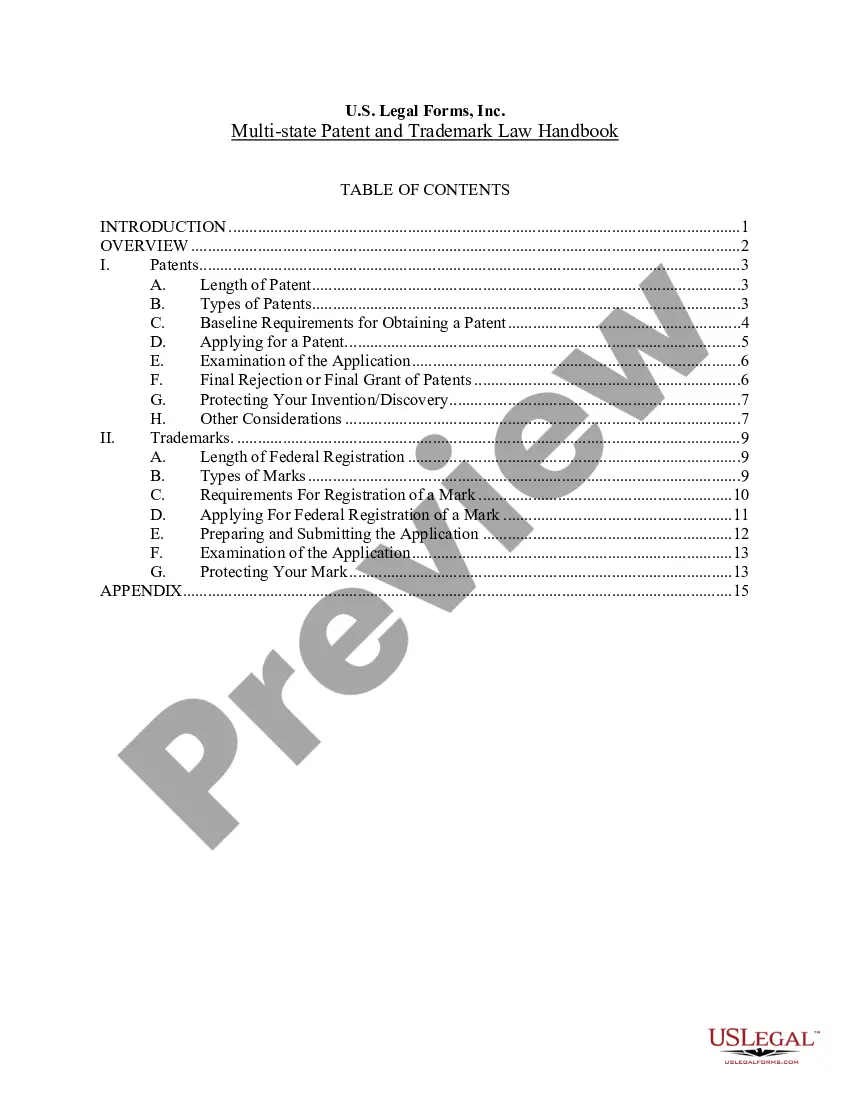
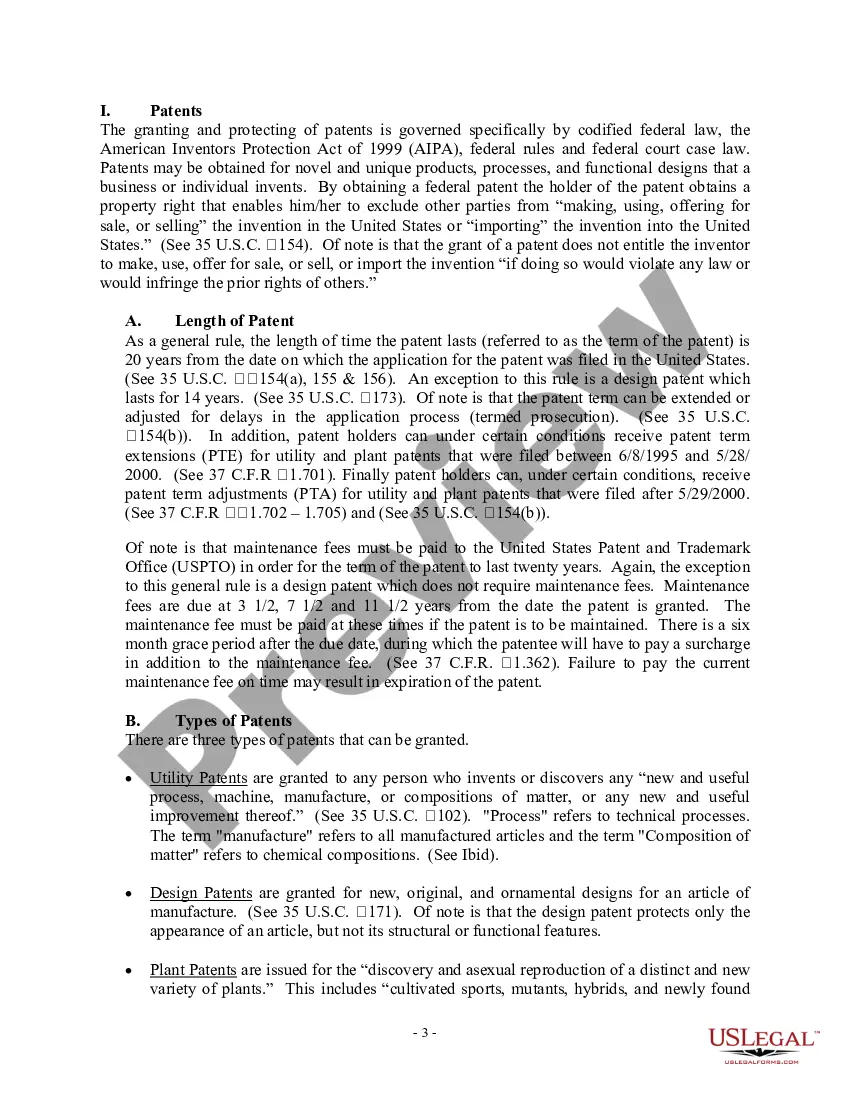
The five primary requirements for patentability are: (1) patentable subject matter; (2) utility; (3) novelty; (4) non-obviousness; and (5) enablement. Like trademarks, patents are territorial, meaning they are enforceable in a specific geographic area.
Under the “first to file” system, there exists no value in obtaining a Poor Man's Patent since it now only matters who filed for the patent first and not who came up with the idea first. Essentially, a Poor Man's Patent has about as much value today as the postage affixed to the envelope.
With trademarks, the entire process can be completed online pretty easily, even if you do it yourself without hiring an attorney.
Likelihood of confusion is a common reason for refusal of a trademark application. The USPTO will review your application and compare your mark to any existing trademark applications or registered trademarks.
The cheapest way to get a trademark is to file a state trademark application, which is typically less expensive than a federal trademark application.
Usually, the process takes 12 to 18 months. Registering your trademark is a complex procedure that involves your application moving through various stages. Learning about each stage in the process will help you understand why getting a trademark takes as long as it does.
