Patent Trademark Application Form Sample In Montgomery
Description

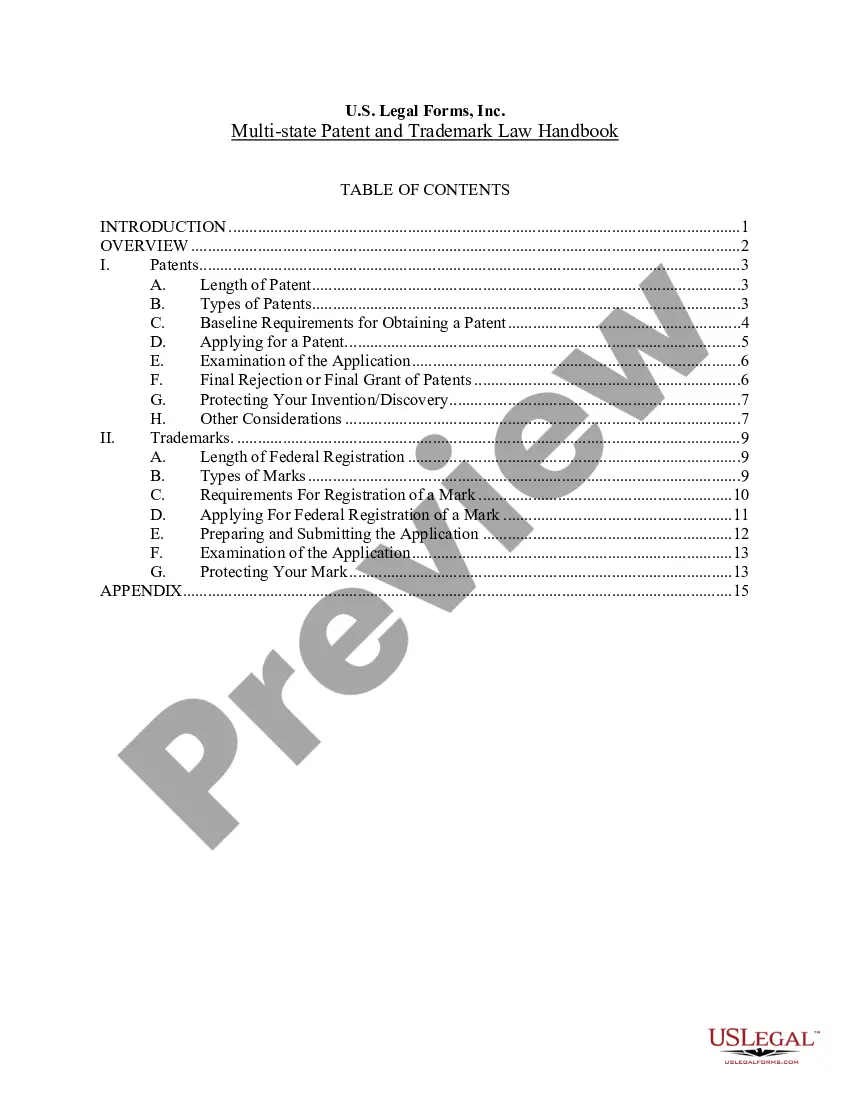
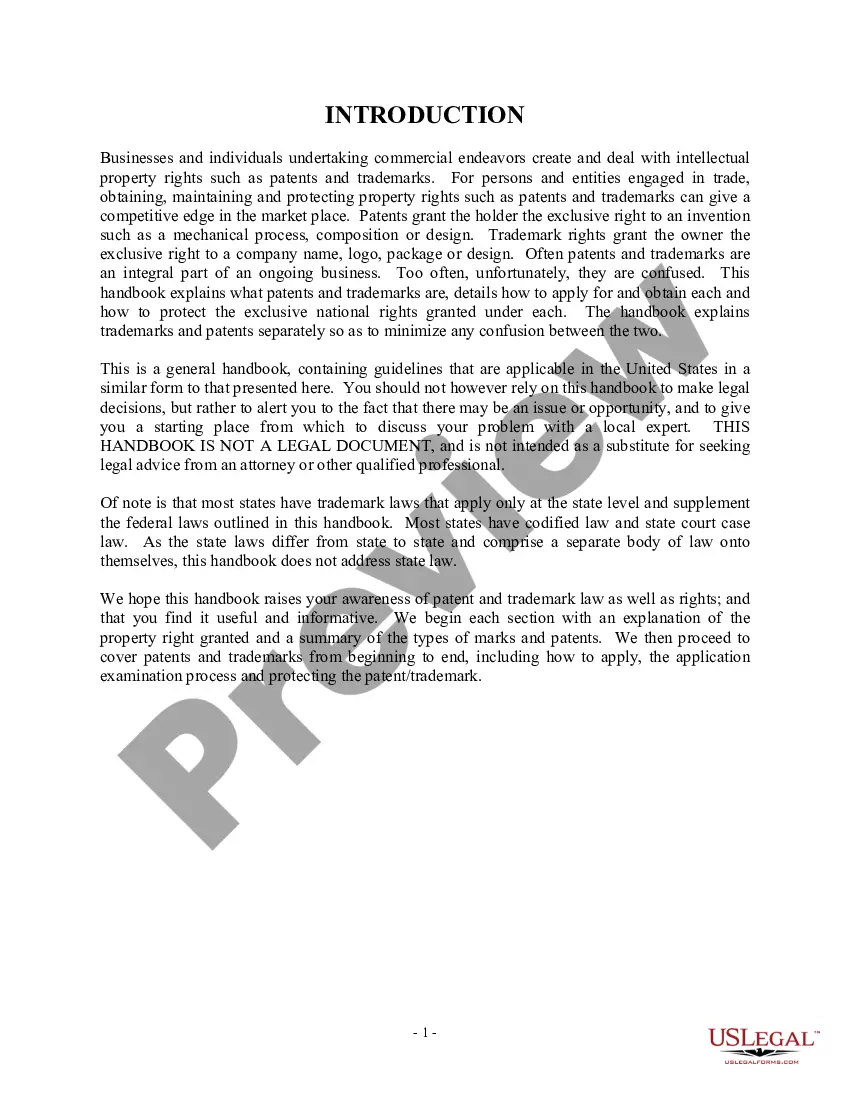
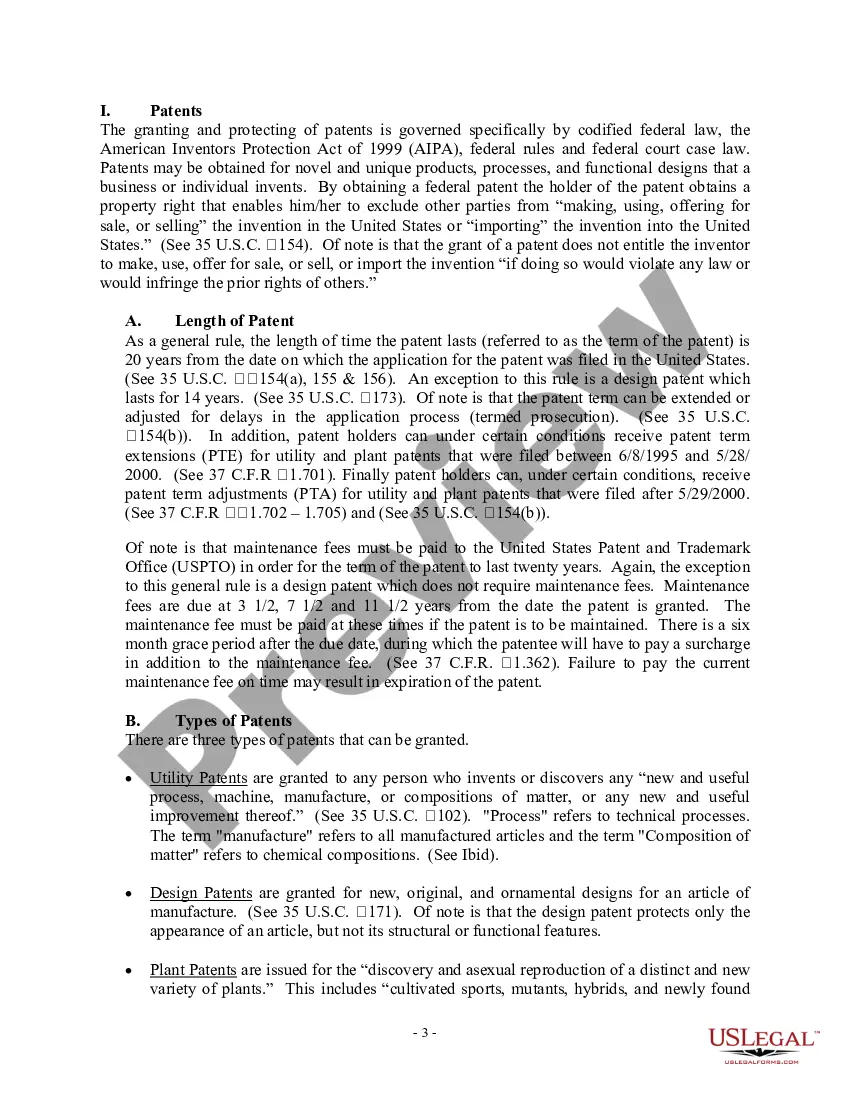


Get your form ready online
Our built-in tools help you complete, sign, share, and store your documents in one place.
Make edits, fill in missing information, and update formatting in US Legal Forms—just like you would in MS Word.
Download a copy, print it, send it by email, or mail it via USPS—whatever works best for your next step.
Sign and collect signatures with our SignNow integration. Send to multiple recipients, set reminders, and more. Go Premium to unlock E-Sign.
If this form requires notarization, complete it online through a secure video call—no need to meet a notary in person or wait for an appointment.
We protect your documents and personal data by following strict security and privacy standards.

Make edits, fill in missing information, and update formatting in US Legal Forms—just like you would in MS Word.

Download a copy, print it, send it by email, or mail it via USPS—whatever works best for your next step.

Sign and collect signatures with our SignNow integration. Send to multiple recipients, set reminders, and more. Go Premium to unlock E-Sign.

If this form requires notarization, complete it online through a secure video call—no need to meet a notary in person or wait for an appointment.

We protect your documents and personal data by following strict security and privacy standards.
Looking for another form?









Form popularity
FAQ
Trademark applications can be filed online with the USPTO. The application must provide a description of the goods or services for which the trademark will be used and a specimen showing how the mark is used in commerce.
There are three most common types of trademarks: word marks, design marks, and composite marks. Legal challenges for famous trademarks include dilution by blurring and tarnishment, piracy, and varying international laws.
Likelihood of confusion is a common reason for refusal of a trademark application. The USPTO will review your application and compare your mark to any existing trademark applications or registered trademarks.
In addition, you acknowledge that the Site itself is protected by copyright law. You further acknowledge that Coca Cola owns the trademarks “Coca Cola”, “Coke” and all associated Coca Cola trade names, service marks and logos. All other trademarks used on the Site are the property of their respective owners.
Definition of Trademark A trademark is used to identify goods made by a specific producer. Tom's distinctive logo would be one such example, but trademarks can also take the forms of phrases, words, or symbols. Distinctive sounds, scents, or even shapes and colors can also be registered as trademarks.
Google's first registered trademark was for its name "Google." The company filed for the trademark on September 15, 1997, and it was officially registered on February 2, 1999. This trademark covered various goods and services related to search engines, online advertising, and internet-related technologies.
The McDonald's golden arches design is an example of a registered trademark in special form format. The company Nike registered this trademark in special form format, combining the stylized word Nike with their swoosh logo.
Proper Trademark Attribution of Ownership An example of a trademark ownership attribution statement is: “Equity In The Center®, Race Equity Cycle®, Awake to Woke to Work®, Race Equity Culture™, and Race Equity Cycle Pulse Check™ are trademarks or registered trademarks of Equity In The Center in the United States.”
Usually, the process takes 12 to 18 months. Registering your trademark is a complex procedure that involves your application moving through various stages. Learning about each stage in the process will help you understand why getting a trademark takes as long as it does.
