Patent Use Can For Bread In Georgia
Description

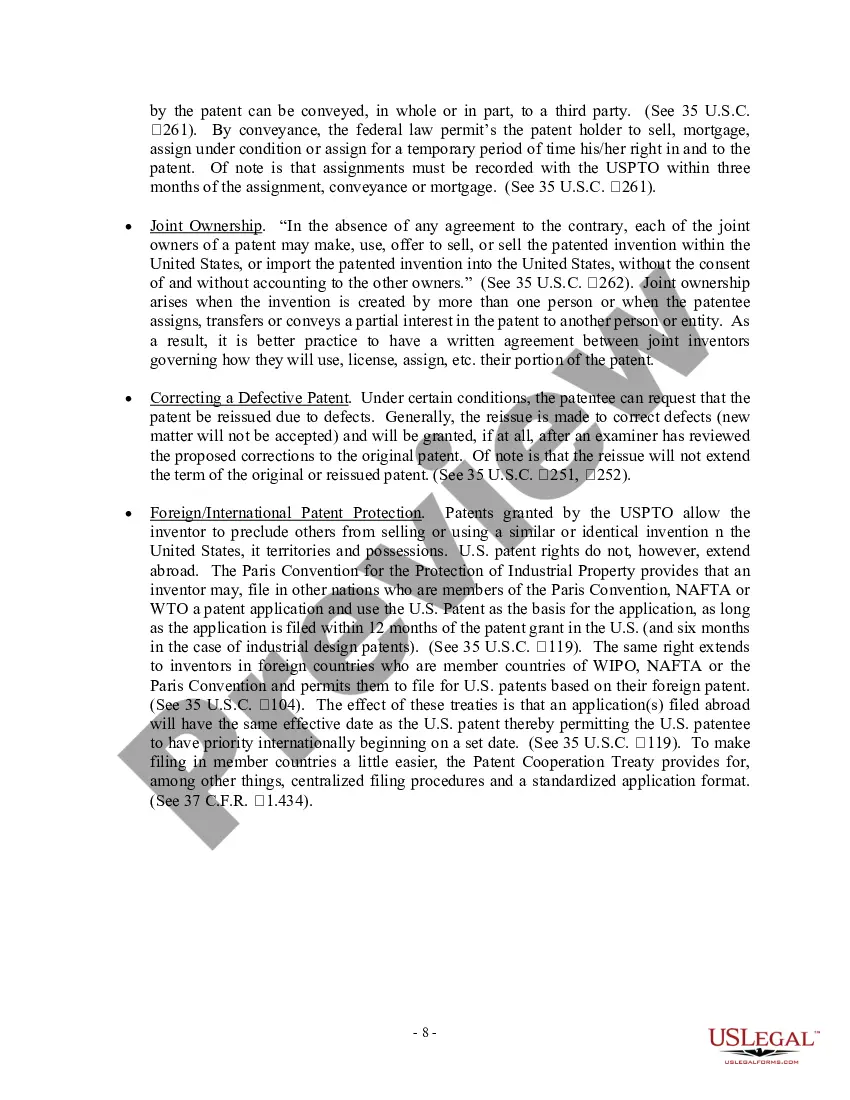



Get your form ready online
Our built-in tools help you complete, sign, share, and store your documents in one place.
Make edits, fill in missing information, and update formatting in US Legal Forms—just like you would in MS Word.
Download a copy, print it, send it by email, or mail it via USPS—whatever works best for your next step.
Sign and collect signatures with our SignNow integration. Send to multiple recipients, set reminders, and more. Go Premium to unlock E-Sign.
If this form requires notarization, complete it online through a secure video call—no need to meet a notary in person or wait for an appointment.
We protect your documents and personal data by following strict security and privacy standards.

Make edits, fill in missing information, and update formatting in US Legal Forms—just like you would in MS Word.

Download a copy, print it, send it by email, or mail it via USPS—whatever works best for your next step.

Sign and collect signatures with our SignNow integration. Send to multiple recipients, set reminders, and more. Go Premium to unlock E-Sign.

If this form requires notarization, complete it online through a secure video call—no need to meet a notary in person or wait for an appointment.

We protect your documents and personal data by following strict security and privacy standards.
Looking for another form?







Form popularity
FAQ
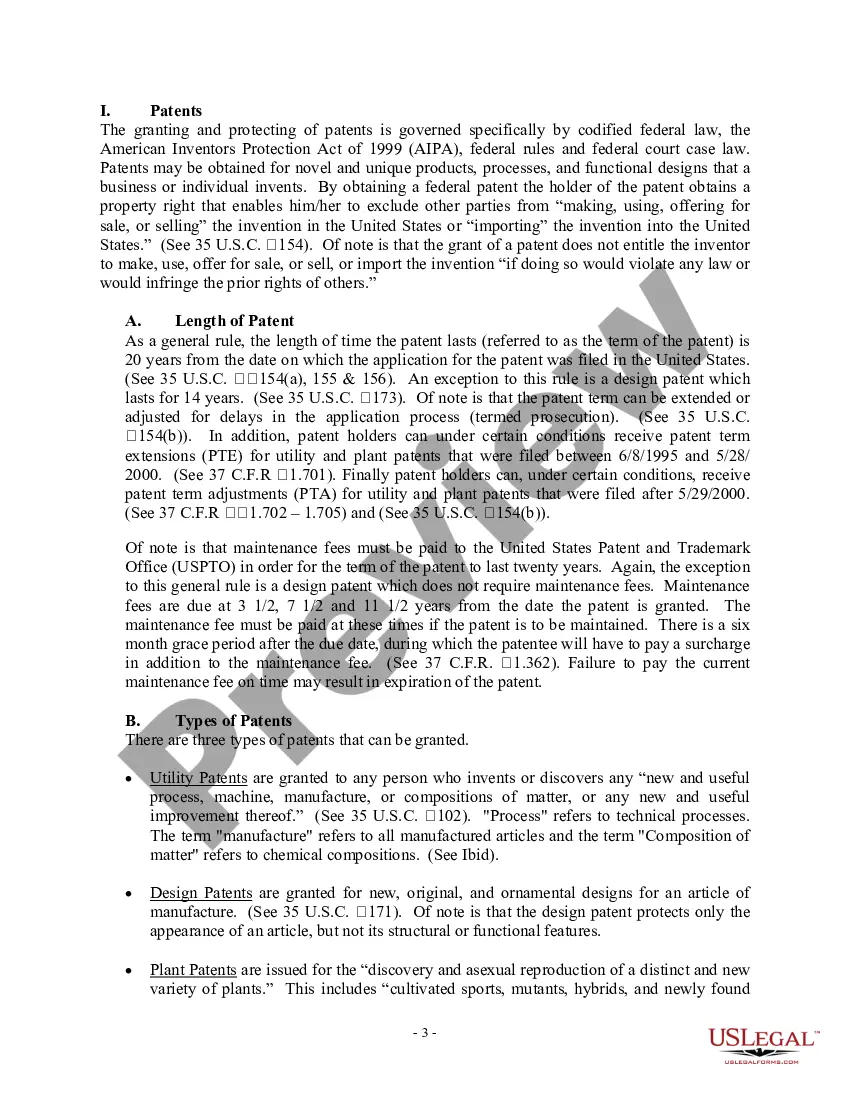
The five primary requirements for patentability are: (1) patentable subject matter; (2) utility; (3) novelty; (4) non-obviousness; and (5) enablement. Like trademarks, patents are territorial, meaning they are enforceable in a specific geographic area.
Countless inventors have successfully navigated the patent system on their own. In fact, federal law requires patent examiners at the U.S. Patent and Trademark Office (USPTO) to help individual inventors who apply for patents without a lawyer's help.
Generally, the term of a new patent is 20 years from the date on which the application for the patent was filed in the United States.
Format of a Patent Application The Specification. The Title. The Description. The Claims. The Drawings. The Abstract. Sample Specifications. Minimum Requirements for a Filing Date.
How to Patent a Food Product Step 1: Turn Your Idea into an Invention. Step 2: Contact a Patent Attorney. Step 3: Perform Market Research. Step 4: Conduct a Patentability Search. Step 5: Determine Inventorship and Ownership. Step 6: Prepare the Patent Application. Step 7: Submit the Patent Application.
It is certainly possible to obtain a patent on a recipe or food item if there is a unique aspect, perhaps if there is something counter-intuitive or a problem (such as shelf life or freshness) is being addressed. The trick will be identifying a uniqueness that is not something one would typically think to try.
Patent law defines the limits of what can be patented. For example, the laws of nature, physical phenomena, and abstract ideas cannot be patented, nor can only an idea or suggestion.
Special Patent is a bread flour, about 12.5% protein. Use it for breads, pizza, rolls, yeasted pastries like croissants, babkas and danish.
For example, the laws of nature, physical phenomena, and abstract ideas cannot be patented, nor can only an idea or suggestion. Other restrictions include the patenting of inventions exclusively related to nuclear material or atomic energy in an atomic weapon (see MPEP 2104.01).
Inventive inventions whose intended usage would result in damage to public morals, order, or human, animal, or plant life cannot be patented. This provision seeks to eliminate those inventions that may be used for destructive purposes, such as lethal chemicals, biological warfare substances, or hazardous side effects.
