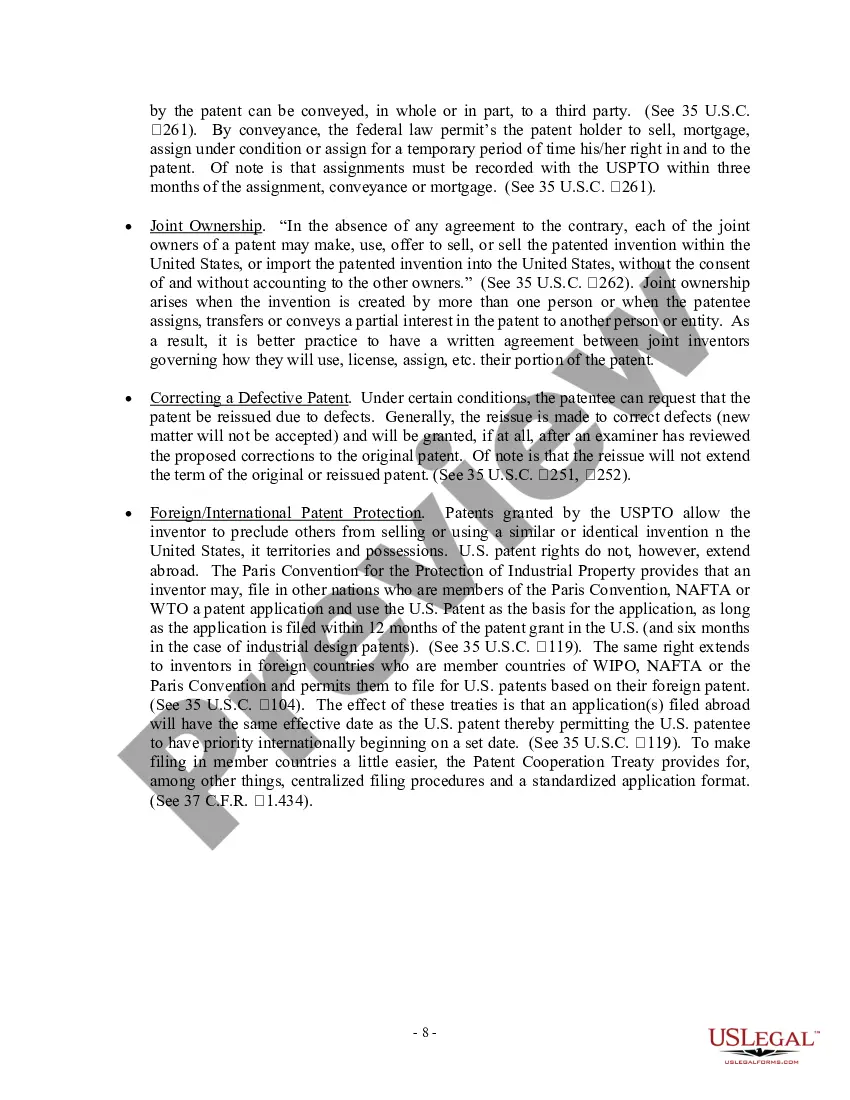
Patent Application For Invention In Florida
Description

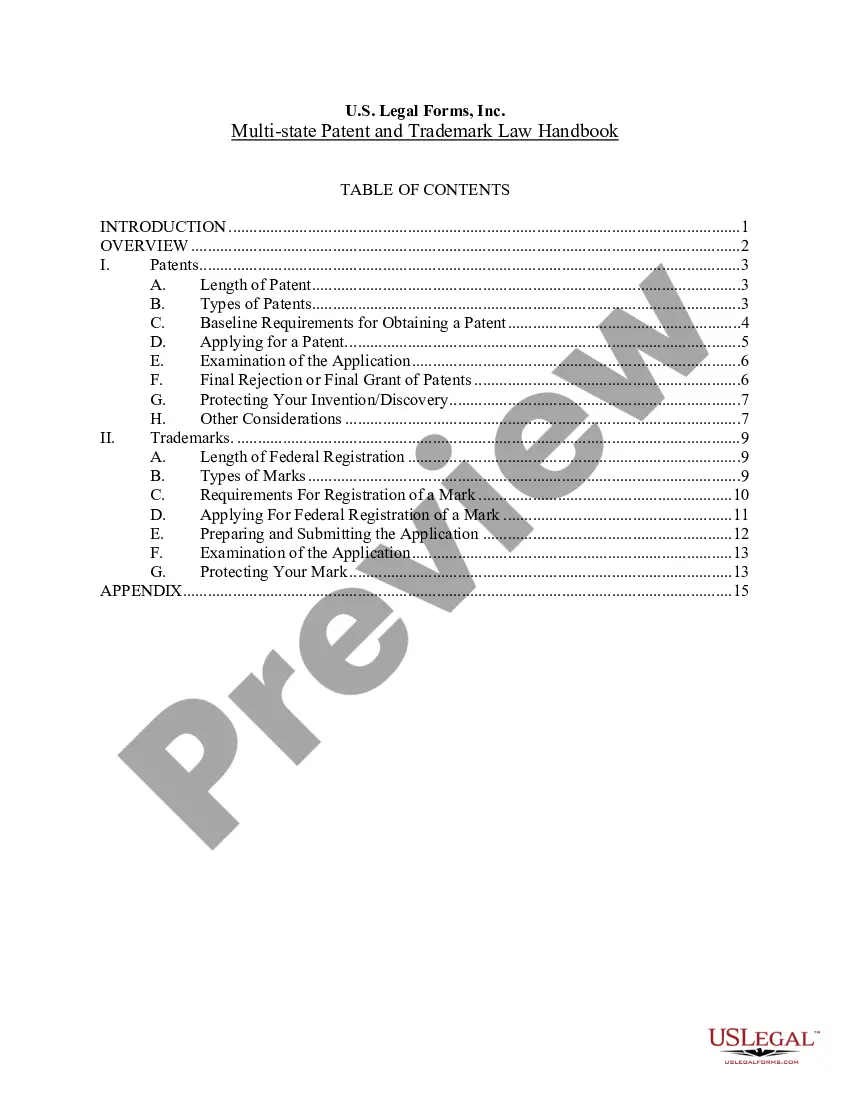
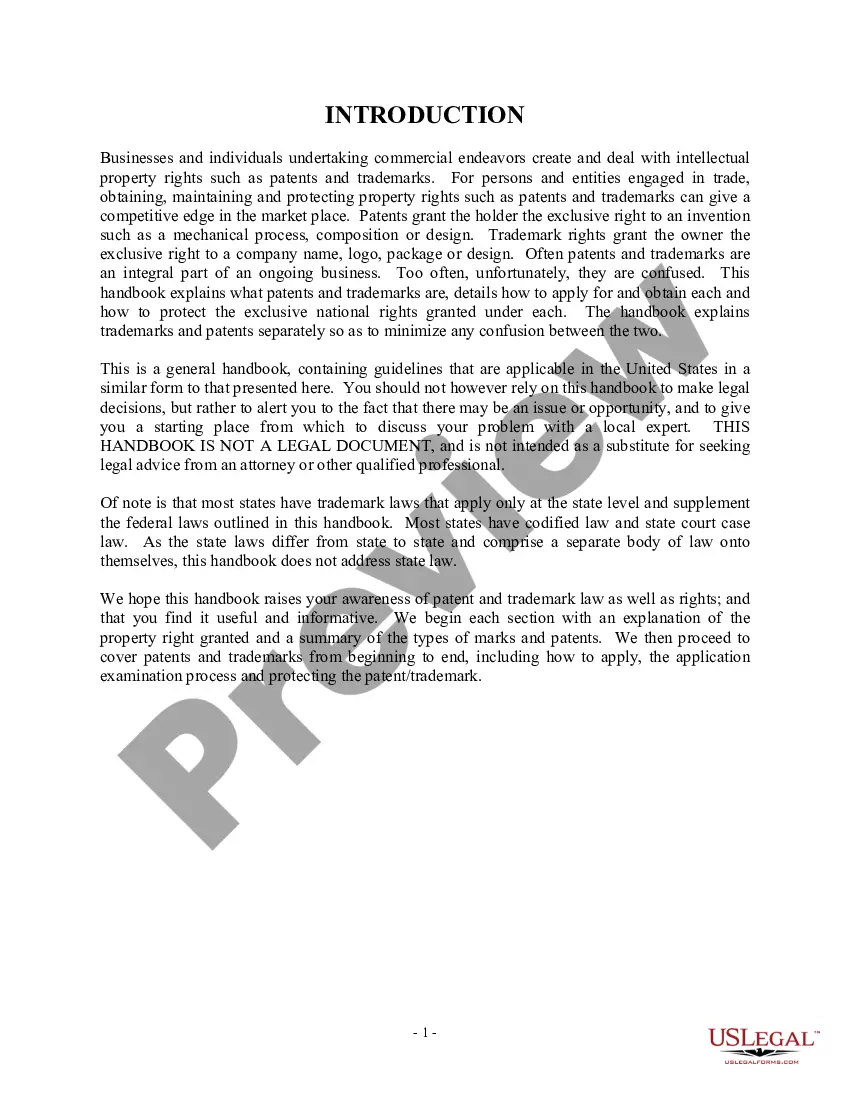
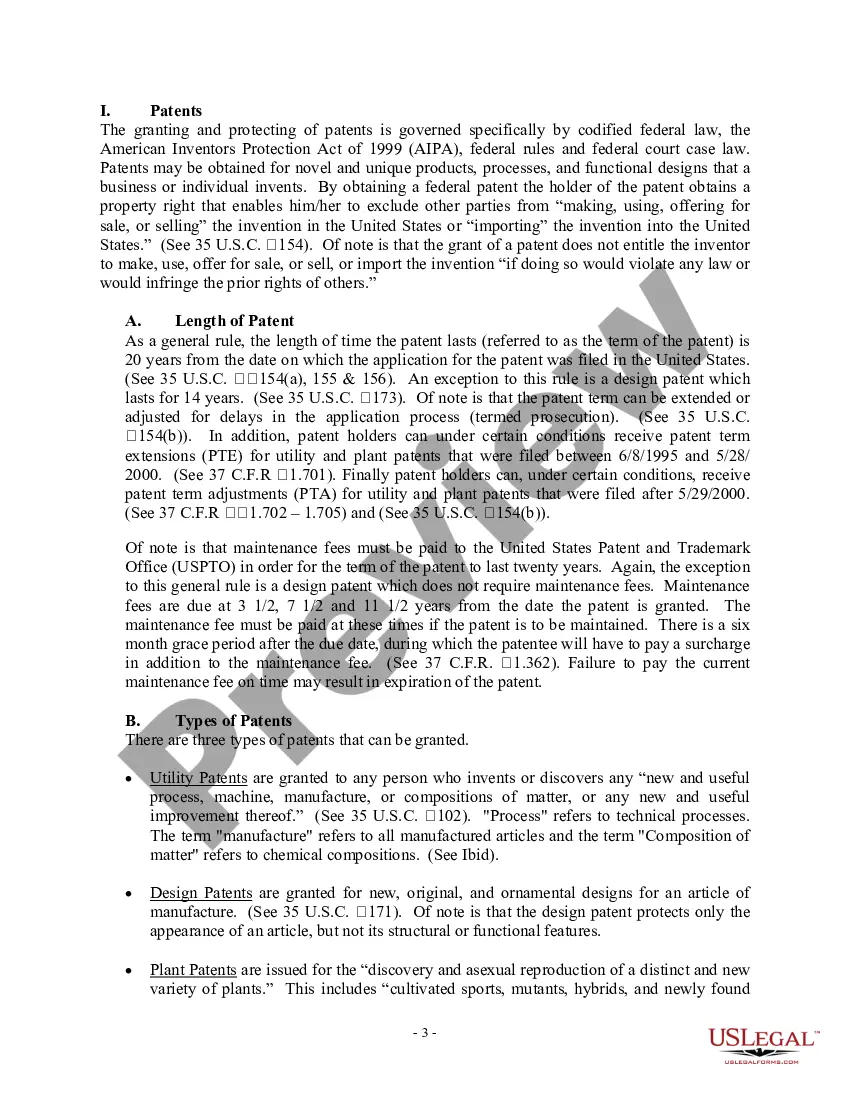



Get your form ready online
Our built-in tools help you complete, sign, share, and store your documents in one place.
Make edits, fill in missing information, and update formatting in US Legal Forms—just like you would in MS Word.
Download a copy, print it, send it by email, or mail it via USPS—whatever works best for your next step.
Sign and collect signatures with our SignNow integration. Send to multiple recipients, set reminders, and more. Go Premium to unlock E-Sign.
If this form requires notarization, complete it online through a secure video call—no need to meet a notary in person or wait for an appointment.
We protect your documents and personal data by following strict security and privacy standards.

Make edits, fill in missing information, and update formatting in US Legal Forms—just like you would in MS Word.

Download a copy, print it, send it by email, or mail it via USPS—whatever works best for your next step.

Sign and collect signatures with our SignNow integration. Send to multiple recipients, set reminders, and more. Go Premium to unlock E-Sign.

If this form requires notarization, complete it online through a secure video call—no need to meet a notary in person or wait for an appointment.

We protect your documents and personal data by following strict security and privacy standards.
Looking for another form?








Form popularity
FAQ
The poor man's patent has become outdated as a result of the change from the “first-to-invent” to the “first-to-file” system. It's not enough to have a good idea. The key is the date of filing, which must be recorded in a patent at the US Patent and Trademark Office (USPTO).
While the United States Patent and Trademark Organization advises against submitting your own patent, they do not prohibit it. In fact, many people have written and prosecuted their own patents.
While the United States Patent and Trademark Organization advises against submitting your own patent, they do not prohibit it. In fact, many people have written and prosecuted their own patents.
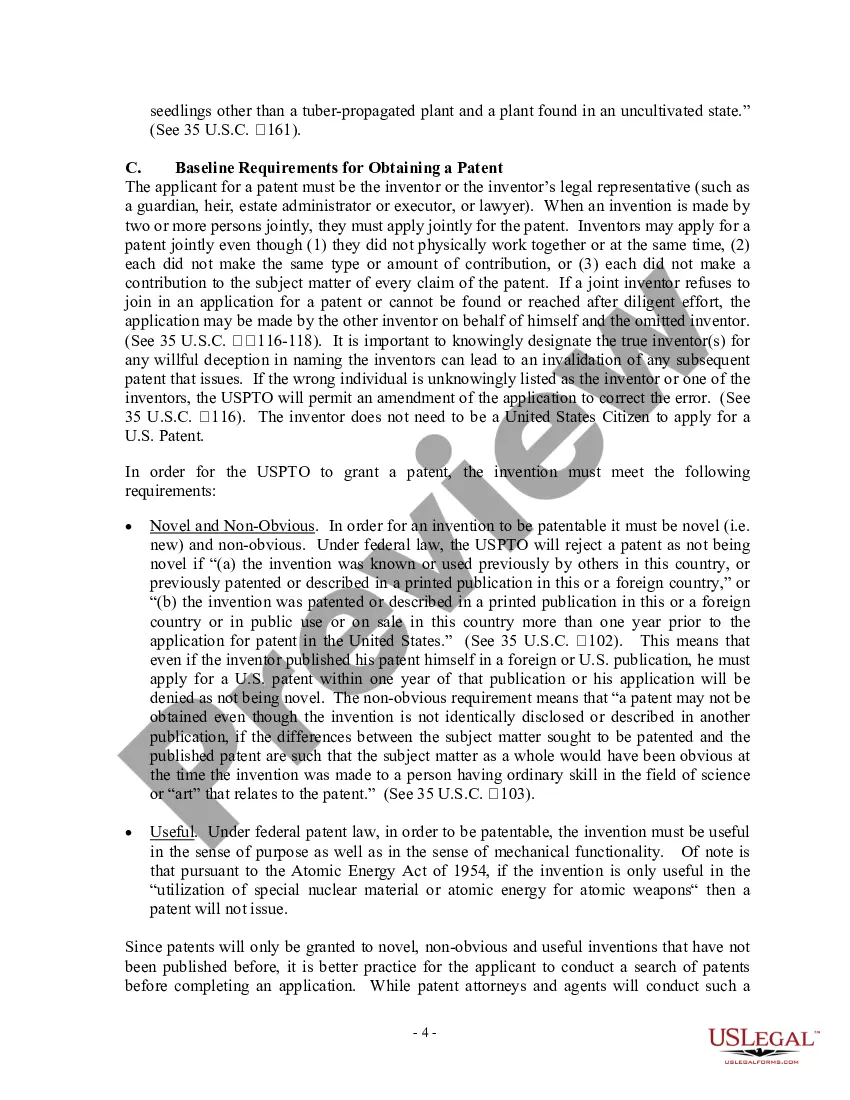
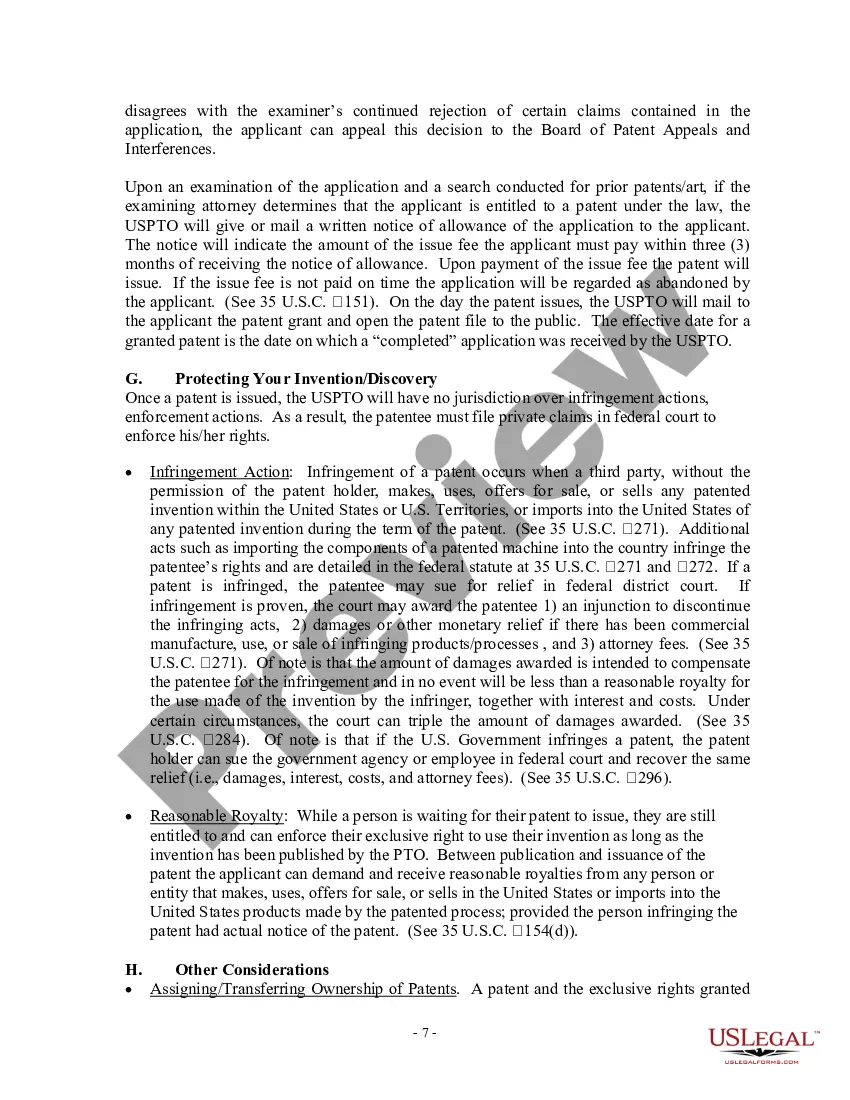
How to File a Patent in Florida Do You Have an Idea or Invention? Every invention begins as an idea. Perform Market Research. Verify Patent Eligibility. Conduct a Patent Search. Determine Inventorship & Ownership. Choose the Type of Patent. Prepare the Patent Application. Submit the Patent Application.
What can be patented? Able to be used (the invention must work and cannot just be a theory) A clear description of how to make and use the invention. New, or “novel” (something not done before) “Not obvious,” as related to a change to something already invented.
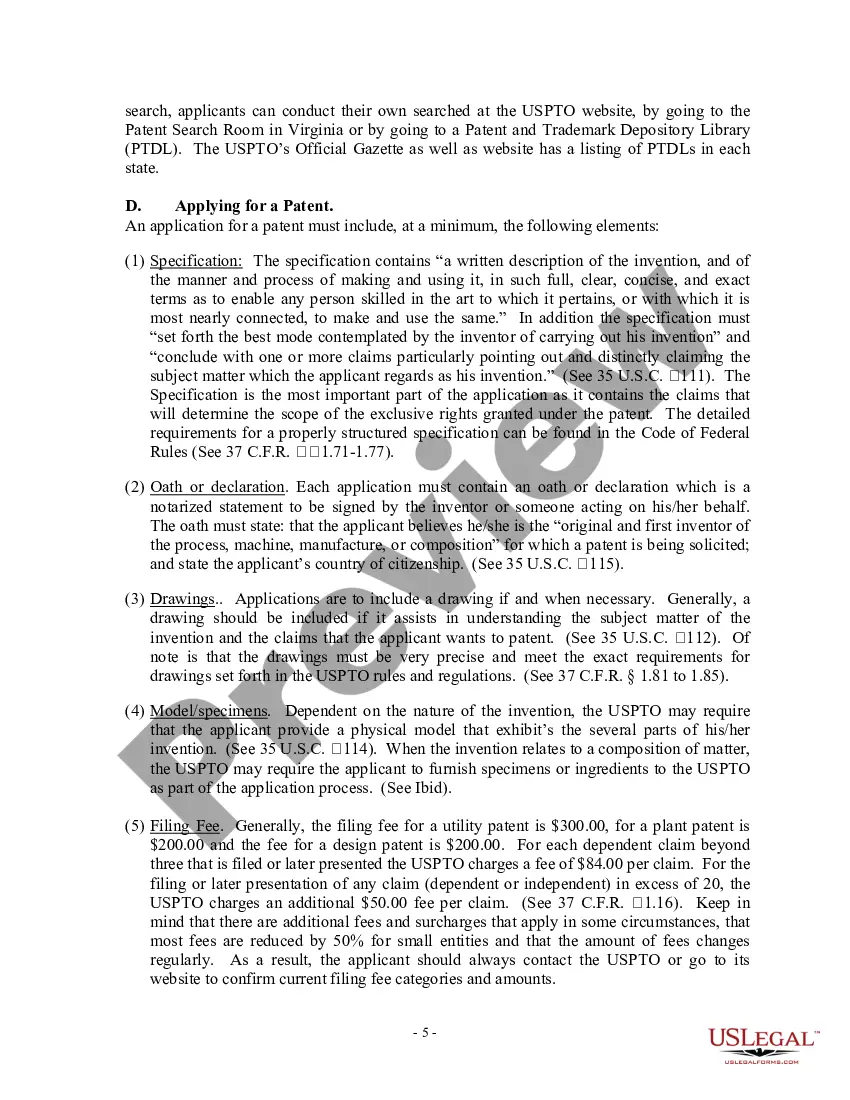
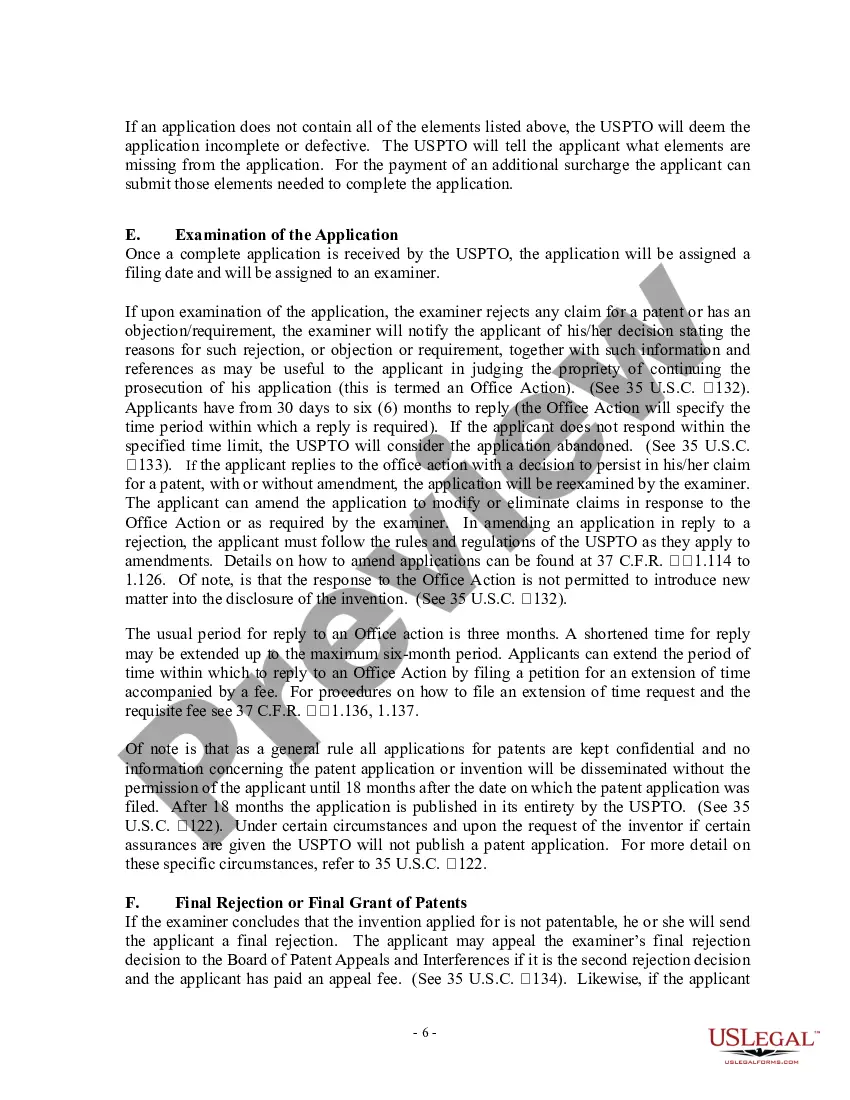
A patent application consists of an abstract, a specification, and often drawings. The abstract is a brief summary of the contents of the specification. The specification is made up of: a clear and complete description of the invention and its usefulness; and • claims that define the boundaries of patent protection.
The title of the invention should be placed at the top of the first page of the specification unless it is provided in the application data sheet (see 37 CFR 1.76). The title should be brief but technically accurate and descriptive and should contain fewer than 500 characters.
Background Section Many attorneys advocate for writing something short and simple that discusses the field of the invention, the problem, and the need for improvement. Many attorneys note that anything in this background section can be used against you so it should be three short sentences.
(1) Field of the Invention: This is a very broad description of the area of technology into which the patent falls. Traditionally, the field of the invention is stated in two sentences. The first is sort of a paraphrasing of the class definition, the second is similar to a subclass definition.
The summary of the invention emphasizes on the nature and purpose of the invention. It aids in providing immense facilitation in understanding the invention and how it can benefit the era in future. For this reason, one must draft the summary in plain and easy to comprehend language.
