Patent Use Can Withstand In Arizona
Description

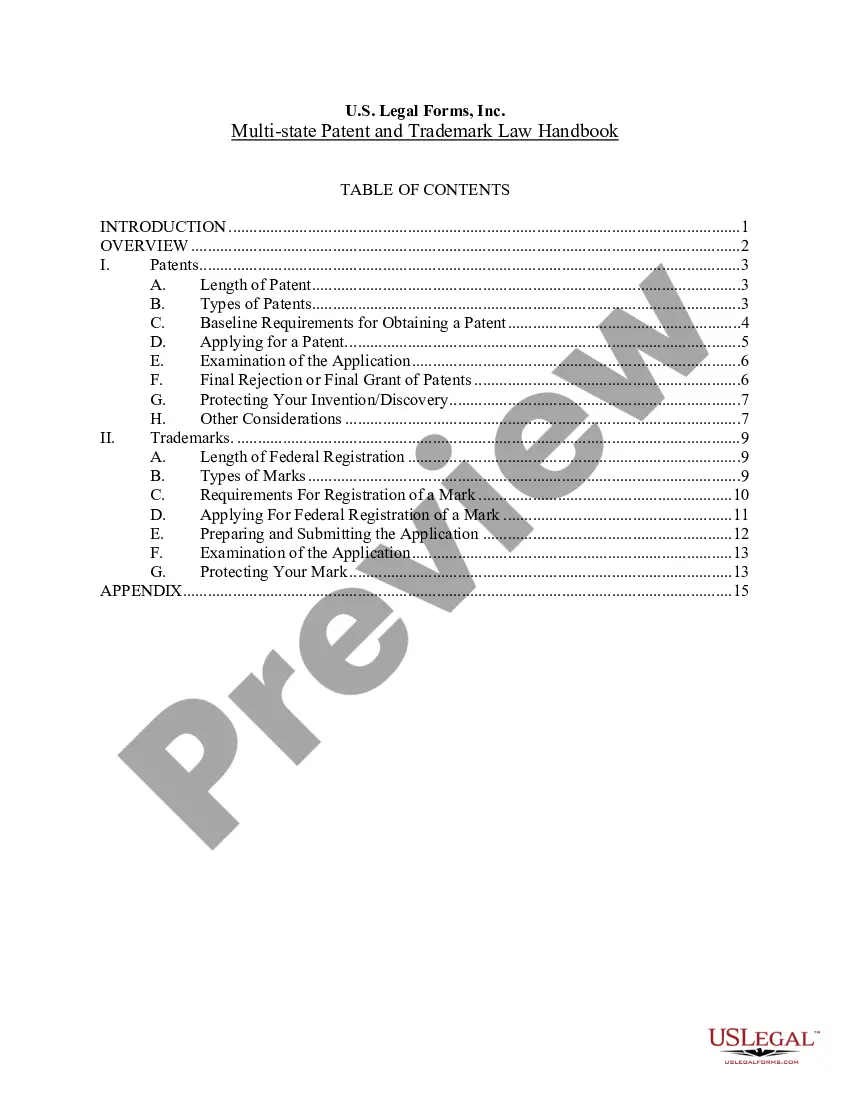
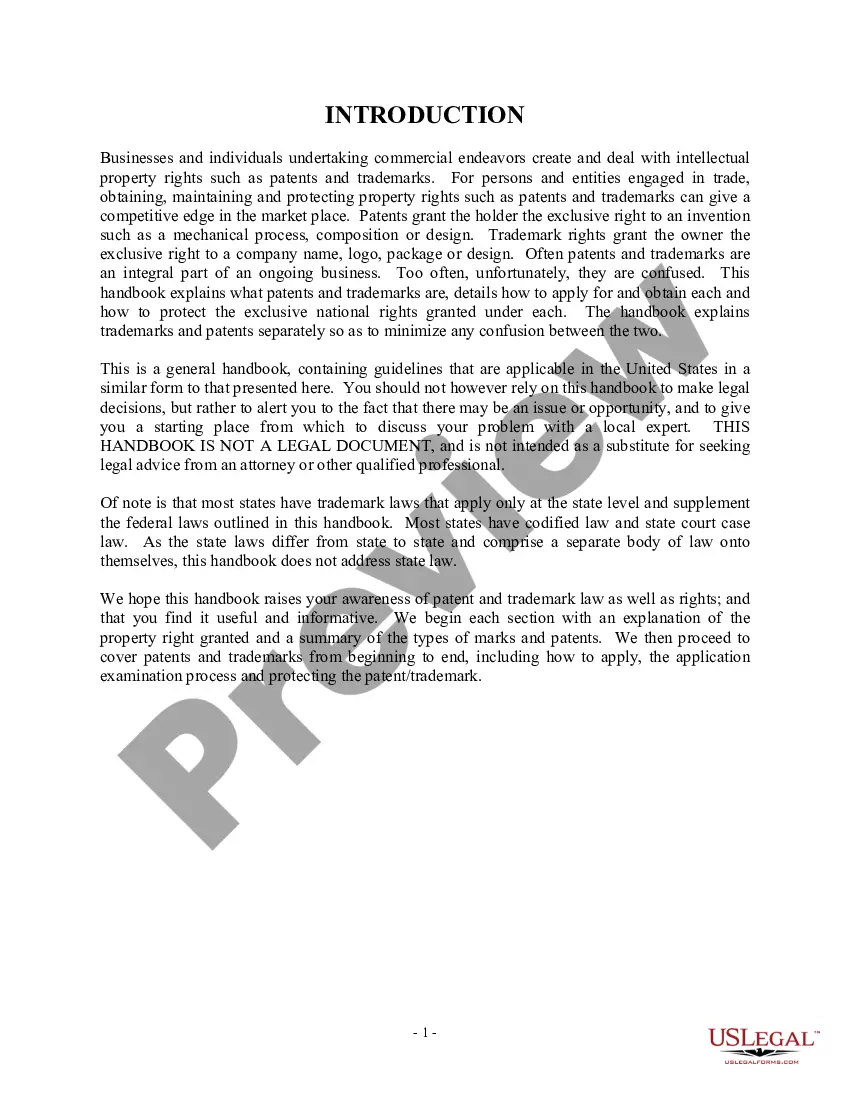
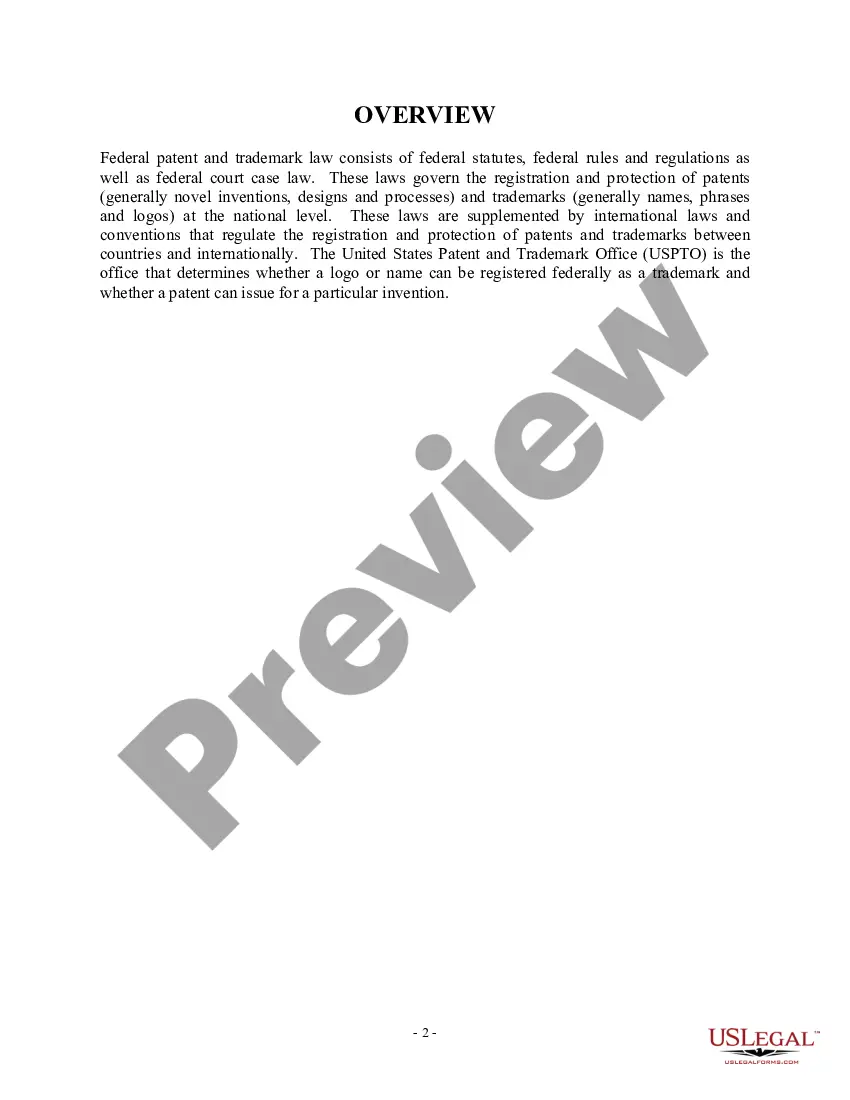
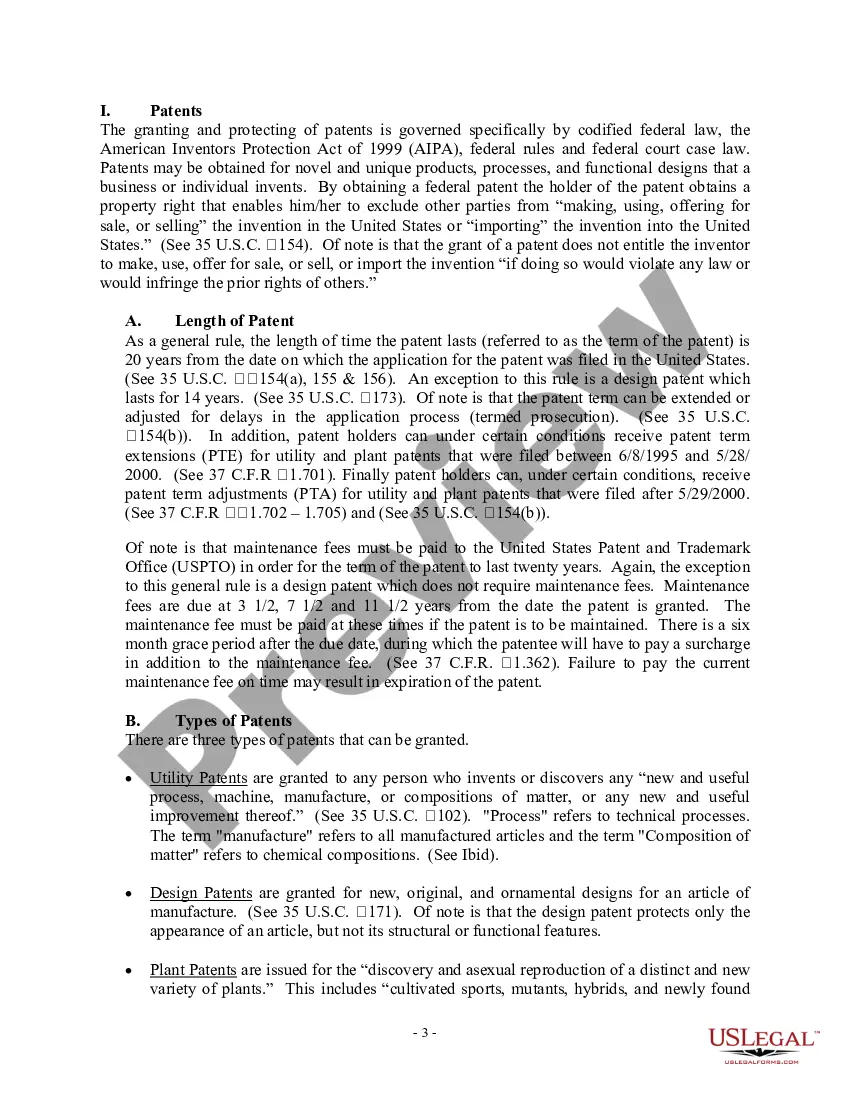


Get your form ready online
Our built-in tools help you complete, sign, share, and store your documents in one place.
Make edits, fill in missing information, and update formatting in US Legal Forms—just like you would in MS Word.
Download a copy, print it, send it by email, or mail it via USPS—whatever works best for your next step.
Sign and collect signatures with our SignNow integration. Send to multiple recipients, set reminders, and more. Go Premium to unlock E-Sign.
If this form requires notarization, complete it online through a secure video call—no need to meet a notary in person or wait for an appointment.
We protect your documents and personal data by following strict security and privacy standards.

Make edits, fill in missing information, and update formatting in US Legal Forms—just like you would in MS Word.

Download a copy, print it, send it by email, or mail it via USPS—whatever works best for your next step.

Sign and collect signatures with our SignNow integration. Send to multiple recipients, set reminders, and more. Go Premium to unlock E-Sign.

If this form requires notarization, complete it online through a secure video call—no need to meet a notary in person or wait for an appointment.

We protect your documents and personal data by following strict security and privacy standards.
Looking for another form?









Form popularity
FAQ
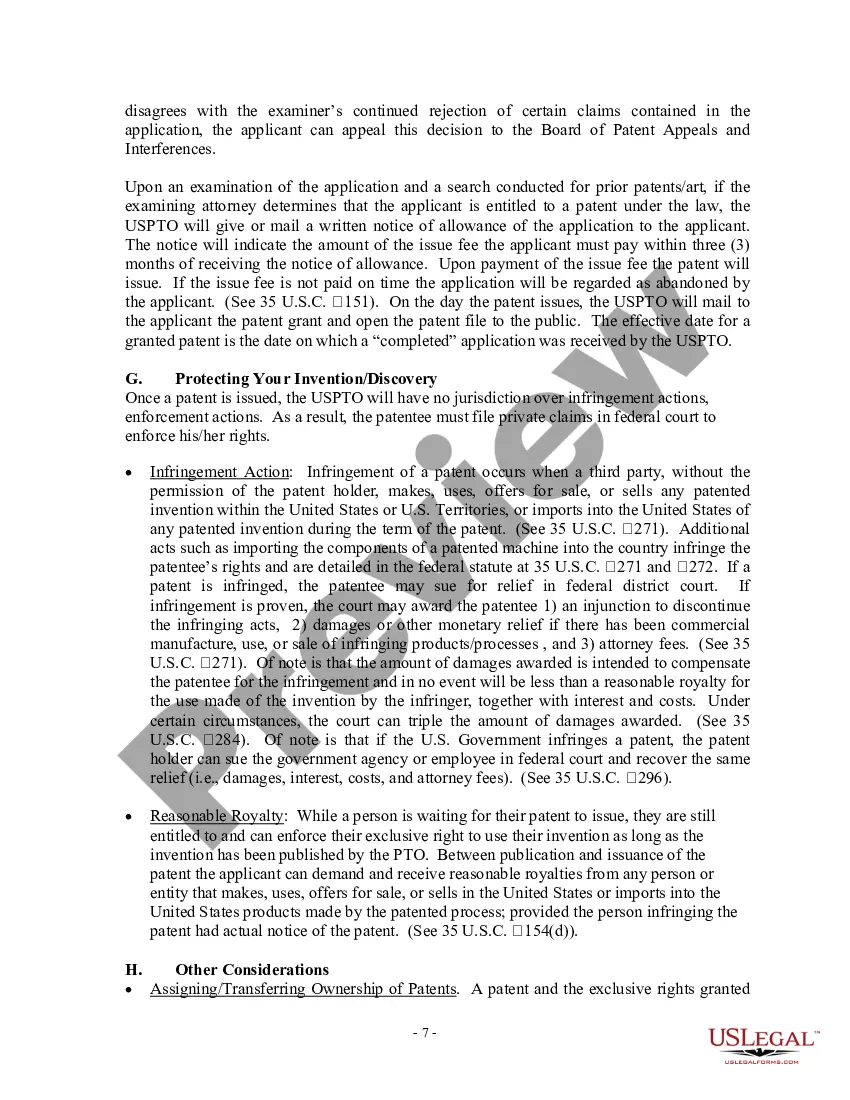
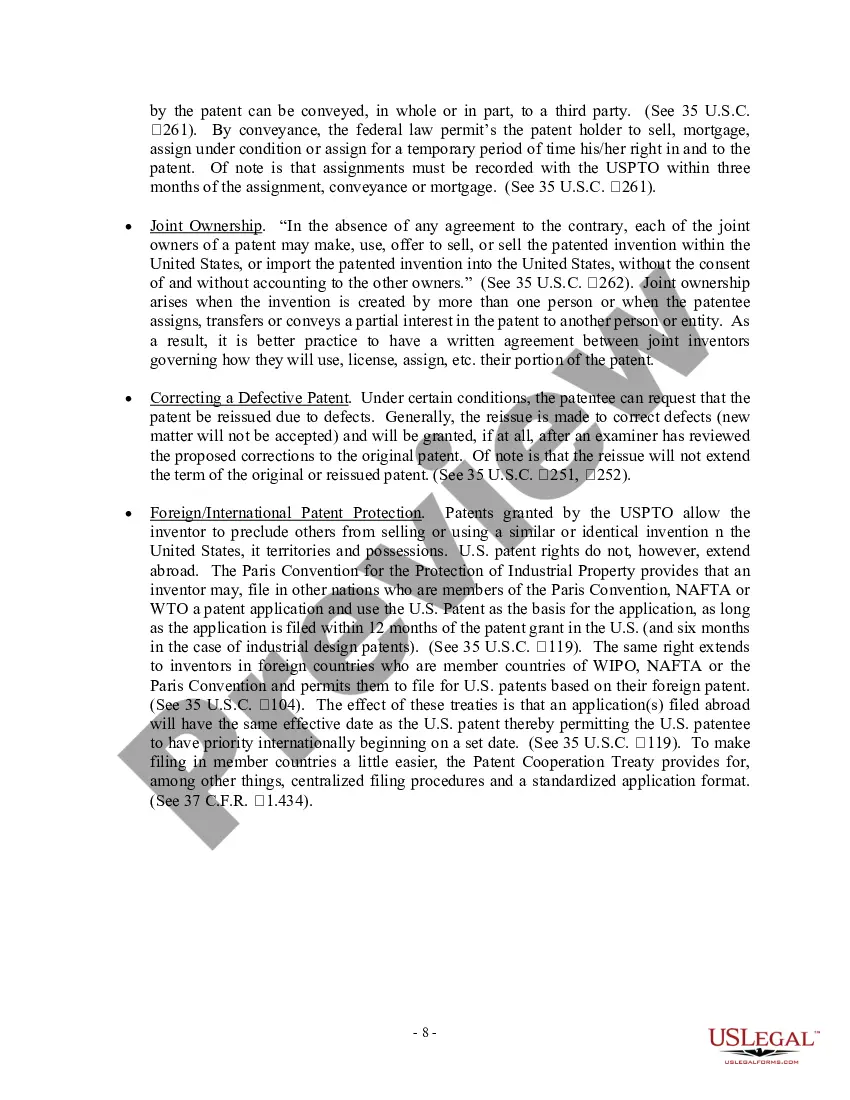
The rights granted by a patent are to exclude others from making, using, or selling the invention in the US. If you make and use your own, you would be infringing, which is illegal. I suggest that you contact the inventor and see if he will sell you one or grant you a personal license to make and use the invention.
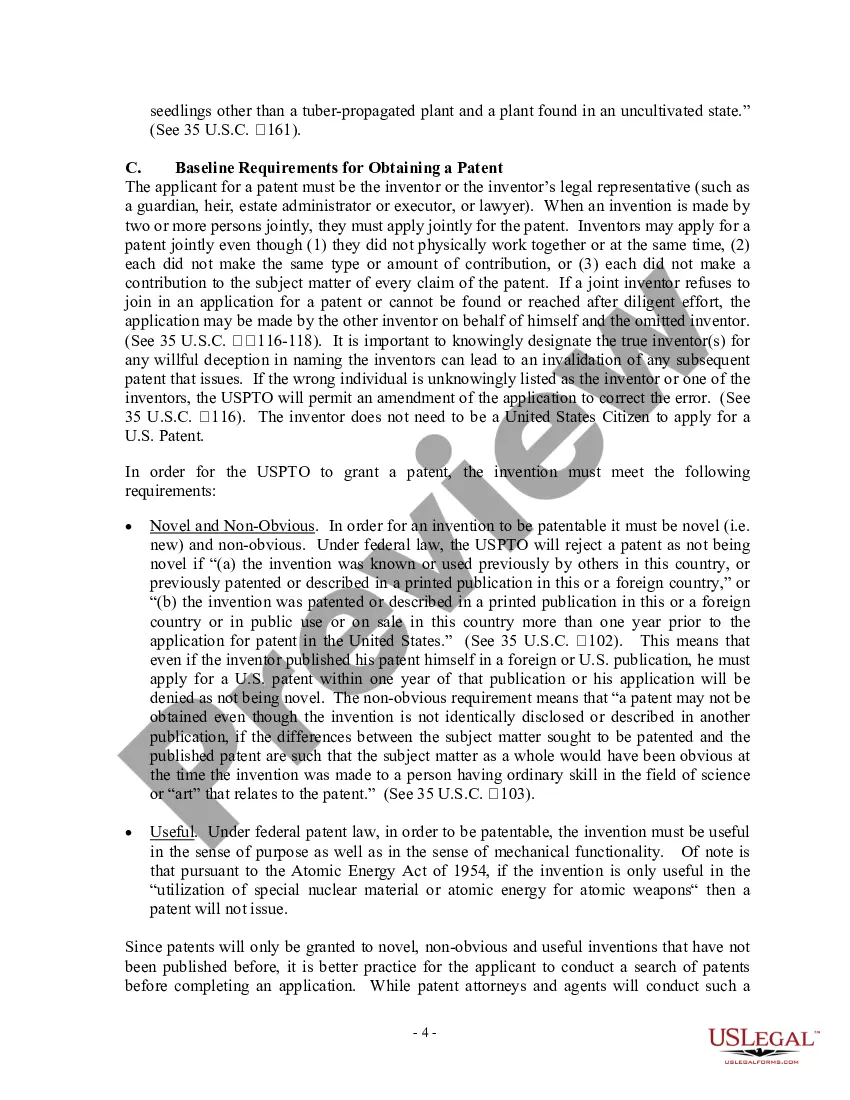
The five primary requirements for patentability are: (1) patentable subject matter; (2) utility; (3) novelty; (4) non-obviousness; and (5) enablement. Like trademarks, patents are territorial, meaning they are enforceable in a specific geographic area.
Under the “first to file” system, there exists no value in obtaining a Poor Man's Patent since it now only matters who filed for the patent first and not who came up with the idea first. Essentially, a Poor Man's Patent has about as much value today as the postage affixed to the envelope.
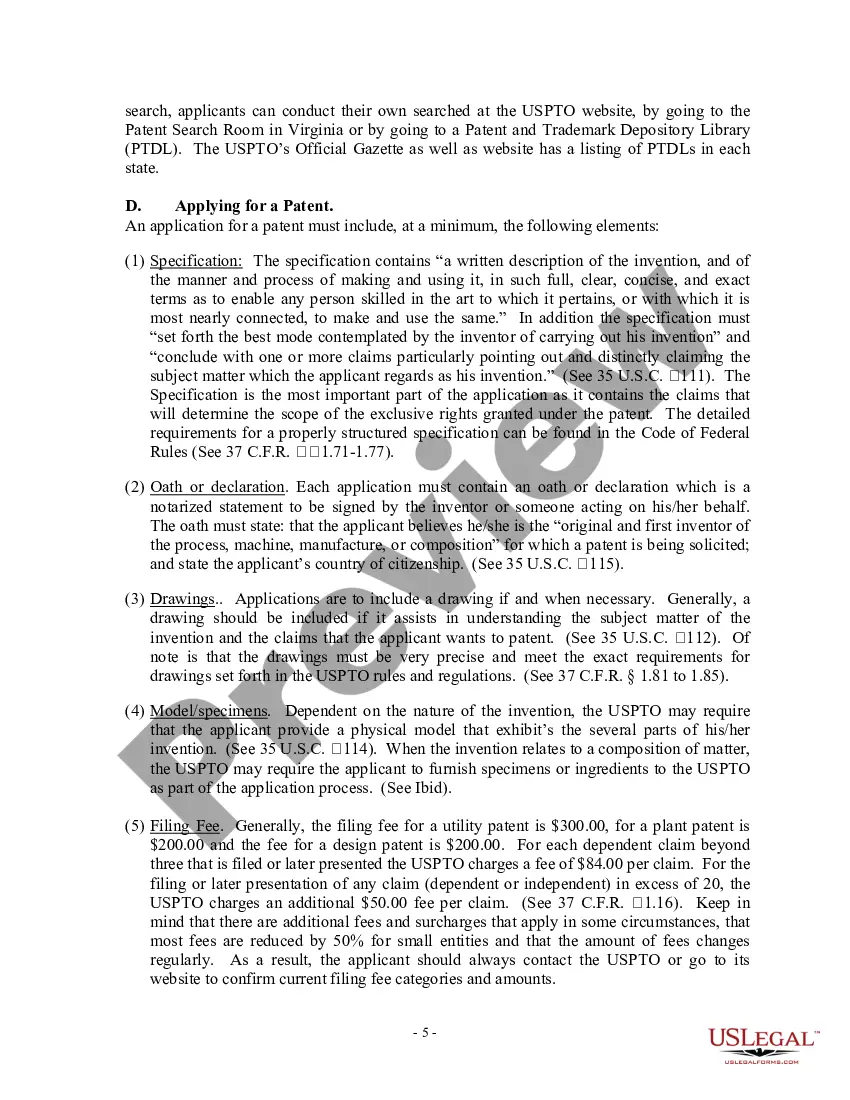
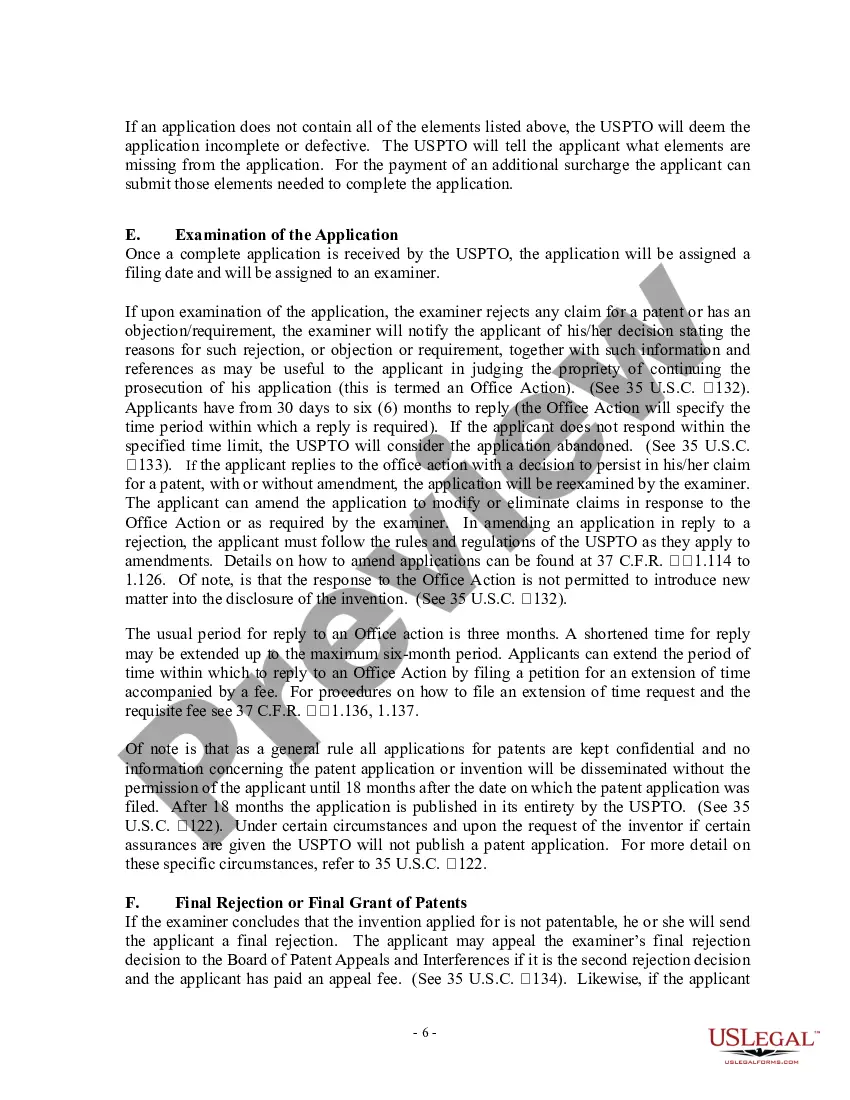
The Patent Application Process A patent law attorney should be sought out to secure a patent. Applications are submitted to the United States Patent and Trademark Office (USPTO).
Patents and trademarks are territorial and must be filed in each country where protection is sought. A U.S. patent or trademark does not afford protection in another country.
For example, the laws of nature, physical phenomena, and abstract ideas cannot be patented, nor can only an idea or suggestion. Other restrictions include the patenting of inventions exclusively related to nuclear material or atomic energy in an atomic weapon (see MPEP 2104.01).
27.201 Patent and copyright infringement liability. (a) Pursuant to 28 U.S.C. 1498 , the exclusive remedy for patent or copyright infringement by or on behalf of the Government is a suit for monetary damages against the Government in the Court of Federal Claims.
For works published in 1978 and later, copyright lasts for the life of the author plus 70 years. The copyright term for corporations (works for hire) is 120 years from creation or 95 years from publication, whichever is later.
Government patent use law is a statute codified at 28 USC § 1498(a) that is a "form of government immunity from patent claims." Section 1498 gives the federal government of the United States the "right to use patented inventions without permission, while paying the patent holder 'reasonable and entire compensation' ...
Number of patent applications stifled by U.S. Government secrecy orders 2000-2021. At the end of the fiscal year of 2021, a total number of 5,976 patent application secrecy orders were in effect. A secrecy order is used to prevent the release of a technology that could endanger national security.
