Patent Application For Software In Alameda
Description




Get your form ready online
Our built-in tools help you complete, sign, share, and store your documents in one place.
Make edits, fill in missing information, and update formatting in US Legal Forms—just like you would in MS Word.
Download a copy, print it, send it by email, or mail it via USPS—whatever works best for your next step.
Sign and collect signatures with our SignNow integration. Send to multiple recipients, set reminders, and more. Go Premium to unlock E-Sign.
If this form requires notarization, complete it online through a secure video call—no need to meet a notary in person or wait for an appointment.
We protect your documents and personal data by following strict security and privacy standards.

Make edits, fill in missing information, and update formatting in US Legal Forms—just like you would in MS Word.

Download a copy, print it, send it by email, or mail it via USPS—whatever works best for your next step.

Sign and collect signatures with our SignNow integration. Send to multiple recipients, set reminders, and more. Go Premium to unlock E-Sign.

If this form requires notarization, complete it online through a secure video call—no need to meet a notary in person or wait for an appointment.

We protect your documents and personal data by following strict security and privacy standards.
Looking for another form?









Form popularity
FAQ
Software copyright protects the original work of programmers and software developers by giving them the right to sue infringers for statutory damages. Software ideas are not copyrightable unless they are in tangible form.
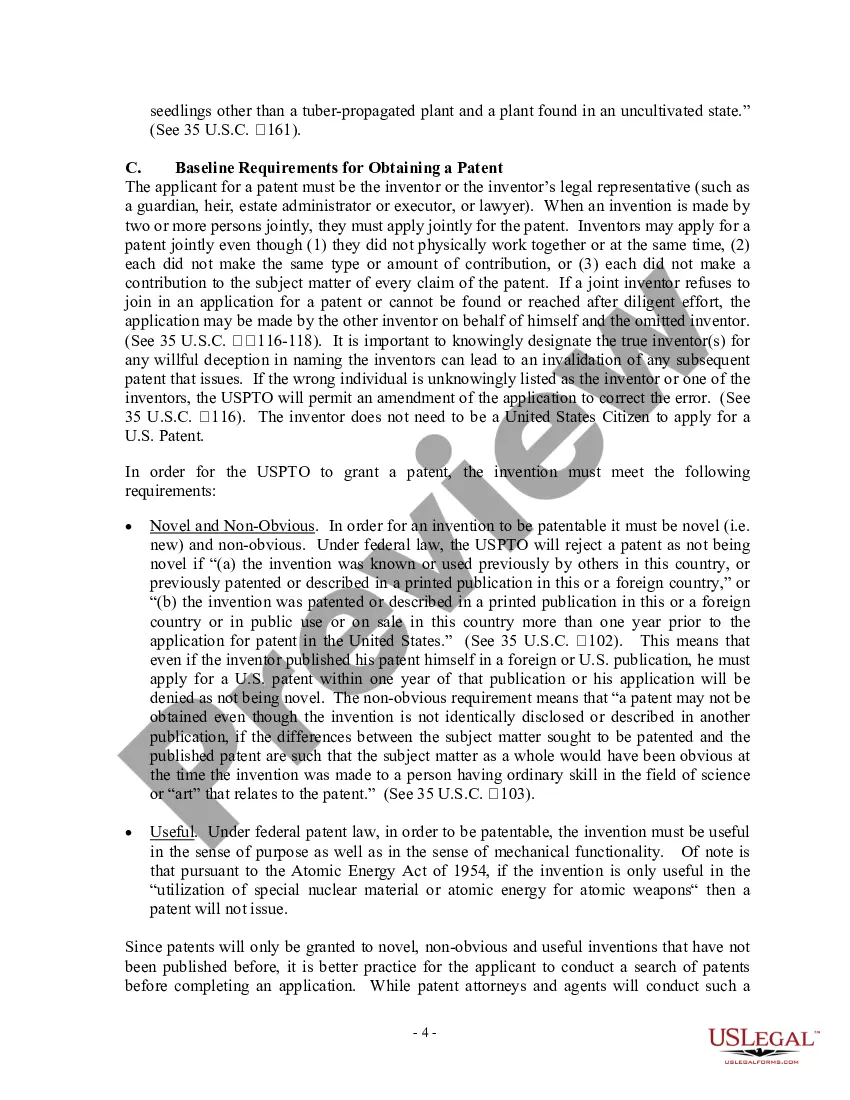
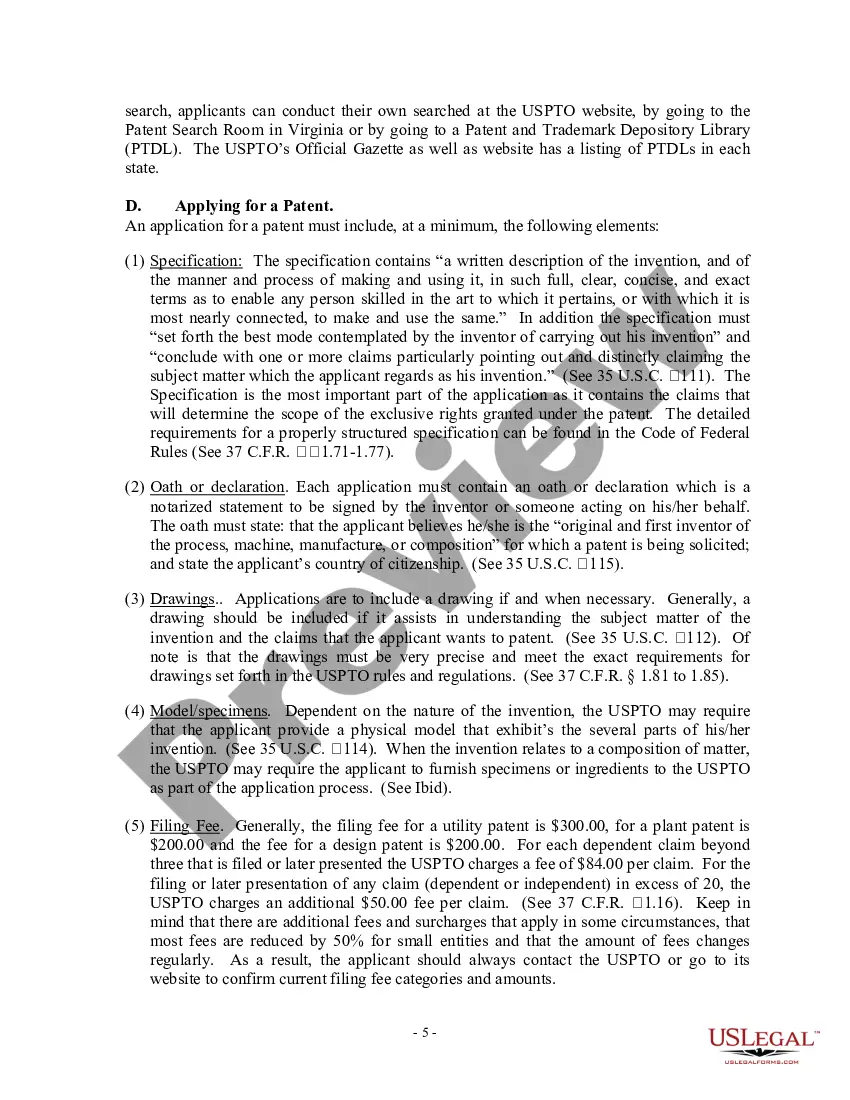
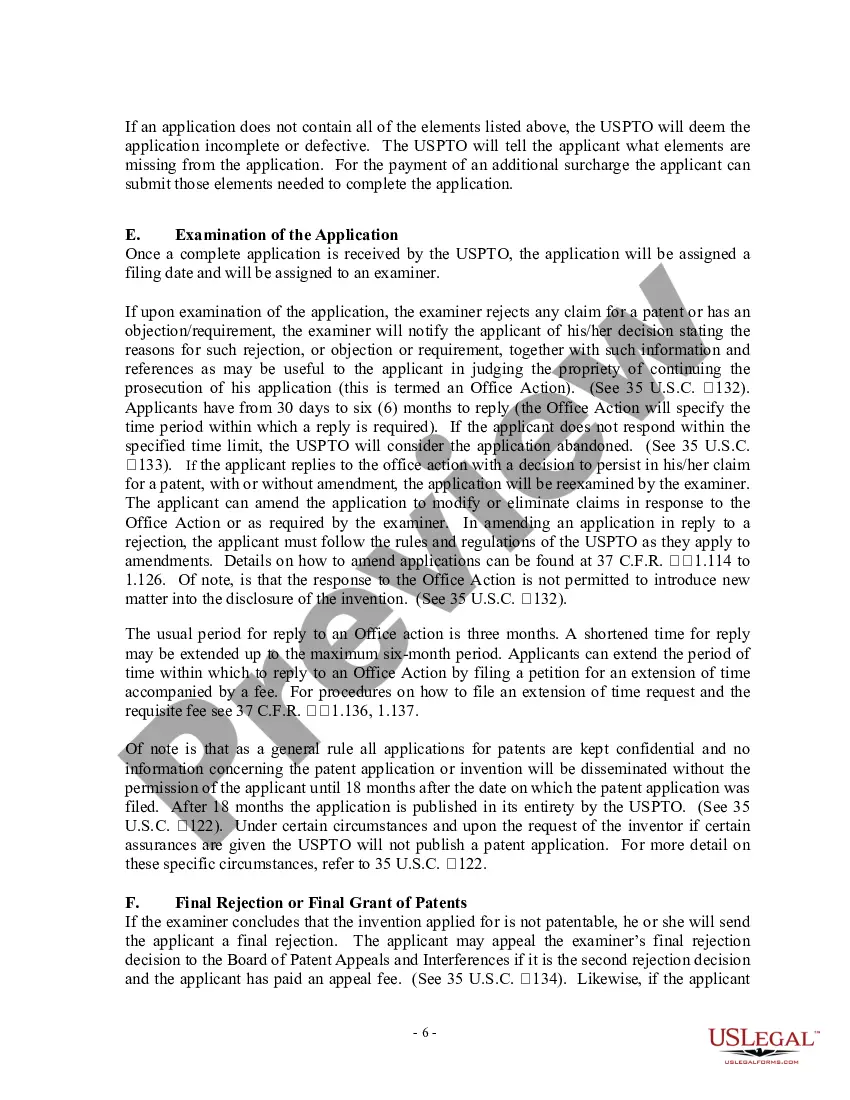
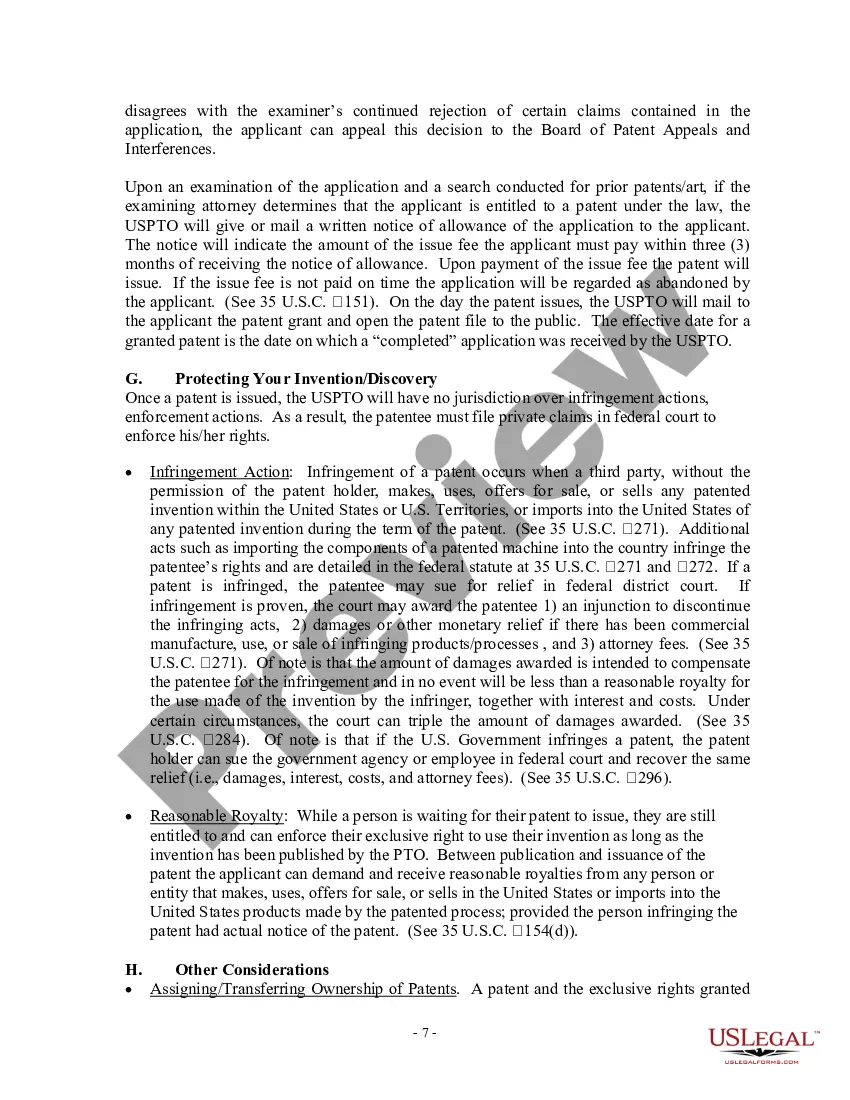
The United States Patent and Trademark Office (USPTO) Public Search Facility located in Alexandria, VA provides the public access to patent and trademark information in a variety of formats including on-line, microfilm, and print. Trained staff are available to assist public users.
Yes, you heard it right! Your apps and app ideas can be patented, with the only condition being to meet the eligibility criteria of novelty. However, please note that the app code cannot be patented, as it falls under the category of law covered by copyrights.
A software invention, for example, could be protected under copyrights (how human expression authored computer-readable code), patents (a useful, novel, and non-obvious method, device, or system), or both.
In order for software to be patentable, it must meet the same requirements of any other type of invention. In particular, a software invention must be new, useful, and non-obvious. A fourth requirement is that the invention be of a type that is eligible for patent protection.
The short answer is no, you can't patent the code itself. However, you can patent the systems and methods that the code uses. Software patents are important because they protect your unique features and prevent others from copying your innovations.
For software or an app to be patentable it needs to meet specific criteria. A patentable invention must provide a technical solution to a technical problem. This means the software or application should offer something beyond a simple business method or abstract idea—it must contribute to the way technology functions.
Yes, patenting an app idea is possible if it meets certain requirements, such as being novel, non-obvious, and useful. You must consult with a patent attorney to determine if your app idea is eligible for a patent.
Yes, you heard it right! Your apps and app ideas can be patented, with the only condition being to meet the eligibility criteria of novelty. However, please note that the app code cannot be patented, as it falls under the category of law covered by copyrights.
