Examples Of Pleadings In Los Angeles
Description
Get your form ready online
Our built-in tools help you complete, sign, share, and store your documents in one place.
Make edits, fill in missing information, and update formatting in US Legal Forms—just like you would in MS Word.
Download a copy, print it, send it by email, or mail it via USPS—whatever works best for your next step.
Sign and collect signatures with our SignNow integration. Send to multiple recipients, set reminders, and more. Go Premium to unlock E-Sign.
If this form requires notarization, complete it online through a secure video call—no need to meet a notary in person or wait for an appointment.
We protect your documents and personal data by following strict security and privacy standards.

Make edits, fill in missing information, and update formatting in US Legal Forms—just like you would in MS Word.

Download a copy, print it, send it by email, or mail it via USPS—whatever works best for your next step.

Sign and collect signatures with our SignNow integration. Send to multiple recipients, set reminders, and more. Go Premium to unlock E-Sign.

If this form requires notarization, complete it online through a secure video call—no need to meet a notary in person or wait for an appointment.

We protect your documents and personal data by following strict security and privacy standards.
Looking for another form?
Form popularity
FAQ
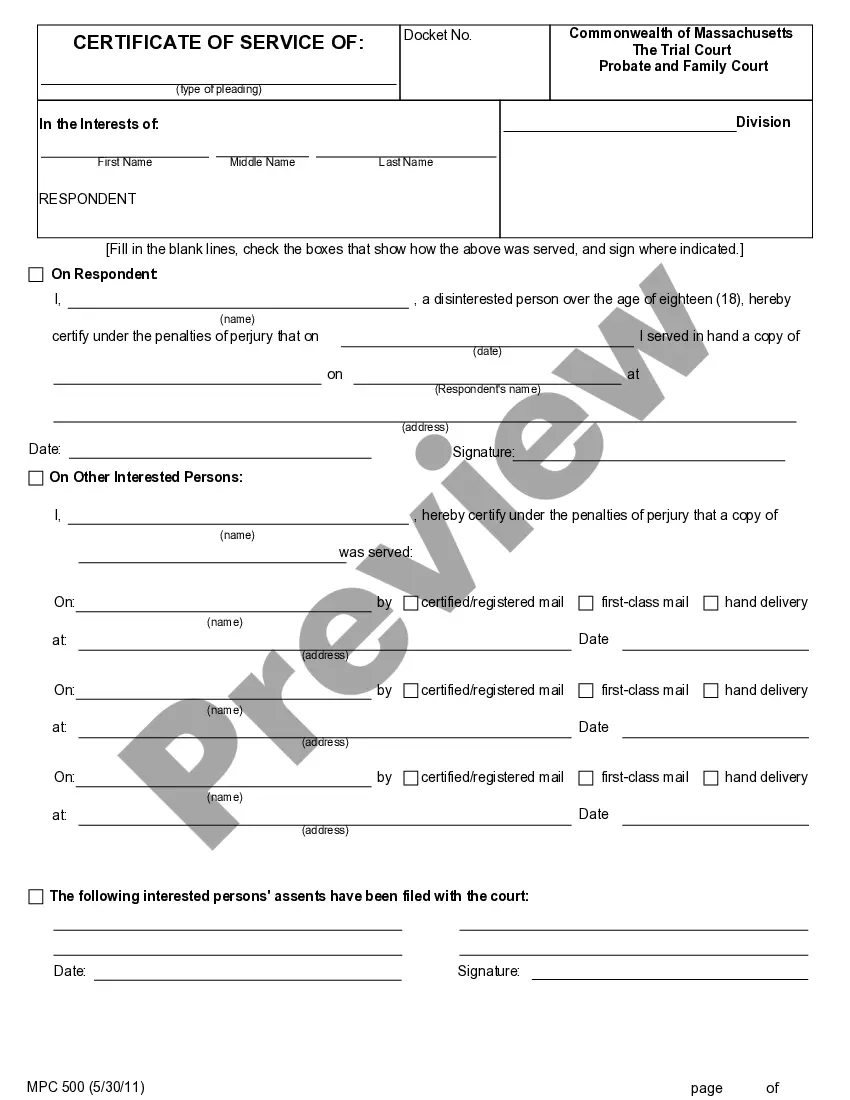
All pleadings have the same basic structure,5 starting with the caption at the top of the first page. The caption states the name of the court at the top and, on the right side of the pleading, the type of pleading,6 the case number (or docket number), and the name of the judge.
Pleading Paper Your name must start on line 1. The Court name and location must start on line 8. The caption of the case must start on line 11. You must have a footer with the title of the document. After the caption (the box with the name of the Plaintiff/Respondent) you can use the space as needed, using double spacing.
(1) "Pleading" means a petition, complaint, application, objection, answer, response, notice, request for orders, statement of interest, report, or account filed in proceedings under the Family Code.
There are several different types of pleadings in civil procedures, but all of them include the basic demand and response structure: Complaints. Answers to a complaint. Counterclaims. Answers to a counterclaim. Crossclaims. Answers to a crossclaim. Third-party complaints. Third-party complaint answers.
“Pleading paper” is the format required for filing documents in court when there is no pre-printed form available.
All pleadings have the same basic structure,5 starting with the caption at the top of the first page. The caption states the name of the court at the top and, on the right side of the pleading, the type of pleading,6 the case number (or docket number), and the name of the judge.
Pleading noun (ASKING) A kind of pleading came into her voice. He had became almost pathetic in his pleading. It was as though he had sensed her unspoken pleading. All his pleading was in vain.