Letter Acknowledgment Receipt Sample For Motor Vehicle In Dallas
Description
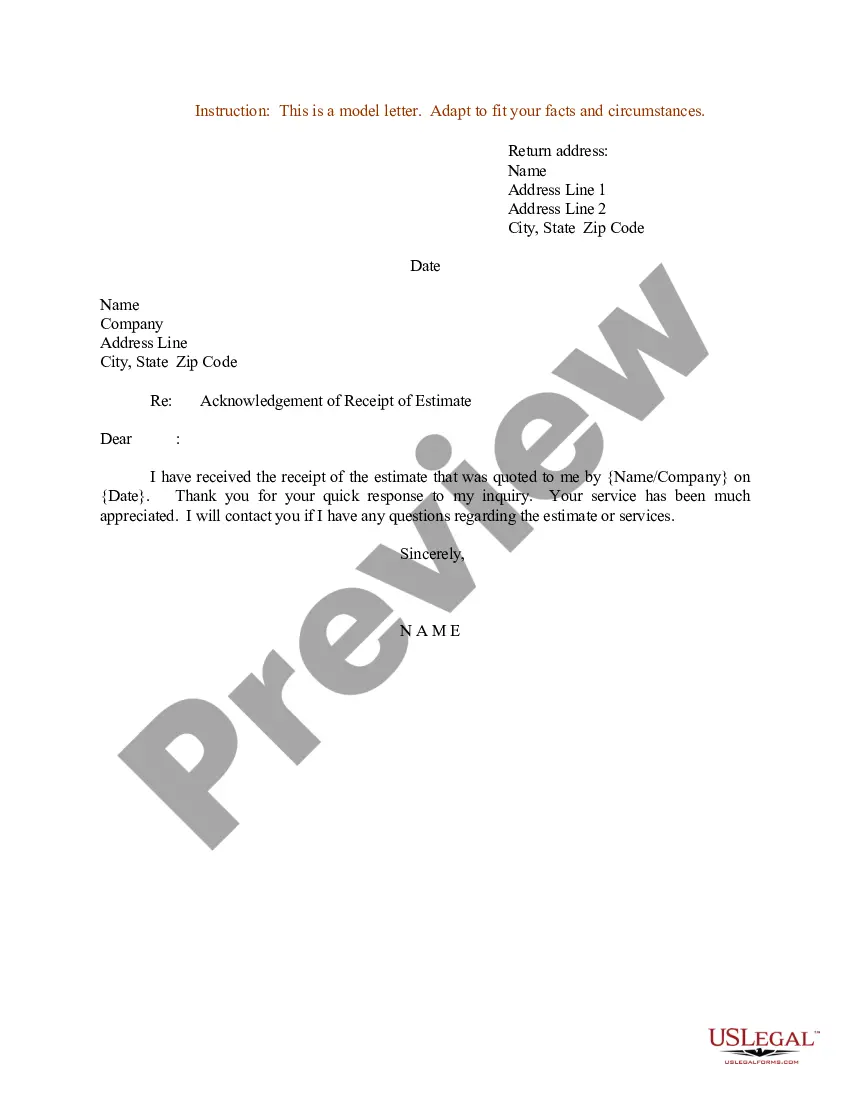



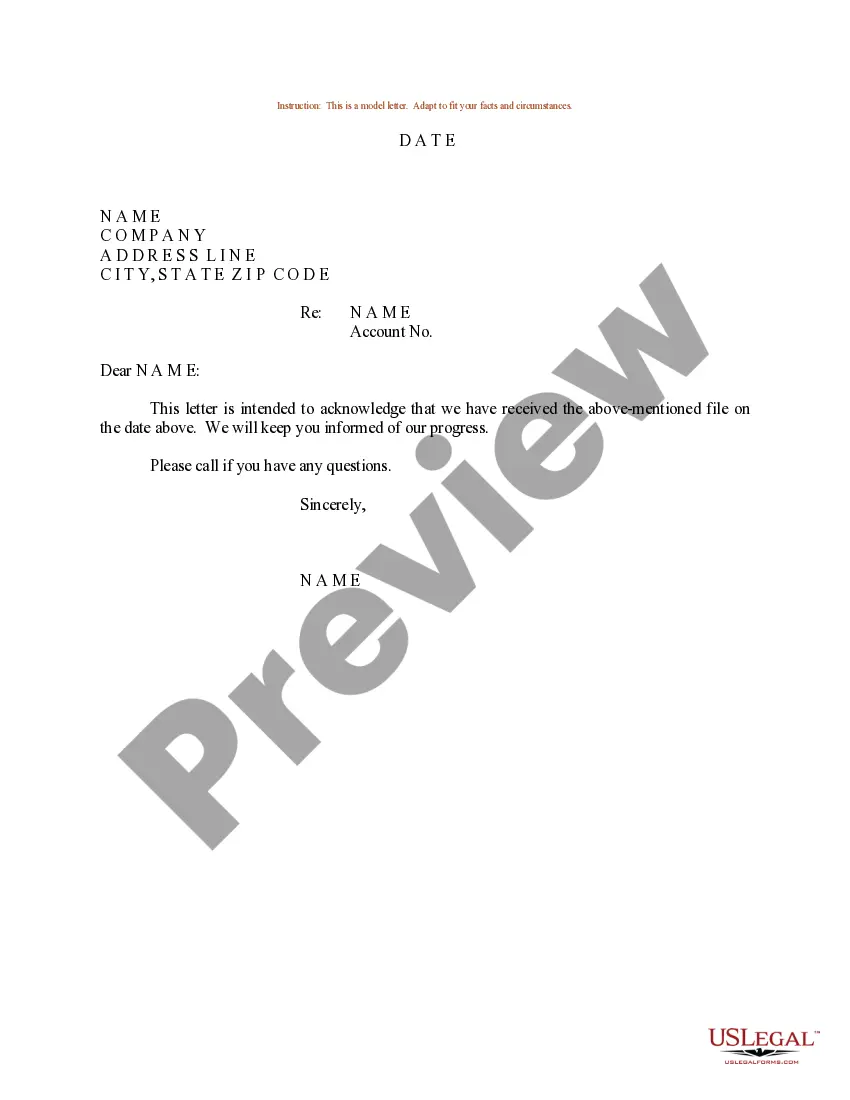
Get your form ready online
Our built-in tools help you complete, sign, share, and store your documents in one place.
Make edits, fill in missing information, and update formatting in US Legal Forms—just like you would in MS Word.
Download a copy, print it, send it by email, or mail it via USPS—whatever works best for your next step.
Sign and collect signatures with our SignNow integration. Send to multiple recipients, set reminders, and more. Go Premium to unlock E-Sign.
If this form requires notarization, complete it online through a secure video call—no need to meet a notary in person or wait for an appointment.
We protect your documents and personal data by following strict security and privacy standards.

Make edits, fill in missing information, and update formatting in US Legal Forms—just like you would in MS Word.

Download a copy, print it, send it by email, or mail it via USPS—whatever works best for your next step.

Sign and collect signatures with our SignNow integration. Send to multiple recipients, set reminders, and more. Go Premium to unlock E-Sign.

If this form requires notarization, complete it online through a secure video call—no need to meet a notary in person or wait for an appointment.

We protect your documents and personal data by following strict security and privacy standards.
Looking for another form?







Form popularity
FAQ
To make a notarized letter, begin with your contact details, create a clear message explaining the purpose of the letter. Include any legal language if necessary. Conclude with a formal closing and leave space for your signature. And that's how you write a statement that needs to be notarized.
For an affirmation: “Do you solemnly state, under penalty of perjury, that the evidence that you shall give in this issue (or matter) shall be the truth, the whole truth, and nothing but the truth?” (Code of Civil Procedure 2094a).
These details describe the facts the Notary is certifying in the particular notarization. An example of acknowledgment wording in the body might read: “… On (today's date), (signer name) personally appeared before me and acknowledged executing the document.”
This verbiage typically includes attestations confirming the signer's identity and willingness. It may also involve jurats, where the signer swears to the truthfulness of the content. Key components of notarization verbiage include: Acknowledgments: Statements confirming the signer's voluntary action without duress.
This “Ordinary Certificate of Acknowledgment,” as prescribed by the Texas Civil Practices and Remedies Code, Section 121.007, may be used when an individual is signing and acknowledging on his or her own behalf.
Now what do you fill in fill in the venue or county where you are notarizing the date you notarized.MoreNow what do you fill in fill in the venue or county where you are notarizing the date you notarized. Your name and title of office notary. Public next you fill in the name of your signer appearing.
The following is a sample oath: “Do you solemnly swear or affirm that you personally know this person as (name of person whose signature is to be notarized) , and that he/she is the person named in the document to be notarized (so help you God)?”
In most states, the notarial certificate must contain the venue, the words “acknowledged before me,” a statement that the signer “executed the instrument for the purposes stated therein,” and the notary's signature and seal.
One of the most common mistakes that notaries make is not printing or signing their name exactly as it appears on their notary commission.
Acknowledgment involves a public official, frequently a notary public. The party executing the legal instrument orally declares that the instrument is his or her act or deed, and the official prepares a certificate attesting to the declaration. Acknowledgments are distinct from jurats, verifications, and attestations.

