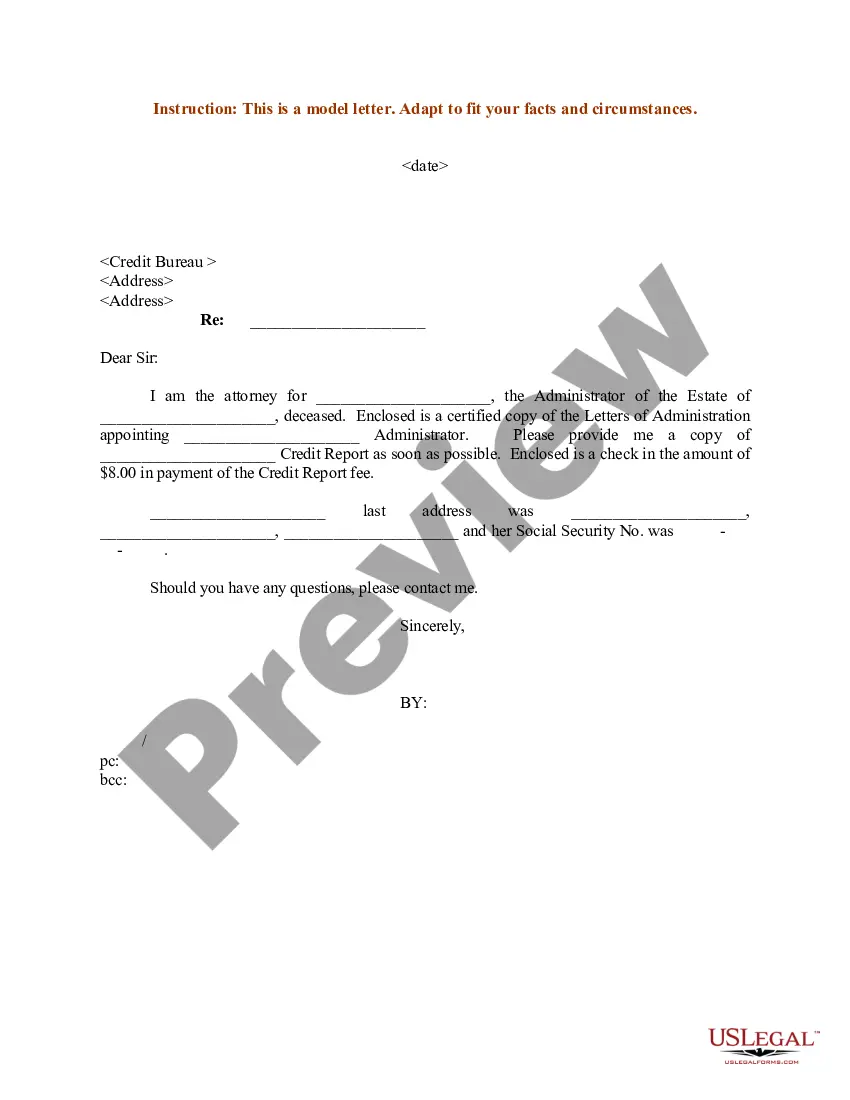
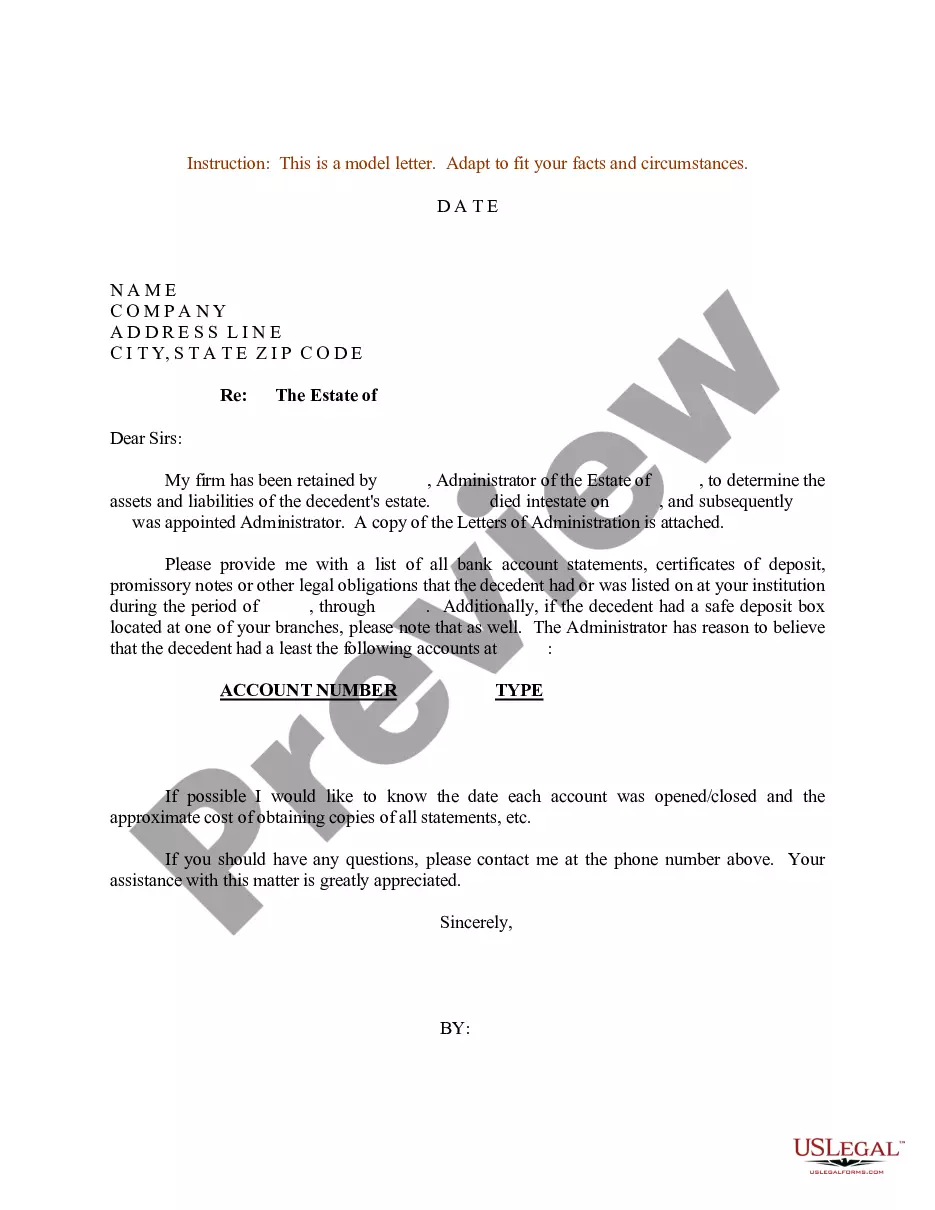
Letter To Close Account After Death Without Will In Tarrant
Description



Get your form ready online
Our built-in tools help you complete, sign, share, and store your documents in one place.
Make edits, fill in missing information, and update formatting in US Legal Forms—just like you would in MS Word.
Download a copy, print it, send it by email, or mail it via USPS—whatever works best for your next step.
Sign and collect signatures with our SignNow integration. Send to multiple recipients, set reminders, and more. Go Premium to unlock E-Sign.
If this form requires notarization, complete it online through a secure video call—no need to meet a notary in person or wait for an appointment.
We protect your documents and personal data by following strict security and privacy standards.

Make edits, fill in missing information, and update formatting in US Legal Forms—just like you would in MS Word.

Download a copy, print it, send it by email, or mail it via USPS—whatever works best for your next step.

Sign and collect signatures with our SignNow integration. Send to multiple recipients, set reminders, and more. Go Premium to unlock E-Sign.

If this form requires notarization, complete it online through a secure video call—no need to meet a notary in person or wait for an appointment.

We protect your documents and personal data by following strict security and privacy standards.
Looking for another form?





Form popularity
FAQ
The Typical Probate Timeline in Texas StepActionEstimated Timeline 1. Locating the Original Will 1-2 weeks 2. Initiation 1-2 weeks 3. Notification 2-4 weeks 4. Hearing Arrangement 3-5 weeks13 more rows •
Can I file an Affidavit of Heirship with the Probate courts? No, these documents should be filed in the County Clerk Official Public Records Office located in room B20 at 100 W. Weatherford, Fort Worth, Texas.
As stated, Texas law deems wills to be public records once admitted to probate court. This means that any member of the public can access and view the will by visiting the county clerk's office in the county where the will was probated.
Wills must be filed for probate within four years from the date of death of the person who drafted the will. Texas offers two types of probate processes: independent administration and court-supervised administration.
As stated, Texas law deems wills to be public records once admitted to probate court. This means that any member of the public can access and view the will by visiting the county clerk's office in the county where the will was probated.
Texas Probate Law: Beneficiaries are Entitled to Receive a Copy of the Will. In Texas, beneficiaries are entitled to receive a copy of the will as part of the probate process.
Dependent on the jurisdiction, administrators hold the power to both sell and lease a decedent's real and personal property. For instance, a decedent may request the deed of their apartment building be transferred to their surviving spouse.
The terms “administrator and “executor” are often used interchangeably, but there's a subtle difference. An administrator can refer to anyone appointed to manage the affairs of a deceased person. An executor is a specific type of administrator named in a person's will to manage their estate after they pass away.
How To File for Executor of Estate Without Will? Find out your place in line. Obtain waivers from other family members. Contact the court. File your administration petition. Go to the probate hearing. Get a probate bond.
Your valid ID, such as a state-issued driver's license or ID card, U.S. passport, or military ID. Proof of death, such as certified copies of the death certificate. Documentation about the account and its owner, including the deceased's full legal name, Social Security number, and the bank account number.
