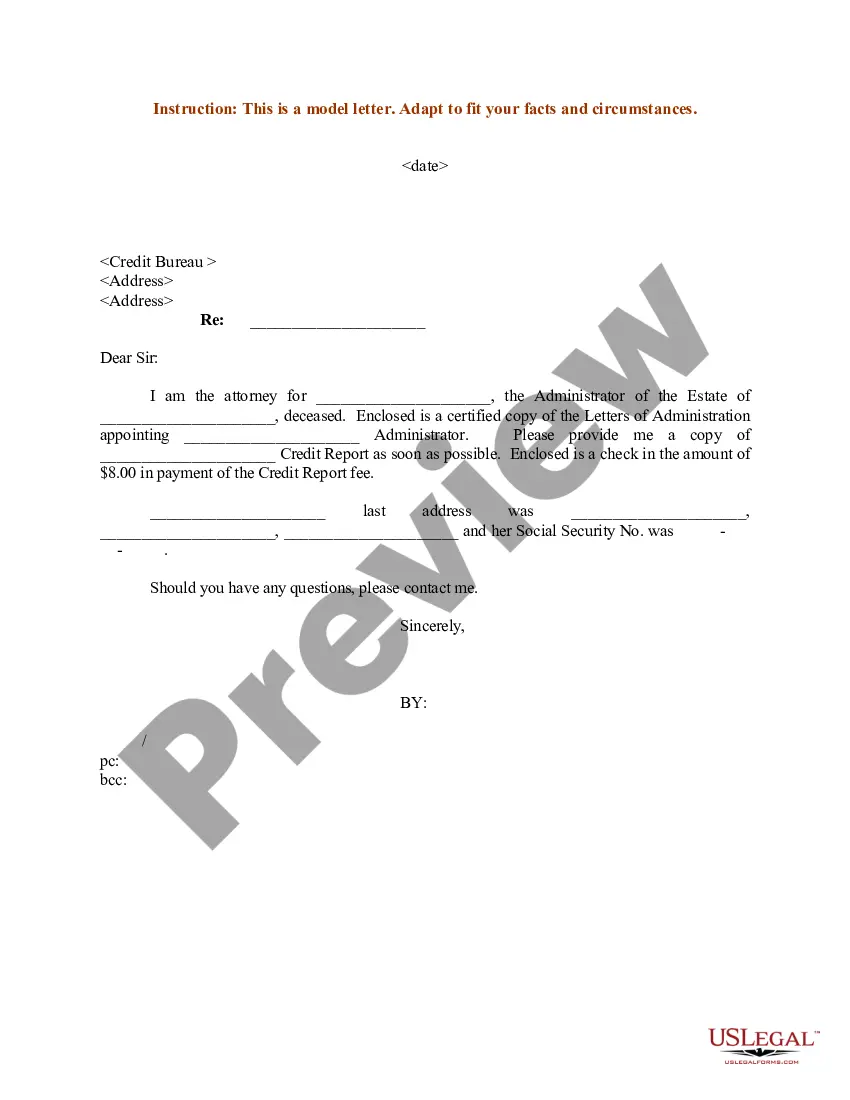
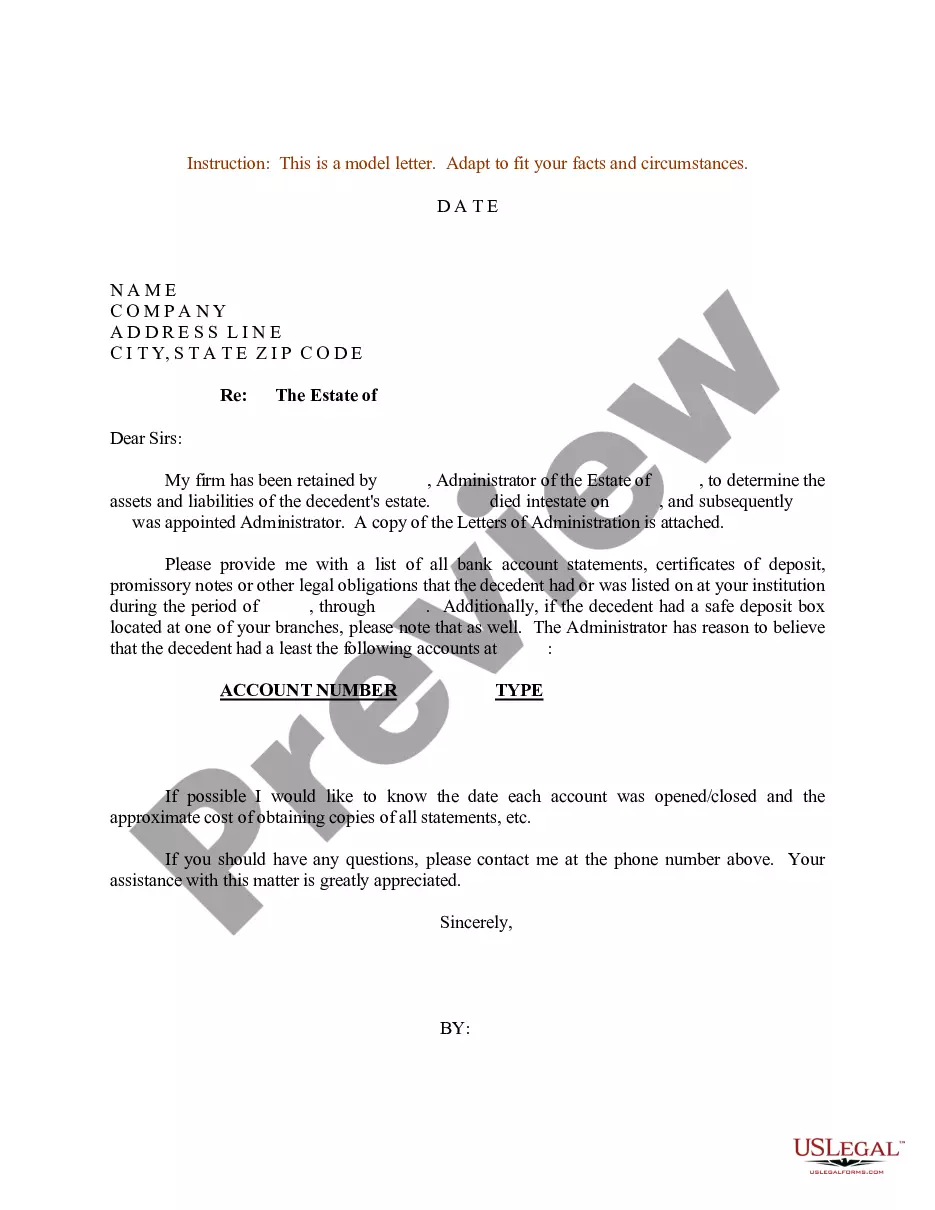
Sample Letter To Close Trust Account For Deceased Person In Montgomery
Description



Get your form ready online
Our built-in tools help you complete, sign, share, and store your documents in one place.
Make edits, fill in missing information, and update formatting in US Legal Forms—just like you would in MS Word.
Download a copy, print it, send it by email, or mail it via USPS—whatever works best for your next step.
Sign and collect signatures with our SignNow integration. Send to multiple recipients, set reminders, and more. Go Premium to unlock E-Sign.
If this form requires notarization, complete it online through a secure video call—no need to meet a notary in person or wait for an appointment.
We protect your documents and personal data by following strict security and privacy standards.

Make edits, fill in missing information, and update formatting in US Legal Forms—just like you would in MS Word.

Download a copy, print it, send it by email, or mail it via USPS—whatever works best for your next step.

Sign and collect signatures with our SignNow integration. Send to multiple recipients, set reminders, and more. Go Premium to unlock E-Sign.

If this form requires notarization, complete it online through a secure video call—no need to meet a notary in person or wait for an appointment.

We protect your documents and personal data by following strict security and privacy standards.
Looking for another form?





Form popularity
FAQ
Sample Estate Closing Letter to Beneficiaries I am writing to inform you of the finalization of Deceased's Name's estate, for which I have served as the executor. Asset Distribution: You will receive Description of Assets as part of your inheritance. These assets will be transferred to you by Transfer Date.
Below, we have broken the process down into manageable steps. Step 1: Start with a Proper Salutation. Step 2: Introduce Yourself and Your Relationship to the Deceased. Step 3: Clearly State the Purpose of the Letter. Step 4: Provide Detailed Information about the Inheritance.
In terms of content, an Estate distribution letter should include: the deceased's personal details; a detailed and complete list of all assets and liabilities; the Beneficiary names and the details of their respective inheritances; any details on debt settlement and creditor communication;
A good letter of instruction should contain the following information: A complete list of all assets. The whereabouts of any tangible assets that are not readily accessible. Necessary information about all liquid assets, including bank, brokerage, retirement, and investment accounts.
If probate is not filed within the given period, Alabama law will treat the estate as intestate. In other words, it will be treated as if there were no will (even if one exists), and the distribution of assets will follow the state's succession laws.
Steps for Managing a Trust After Death Locate and Review Relevant Documents. Provide Notice to Beneficiaries and Heirs About Trust Administration. Gather and Value Trust Assets. Satisfy Grantor's Debts. Prudently Manage and Invest Trust Assets. Track Down Titles to Trust Assets. Account to Beneficiaries and Heirs.
Each state has varying rules about probate administration. As of 2024, in Alabama, if an estate is valued at $36,030 or more or it includes real estate, the estate will go through the normal probate administration process.
WHEN MUST A WILL BE FILED FOR PROBATE? To be effective, a Will must be filed for probate within five years of the date of the testator's death.
In order to obtain Letters of Administration, you must first submit the following documents to the probate courts: The person's death certificate. Will (if available) Probate court petition. A brief statement of the person's assets. List of interested persons. A bond to serve as personal representative.
Generally, Wills must be filed for probate in the county where the deceased lived. WHEN MUST A WILL BE FILED FOR PROBATE? To be effective, a Will must be filed for probate within five years of the date of the testator's death.