Sample Letter To Close Trust Account With Attorney In Minnesota
Description




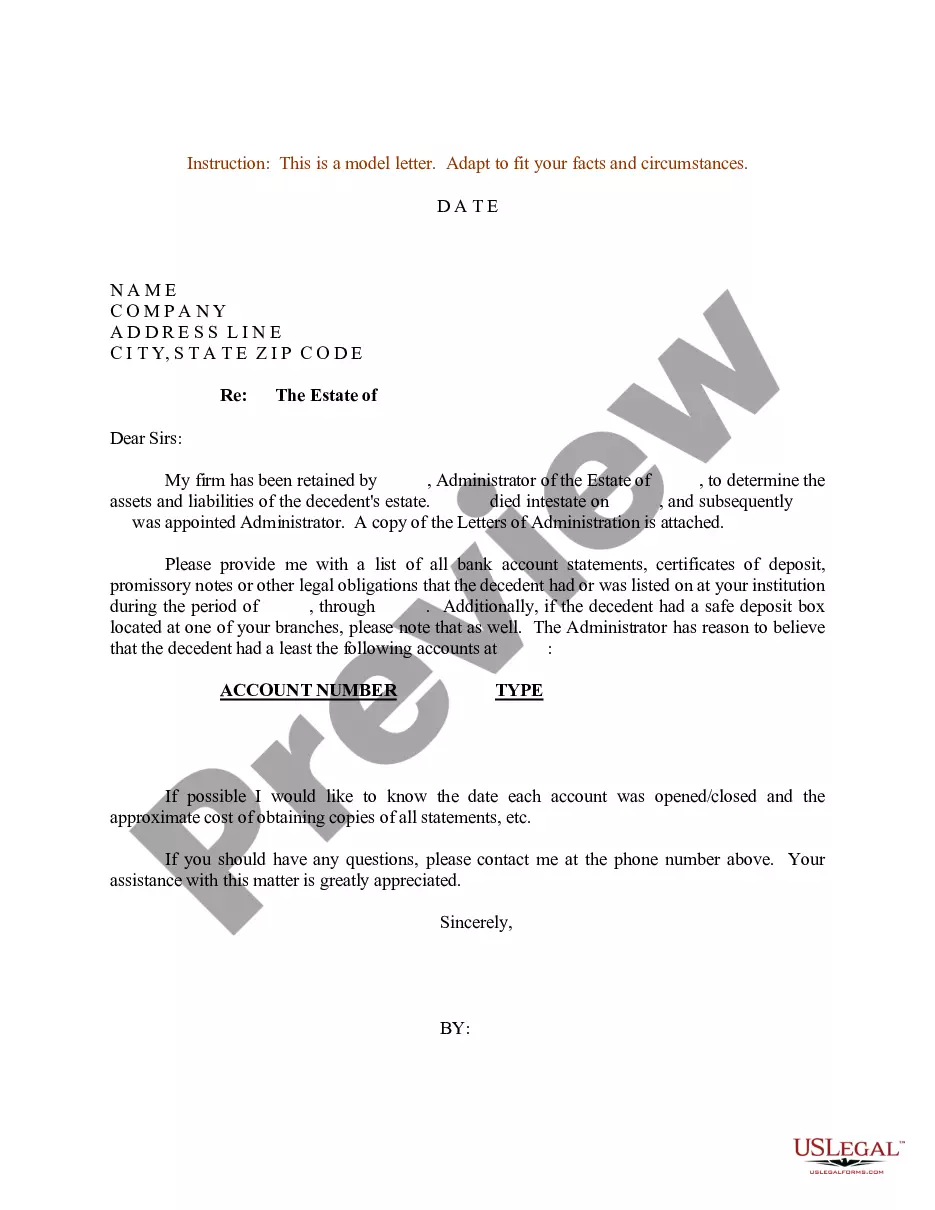
Get your form ready online
Our built-in tools help you complete, sign, share, and store your documents in one place.
Make edits, fill in missing information, and update formatting in US Legal Forms—just like you would in MS Word.
Download a copy, print it, send it by email, or mail it via USPS—whatever works best for your next step.
Sign and collect signatures with our SignNow integration. Send to multiple recipients, set reminders, and more. Go Premium to unlock E-Sign.
If this form requires notarization, complete it online through a secure video call—no need to meet a notary in person or wait for an appointment.
We protect your documents and personal data by following strict security and privacy standards.

Make edits, fill in missing information, and update formatting in US Legal Forms—just like you would in MS Word.

Download a copy, print it, send it by email, or mail it via USPS—whatever works best for your next step.

Sign and collect signatures with our SignNow integration. Send to multiple recipients, set reminders, and more. Go Premium to unlock E-Sign.

If this form requires notarization, complete it online through a secure video call—no need to meet a notary in person or wait for an appointment.

We protect your documents and personal data by following strict security and privacy standards.
Looking for another form?



Form popularity
FAQ
The trust deed may stipulate that a simple resolution will suffice for winding up the trust, but more commonly a new deed is necessary to close the trust and distribute the trust assets. The deed should be drawn up by a solicitor and signatures must be witnessed.
Minnesota allows dynasty trusts, but the law creates a simple limitation that prevents these trusts from lasting forever. This is known as a rule against perpetuities. In Minnesota, a dynasty trust can only last until 21 years following the death of the last beneficiary who was alive when the trust was created.
Termination by Consent: If all beneficiaries consent and it does not contradict a material purpose of the trust, the trust can be terminated. Court Approval: In situations where beneficiaries cannot consent or there are disputes, a court can approve the termination.
There are four main approaches: Vesting. The easiest way to dissolve a trust is to have a vesting date. Revoked. A trust may contain a provision which allows for the trustee or settlor to revoke the deed. Consent. In some instances, a trust can be dissolved upon the consent of the beneficiaries. Court Termination.
To cancel a trust, trustees must first comply with the requirements in the trust deed, settle all financial and legal obligations, and distribute assets to beneficiaries. They then apply for deregistration through the Master of the High Court, which finalizes the trust's termination once all requirements are fulfilled.
A lawyer must comply with applicable law requiring notice to or permission of a tribunal when terminating a representation. When ordered to do so by a tribunal, a lawyer shall continue representation notwithstanding good cause for terminating the representation.
15.01Amendments A party shall plead in response to an amended pleading within the time remaining for response to the original pleading or within 14 days after service of the amended pleading, whichever period may be longer, unless the court otherwise orders.
A lawyer must withdraw earned fees and any other funds belonging to the lawyer or the law firm from the trust account within a reasonable time after the fees have been earned or entitlement to the funds has been established and the lawyer must provide the client or third person with: (i) written notice of the time, ...
The complimentary close is a short and polite remark that ends your letter. The close begins at the same justification as your date and one line after the last body paragraph. Capitalize the first word of your closing (Thank you) and leave four lines for a signature between the close and the sender's name.
The purpose of a closure letter is to confirm that a client's matter has been wrapped up, which means your involvement in that matter is now over.