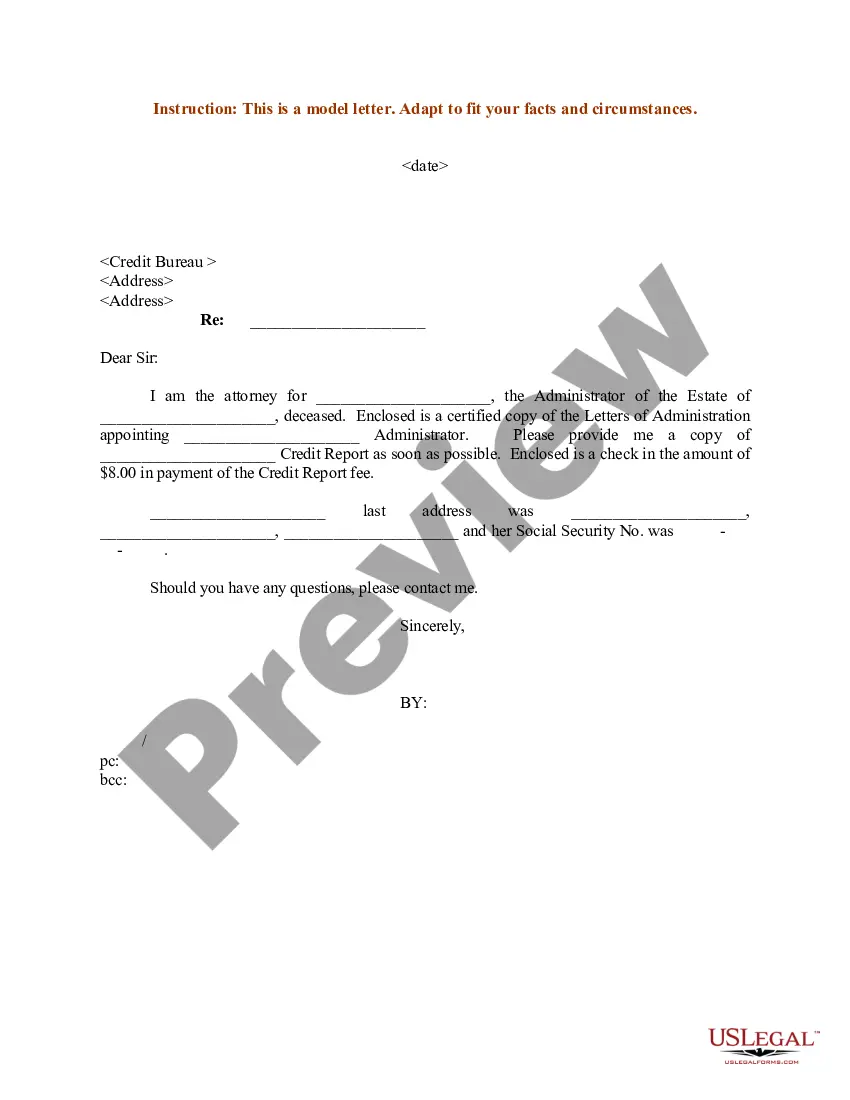
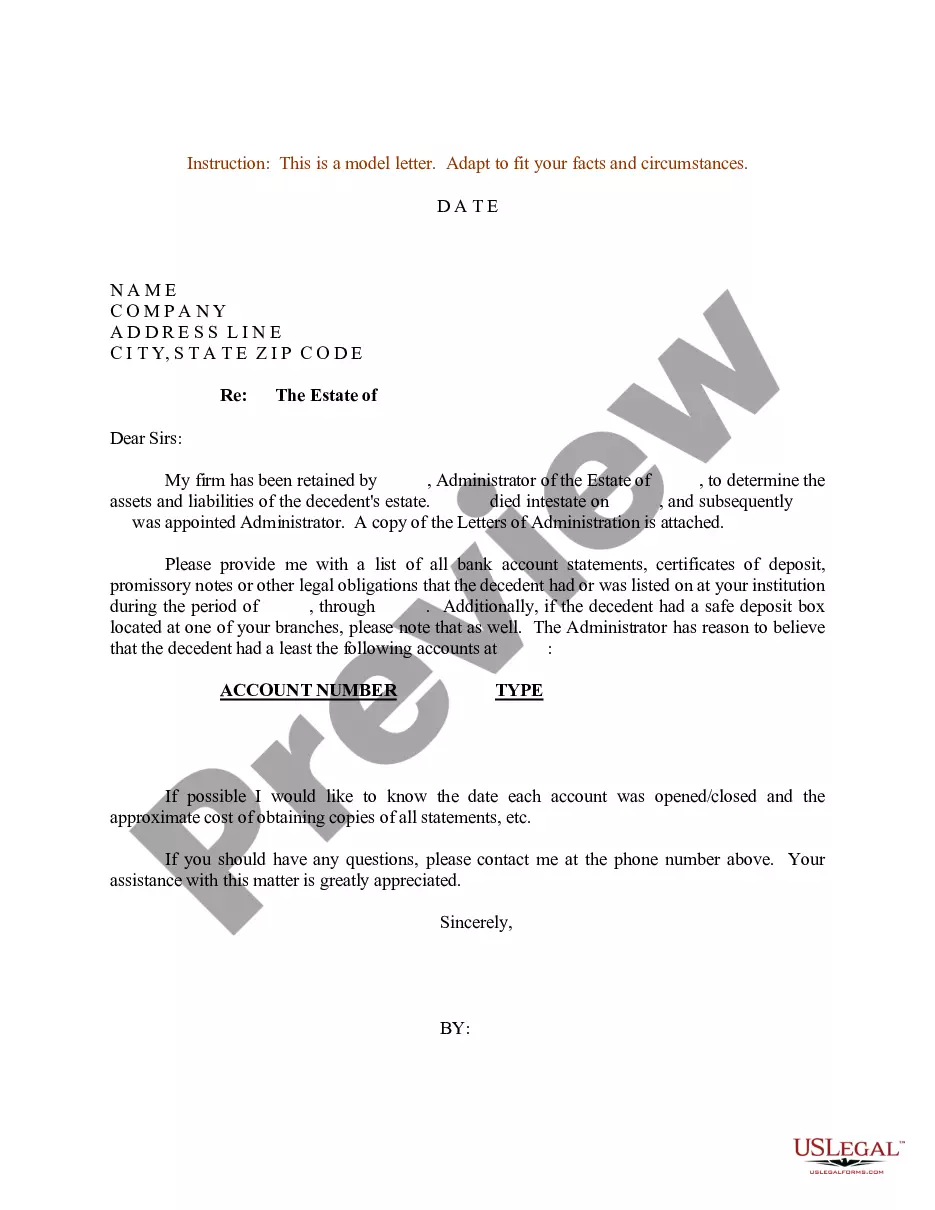
Decedent Account Bank Format In Mecklenburg
Description



Get your form ready online
Our built-in tools help you complete, sign, share, and store your documents in one place.
Make edits, fill in missing information, and update formatting in US Legal Forms—just like you would in MS Word.
Download a copy, print it, send it by email, or mail it via USPS—whatever works best for your next step.
Sign and collect signatures with our SignNow integration. Send to multiple recipients, set reminders, and more. Go Premium to unlock E-Sign.
If this form requires notarization, complete it online through a secure video call—no need to meet a notary in person or wait for an appointment.
We protect your documents and personal data by following strict security and privacy standards.

Make edits, fill in missing information, and update formatting in US Legal Forms—just like you would in MS Word.

Download a copy, print it, send it by email, or mail it via USPS—whatever works best for your next step.

Sign and collect signatures with our SignNow integration. Send to multiple recipients, set reminders, and more. Go Premium to unlock E-Sign.

If this form requires notarization, complete it online through a secure video call—no need to meet a notary in person or wait for an appointment.

We protect your documents and personal data by following strict security and privacy standards.
Looking for another form?







Form popularity
FAQ
The executor of the estate needs to follow these basic steps. Step 1: Begin the probate process. Step 2: Obtain a tax ID number for the estate account. Step 3: Bring all required documents to the bank. Step 4: Open the estate account.
The following information is needed to open an Estate Account: Original or Certified copy of appointment papers - including any of the following as applicable. Letters of Testamentary. Probate court documents. Domiciliary letters. Obtain and present an Employer Identification Number (EIN) issued for the estate.
Generally, North Carolina law expects the executor to settle the estate within a reasonable time frame, typically ranging from six to 18 months or longer for complex cases.
The best banks to open an estate account Schwab One Estate Account. Fidelity Estate Account. Estate Services. USAA Survivor Relations.
What Do I Need to Do When I'm Opening an Estate Bank Account? The death certificate. The person's Social Security number. An Employer Identification Number for the estate, since the estate is considered a separate entity — it's not the same as the person who died. Other documents needed by your bank.
How to open an estate account Step 1: Begin the probate process. The steps for beginning this process depend on the state in which the deceased person resided. Step 2: Obtain a tax ID number for the estate account. Step 3: Bring all required documents to the bank. Step 4: Open the estate account.
Setting up a TOD account is relatively easy, and it's usually as simple as filling out a TOD designation form provided by your broker or financial institution. This form will ask you to name the beneficiaries and specify the proportions of assets each will receive upon your death.
Once the executor pays outstanding taxes and debts, distributes all assets, and completes all other tasks necessary to close an estate, the court requires filing a Final Account (Form AOC-E-506).
Since probate is not automatically triggered after someone's death in North Carolina, the general recommendation is that the process is opened by a probate estate representative within 60 days after death.
