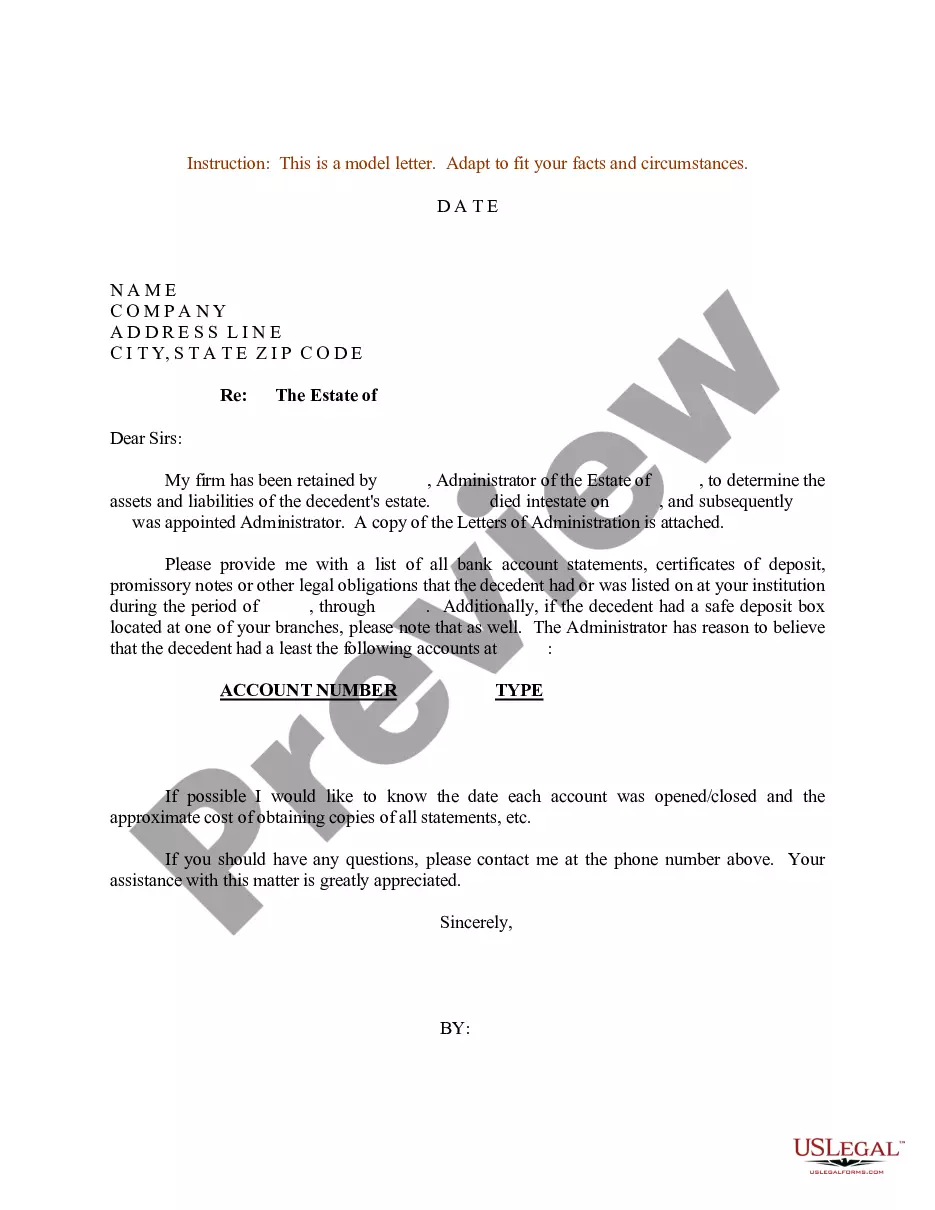
Date Of Death Balance Letter Format In Illinois
Description




Get your form ready online
Our built-in tools help you complete, sign, share, and store your documents in one place.
Make edits, fill in missing information, and update formatting in US Legal Forms—just like you would in MS Word.
Download a copy, print it, send it by email, or mail it via USPS—whatever works best for your next step.
Sign and collect signatures with our SignNow integration. Send to multiple recipients, set reminders, and more. Go Premium to unlock E-Sign.
If this form requires notarization, complete it online through a secure video call—no need to meet a notary in person or wait for an appointment.
We protect your documents and personal data by following strict security and privacy standards.

Make edits, fill in missing information, and update formatting in US Legal Forms—just like you would in MS Word.

Download a copy, print it, send it by email, or mail it via USPS—whatever works best for your next step.

Sign and collect signatures with our SignNow integration. Send to multiple recipients, set reminders, and more. Go Premium to unlock E-Sign.

If this form requires notarization, complete it online through a secure video call—no need to meet a notary in person or wait for an appointment.

We protect your documents and personal data by following strict security and privacy standards.
Looking for another form?

Form popularity
FAQ
How to fill out a small estate affidavit in Illinois Fill in your name and information in #1. Complete the information about the decedent in #2-4. Mark either #7a or #7b depending on what is true. Complete #9a to indicate the names of the spouse and children if any.
The date of death value is the exact balance in the deceased's bank accounts at the time of their death. This figure is vital for several reasons: For Tax Purposes: It's essential in calculating any estate taxes due and may affect the income tax returns of the heirs.
A date of death value letter provides account balance information on the date the account owner passed away. The date of death letter may only be requested by the decedent account's authorized representative: joint account owner, payable on death beneficiary, executor, estate administrator, or small estate beneficiary.
The Petition for Letters of Office is the proposed representative's (called the “petitioner”) formal request that the court appoint him or her as representative of the decedent's estate. It is generally the first step in the formal probate process in Illinois.
