Account Estate Bank Foreclosure In Florida
Description




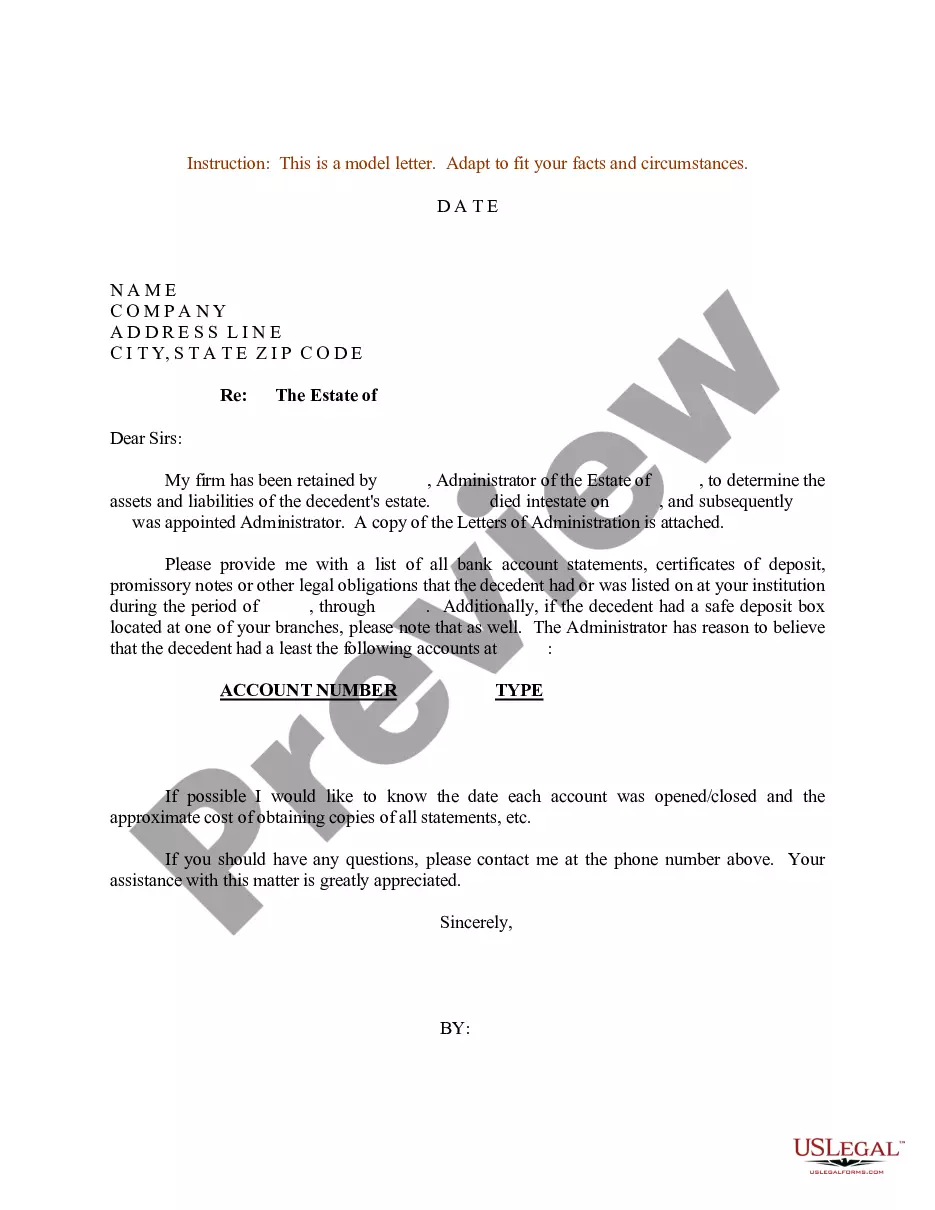
Get your form ready online
Our built-in tools help you complete, sign, share, and store your documents in one place.
Make edits, fill in missing information, and update formatting in US Legal Forms—just like you would in MS Word.
Download a copy, print it, send it by email, or mail it via USPS—whatever works best for your next step.
Sign and collect signatures with our SignNow integration. Send to multiple recipients, set reminders, and more. Go Premium to unlock E-Sign.
If this form requires notarization, complete it online through a secure video call—no need to meet a notary in person or wait for an appointment.
We protect your documents and personal data by following strict security and privacy standards.

Make edits, fill in missing information, and update formatting in US Legal Forms—just like you would in MS Word.

Download a copy, print it, send it by email, or mail it via USPS—whatever works best for your next step.

Sign and collect signatures with our SignNow integration. Send to multiple recipients, set reminders, and more. Go Premium to unlock E-Sign.

If this form requires notarization, complete it online through a secure video call—no need to meet a notary in person or wait for an appointment.

We protect your documents and personal data by following strict security and privacy standards.
Looking for another form?







Form popularity
FAQ
The lender must sue the borrower and obtain an order to foreclose. Depending on the court schedule and load, it normally takes from 180 to 200 days to complete the foreclosure process in Florida. If contested by the borrower or if the borrower files for bankruptcy, this process may be delayed further.
The Length of the Florida Foreclosure Process Timeline can vary. Generally, it lasts between 8 to 14 months.
If the borrower is more than 120 days late on payments, the lender may file a notice with the court to start the foreclosure process. However, Florida homeowners retain the right to stop the foreclosure process at any point until the sale date by paying off the owed amount.
If you're three months late on your mortgage payments, you will find that you incur each of the consequences from being two months late: late fees, credit damage, and stern, formal communiqués from your lender, who will almost certainly initiate the pre-foreclosure process.
A person's home, and its associated mortgage, are counted among these assets and considered as part of the deceased's estate. Unfortunately, the bank is still able to foreclose on a property during probate as long as it can prove that it has the legal right to proceed.
You'll need to act quickly to claim surplus funds after the foreclosure sale. A limited amount of time will be available for you to get the funds. The exact amount of time you'll get depends on state procedures. You can apply to either the foreclosure trustee or the court to get the foreclosure excess proceeds.
How to Claim Surplus Funds From a Foreclosure in Florida Provide Proof of Ownership. This step of the process is usually satisfied by providing a copy of the title that shows that you owned the property last. Verification of Surplus Funds. Reach out to Trustee. Submit a Claim For the Surplus Funds. Hearings and Motions.
How to Claim Surplus Funds From a Foreclosure in Florida Provide Proof of Ownership. This step of the process is usually satisfied by providing a copy of the title that shows that you owned the property last. Verification of Surplus Funds. Reach out to Trustee. Submit a Claim For the Surplus Funds. Hearings and Motions.
However, as the life tenant, you'll lose the ability to sell or mortgage your home without your heir's permission. Since you cannot reverse a life estate without the consent of both the life tenant and remainderman, it's recommended to understand each facet of the contract before committing to it.
