1031 Exchange Agreement Form With Us In Wayne
Description

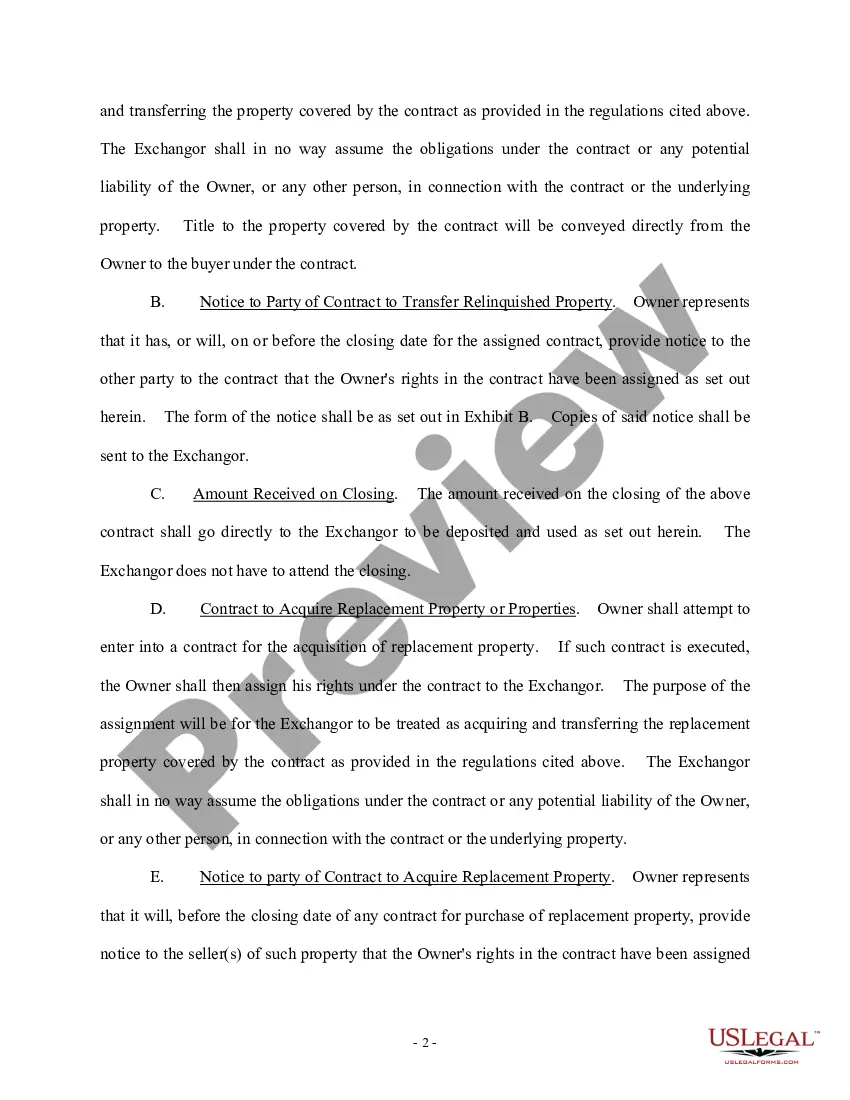
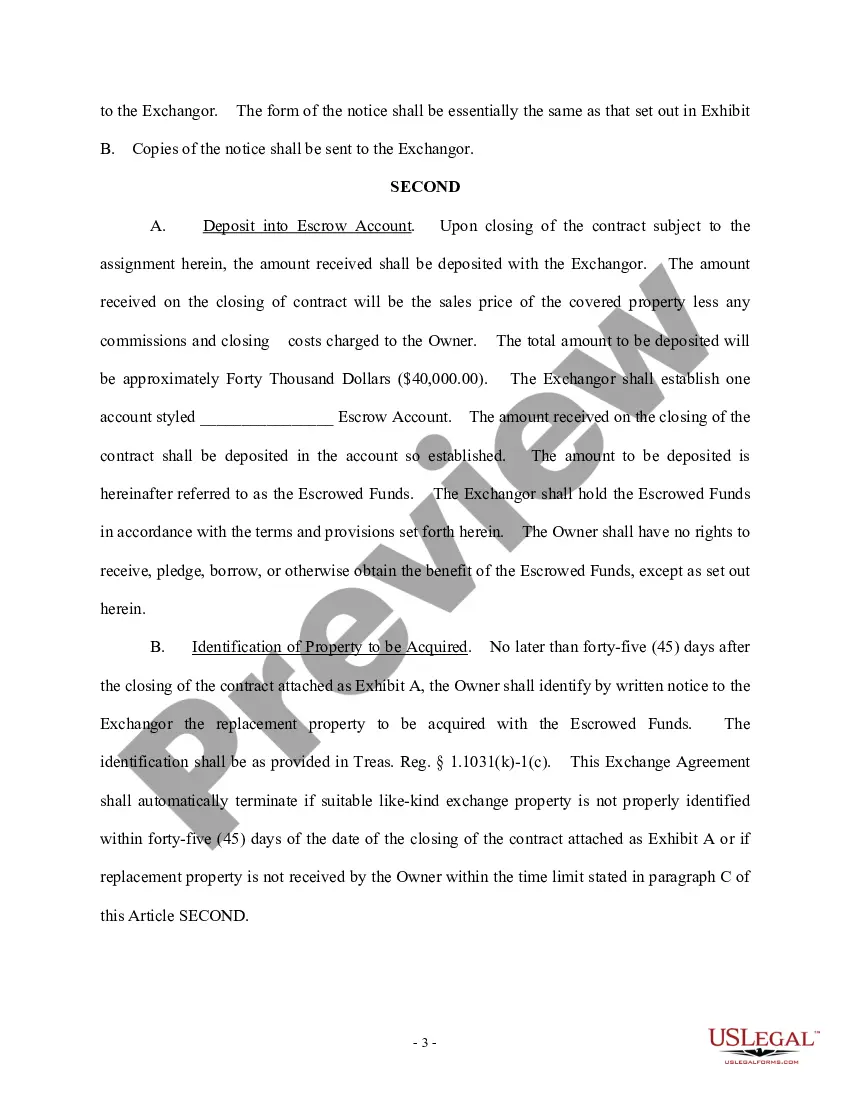
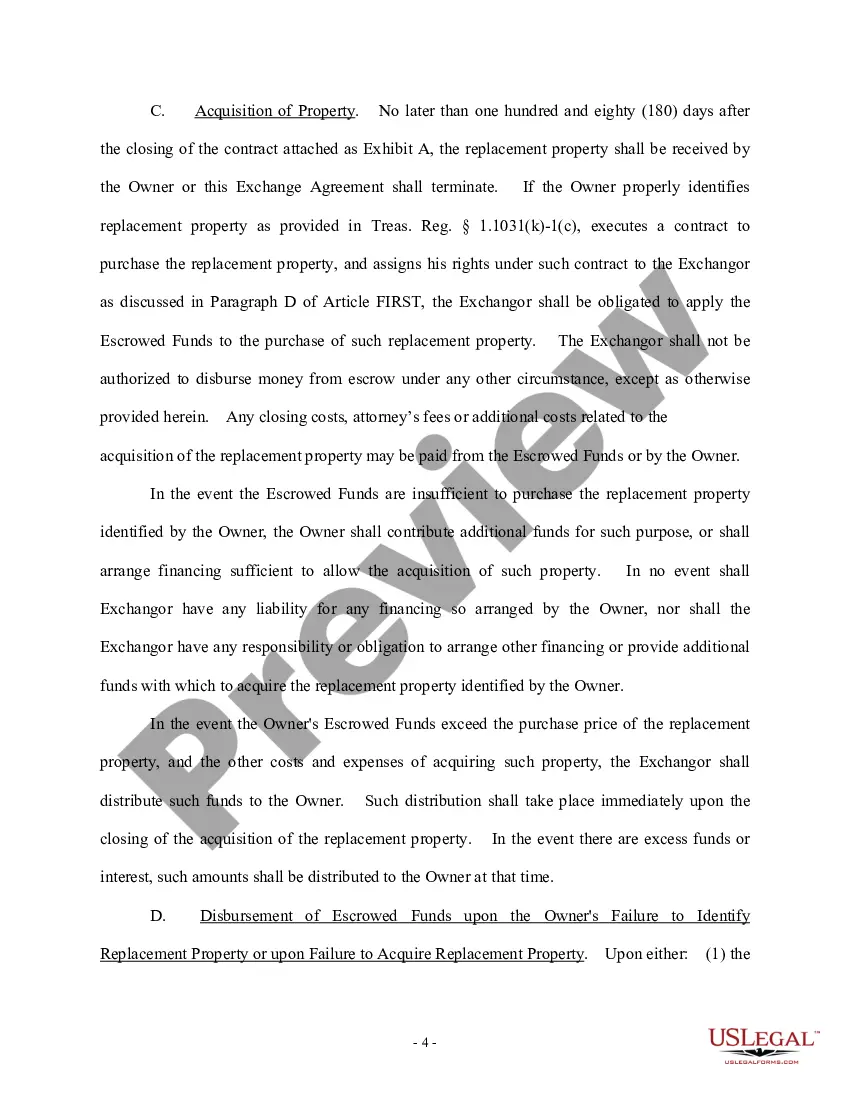
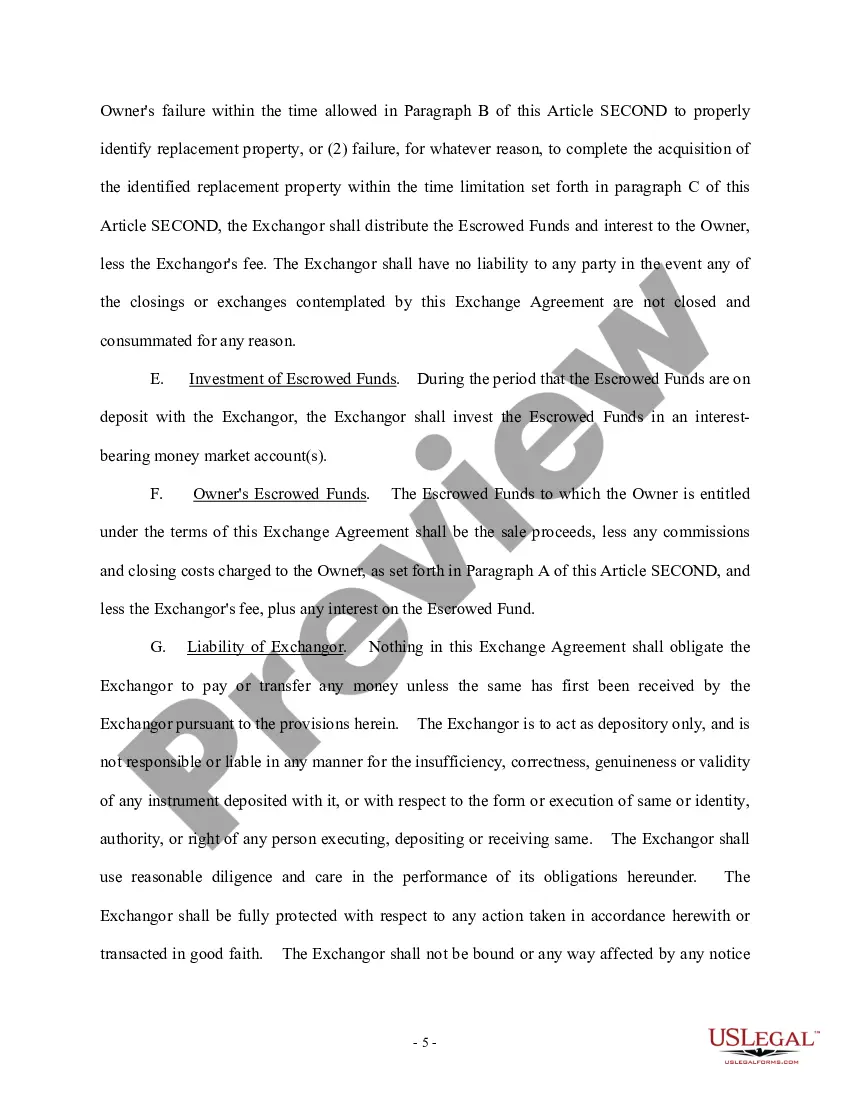
Get your form ready online
Our built-in tools help you complete, sign, share, and store your documents in one place.
Make edits, fill in missing information, and update formatting in US Legal Forms—just like you would in MS Word.
Download a copy, print it, send it by email, or mail it via USPS—whatever works best for your next step.
Sign and collect signatures with our SignNow integration. Send to multiple recipients, set reminders, and more. Go Premium to unlock E-Sign.
If this form requires notarization, complete it online through a secure video call—no need to meet a notary in person or wait for an appointment.
We protect your documents and personal data by following strict security and privacy standards.

Make edits, fill in missing information, and update formatting in US Legal Forms—just like you would in MS Word.

Download a copy, print it, send it by email, or mail it via USPS—whatever works best for your next step.

Sign and collect signatures with our SignNow integration. Send to multiple recipients, set reminders, and more. Go Premium to unlock E-Sign.

If this form requires notarization, complete it online through a secure video call—no need to meet a notary in person or wait for an appointment.

We protect your documents and personal data by following strict security and privacy standards.
Looking for another form?








Form popularity
FAQ
While there are no definitive rules on a holding period for a 1031 exchange property, it has made rulings indicating that a holding period of two years has been considered sufficient in order to meet the qualified use test.
The 2-Year Holding Period Rule is part of the IRS procedures regulating 1031 exchanges. It stipulates that you must hold your Replacement Property (new property) for a minimum of two years after acquiring it.
Section 1031(f) provides that if a Taxpayer exchanges with a related party then the party who acquired the property in the exchange must hold it for 2 years or the exchange will be disallowed.
There are certain rare exceptions to the two-year rule: if the disposition of the replacement property occurs “after the earlier of the death of the taxpayer or the death of the related person,” it may be acceptable to dispose of the replacement property within two years.
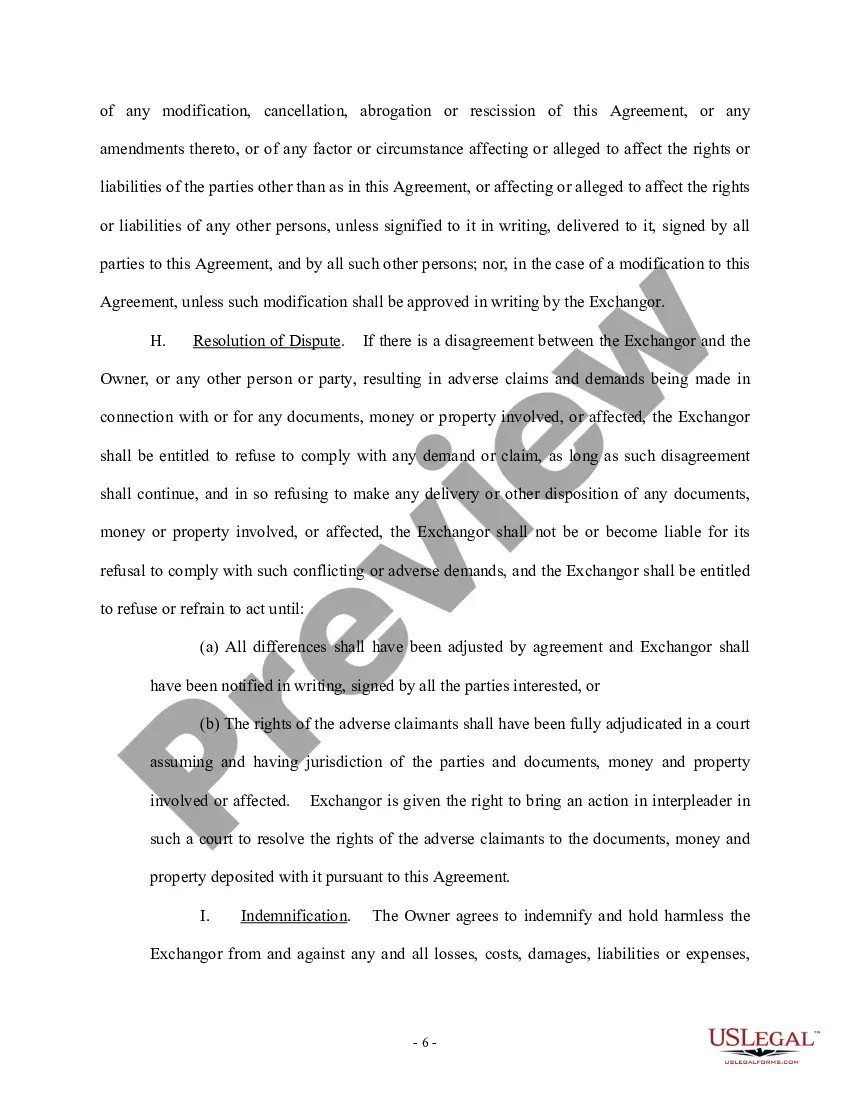
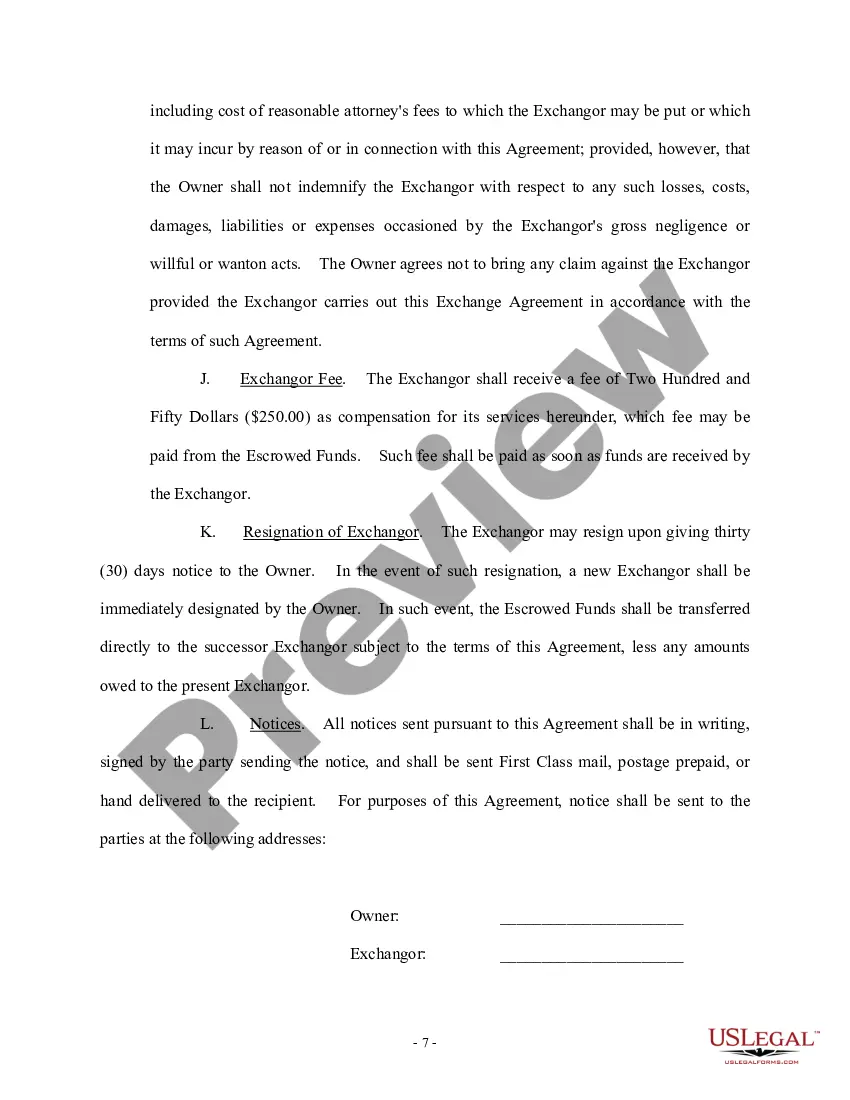
A Qualified Intermediary, or QI, is an independent third party to the transaction whose function is to prepare the documents necessary to create the exchange, as well as to act as the independent escrow agent for the exchange funds.
Detailed record-keeping and allowing your replacement property to have its season as an investment asset is imperative. The exchange can be disallowed if the IRS suspects that you completed the 1031 exchange, intending to move in immediately. It's best to wait at least two years.
How to Do a 1031 Exchange Choose a qualified intermediary to coordinate the exchange. Sell your current real estate property. You have 45 days to identify potential replacement properties. You have 180 days to close on a replacement property. File IRS Form 8824.
