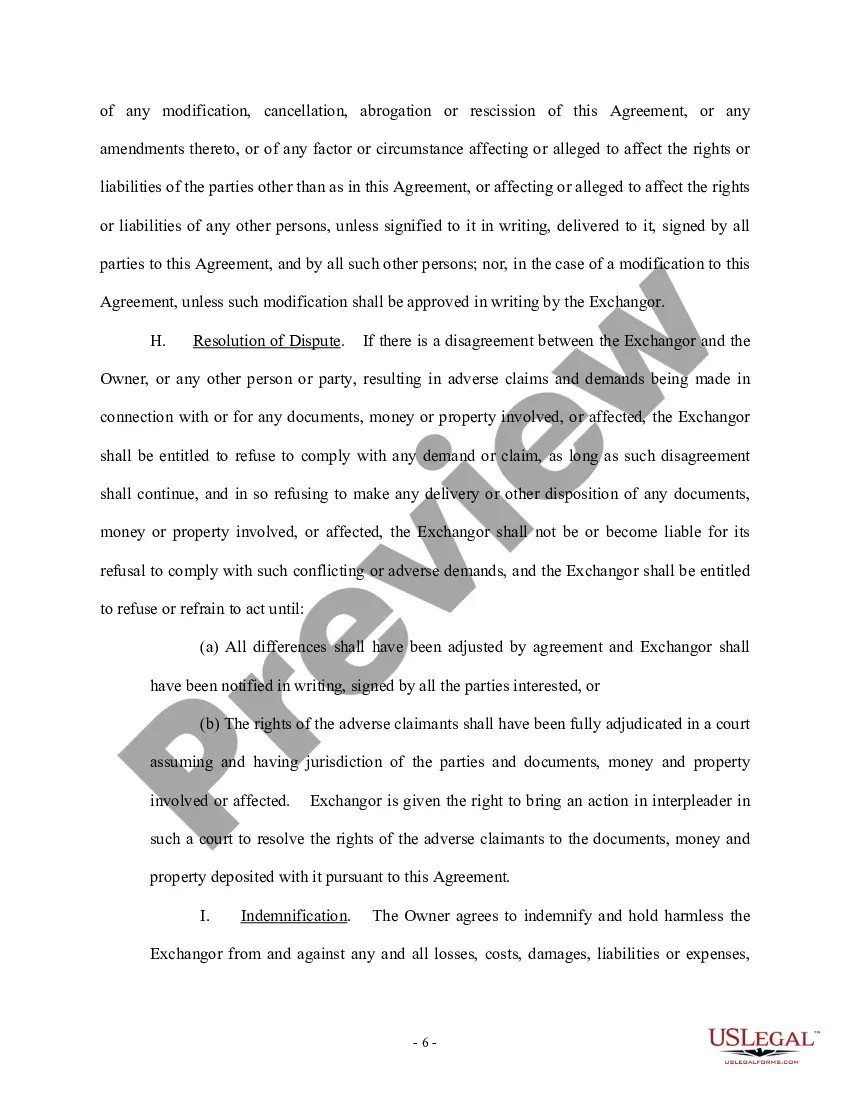
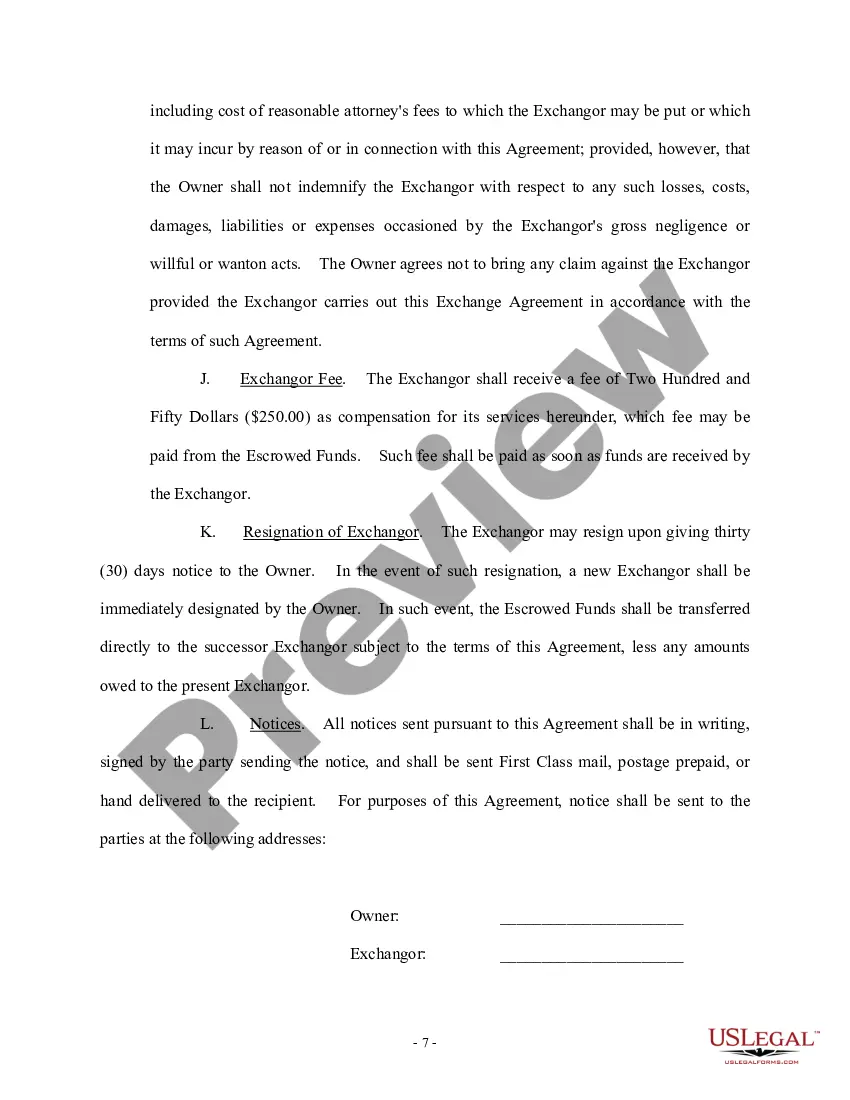
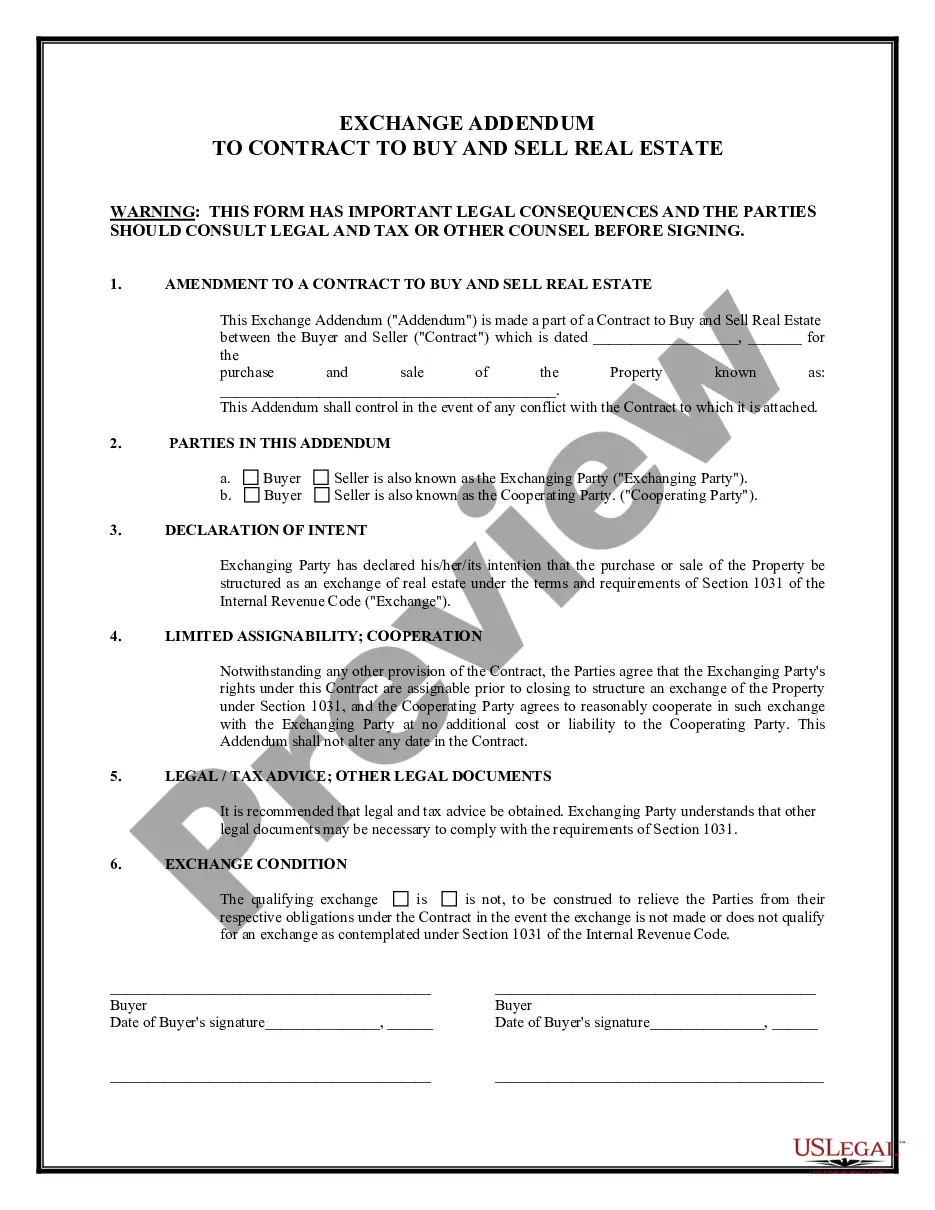
Exchange Agreement Form In North Carolina
Description

Get your form ready online
Our built-in tools help you complete, sign, share, and store your documents in one place.
Make edits, fill in missing information, and update formatting in US Legal Forms—just like you would in MS Word.
Download a copy, print it, send it by email, or mail it via USPS—whatever works best for your next step.
Sign and collect signatures with our SignNow integration. Send to multiple recipients, set reminders, and more. Go Premium to unlock E-Sign.
If this form requires notarization, complete it online through a secure video call—no need to meet a notary in person or wait for an appointment.
We protect your documents and personal data by following strict security and privacy standards.

Make edits, fill in missing information, and update formatting in US Legal Forms—just like you would in MS Word.

Download a copy, print it, send it by email, or mail it via USPS—whatever works best for your next step.

Sign and collect signatures with our SignNow integration. Send to multiple recipients, set reminders, and more. Go Premium to unlock E-Sign.

If this form requires notarization, complete it online through a secure video call—no need to meet a notary in person or wait for an appointment.

We protect your documents and personal data by following strict security and privacy standards.
Looking for another form?








Form popularity
FAQ
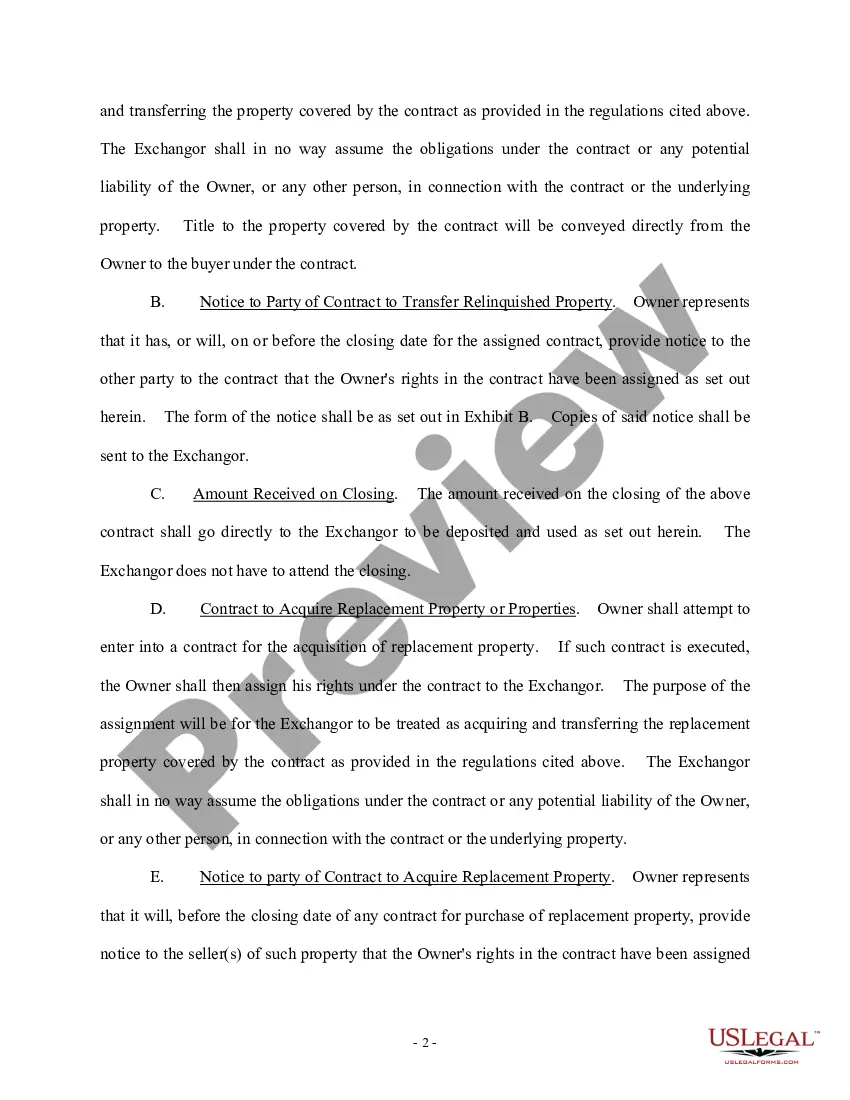
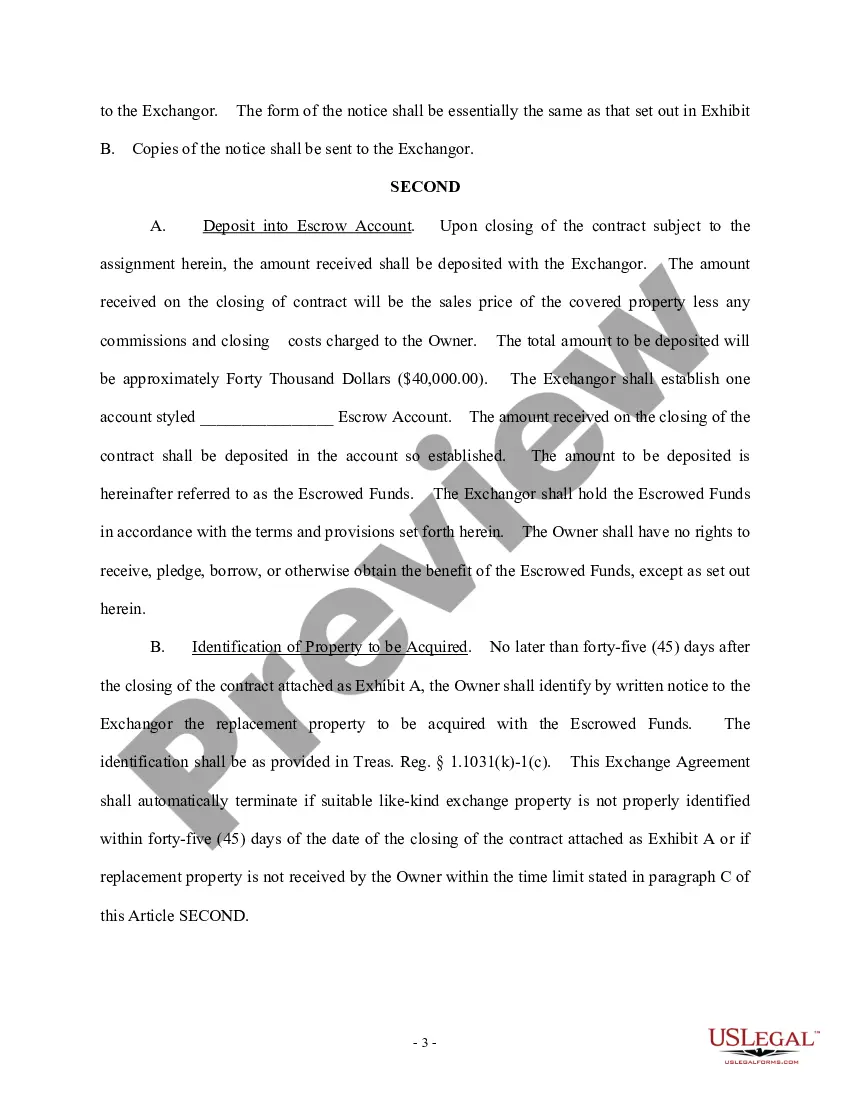
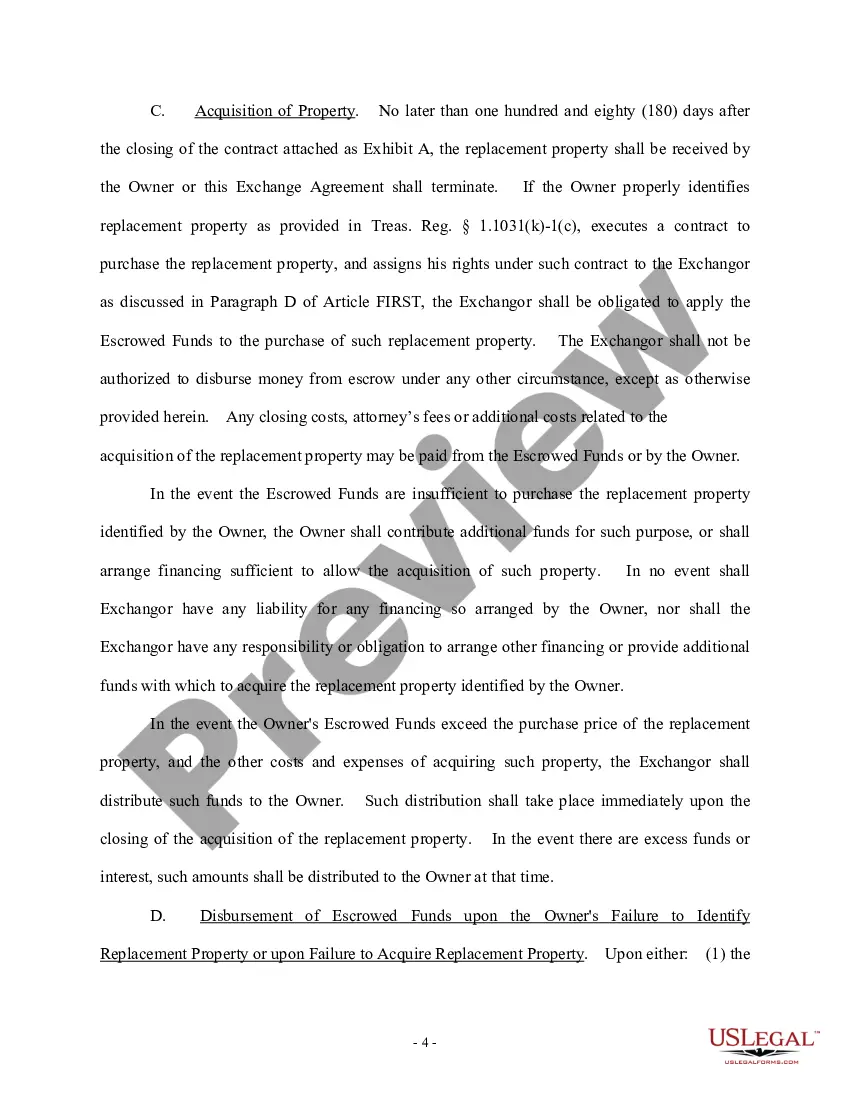
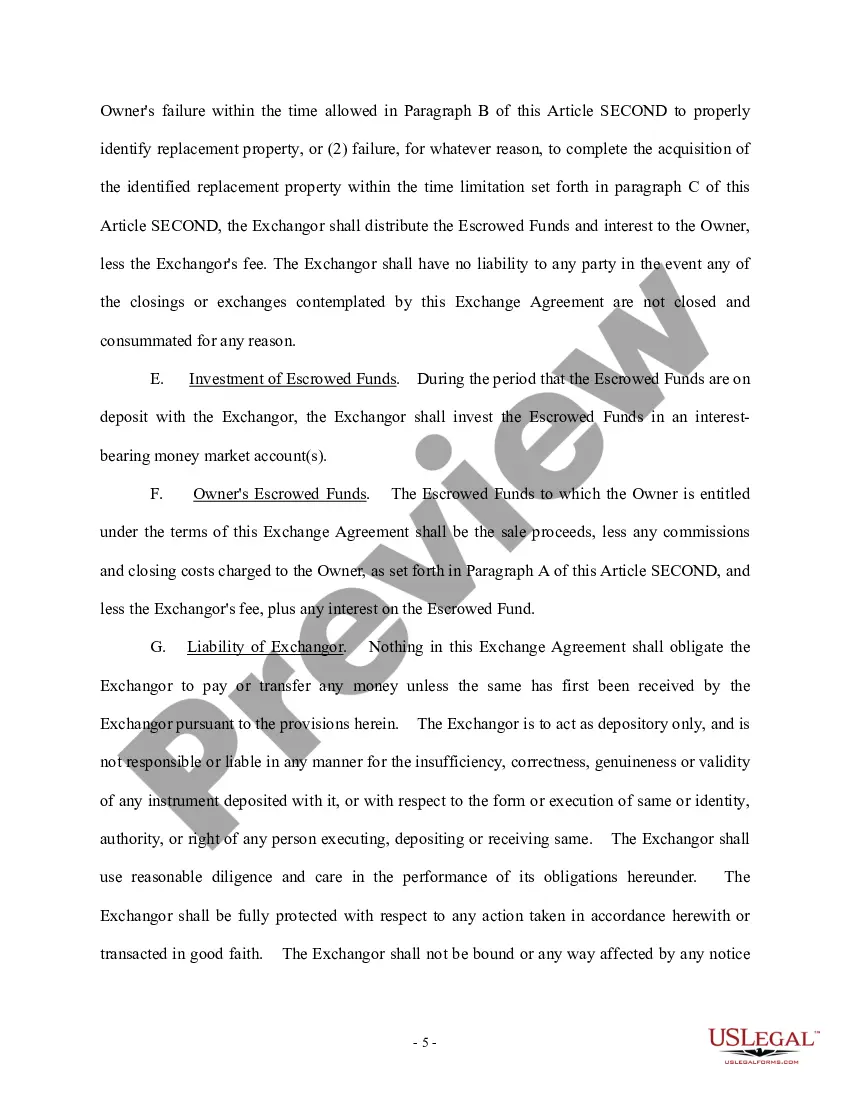
Understanding the 1031 Exchange in North Carolina The essential principle behind a 1031 Exchange, often referred to as a like-kind exchange, is to allow postponement of capital gains taxes incurred from the sale of a property, as long as the proceeds are reinvested in a similar property.
Lack of Liquidity- Exchanging properties continually can tie up funds in real estate, making it hard for an investor to access liquid capital if required. While real estate can be a profitable investment, it's not as liquid as some other assets.
Posted 29th May 2024 in Help & Advice. Once a property has been sold the focus of both seller and buyer will usually turn to the key stages of exchange of contracts and completion. Exchange of contracts is the point at which both the buyer and seller are legally committed to the sale.
In order to have a valid contract in North Carolina, there must be an offer, an acceptance, along with consideration. The parties must also have the capacity to enter into the contract.
While not always legally required, operating agreements play a critical role in the smooth operation, legal protection, and financial clarity of LLCs. Their absence can lead to governance by default state laws, management, and financial disorganization, and increased legal vulnerabilities.
An operating agreement is optional, and authorized by the North Carolina Limited Liability Company Act (“the Act”). When an LLC is formed, rights of owners (called “members”) are governed by the Act until such time as all of the initial owners adopt an operating agreement.
In addition, an operating agreement outlines the rules and regulations governing the business, which can help to prevent disputes between you and other members. This document is not required by law in North Carolina, but having one in place is a good idea.
Who needs an operating agreement? Every LLC that is registered in the states of California, Delaware, Maine, Missouri, and New York is legally required to have an operating agreement.
