1031 Exchange Agreement Form For Export In North Carolina
Description

Get your form ready online
Our built-in tools help you complete, sign, share, and store your documents in one place.
Make edits, fill in missing information, and update formatting in US Legal Forms—just like you would in MS Word.
Download a copy, print it, send it by email, or mail it via USPS—whatever works best for your next step.
Sign and collect signatures with our SignNow integration. Send to multiple recipients, set reminders, and more. Go Premium to unlock E-Sign.
If this form requires notarization, complete it online through a secure video call—no need to meet a notary in person or wait for an appointment.
We protect your documents and personal data by following strict security and privacy standards.

Make edits, fill in missing information, and update formatting in US Legal Forms—just like you would in MS Word.

Download a copy, print it, send it by email, or mail it via USPS—whatever works best for your next step.

Sign and collect signatures with our SignNow integration. Send to multiple recipients, set reminders, and more. Go Premium to unlock E-Sign.

If this form requires notarization, complete it online through a secure video call—no need to meet a notary in person or wait for an appointment.

We protect your documents and personal data by following strict security and privacy standards.
Looking for another form?








Form popularity
FAQ
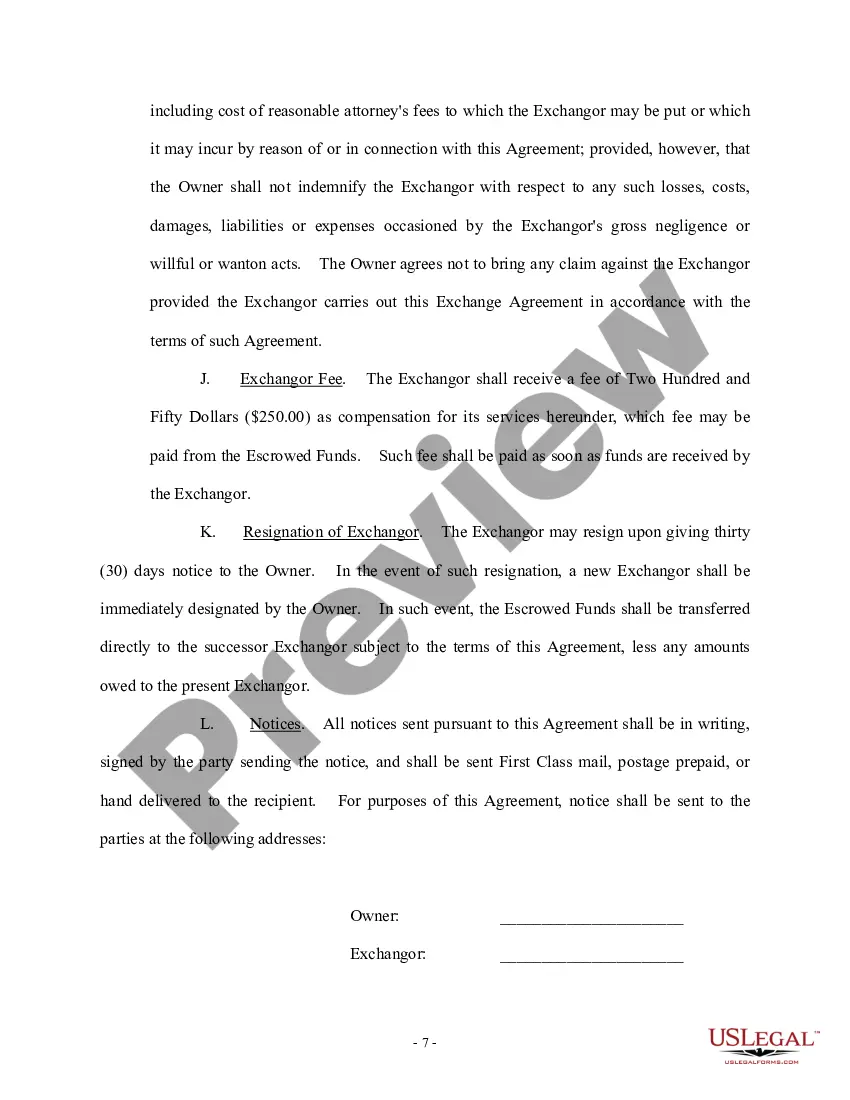
Section 1031(f) provides that if a Taxpayer exchanges with a related party then the party who acquired the property in the exchange must hold it for 2 years or the exchange will be disallowed.
Understanding the 1031 Exchange in North Carolina The essential principle behind a 1031 Exchange, often referred to as a like-kind exchange, is to allow postponement of capital gains taxes incurred from the sale of a property, as long as the proceeds are reinvested in a similar property.
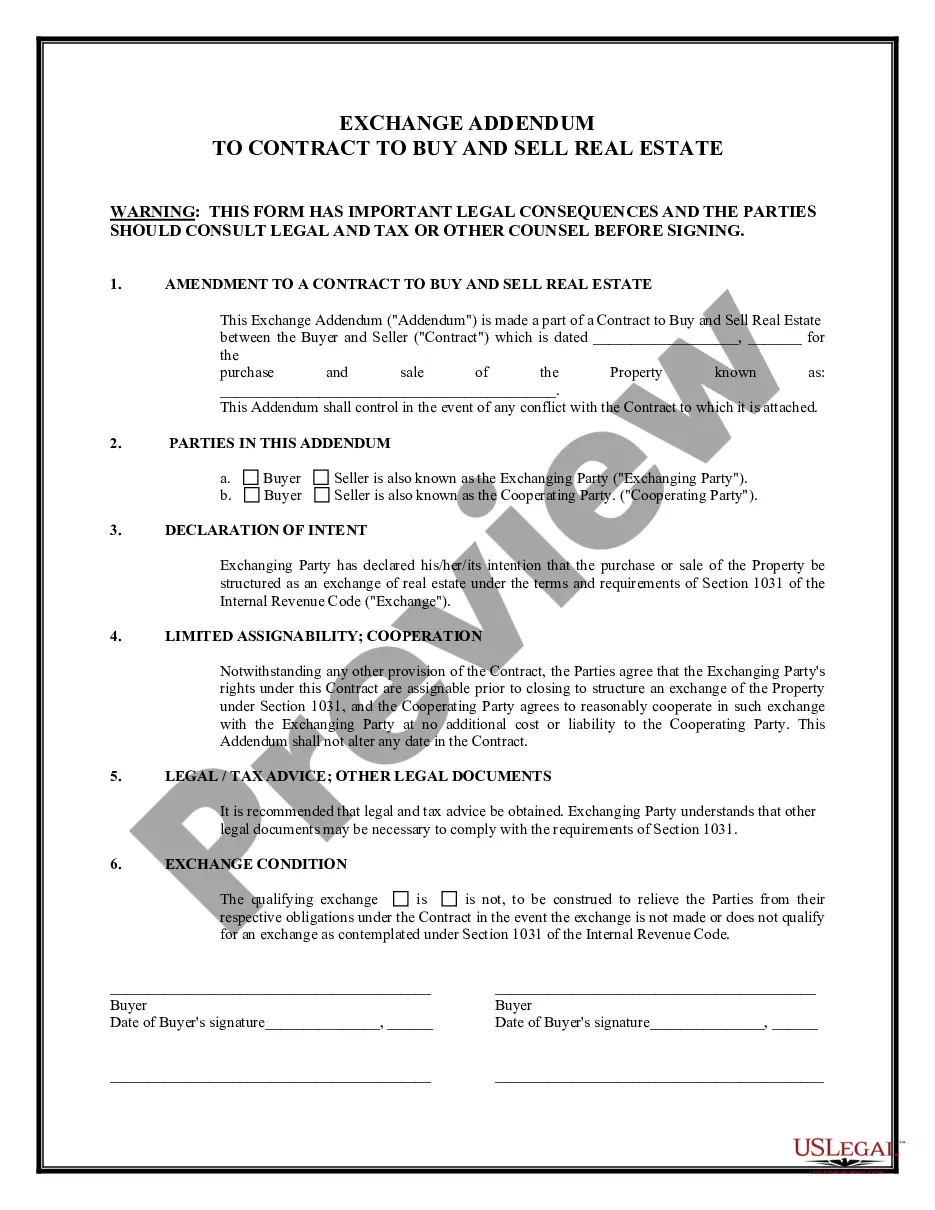
1031 Exchange Qualifications in North Carolina Individuals, C corporations, S corporations, partnerships (general or limited), limited liability companies, trusts and any other taxpaying entity may set up an exchange of business or investment properties for business or investment properties under Section 1031.
As such, the process is uniformly recognized across all 50 states and DC.
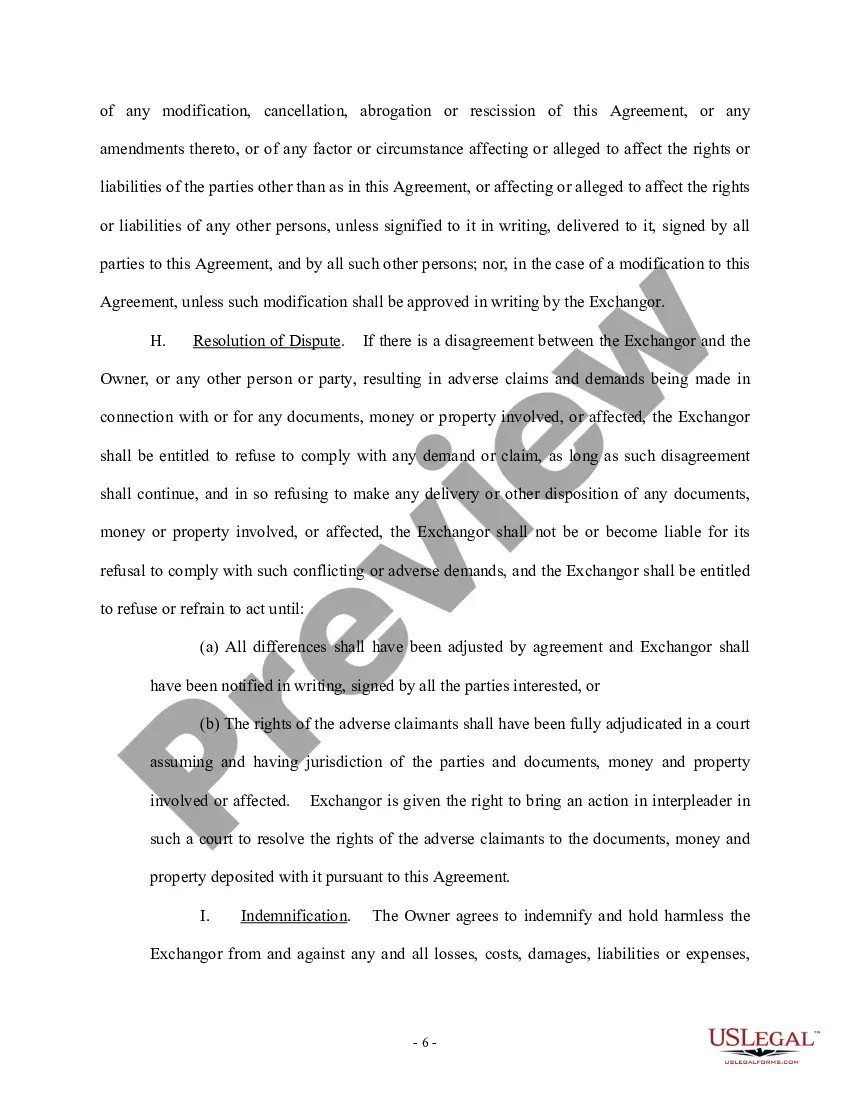
Your 1031 exchange must be reported by completing Form 8824 and filing it along with your federal income tax return. If you completed more than one exchange, a different form must be completed for each exchange. For line-by-line instructions on how to complete form, download the instructions here.
States like Florida, Texas, and Nevada are great options for 1031 exchanges due to their lack of state income tax and strong real estate markets. On the other hand, states like California, New York, and Oregon can be less attractive due to their high state income tax rates and strict real estate laws.
Your settlement agent is required to submit the 1099-S upon the completion of every sale and Form 8824 is your way of notifying the IRS that you did an exchange on that sale and may have deferred your tax liability.
Appraisals are an integral part of the 1031 exchange process as they provide an unbiased estimate of the property's value.