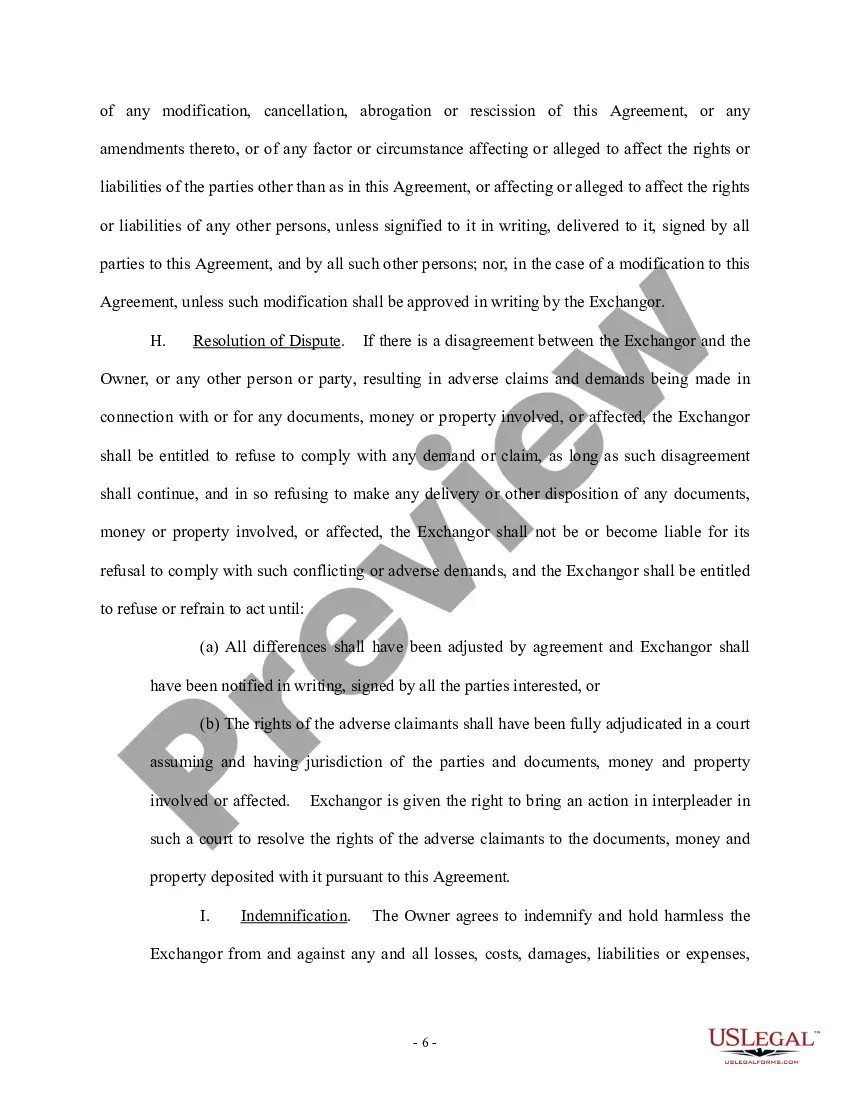
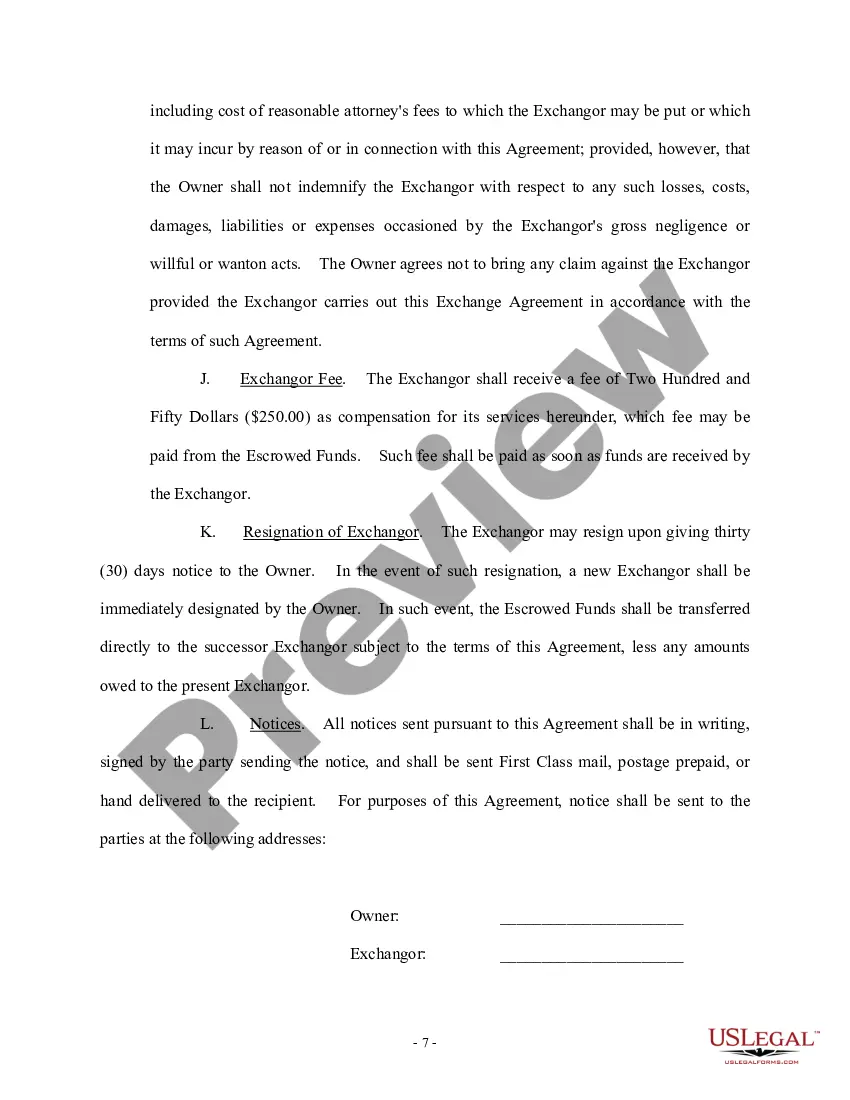
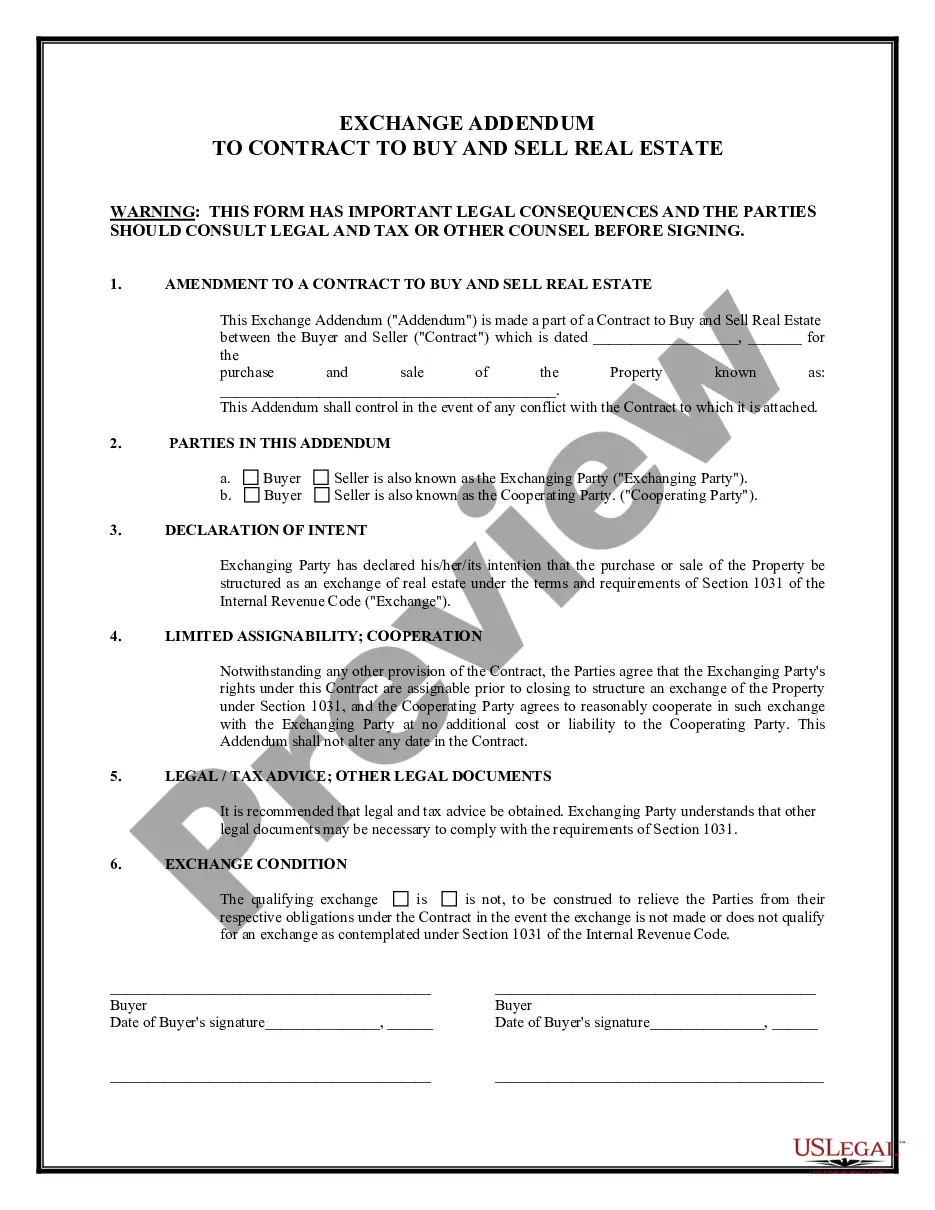
1031 Exchange Agreement Form With United States In Arizona
Description

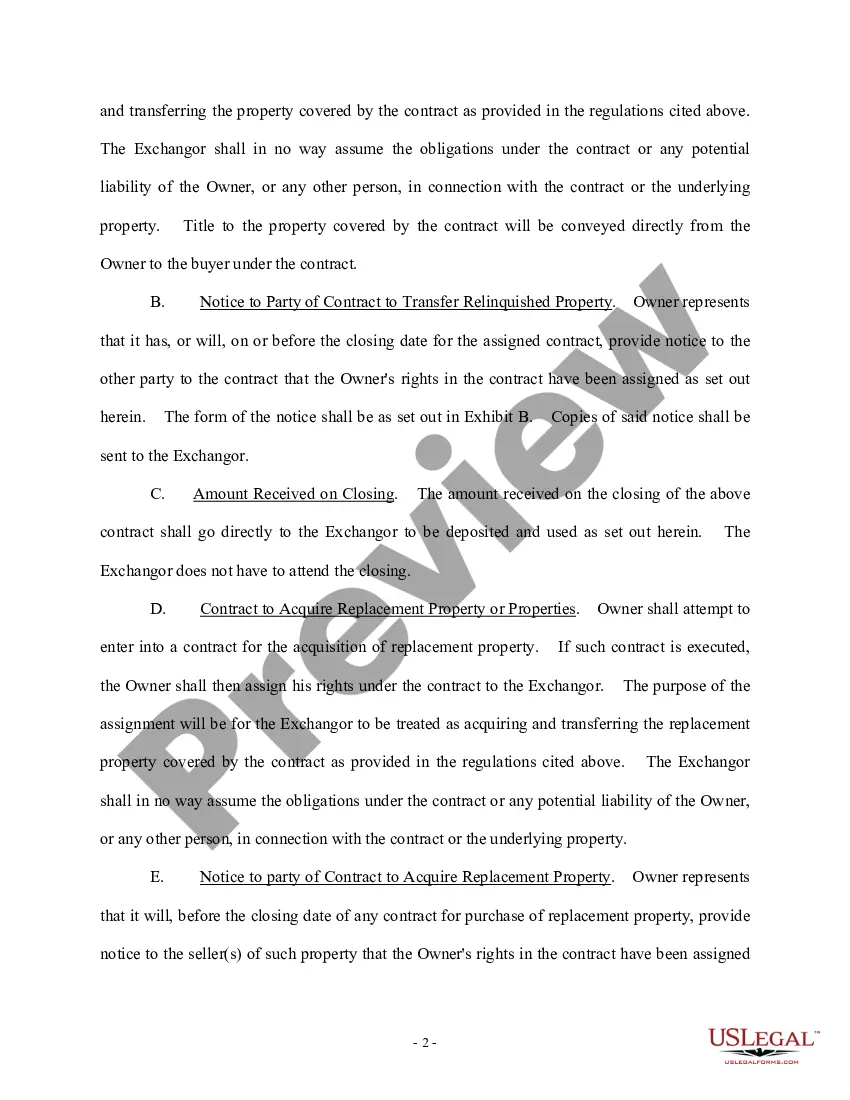
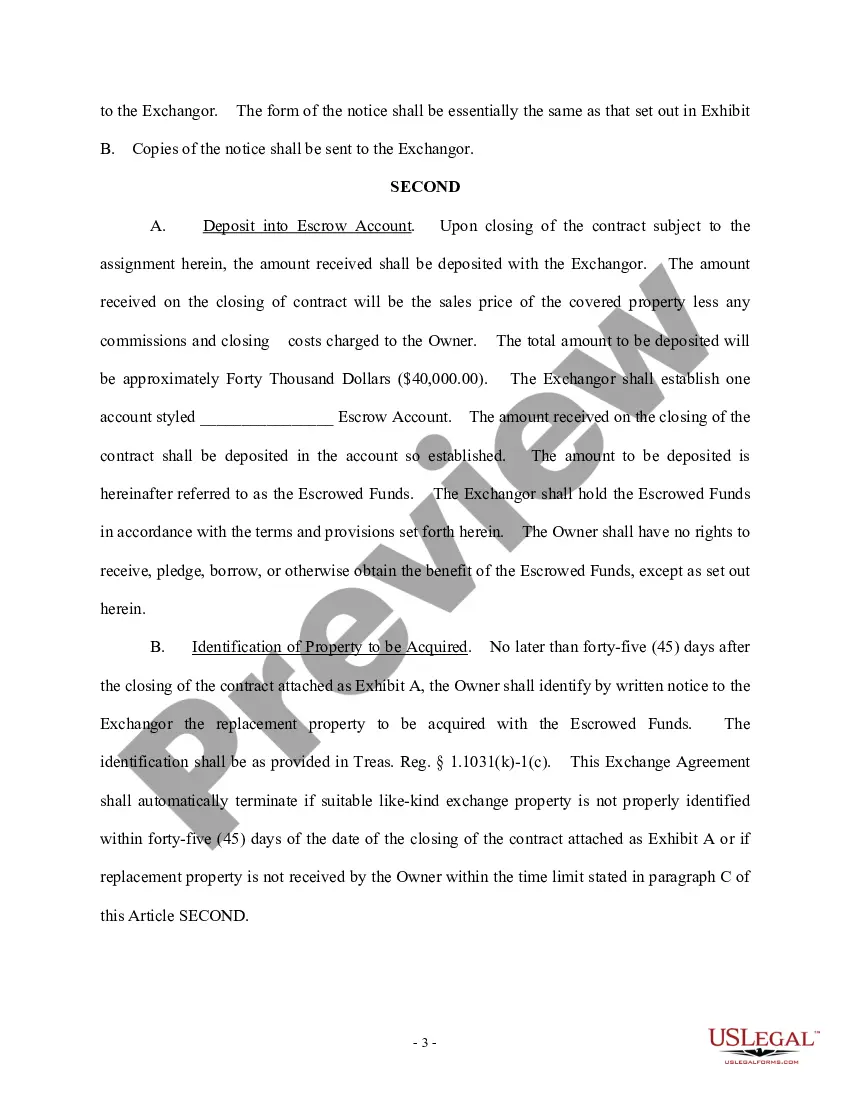
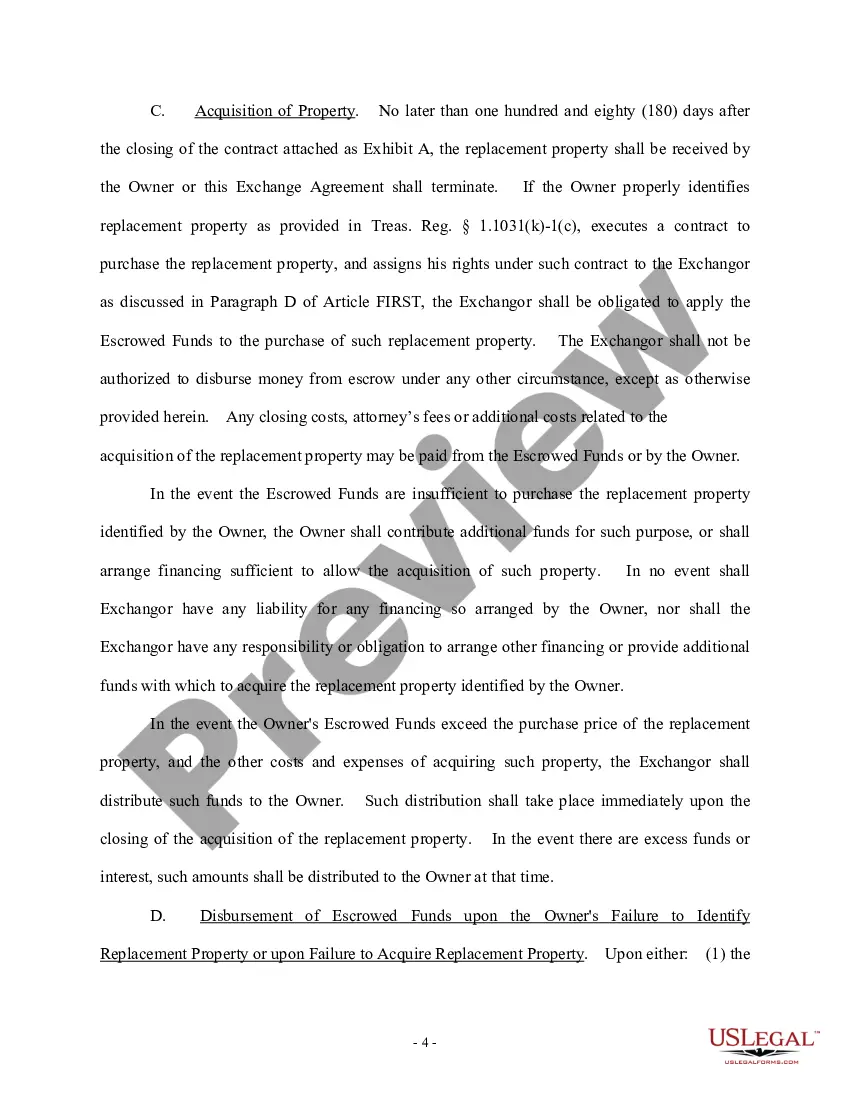
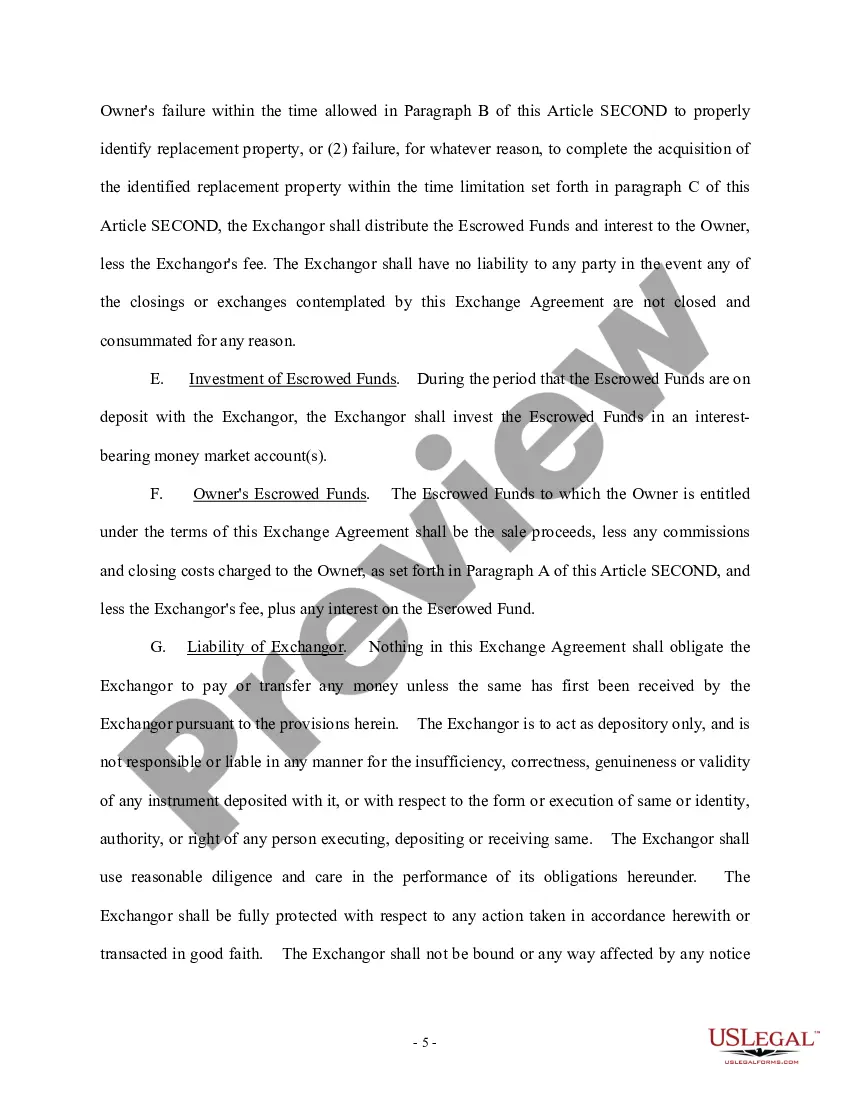
Get your form ready online
Our built-in tools help you complete, sign, share, and store your documents in one place.
Make edits, fill in missing information, and update formatting in US Legal Forms—just like you would in MS Word.
Download a copy, print it, send it by email, or mail it via USPS—whatever works best for your next step.
Sign and collect signatures with our SignNow integration. Send to multiple recipients, set reminders, and more. Go Premium to unlock E-Sign.
If this form requires notarization, complete it online through a secure video call—no need to meet a notary in person or wait for an appointment.
We protect your documents and personal data by following strict security and privacy standards.

Make edits, fill in missing information, and update formatting in US Legal Forms—just like you would in MS Word.

Download a copy, print it, send it by email, or mail it via USPS—whatever works best for your next step.

Sign and collect signatures with our SignNow integration. Send to multiple recipients, set reminders, and more. Go Premium to unlock E-Sign.

If this form requires notarization, complete it online through a secure video call—no need to meet a notary in person or wait for an appointment.

We protect your documents and personal data by following strict security and privacy standards.
Looking for another form?






Form popularity
FAQ
Savvy real estate investors can use a 1031 exchange as a tax-deferred strategy to build wealth. However, the many complex moving parts require understanding the rules and enlisting professional help—even for seasoned investors.
The property you sell and the replacement property you purchange must meet certain requirements to qualify for a 1031 Exchange. Both properties must be held for use in a trade or business or for investment. Both properties must be similar enough to qualify as “Like-Kind.”
Misconception 1: I can build on a property I already own, and it will still qualify for a 1031 exchange. The IRS does not allow renovations or new construction on property already owned to qualify for tax deferral through a 1031 exchange.
While standard “must-have” documents come in tandem with a successful 1031 exchange, each state has its own requirements based on its own tax rules and regulations. For example, California requires an FTB Form 593-C, which outlines the date involving the sale or transfer of California real property.
Generally, a 1031 exchange on a property you already own cannot be done, but with some creativity, there are some ways around it.
A Qualified Intermediary, or QI, is an independent third party to the transaction whose function is to prepare the documents necessary to create the exchange, as well as to act as the independent escrow agent for the exchange funds.
States like Florida, Texas, and Nevada are great options for 1031 exchanges due to their lack of state income tax and strong real estate markets. On the other hand, states like California, New York, and Oregon can be less attractive due to their high state income tax rates and strict real estate laws.
You can perform a 1031 exchange with foreign properties, so long as your relinquished and replacement properties are both located outside the United States.
A primary residence usually does not qualify for an exchange because it is not used in trade or business or investment. That said, that portion of the primary residence that is used in a trade or business or for investment may qualify for a 1031 Exchange.
A reverse 1031 exchange has the same 45-day and 180-day rules as a delayed exchange, but it works in reverse – the replacement property is purchased first and the relinquished property must be identified within 45 days and sold within 180 days.
