Homestead Act Information Form Massachusetts In Pima
Description





Get your form ready online
Our built-in tools help you complete, sign, share, and store your documents in one place.
Make edits, fill in missing information, and update formatting in US Legal Forms—just like you would in MS Word.
Download a copy, print it, send it by email, or mail it via USPS—whatever works best for your next step.
Sign and collect signatures with our SignNow integration. Send to multiple recipients, set reminders, and more. Go Premium to unlock E-Sign.
If this form requires notarization, complete it online through a secure video call—no need to meet a notary in person or wait for an appointment.
We protect your documents and personal data by following strict security and privacy standards.
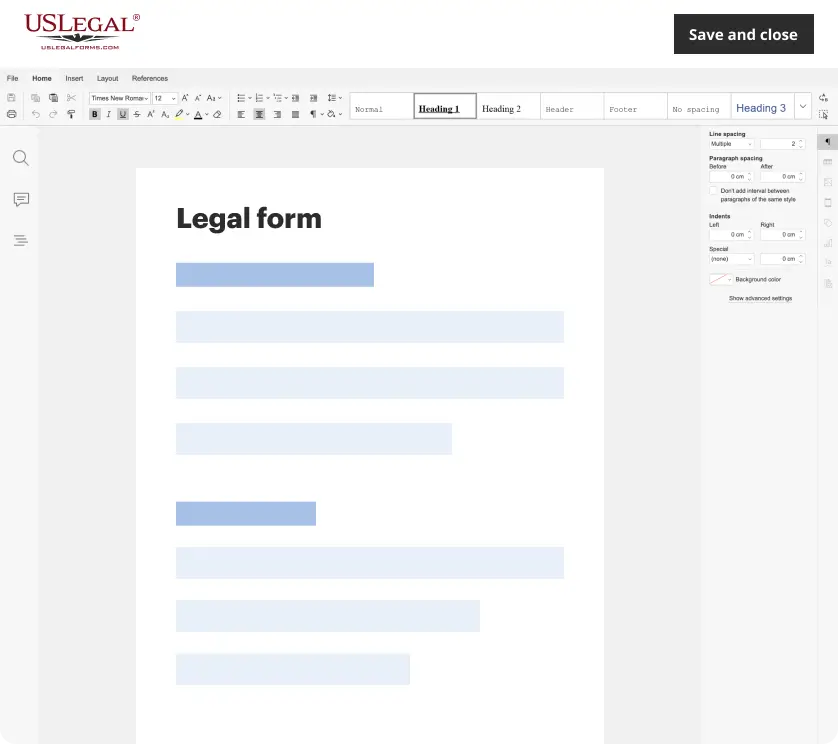
Make edits, fill in missing information, and update formatting in US Legal Forms—just like you would in MS Word.
Download a copy, print it, send it by email, or mail it via USPS—whatever works best for your next step.
Sign and collect signatures with our SignNow integration. Send to multiple recipients, set reminders, and more. Go Premium to unlock E-Sign.

If this form requires notarization, complete it online through a secure video call—no need to meet a notary in person or wait for an appointment.
We protect your documents and personal data by following strict security and privacy standards.
Looking for another form?








Form popularity
FAQ
Most states have homestead exemptions except New Jersey and Pennsylvania. Some states have other homestead laws such as provisions that protect surviving spouses from creditors.
Liens. A “lien” is a legal claim that gives a creditor the right to take your property if you do not repay a debt . A lien can be placed on your home before and after you file a declaration of homestead, but no one can collect on the lien(s) that were placed on your home after you filed a declaration of homestead.
To protect the value of your property up to one million dollars ($1,000,000) per residence, per family, you must file a document called a “Declaration of Homestead”. You can file this form at the Registry of Deeds in the county or district where your property is located, referencing the title/deed to the property.
The Massachusetts Homestead Act is a law under which a homeowner is protected by an Estate of Homestead. A homestead estate provides limited protection of the value of the home, up to $1,000,000, against unsecured creditor claims.
Homestead declaration protects you from unsecured creditors and certain other debts or attachments, but it does not shield you from first or second mortgage lenders and/or equity lenders who possess a security interest in your home.
Clauses 41, 41B, 41C or 41C½ provide exemptions to seniors who meet specific ownership, residency, income and asset requirements. Seniors 70 or older may, alternatively, qualify for exemption under Clauses 17, 17C, 17C½ or 17D, which provide a reduced benefit, but have less strict eligibility requirements.

