Service Of Interrogatories Florida In Santa Clara
Description


Get your form ready online
Our built-in tools help you complete, sign, share, and store your documents in one place.
Make edits, fill in missing information, and update formatting in US Legal Forms—just like you would in MS Word.
Download a copy, print it, send it by email, or mail it via USPS—whatever works best for your next step.
Sign and collect signatures with our SignNow integration. Send to multiple recipients, set reminders, and more. Go Premium to unlock E-Sign.
If this form requires notarization, complete it online through a secure video call—no need to meet a notary in person or wait for an appointment.
We protect your documents and personal data by following strict security and privacy standards.

Make edits, fill in missing information, and update formatting in US Legal Forms—just like you would in MS Word.

Download a copy, print it, send it by email, or mail it via USPS—whatever works best for your next step.

Sign and collect signatures with our SignNow integration. Send to multiple recipients, set reminders, and more. Go Premium to unlock E-Sign.

If this form requires notarization, complete it online through a secure video call—no need to meet a notary in person or wait for an appointment.

We protect your documents and personal data by following strict security and privacy standards.
Looking for another form?






Form popularity
FAQ
With the exception of motions filed pursuant to rule 9.410(b), a party may serve 1 response to a motion within 15 days of service of the motion. The court may shorten or extend the time for response to a motion.
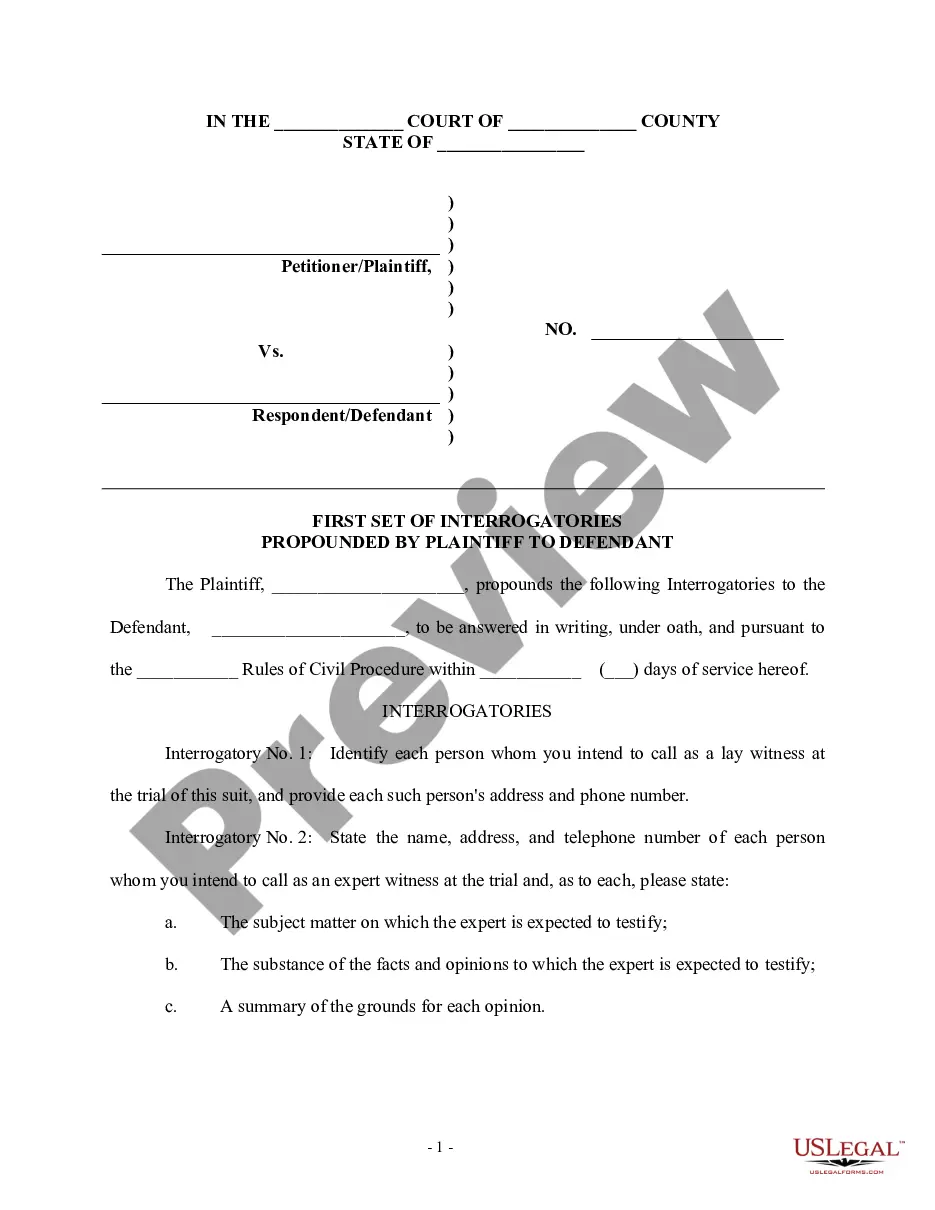
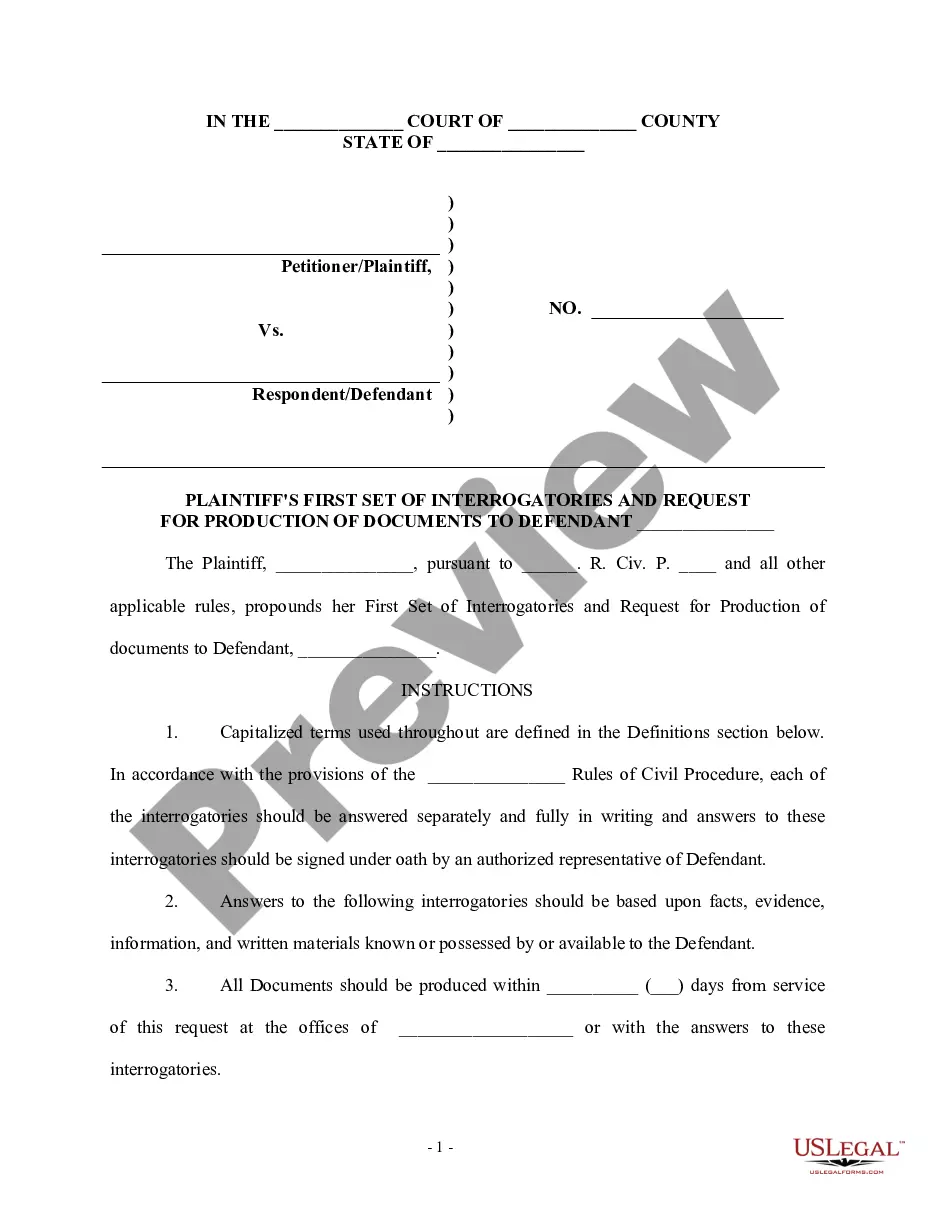
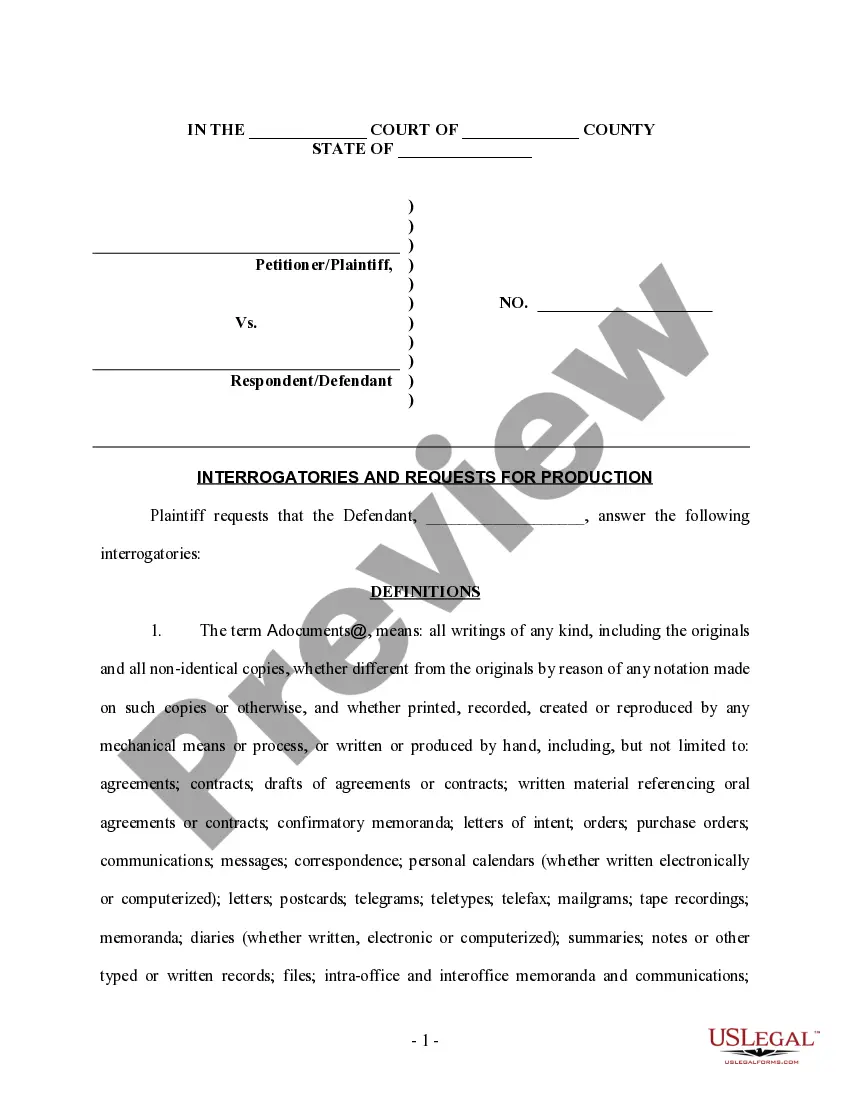
An interrogatory is a request for information, in the form of standard questions, that must be answered in writing and then notarized.
The party to whom the interrogatories are directed must serve the answers and any objections within 30 days after the service of the interrogatories, except that a defendant may serve answers or objections within 45 days after service of the process and initial pleading on that defendant.
An interrogatory is a request for information, in the form of standard questions, that must be answered in writing and then notarized. In Florida, there are two types of interrogatories used in family law proceedings.
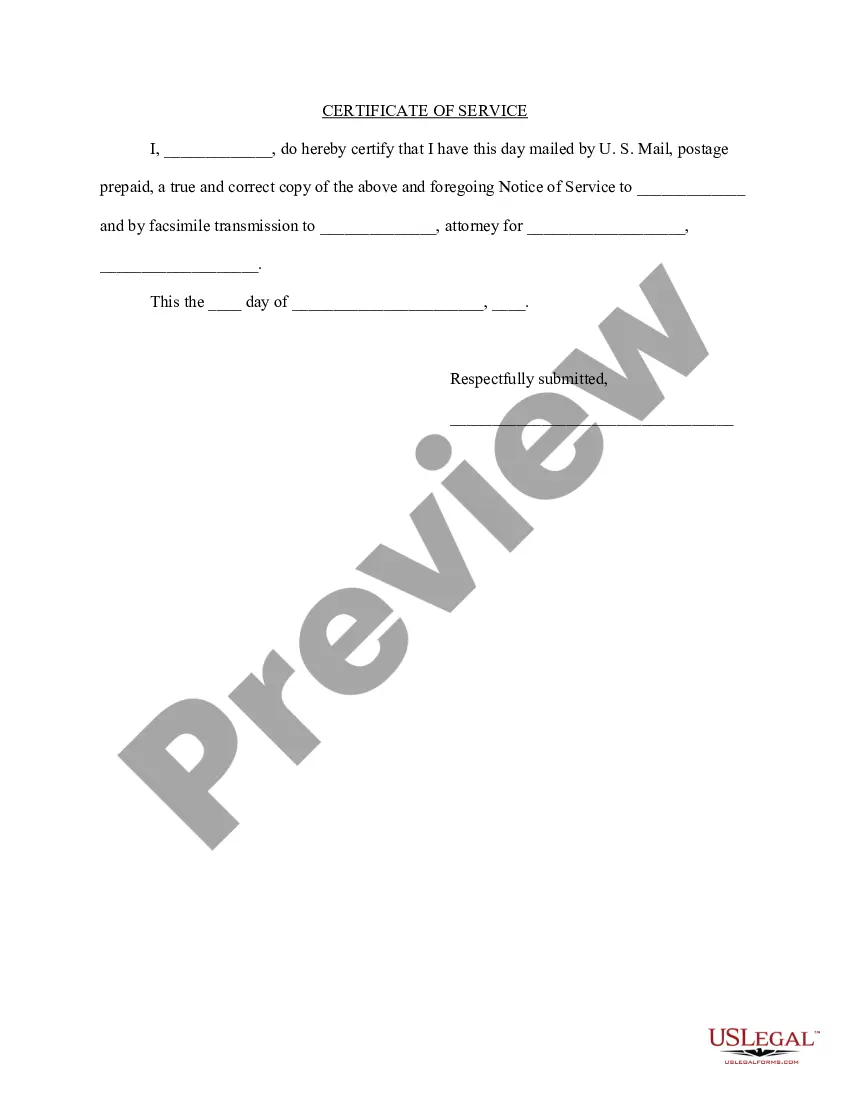
(1) Interrogatories must be served on the party to whom the interrogatories are directed and copies must be served on all other parties. (2) A certificate of service of the interrogatories must be filed, giving the date of service and the name of the party to whom they were directed.
In Florida, ing to Rule of Civil Procedure 1.070 (j), a complaint must be served on the defendant within 120 days of its filing. If it is not served within the time frame specified, a motion to dismiss is appropriate, and the case is dismissed without prejudice.
Under the Federal Rules and parallel state rules, litigants may use what are called “contention interrogatories” to explore adversaries' factual support for their legal contentions. Courts normally regulate the timing of those, generally prohibiting litigants from using that tactic too early in the discovery process.
(1) Unless a different time is prescribed in a statute of Florida, a defendant must serve an answer within 20 days after service of original process and the initial pleading on the defendant, or not later than the date fixed in a notice by publication.
Florida law requires that lien releases be notarized. Arrange for a notary public to witness the signing of the lien release document and affix their official seal and signature.
Witness Signature Rules Yes, a witness signature in Florida requires the signer to appear before a notary and provide proper identification.