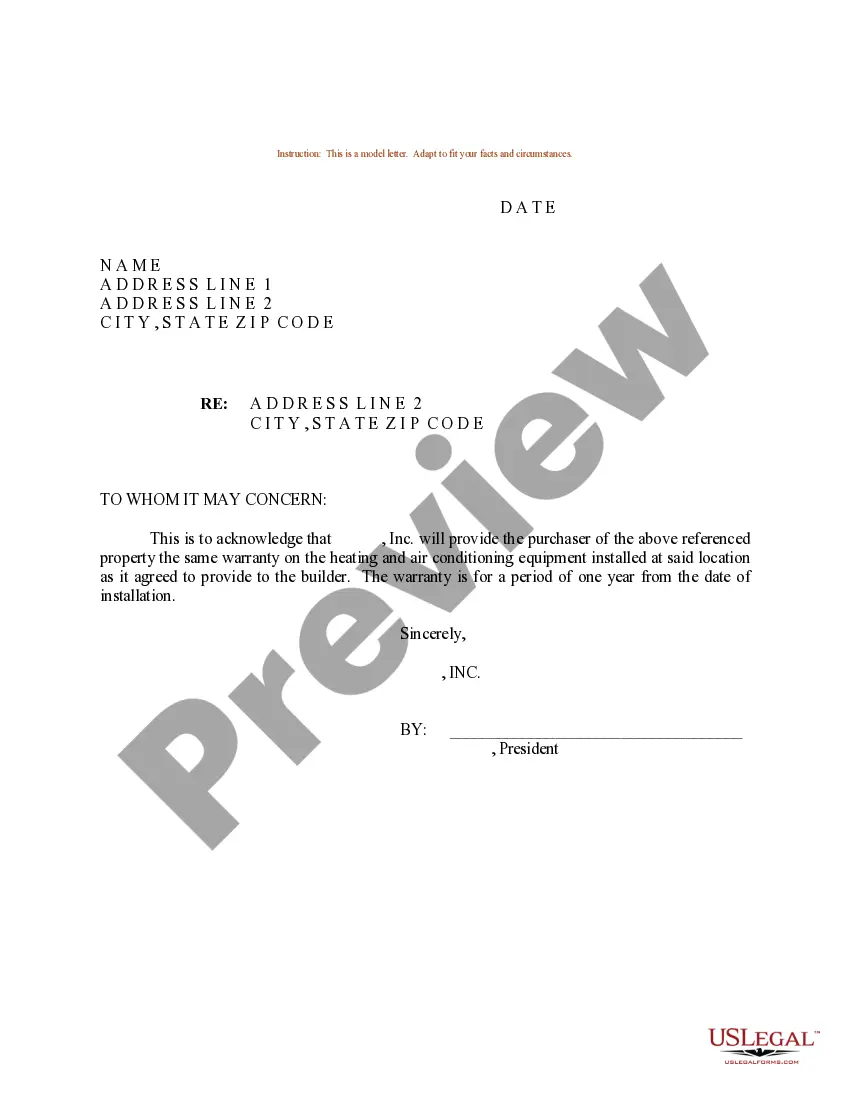
Service Interrogatories With Multiple Parties In San Antonio
Description


Get your form ready online
Our built-in tools help you complete, sign, share, and store your documents in one place.
Make edits, fill in missing information, and update formatting in US Legal Forms—just like you would in MS Word.
Download a copy, print it, send it by email, or mail it via USPS—whatever works best for your next step.
Sign and collect signatures with our SignNow integration. Send to multiple recipients, set reminders, and more. Go Premium to unlock E-Sign.
If this form requires notarization, complete it online through a secure video call—no need to meet a notary in person or wait for an appointment.
We protect your documents and personal data by following strict security and privacy standards.

Make edits, fill in missing information, and update formatting in US Legal Forms—just like you would in MS Word.

Download a copy, print it, send it by email, or mail it via USPS—whatever works best for your next step.

Sign and collect signatures with our SignNow integration. Send to multiple recipients, set reminders, and more. Go Premium to unlock E-Sign.

If this form requires notarization, complete it online through a secure video call—no need to meet a notary in person or wait for an appointment.

We protect your documents and personal data by following strict security and privacy standards.
Looking for another form?







Form popularity
FAQ
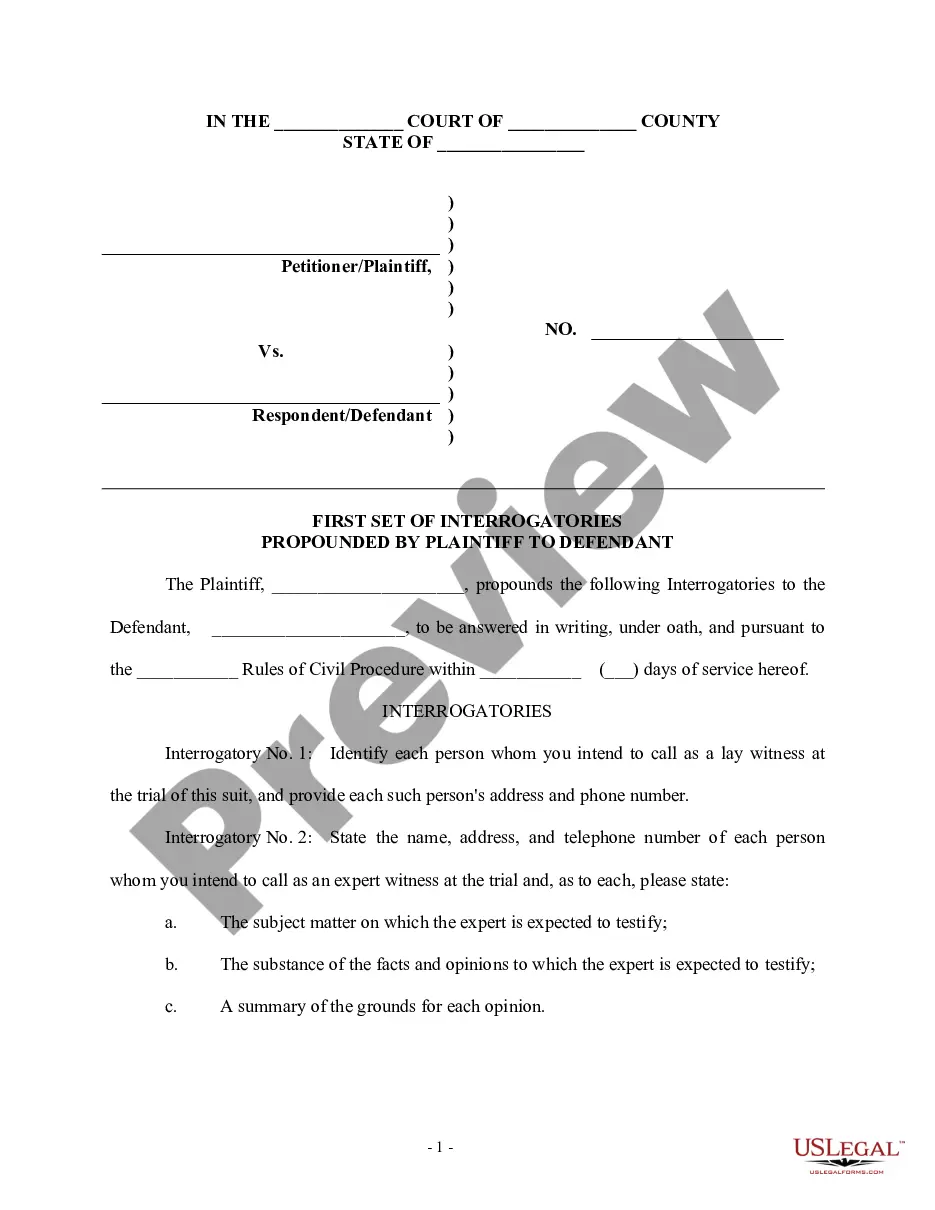
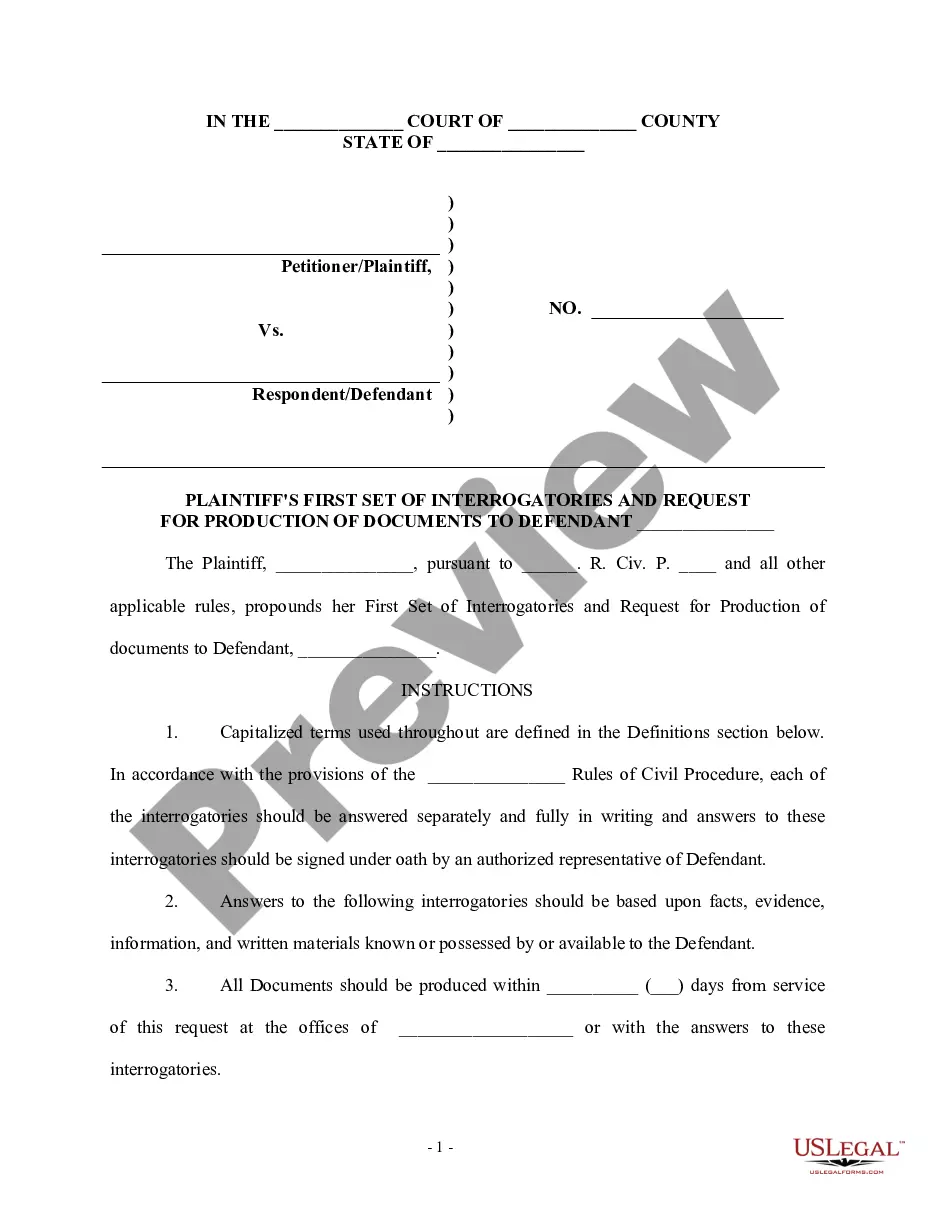
You can use interrogatories to find out facts about a case but they cannot be used for questions that draw a legal conclusion.
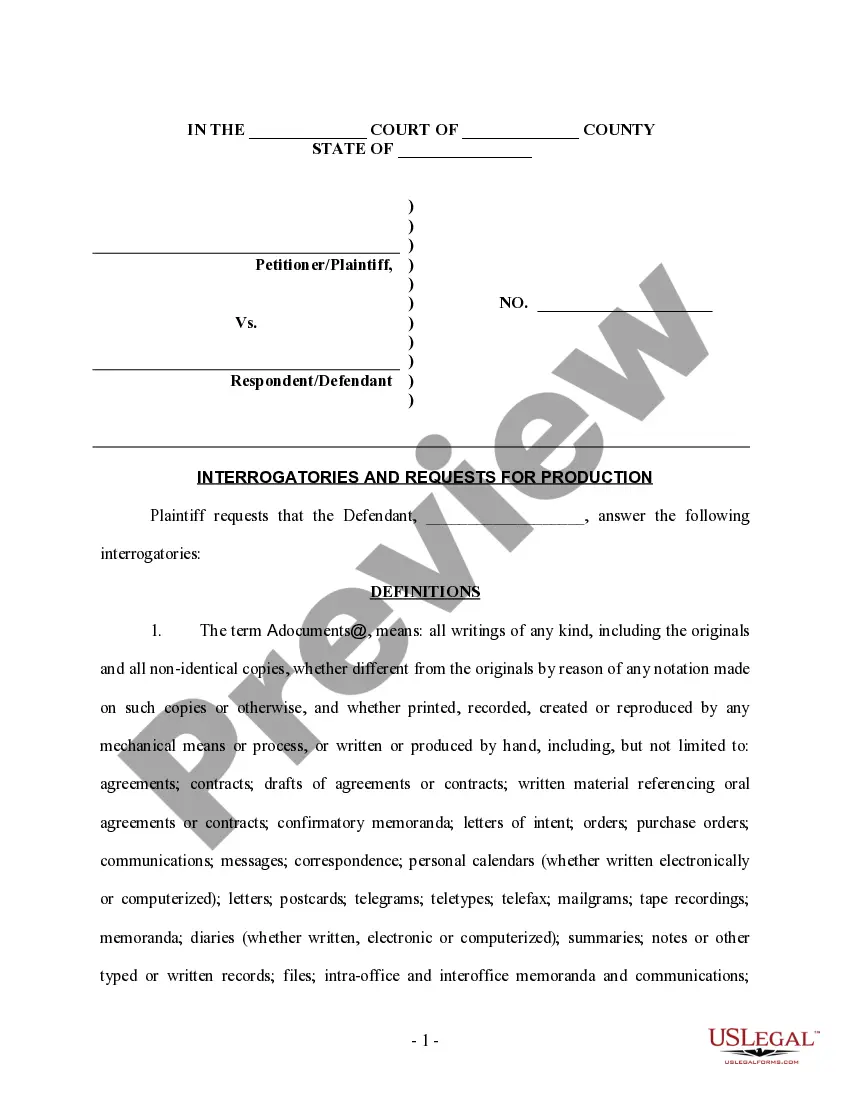
(a) A party may propound to another party either or both of the following: (1) Thirty-five specially prepared interrogatories that are relevant to the subject matter of the pending action.
(a) Interrogatories are written questions prepared by a party to an action that are sent to any other party in the action to be answered under oath. The interrogatories below are form interrogatories approved for use in economic litigation.
(3) Interrogatories. Any party may serve on any other party no more than 25 written interrogatories, excluding interrogatories asking a party only to identify or authenticate specific documents. Each discrete subpart of an interrogatory is considered a separate interrogatory.
Draft Interrogatories Strategically Only ask specific questions that address the crux of the matter where possible. Avoid board or vague questions. The opposing party's legal team may simply file objections against these, citing irrelevance, wasting your time. Also, ask questions sequentially.
If your case is a limited civil case ($35,000 or less) you can request up to a total of 35 combined request for admissions, form interrogatories , special interrogatories, and requests for production.
Clear and Succinct Language: Writing in an easy-to-understand way without using complex legal terms. Leading Questions: Questions that suggest the desired answer and can be seen as an attempt to influence the party's response. Motion to Compel: A legal request to force the opposing party to answer the interrogatories.
Interrogatories should be brief, simple, particularized, unambiguous, and capable of being understood by jurors when read in conjunction with the answer. They should not be argumentative nor should they impose unreasonable burdens on the responding party.