Notice Of Discovery Without Notice In Middlesex
Description



Get your form ready online
Our built-in tools help you complete, sign, share, and store your documents in one place.
Make edits, fill in missing information, and update formatting in US Legal Forms—just like you would in MS Word.
Download a copy, print it, send it by email, or mail it via USPS—whatever works best for your next step.
Sign and collect signatures with our SignNow integration. Send to multiple recipients, set reminders, and more. Go Premium to unlock E-Sign.
If this form requires notarization, complete it online through a secure video call—no need to meet a notary in person or wait for an appointment.
We protect your documents and personal data by following strict security and privacy standards.

Make edits, fill in missing information, and update formatting in US Legal Forms—just like you would in MS Word.

Download a copy, print it, send it by email, or mail it via USPS—whatever works best for your next step.

Sign and collect signatures with our SignNow integration. Send to multiple recipients, set reminders, and more. Go Premium to unlock E-Sign.

If this form requires notarization, complete it online through a secure video call—no need to meet a notary in person or wait for an appointment.

We protect your documents and personal data by following strict security and privacy standards.
Looking for another form?







Form popularity
FAQ
One of the most common methods of discovery is to take depositions. A deposition is an out-of-court statement given under oath by any person involved in the case.
What Is a Notice of Deposition? Witnesses are needed by a legal team to answer questions under oath pertaining to their knowledge relating to a lawsuit before the case is tried in the court. The law firm sends a document called a notice of deposition to the witness and all other parties involved in the lawsuit.
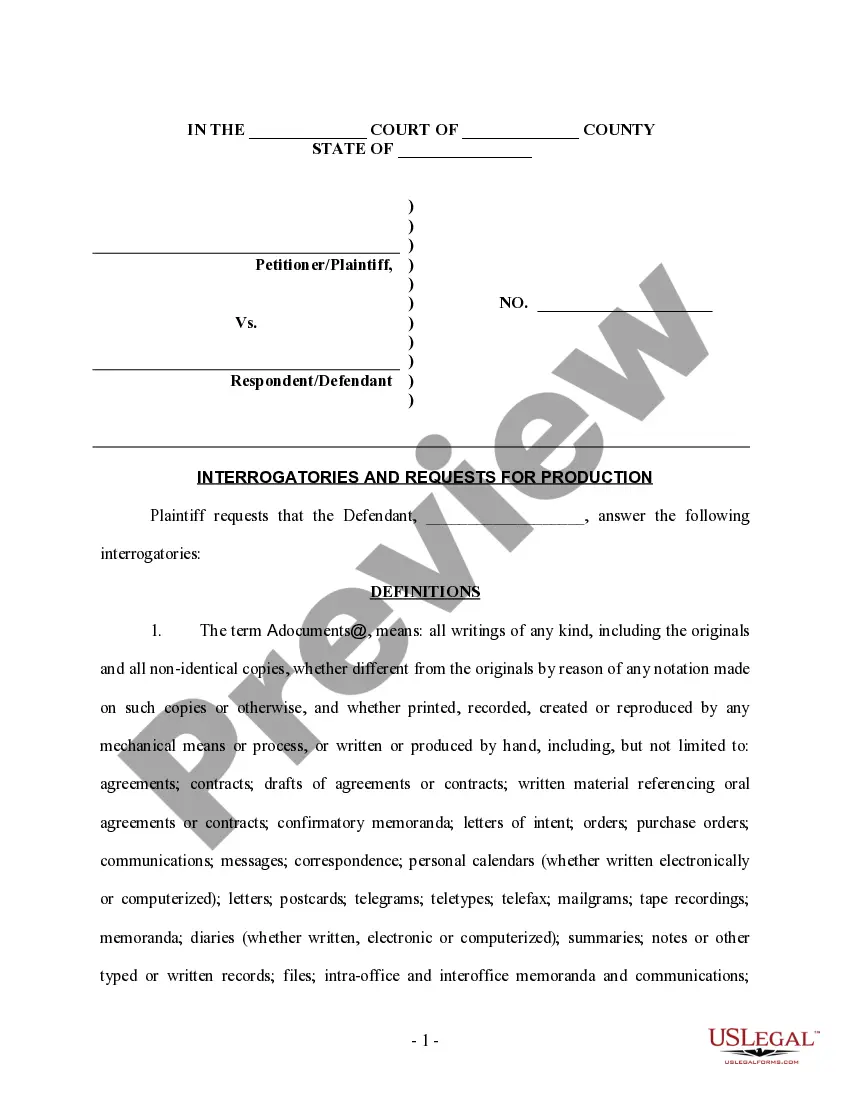
Disclosure is accomplished through a methodical process called "discovery." Discovery takes three basic forms: written discovery, document production, and depositions.
Taking depositions is one of the most common methods of discovery, as statements given under oath enables parties to know in advance what a witness will say at a trial.
The discovery rule is a rule of equity that provides, in appropriate cases, that a personal injury claim does not accrue until an injured person discovers, or should discover by exercise of reasonable diligence, that he or she has a claim.
Lawsuits for amounts up to $20,000 are called special civil cases. They are filed in Superior Court, in the special civil part of the civil division.
A deposition is a witness's sworn out-of-court testimony. It is used to gather information as part of the discovery process and, in limited circumstances, may be used at trial.
-2. Except as otherwise provided by R. -1 (clerical errors), a motion for rehearing or reconsideration seeking to alter or amend a judgment or final order shall be served not later than 20 days after service of the judgment or order upon all parties by the party obtaining it.
If the parties are having a dispute, either party can file a motion with the court asking the judge to order the other side to respond to discovery requests or punish the other side for failing to respond to discovery requests or for making unreasonable discovery requests.