Nonprofit Resolution Template Forecast In Los Angeles
Description

Get your form ready online
Our built-in tools help you complete, sign, share, and store your documents in one place.
Make edits, fill in missing information, and update formatting in US Legal Forms—just like you would in MS Word.
Download a copy, print it, send it by email, or mail it via USPS—whatever works best for your next step.
Sign and collect signatures with our SignNow integration. Send to multiple recipients, set reminders, and more. Go Premium to unlock E-Sign.
If this form requires notarization, complete it online through a secure video call—no need to meet a notary in person or wait for an appointment.
We protect your documents and personal data by following strict security and privacy standards.

Make edits, fill in missing information, and update formatting in US Legal Forms—just like you would in MS Word.

Download a copy, print it, send it by email, or mail it via USPS—whatever works best for your next step.

Sign and collect signatures with our SignNow integration. Send to multiple recipients, set reminders, and more. Go Premium to unlock E-Sign.

If this form requires notarization, complete it online through a secure video call—no need to meet a notary in person or wait for an appointment.

We protect your documents and personal data by following strict security and privacy standards.
Looking for another form?






Form popularity
FAQ
Robert's Rules (Section -16) state that “the minutes should contain mainly a record of what was done at the meeting, not what was said by the members.” Minutes are not transcripts of meetings; rather, the document contains a record of actions taken by the body, organized by the meeting's order of business (agenda).
To reiterate, minutes are a record of a meeting and the (general or special) resolutions passed are the decisions made in a meeting. Meetings are held physically, in the sense that all attendees must be present at the same time.
Board minutes reflect the discussions held, authorizations granted and actions taken by the board of directors of an entity. The minutes and any resolutions adopted must refer to any documents presented to the board for approval.
Board resolutions are formal agreements, decisions, or actions made by company directors. This type of directors' resolution is recorded in board minutes. Officially, the term 'board resolution' refers to a decision made at a board meeting.
Board meeting minutes are an objective record of what took place during a board meeting. The minutes are typically used for internal purposes like record-keeping and for posterity. Minutes can serve to inform future meetings and recall what was discussed, agreed upon or dismissed by a company's board members.
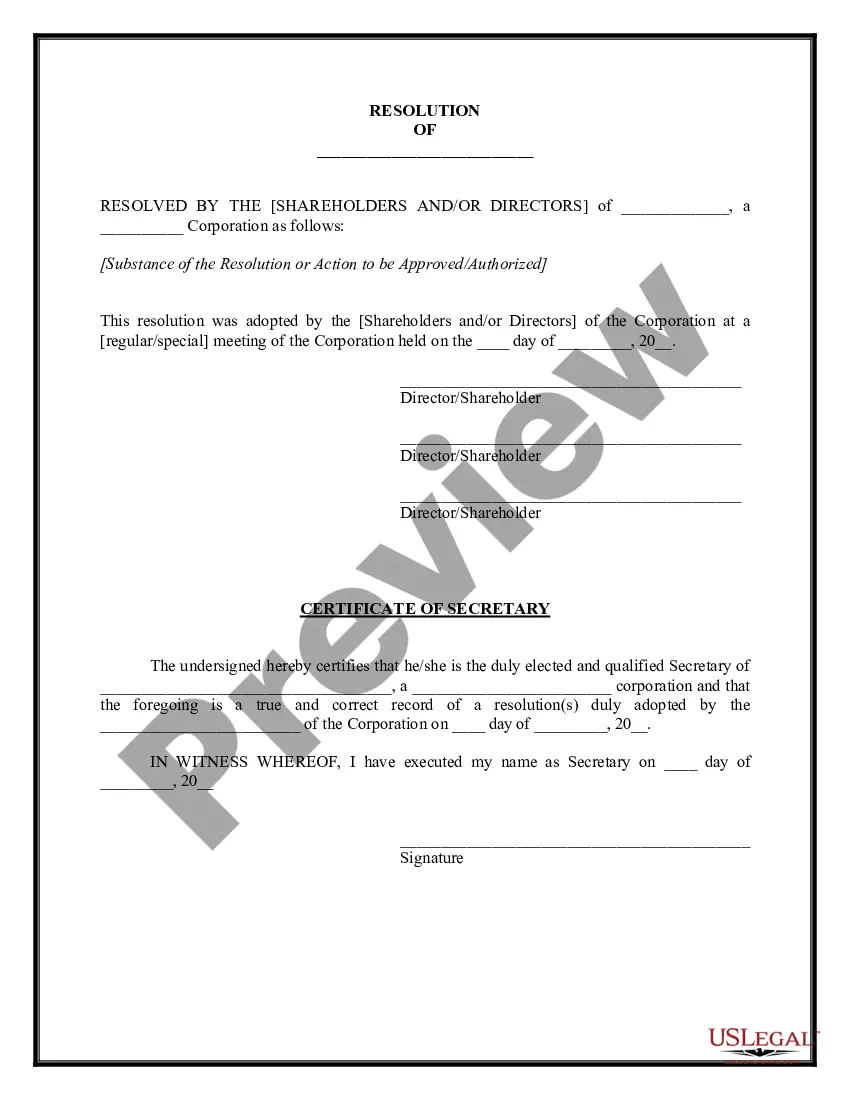
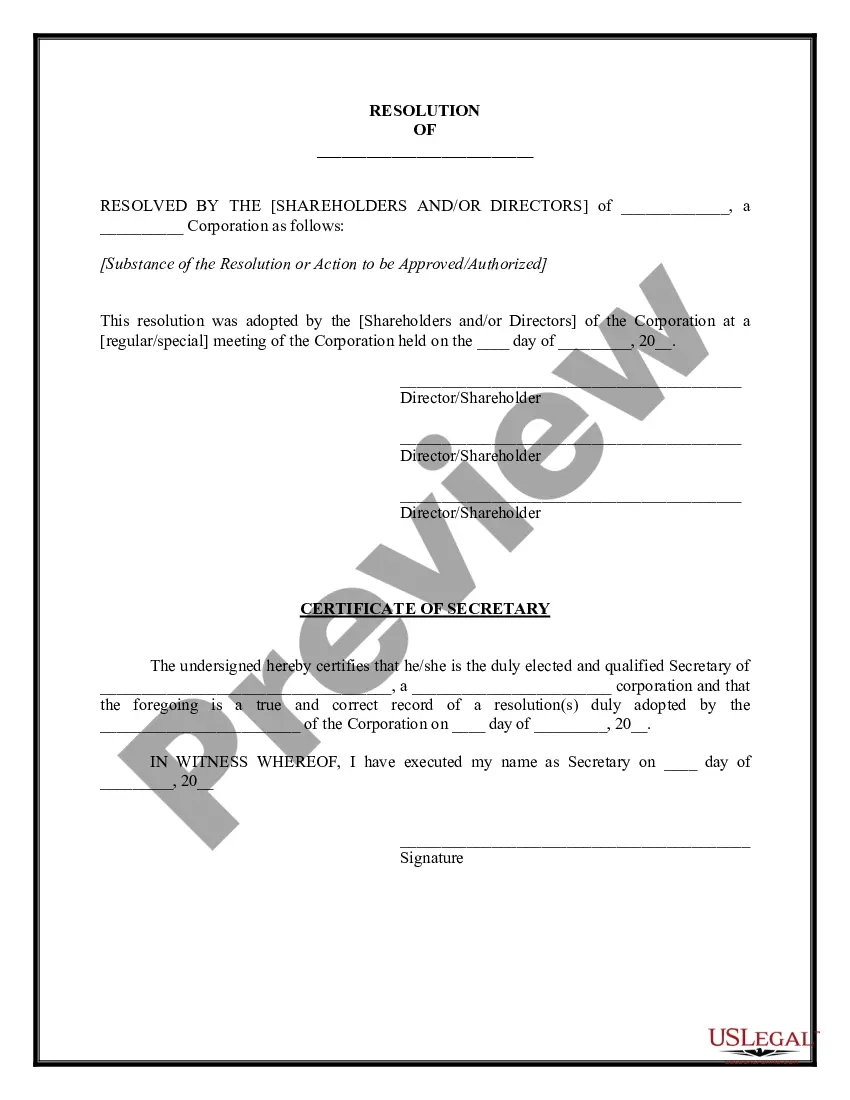
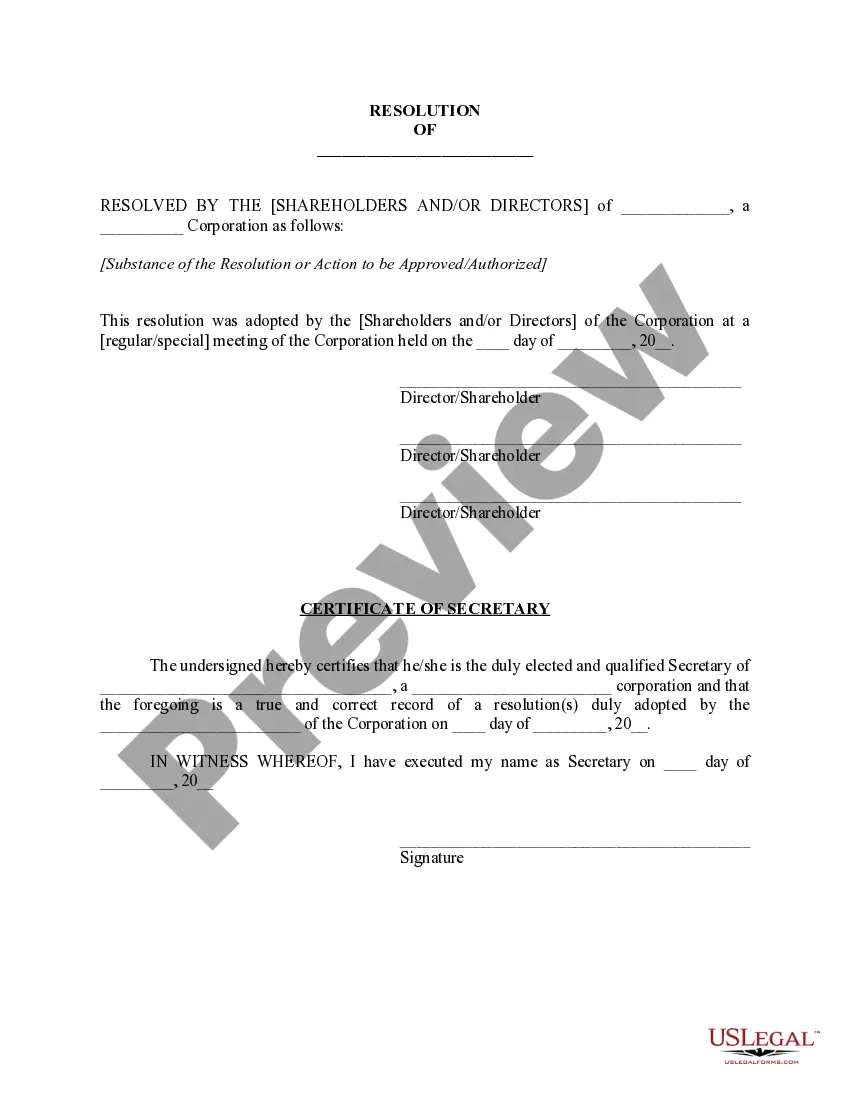
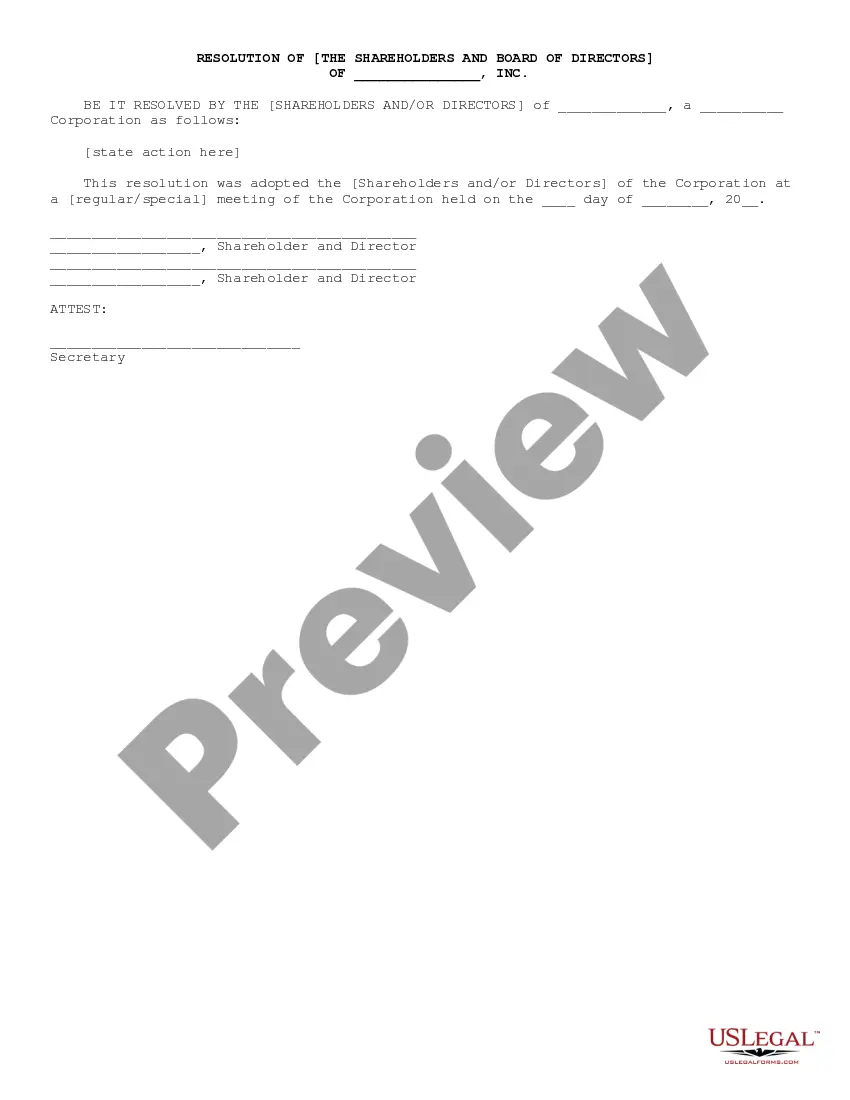
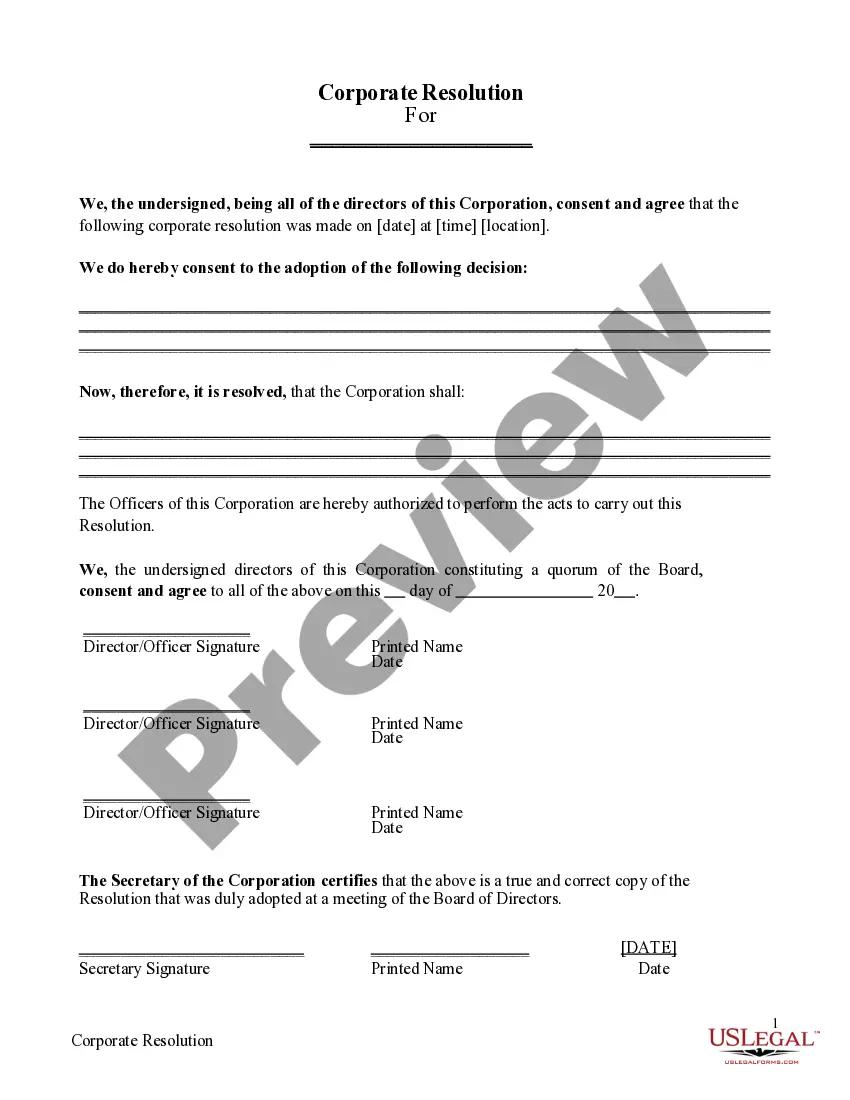
What Are the Components of a Nonprofit Board Resolution Template? The board meeting date. The number of the resolution. A title of the resolution. The resolution itself (what is being voted on) The name and vote of each voting member of the board. The Chairperson's name and signature.
While it may seem like a formality, the initial resolution is an important piece of starting a corporation. Put simply, the initial resolution shows how the corporation acts in between its formation and the adoption of its internal governing documents (your bylaws).
All resolutions should be typed single space in 12pt Calibri Font. All margins (top, bottom, left, right) must be one inch. WHEREAS and RESOLVED and RATIONALE phrases must be in bold and all caps.
Unlike corporations, LLCs don't need to file business resolutions with the state. Single-member LLCs (SMLLCs) can also use business resolutions, even though there is no chance of disagreement among the members.
What Are the Components of a Nonprofit Board Resolution Template? The board meeting date. The number of the resolution. A title of the resolution. The resolution itself (what is being voted on) The name and vote of each voting member of the board. The Chairperson's name and signature.