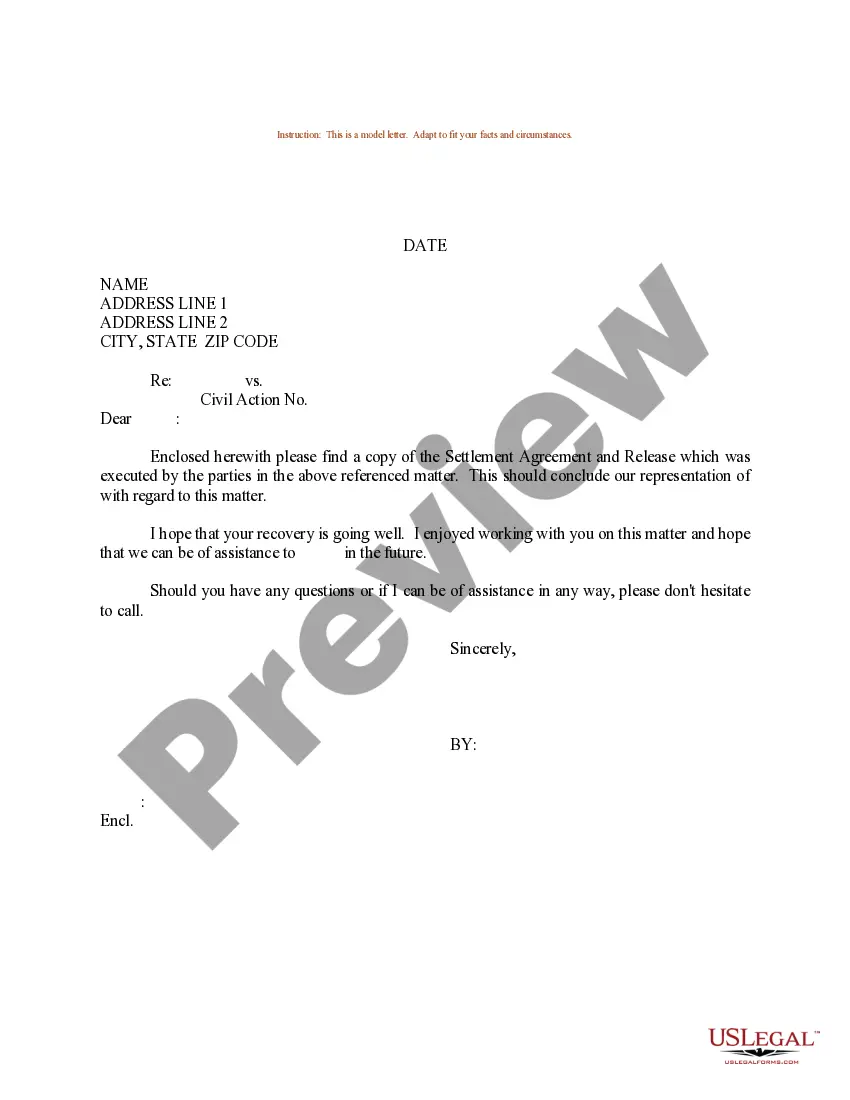
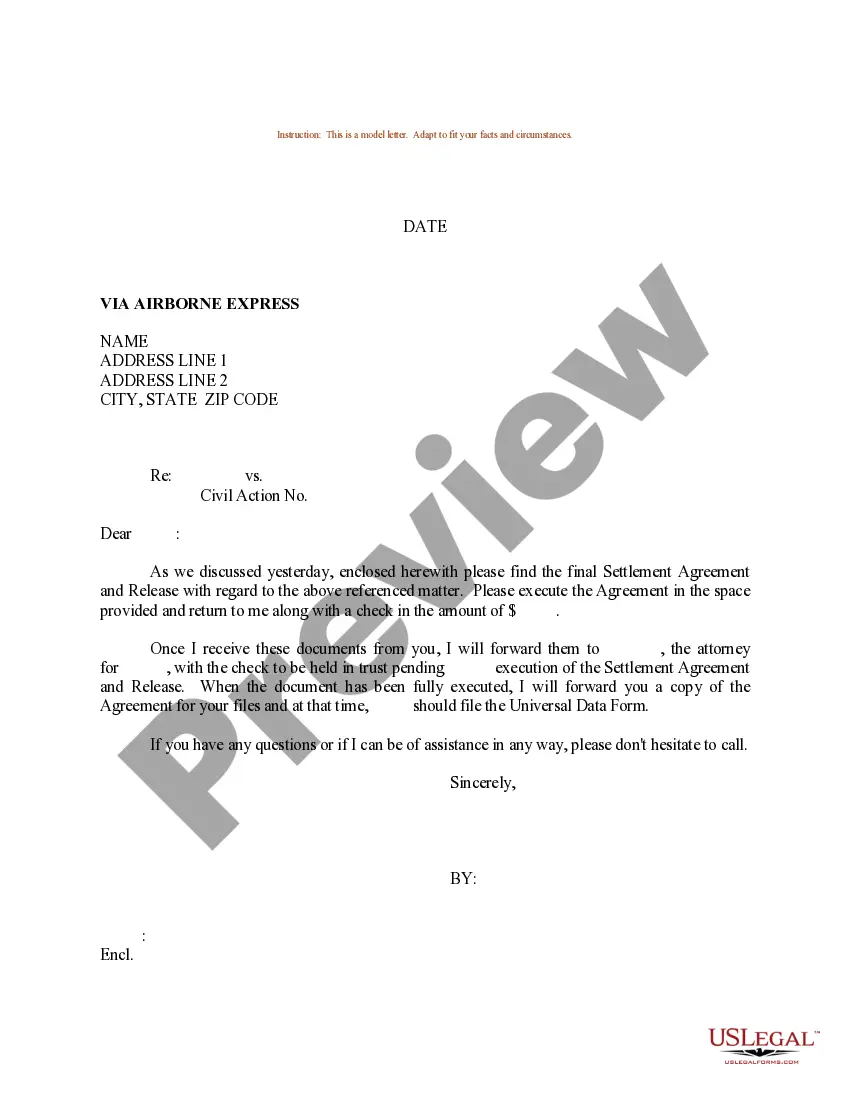
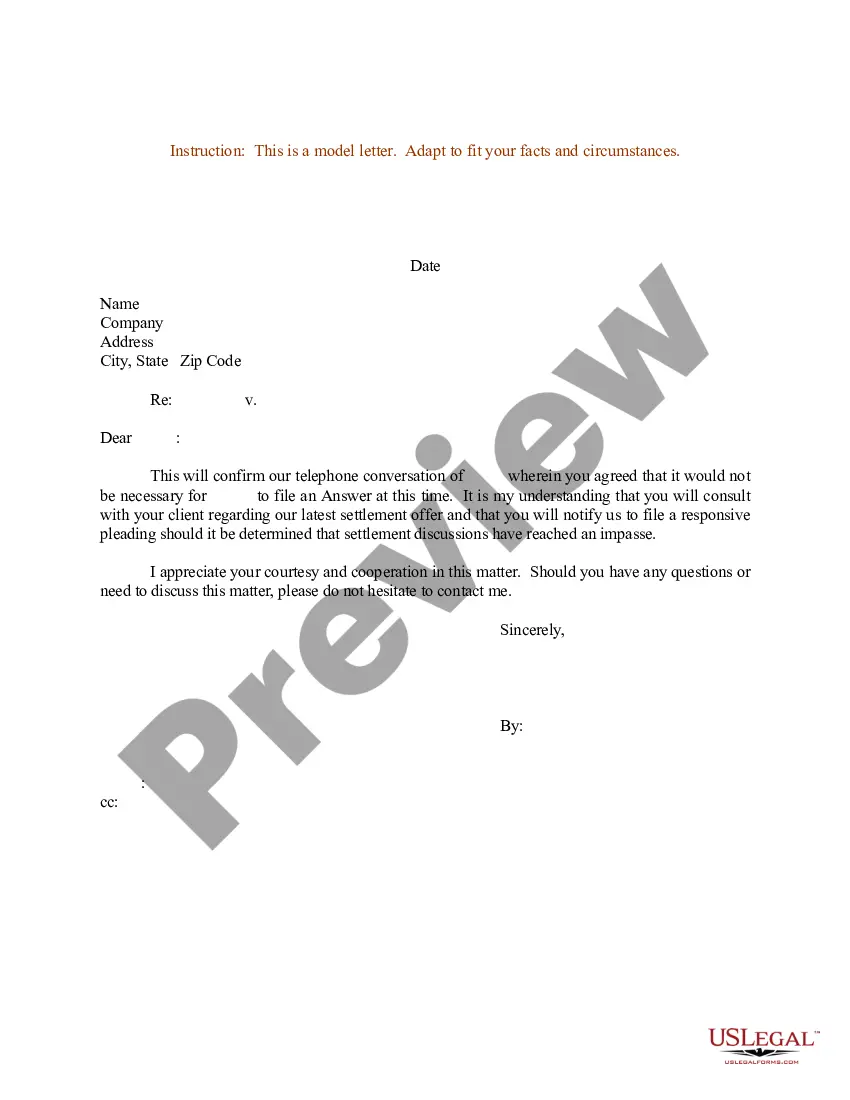
Settlement Confirmation Letter With Salary Requirements In Pima
Description


Get your form ready online
Our built-in tools help you complete, sign, share, and store your documents in one place.
Make edits, fill in missing information, and update formatting in US Legal Forms—just like you would in MS Word.
Download a copy, print it, send it by email, or mail it via USPS—whatever works best for your next step.
Sign and collect signatures with our SignNow integration. Send to multiple recipients, set reminders, and more. Go Premium to unlock E-Sign.
If this form requires notarization, complete it online through a secure video call—no need to meet a notary in person or wait for an appointment.
We protect your documents and personal data by following strict security and privacy standards.

Make edits, fill in missing information, and update formatting in US Legal Forms—just like you would in MS Word.

Download a copy, print it, send it by email, or mail it via USPS—whatever works best for your next step.

Sign and collect signatures with our SignNow integration. Send to multiple recipients, set reminders, and more. Go Premium to unlock E-Sign.

If this form requires notarization, complete it online through a secure video call—no need to meet a notary in person or wait for an appointment.

We protect your documents and personal data by following strict security and privacy standards.
Looking for another form?





Form popularity
FAQ
A garnishment merely freezes the debtor's property in the hands of the garnishee, but an execution requires the person holding the debtor's property to release it to the creditor.
The Writ of Execution authorizes the Constable or Sheriff to seize non-exempt property from the Judgment- Debtor and sell it to satisfy the judgment against him/her.
What Is a Writ of Execution? A writ of execution is a court order that puts in force a judgment of possession and directs law enforcement personnel to begin the transfer of property as the result of a legal judgment.
The writ of garnishment is a court order requiring the garnishee to withhold a certain amount from your earnings and to continue to withhold a portion of your earnings until the judgment is satisfied or the writ is quashed by the court or released by the judgment creditor.