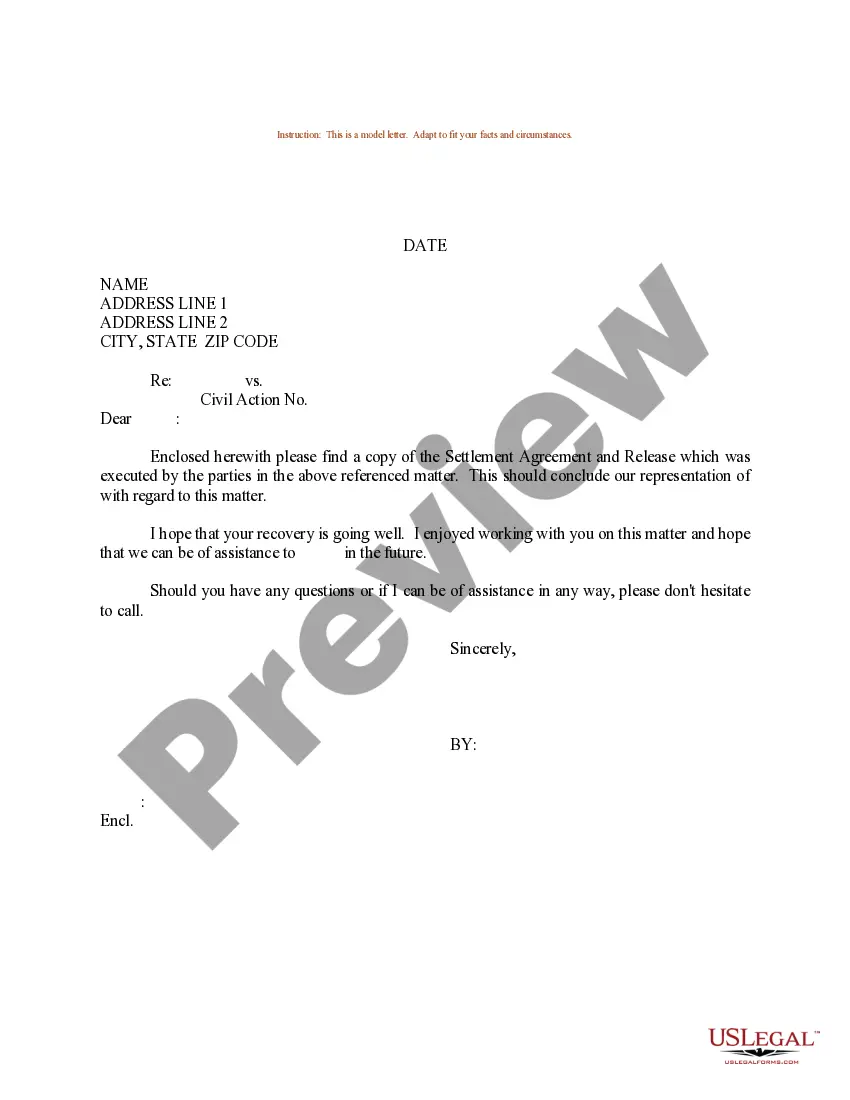
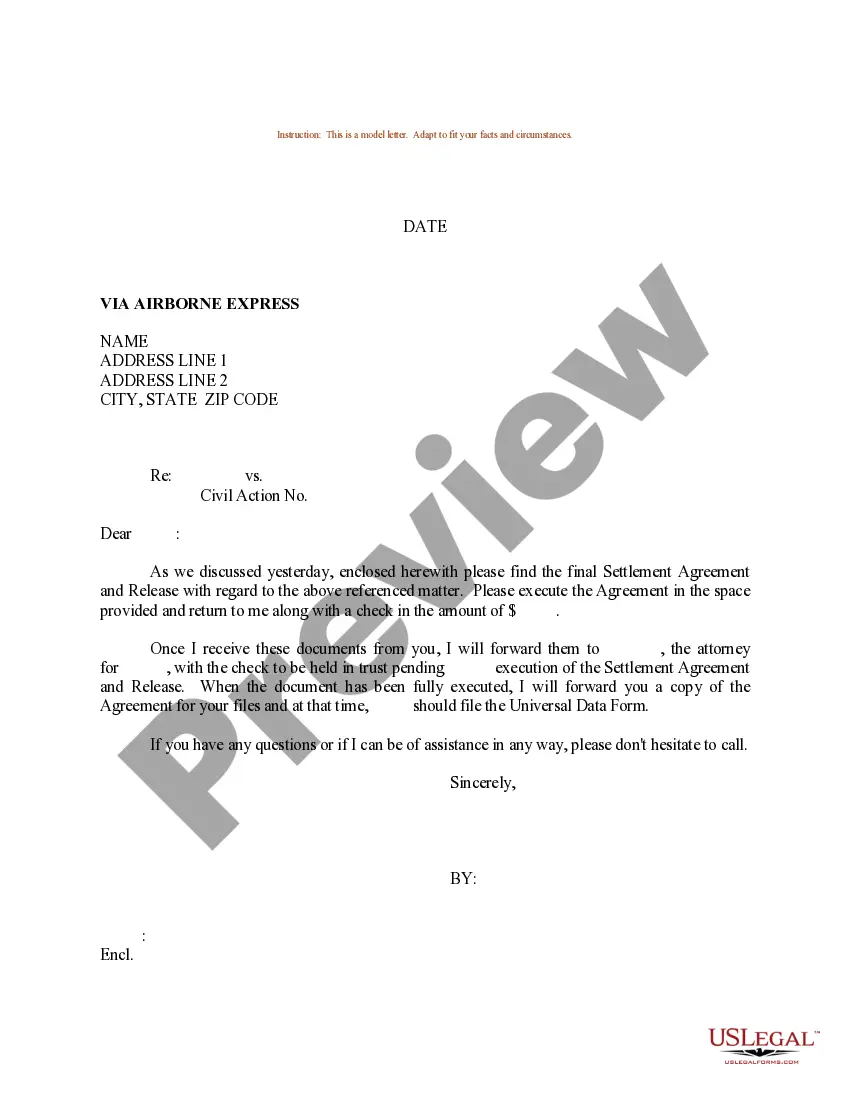
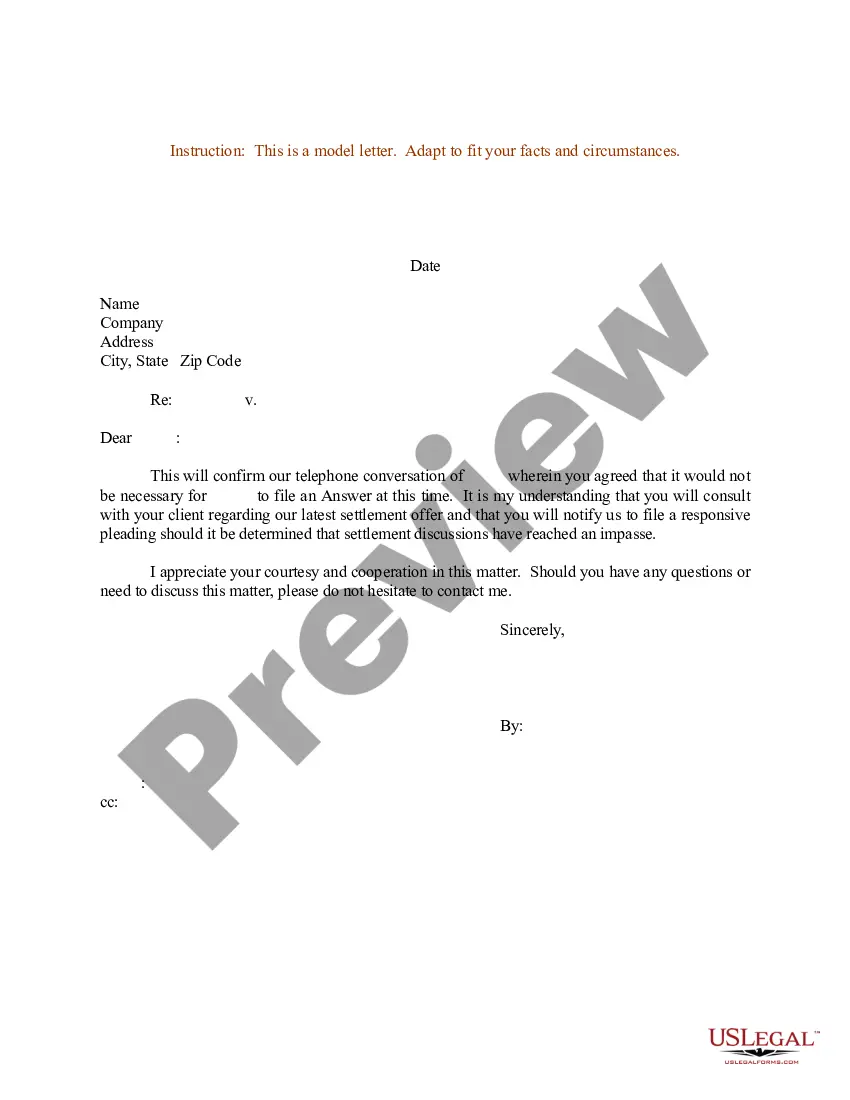
Cover Letter For Settlement Agreement In Minnesota
Description


Get your form ready online
Our built-in tools help you complete, sign, share, and store your documents in one place.
Make edits, fill in missing information, and update formatting in US Legal Forms—just like you would in MS Word.
Download a copy, print it, send it by email, or mail it via USPS—whatever works best for your next step.
Sign and collect signatures with our SignNow integration. Send to multiple recipients, set reminders, and more. Go Premium to unlock E-Sign.
If this form requires notarization, complete it online through a secure video call—no need to meet a notary in person or wait for an appointment.
We protect your documents and personal data by following strict security and privacy standards.

Make edits, fill in missing information, and update formatting in US Legal Forms—just like you would in MS Word.

Download a copy, print it, send it by email, or mail it via USPS—whatever works best for your next step.

Sign and collect signatures with our SignNow integration. Send to multiple recipients, set reminders, and more. Go Premium to unlock E-Sign.

If this form requires notarization, complete it online through a secure video call—no need to meet a notary in person or wait for an appointment.

We protect your documents and personal data by following strict security and privacy standards.
Looking for another form?








Form popularity
FAQ
Mediators or settlement judges can assist in drafting the release or resolving disputes about it. Most mediators limit their involvement to a “preliminary release” subject to the drafting of a final agreement by the parties.
At the outset of settlement negotiations, list all individuals and entities—both for the plaintiff and the defendant—that the agreement will cover. ✔ List all legal issues to be settled. List all claims your adversary may legally release via settlement. Verify the agreement covers these claims.
They can either ask for a settlement agreement themselves or with support from a qualified advisor or solicitor. Regardless of whether the employer or employee is the one initiating settlement agreement discussions, we always recommend reaching out to an experienced solicitor or qualified advisor.
Conclusion: Going to small claims court may be worth it for $500, but it will determine how you weigh your costs versus benefits. At a minimum, it is worth it to send a demand letter.
No. Court procedures are simplified to allow you to represent yourself. You may have an attorney only if the judge lets you. Also, the judge can decide how the attorney participates.
After you win a judgment, you must then have the judgment docketed. This process is sometimes called “transcribing the judgment.” You can docket a judgment by filing an Affidavit of Identification of Judgment Debtor form with court administration in the county where you were awarded the judgment.
Currently, the monetary jurisdictional limit is $15,000 ($4,000 if the claim involves a consumer credit transaction). You cannot file a claim involving title to real estate, slander, class actions, or medical malpractice in Conciliation Court.
Currently, the monetary jurisdictional limit is $15,000 ($4,000 if the claim involves a consumer credit transaction). You cannot file a claim involving title to real estate, slander, class actions, or medical malpractice in Conciliation Court.
Settlement agreements are contracts. Although the law presumes that settlement agreements are valid, they generally are subject to contract defenses, including mistake, unconscionability, duress, undue influence, and fraud.