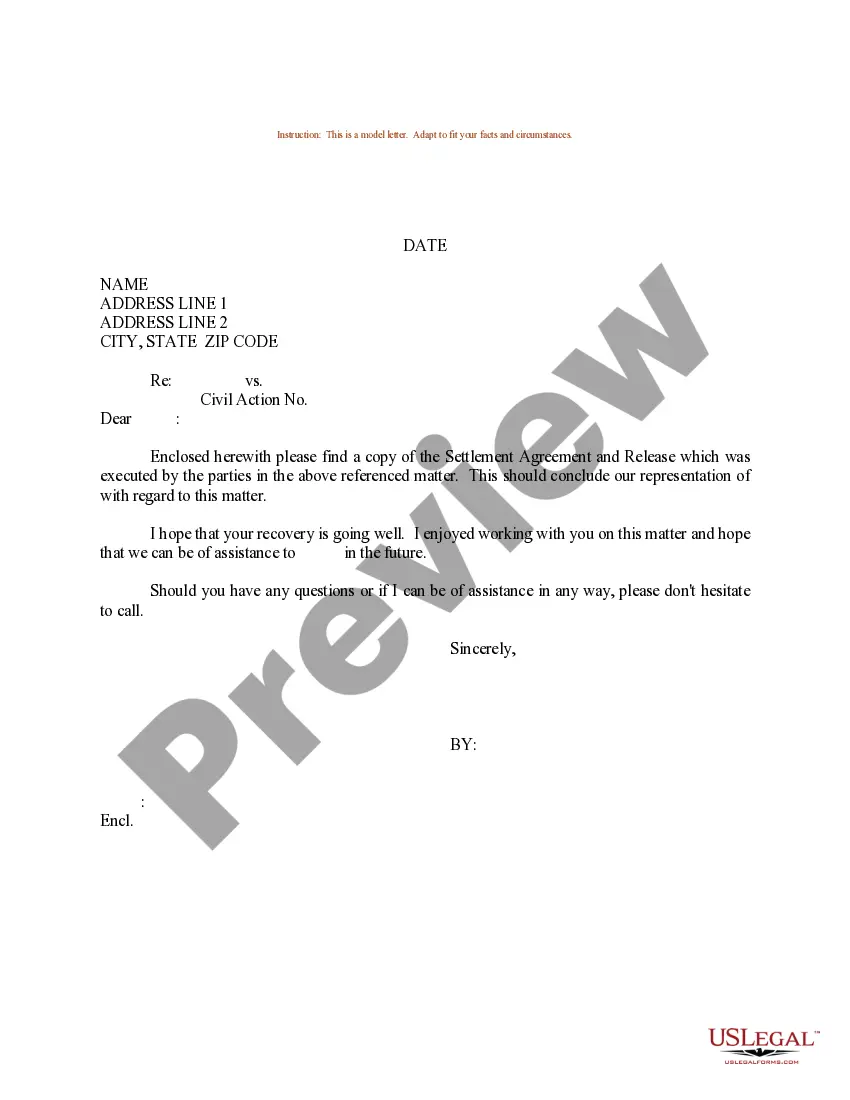
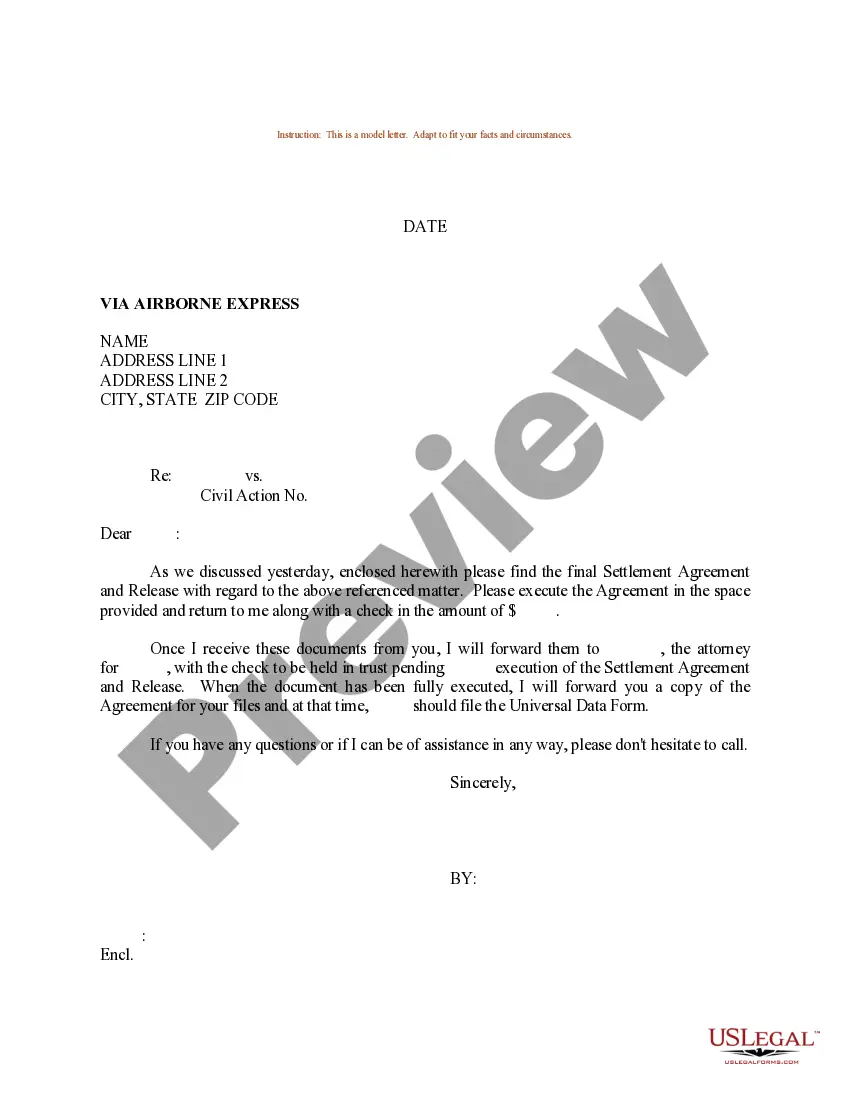
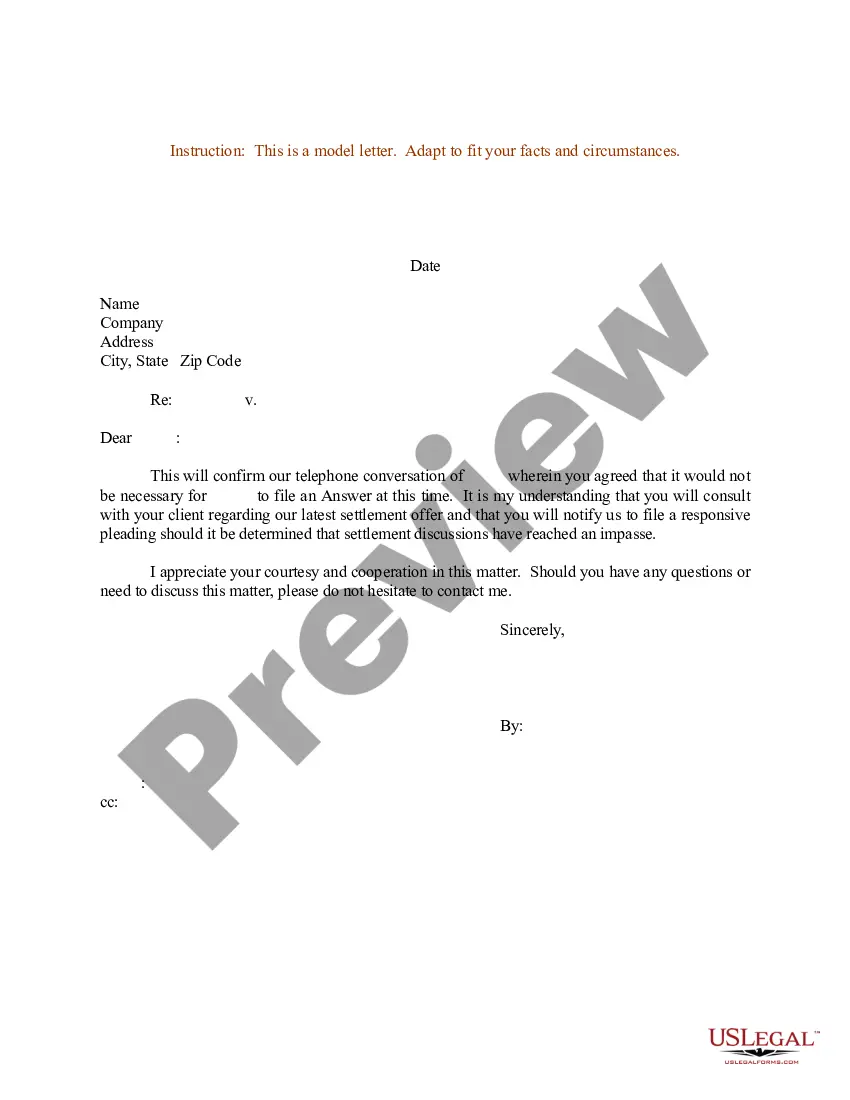
Confirmation Letter For Settlement In King
Description


Get your form ready online
Our built-in tools help you complete, sign, share, and store your documents in one place.
Make edits, fill in missing information, and update formatting in US Legal Forms—just like you would in MS Word.
Download a copy, print it, send it by email, or mail it via USPS—whatever works best for your next step.
Sign and collect signatures with our SignNow integration. Send to multiple recipients, set reminders, and more. Go Premium to unlock E-Sign.
If this form requires notarization, complete it online through a secure video call—no need to meet a notary in person or wait for an appointment.
We protect your documents and personal data by following strict security and privacy standards.

Make edits, fill in missing information, and update formatting in US Legal Forms—just like you would in MS Word.

Download a copy, print it, send it by email, or mail it via USPS—whatever works best for your next step.

Sign and collect signatures with our SignNow integration. Send to multiple recipients, set reminders, and more. Go Premium to unlock E-Sign.

If this form requires notarization, complete it online through a secure video call—no need to meet a notary in person or wait for an appointment.

We protect your documents and personal data by following strict security and privacy standards.
Looking for another form?








Form popularity
FAQ
A Response or Reply to the Opposing Party's Pleadings is your answer to the opposing party's document filed with the court. These documents could include a Petition for Dissolution of a Non-Covenant Marriage, a Motion for Clarification, or a Petition to Enforce.
To file a motion for contempt in New York, certain criteria must be met. There must be an existing order of the court that is clear and unambiguous, and the accused must be proven to have known about this order and willfully disobeyed it.
After the defendant has filed an answer or a motion to dismiss the complaint, the judge holds a pretrial conference, sometimes referred to as a case management conference. A schedule for discovery is generally set at this conference, and a trial date is sometimes also scheduled.
You must fill out an Answer, serve the plaintiff, and file your Answer form with the court. Generally, this is due within 30 days after you were served. If you don't, the plaintiff can ask for a default. If there's a default, the court won't let you file an Answer and can decide the case without you.
Basics. Filing a response is an important first step for any defendant in a civil lawsuit. By filing a response, you establish that you are contesting the case and requiring the plaintiff to prove their case at trial in order to win.
After a summons with notice is served, the defendant will demand that the plaintiff serve a complaint. The plaintiff must then have the complaint served within 20 days after being served with the demand, or the case may be dismissed.
You must fill out an Answer, serve the plaintiff, and file your Answer form with the court. Generally, this is due within 30 days after you were served. If you don't, the plaintiff can ask for a default. If there's a default, the court won't let you file an Answer and can decide the case without you.
The Format of a Settlement Demand Letter A description of the accident. An explanation of why the defendant is at fault or otherwise liable for the claim. A brief description of your injuries and property damage. A brief description of your losses (medical expenses, lost earnings, pain and suffering, etc.).
Here are five steps on how to write a confirmation letter: Insert a confirmation letter header. Begin with your explanation. Supplement with detailed information. Call attention to any attachments. Close with a supportive statement.
The Nuts and Bolts of a Demand Letter Gather complete information before you start writing. Describe your injuries and medical treatment. List your medical expenses, lost wages, and non-economic damages. Make a settlement demand. Include a deadline for legal action if you want to, but don't bluff.