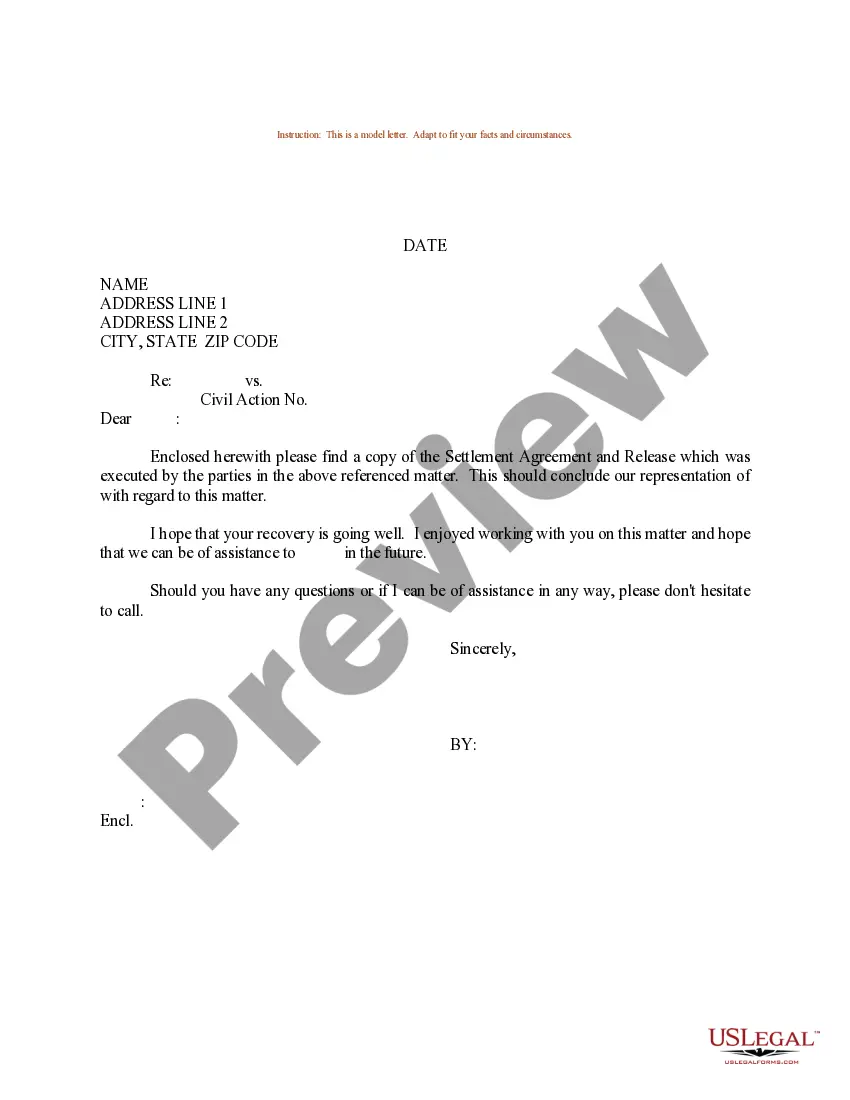
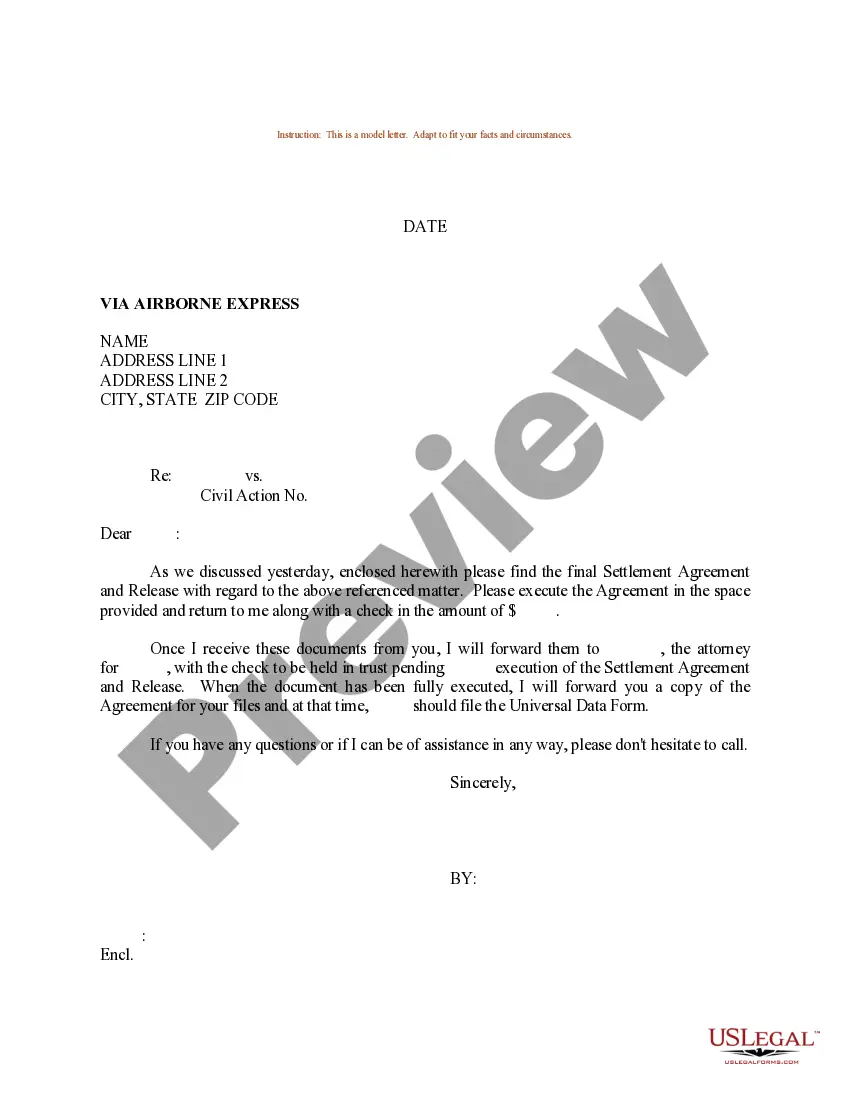
Confirmation Of Settlement Letter For Payment In Franklin
Description


Get your form ready online
Our built-in tools help you complete, sign, share, and store your documents in one place.
Make edits, fill in missing information, and update formatting in US Legal Forms—just like you would in MS Word.
Download a copy, print it, send it by email, or mail it via USPS—whatever works best for your next step.
Sign and collect signatures with our SignNow integration. Send to multiple recipients, set reminders, and more. Go Premium to unlock E-Sign.
If this form requires notarization, complete it online through a secure video call—no need to meet a notary in person or wait for an appointment.
We protect your documents and personal data by following strict security and privacy standards.

Make edits, fill in missing information, and update formatting in US Legal Forms—just like you would in MS Word.

Download a copy, print it, send it by email, or mail it via USPS—whatever works best for your next step.

Sign and collect signatures with our SignNow integration. Send to multiple recipients, set reminders, and more. Go Premium to unlock E-Sign.

If this form requires notarization, complete it online through a secure video call—no need to meet a notary in person or wait for an appointment.

We protect your documents and personal data by following strict security and privacy standards.
Looking for another form?




Form popularity
FAQ
Under New York law, and in other US jurisdictions, settlement agreements are treated like any other contract. ingly to establish the existence of a settlement agreement, “a plaintiff must establish an offer, acceptance of the offer, consideration, mutual assent and an intent to be bound” (Kowalchuk v.
The only way you would be able to find the settlement paperwork would be to either contact the law office that handled the case or if it was filed with the court, if there was a lawsuit filed in the case.
The document (contract) which evidences the agreement between parties and which binds the parties following a negotiation to adhere to the terms agreed upon as a result of the negotiation.
A plaintiff's concern about the financial resources of a defendant may also play a major role in settlement. A plaintiff with a strong case will often be forced to accept a lower-value settlement if the de- fendant is financially incapable of paying the likely judgment.
Across all cases, plaintiffs win slightly more than half the cases.
Settling can provide a guaranteed outcome and eliminate the uncertainty associated with a trial. Financial Considerations: Trials are expensive, and legal fees can accumulate quickly. This is particularly important if you're paying your lawyer by the hour.
There are several reasons why it may be better to settle a case rather than going to trial. Trials are expensive. Trials are stressful. Liability and damages are difficult to determine when your case is decided by a judge or jury.
At the outset of settlement negotiations, list all individuals and entities—both for the plaintiff and the defendant—that the agreement will cover. ✔ List all legal issues to be settled. List all claims your adversary may legally release via settlement. Verify the agreement covers these claims.
Critical Elements of a Settlement Demand Letter Introduction and Background Information. Start by introducing yourself and providing a brief overview of the incident. Statement of Facts. Liability. Injuries and Medical Treatment. Damages. Settlement Demand. Deadline for Response. Closing.