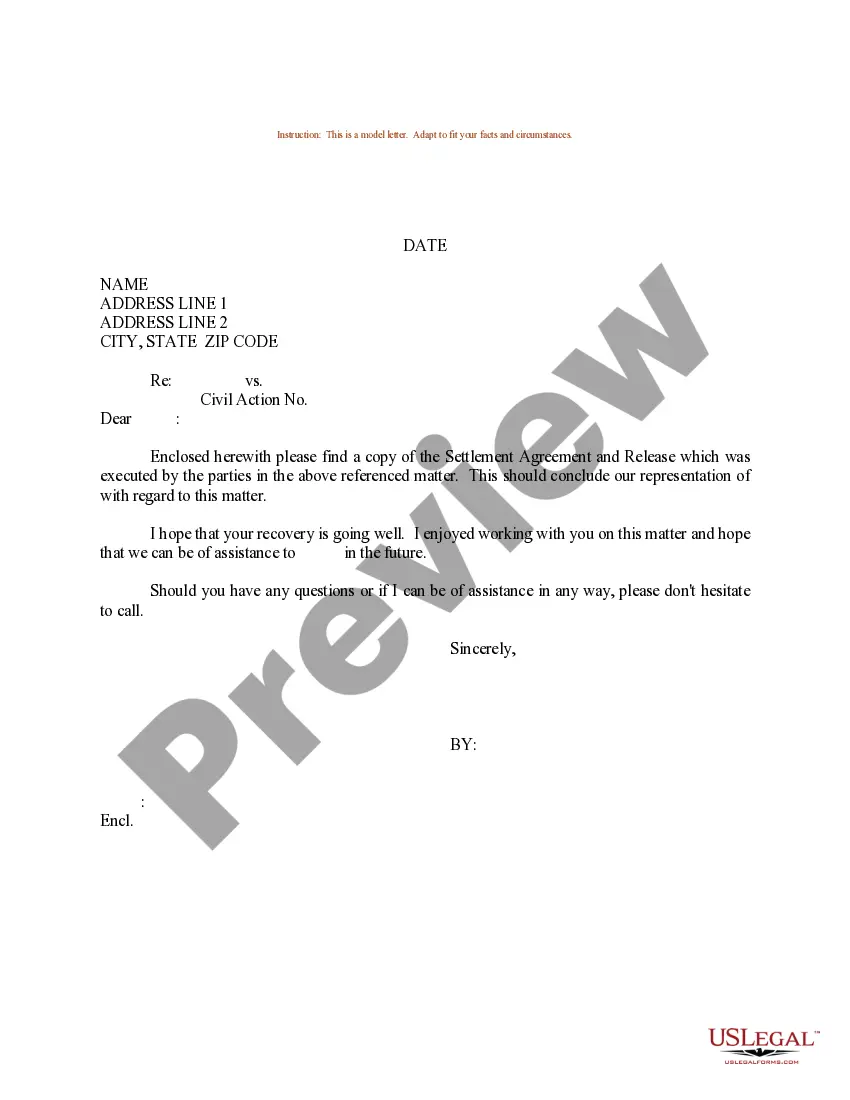
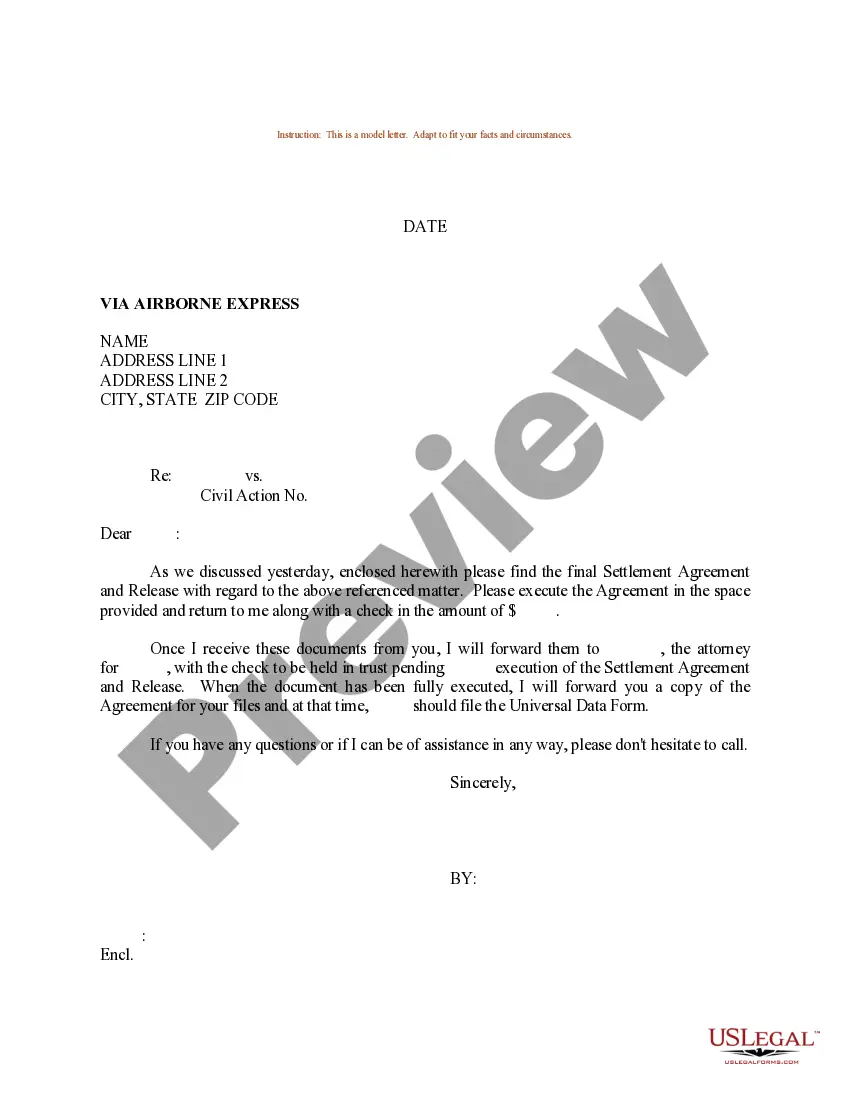
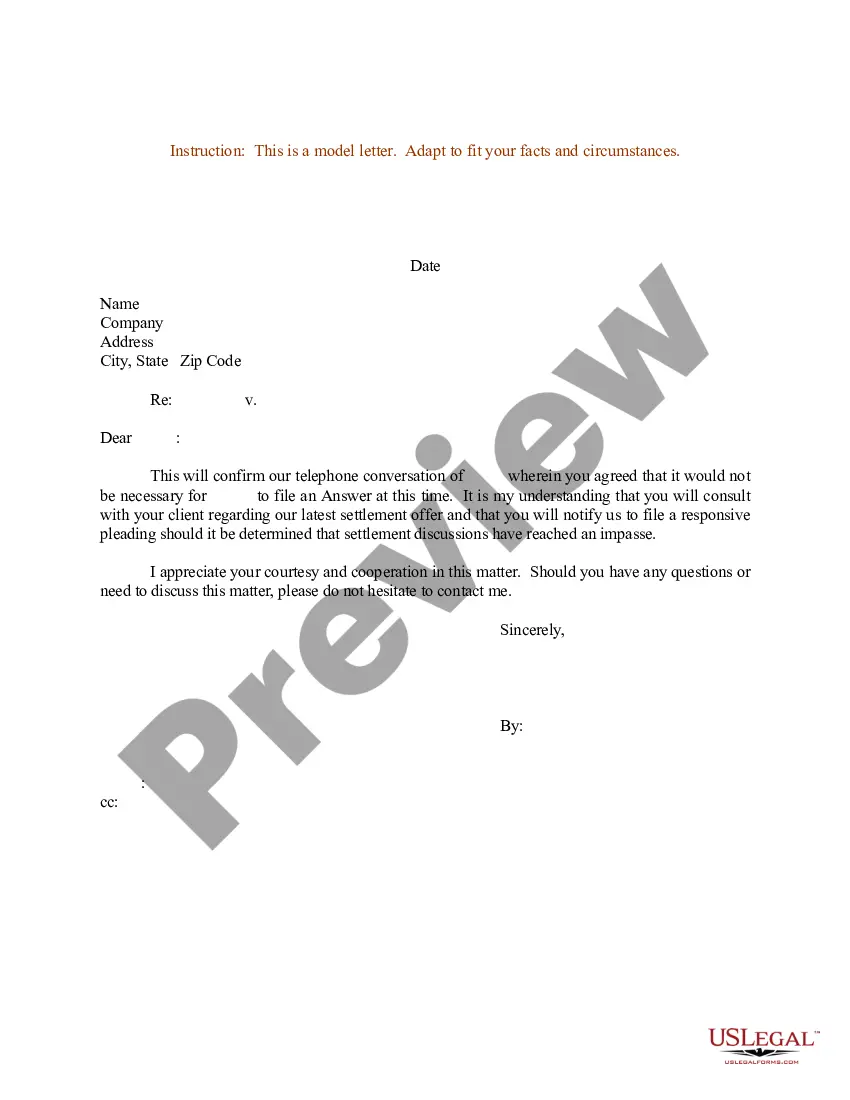
Confirmation Of Settlement Letter Without Prejudice In Broward
Description


Get your form ready online
Our built-in tools help you complete, sign, share, and store your documents in one place.
Make edits, fill in missing information, and update formatting in US Legal Forms—just like you would in MS Word.
Download a copy, print it, send it by email, or mail it via USPS—whatever works best for your next step.
Sign and collect signatures with our SignNow integration. Send to multiple recipients, set reminders, and more. Go Premium to unlock E-Sign.
If this form requires notarization, complete it online through a secure video call—no need to meet a notary in person or wait for an appointment.
We protect your documents and personal data by following strict security and privacy standards.

Make edits, fill in missing information, and update formatting in US Legal Forms—just like you would in MS Word.

Download a copy, print it, send it by email, or mail it via USPS—whatever works best for your next step.

Sign and collect signatures with our SignNow integration. Send to multiple recipients, set reminders, and more. Go Premium to unlock E-Sign.

If this form requires notarization, complete it online through a secure video call—no need to meet a notary in person or wait for an appointment.

We protect your documents and personal data by following strict security and privacy standards.
Looking for another form?




Form popularity
FAQ
Call Us. General Information: (954) 831-6565. Telephone agents are available to assist you or direct your call between a.m. and p.m., Monday thru Friday, excluding Courthouse Holidays.
By Florida law, the Clerk of Courts in each county is the official custodian of court records. Click here to access the Clerk's Online Services, including official records, civil/family/probate cases, criminal cases and traffic cases, or you may call the Clerk's 24-hour voice response system at (305) 275-1155.
Please contact the Archives and Records Library of the Broward County Clerk of Court. For additional information, please call: (954) 831-7856.
Brenda D. Forman As your Clerk of the Circuit and County Courts, I am pleased to provide you with this website and hope you will find the information and services provided here useful.
You can access all public dockets and available case documents using the new Appellate Case Information System (ACIS) at .
The Role of the Court Depending on the claim's nature, a judge or another officer of the court might need to sign off on the settlement agreement. This underscores the importance of having an experienced personal injury attorney handle your case from start to finish.
In your first without prejudice letter, be selective and keep some issues in reserve for the final negotiating stages. Try not to over-emphasise all the ways you think they've mistreated you. Instead stop and think if there is a way in which you can more subtly mention their behaviour.
“Without Prejudice” means that you are sending a communication in an honest attempt to compromise a matter, in which you might make a concession (either expressly or implicitly) to the other side that cannot be later put into evidence in Court.
What Should Be Included in a Settlement Agreement? Identifying information for all involved parties. A description of the issue you're seeking to settle. An offer of resolutions that both parties agree to. Proof of valid consideration from both parties without coercion or duress. Legal purpose.
If you are in a dispute with someone or trying to settle an issue before it becomes a full blown dispute, you may come across something being “Without Prejudice”. The two most common times you'll encounter this are in a letter or email from the other party or their lawyer, or in a meeting or phone call.