Installment Contract Agreement With Seller In San Bernardino
Description

Get your form ready online
Our built-in tools help you complete, sign, share, and store your documents in one place.
Make edits, fill in missing information, and update formatting in US Legal Forms—just like you would in MS Word.
Download a copy, print it, send it by email, or mail it via USPS—whatever works best for your next step.
Sign and collect signatures with our SignNow integration. Send to multiple recipients, set reminders, and more. Go Premium to unlock E-Sign.
If this form requires notarization, complete it online through a secure video call—no need to meet a notary in person or wait for an appointment.
We protect your documents and personal data by following strict security and privacy standards.

Make edits, fill in missing information, and update formatting in US Legal Forms—just like you would in MS Word.

Download a copy, print it, send it by email, or mail it via USPS—whatever works best for your next step.

Sign and collect signatures with our SignNow integration. Send to multiple recipients, set reminders, and more. Go Premium to unlock E-Sign.

If this form requires notarization, complete it online through a secure video call—no need to meet a notary in person or wait for an appointment.

We protect your documents and personal data by following strict security and privacy standards.
Looking for another form?









Form popularity
FAQ
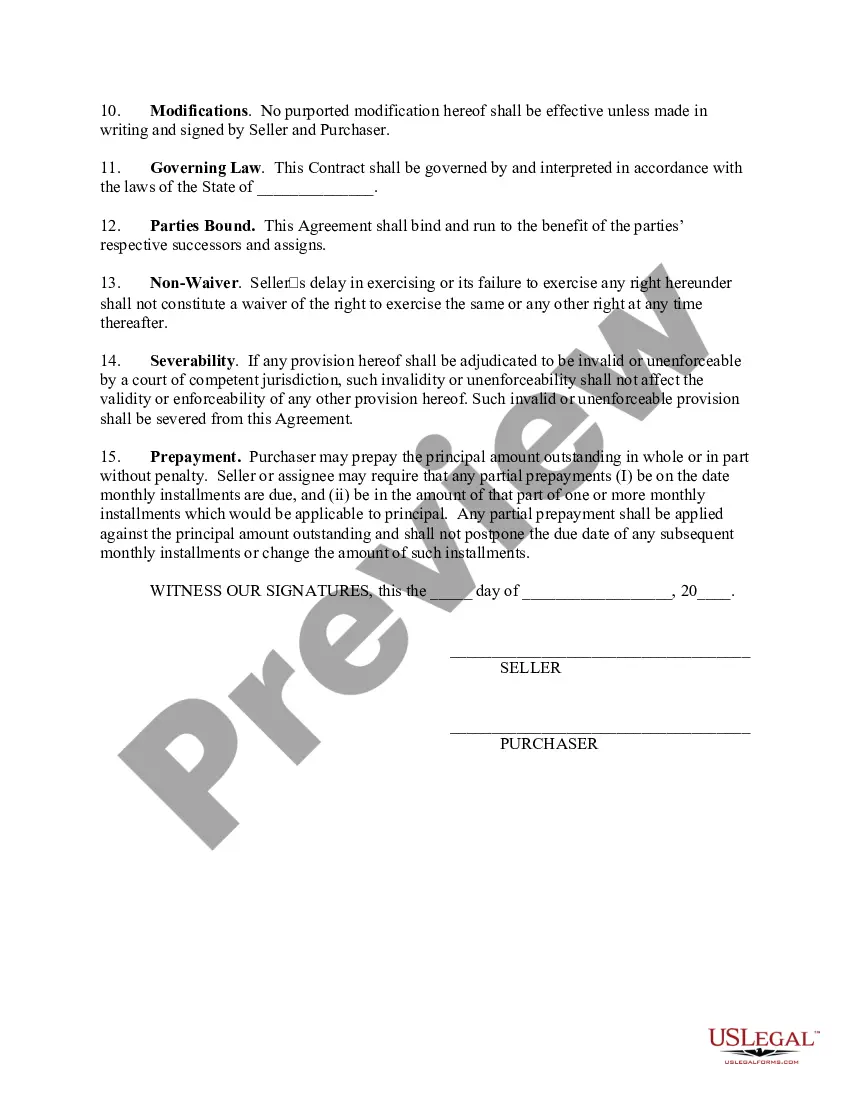
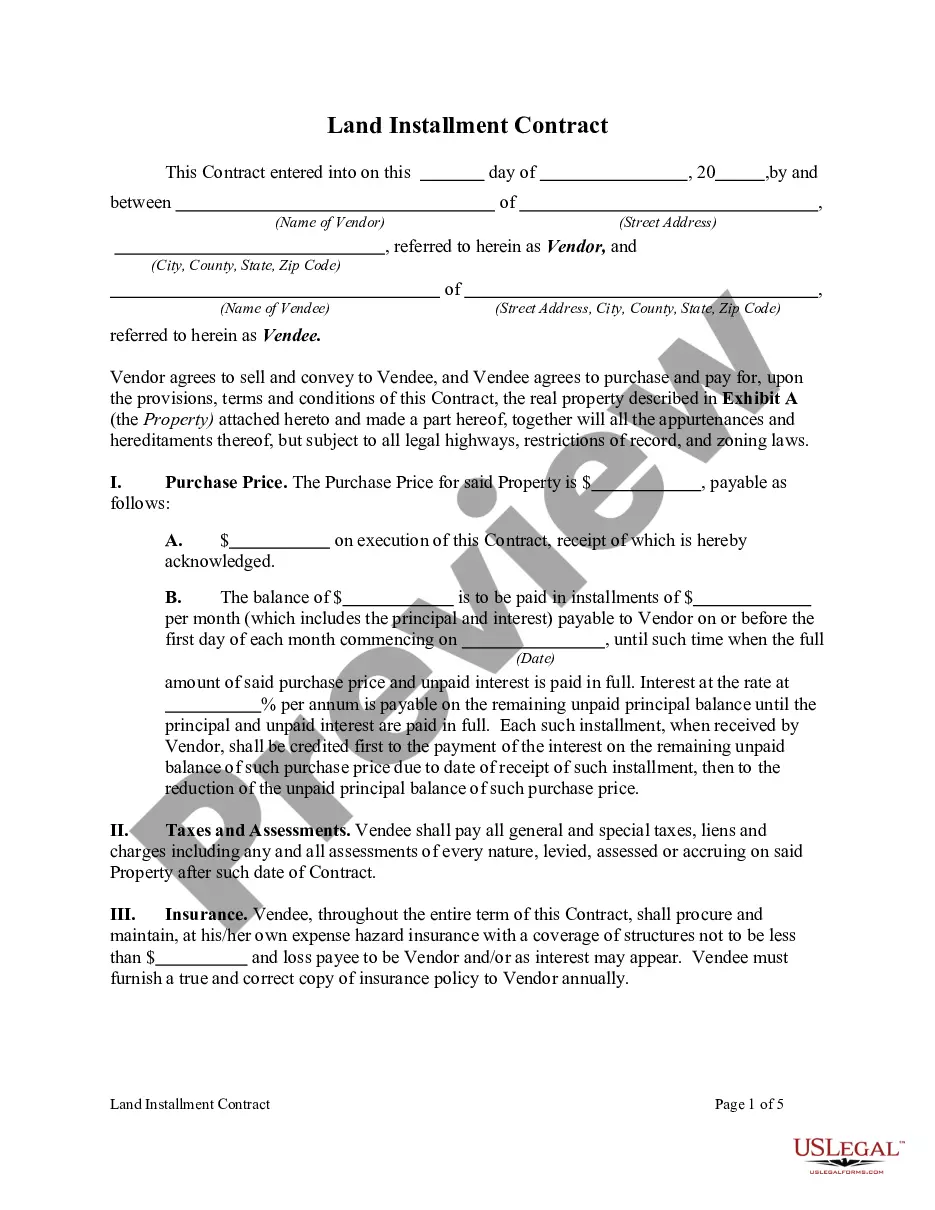
Under this financial arrangement, the purchaser takes equitable title to the real property and has the right to possession and use of the real property while making installment payments to the seller.
But it also can be beneficial for a seller because the taxable gain from the sale can be spread out over several years. Here's a close-up on the federal income tax implications for installment sales for sales of businesses, business ownership interests and other eligible assets.
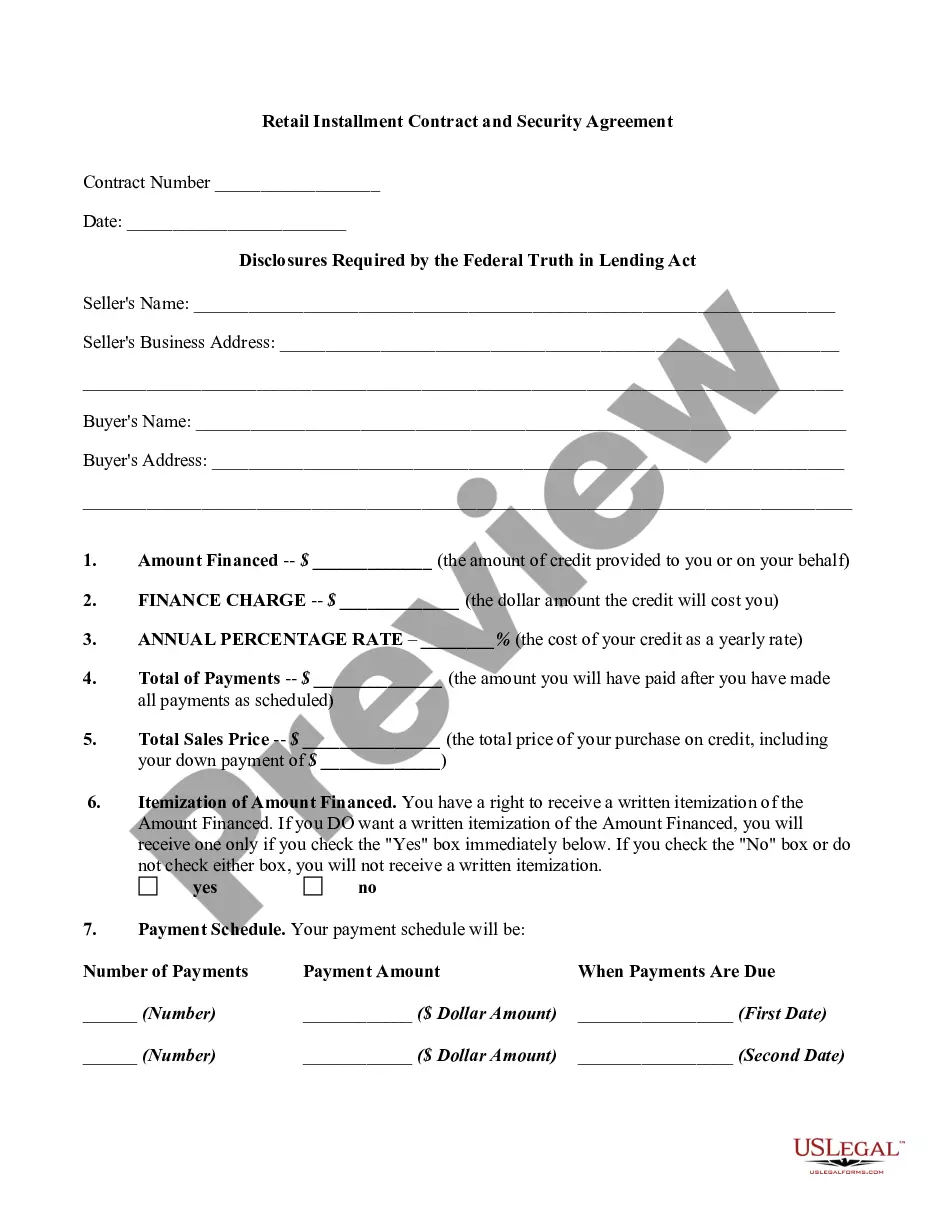
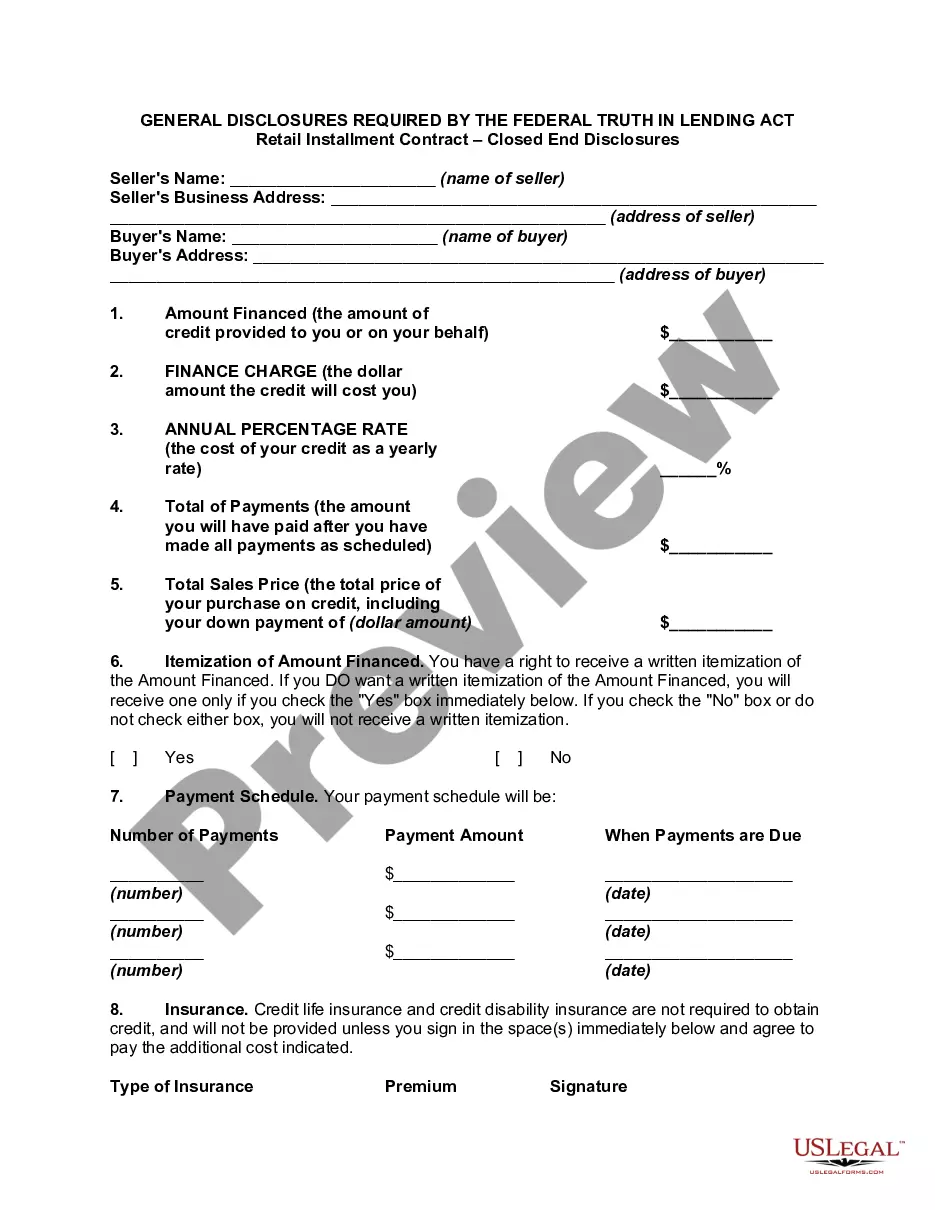
Getting a Copy of the Contract Under TILA, the dealer is required to give the customer a copy of the contract to keep at the time the customer signs the retail installment sale contract whether you want to incur the debt on these terms.
One of the biggest benefits of an installment sale is that it helps the buyer place themselves into a lower tax bracket. The sale of some sizable property or property of sizable value—whether it's commercial real estate or residential real estate—can bump an investor into a tax bracket they'd like to avoid.
Tax Deferral (for the seller): One of the most compelling reasons to consider an installment sale is the ability to defer capital gains tax.
Installment land contract; An installment land contract, or contract for deed, allows the buyer to make payments over time to the owner, while the owner holds legal title to the property. No deed or title is transferred until all, or a specified portion of, payments have been made.
Advantages of the Installment Sales Method Potential for Lower Tax Rates: Capital gains rates are based on your adjusted gross income, so spreading out the gain over multiple years might result in a lower overall tax rate.