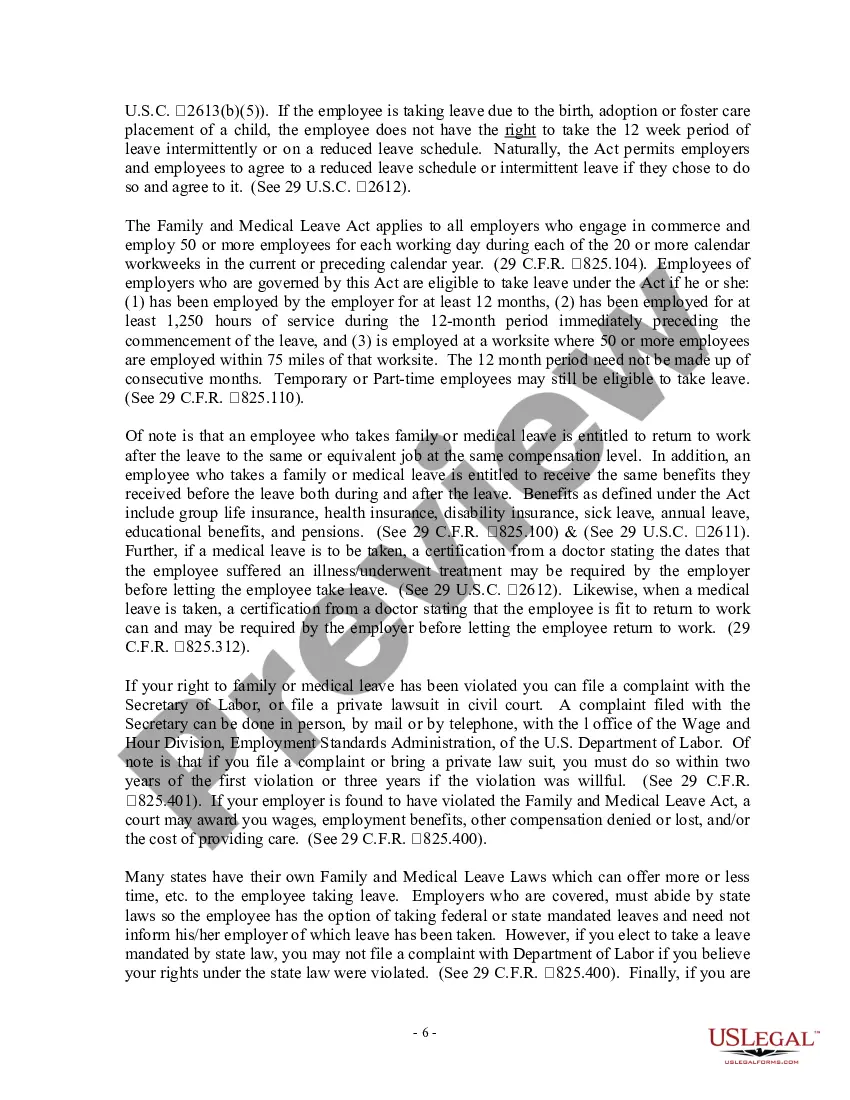
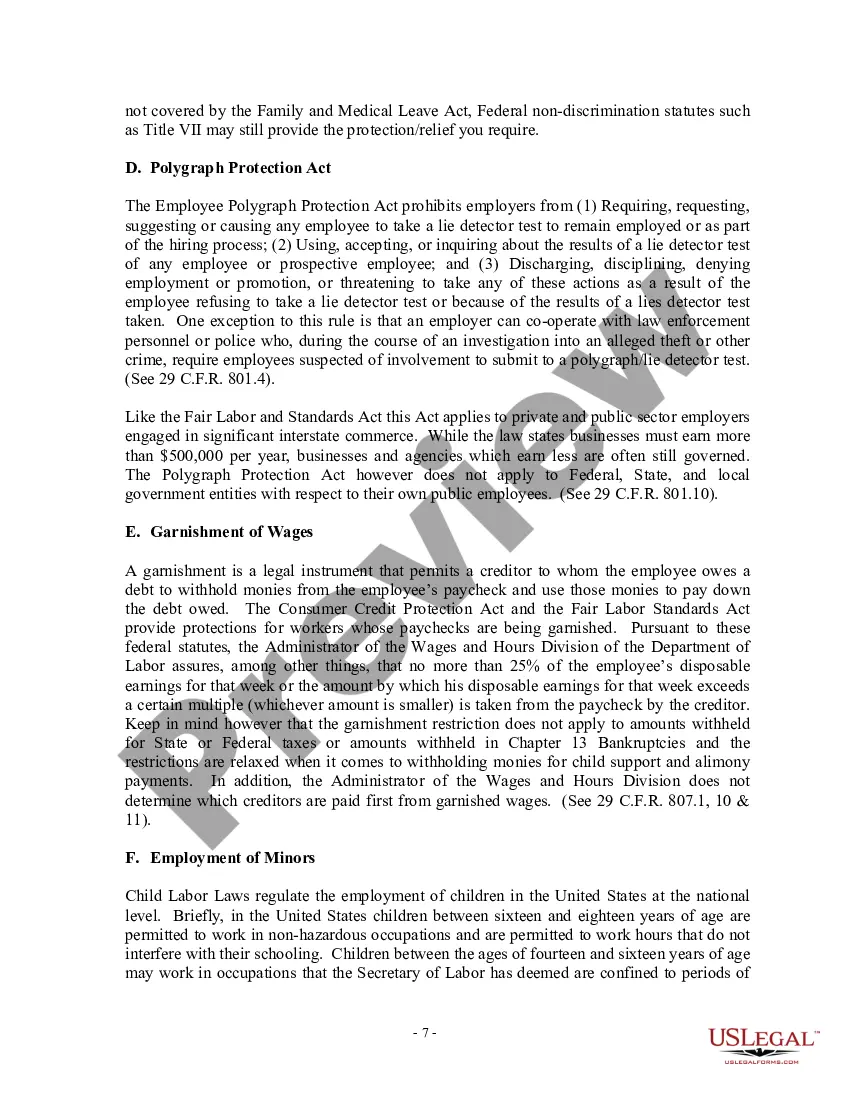
Employment Law Handbook With Benefits In Collin
Description

Get your form ready online
Our built-in tools help you complete, sign, share, and store your documents in one place.
Make edits, fill in missing information, and update formatting in US Legal Forms—just like you would in MS Word.
Download a copy, print it, send it by email, or mail it via USPS—whatever works best for your next step.
Sign and collect signatures with our SignNow integration. Send to multiple recipients, set reminders, and more. Go Premium to unlock E-Sign.
If this form requires notarization, complete it online through a secure video call—no need to meet a notary in person or wait for an appointment.
We protect your documents and personal data by following strict security and privacy standards.

Make edits, fill in missing information, and update formatting in US Legal Forms—just like you would in MS Word.

Download a copy, print it, send it by email, or mail it via USPS—whatever works best for your next step.

Sign and collect signatures with our SignNow integration. Send to multiple recipients, set reminders, and more. Go Premium to unlock E-Sign.

If this form requires notarization, complete it online through a secure video call—no need to meet a notary in person or wait for an appointment.

We protect your documents and personal data by following strict security and privacy standards.
Looking for another form?


Form popularity
FAQ
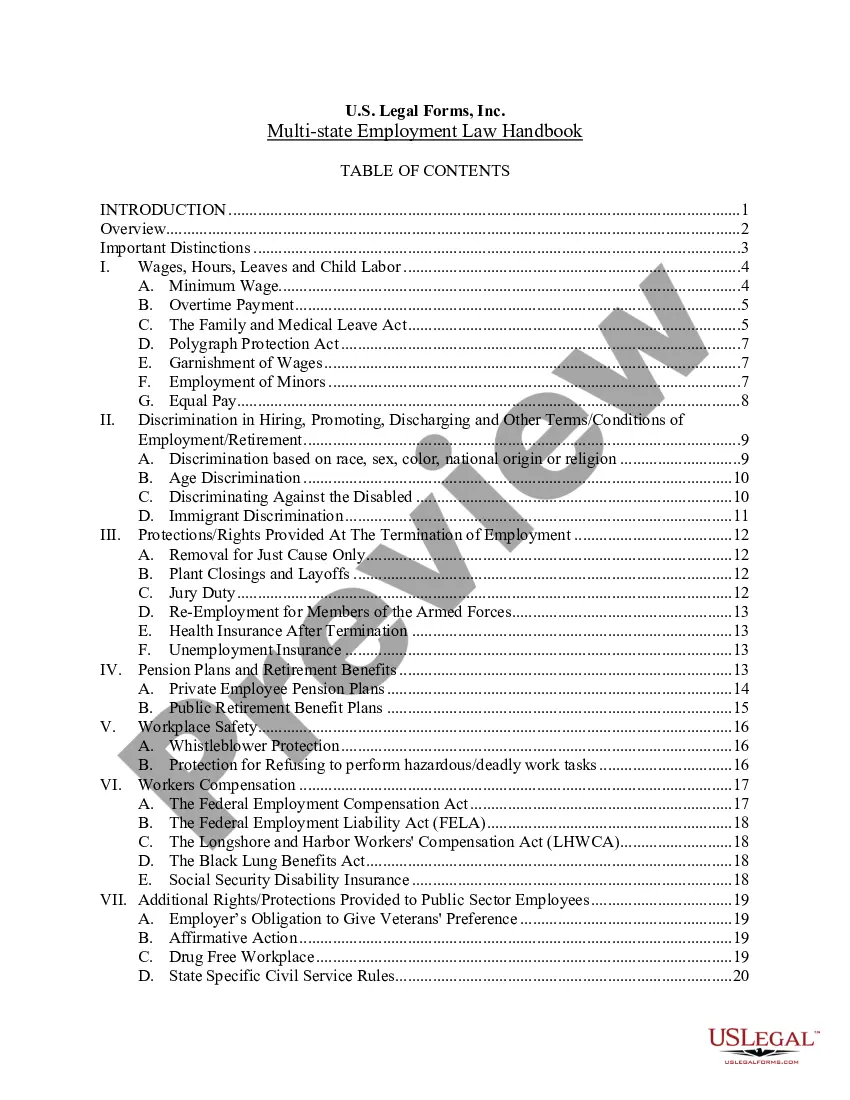
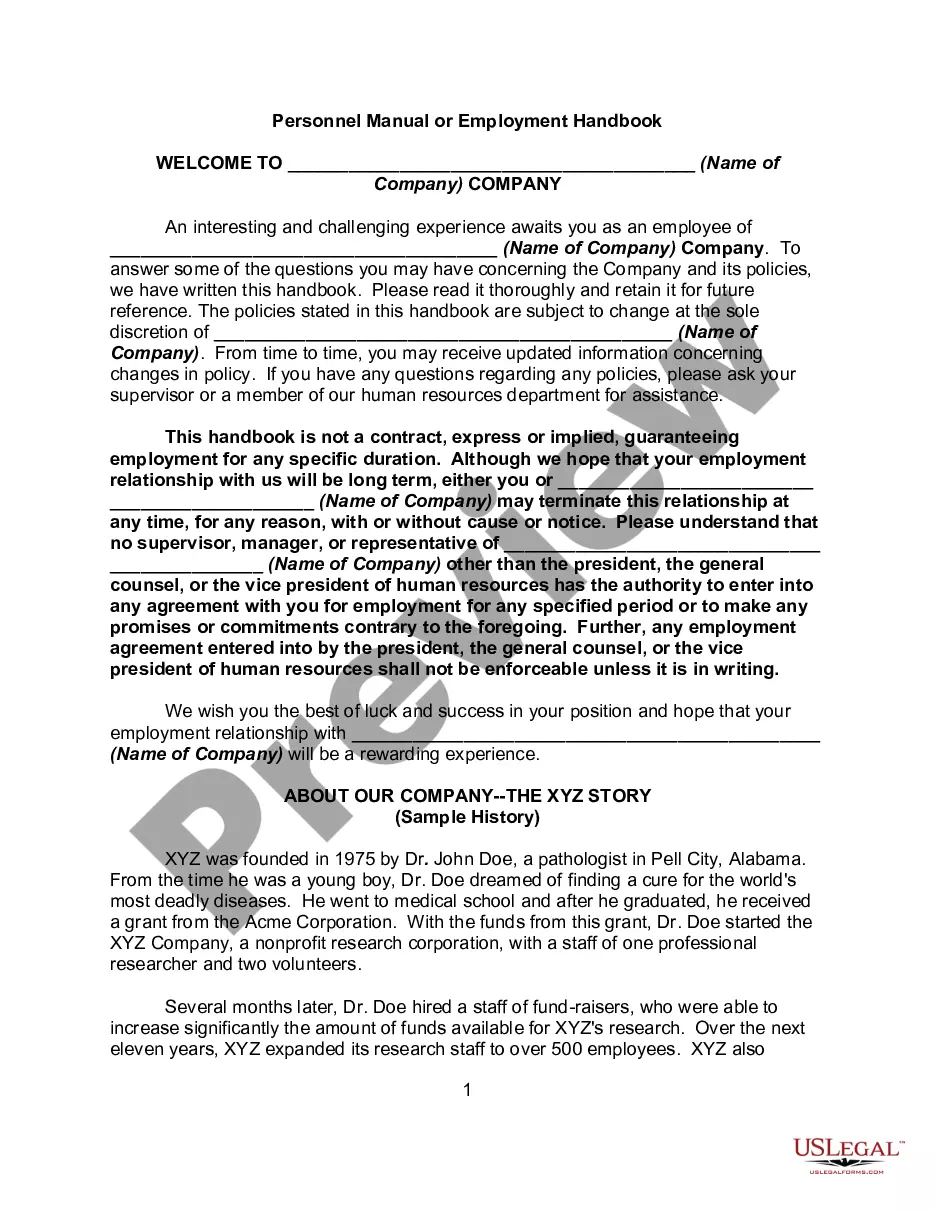
Employee Handbook Guidelines An introduction containing: A welcome to the employees. A statement that the handbook is not an employment contract (California does not view handbooks as employment contracts)
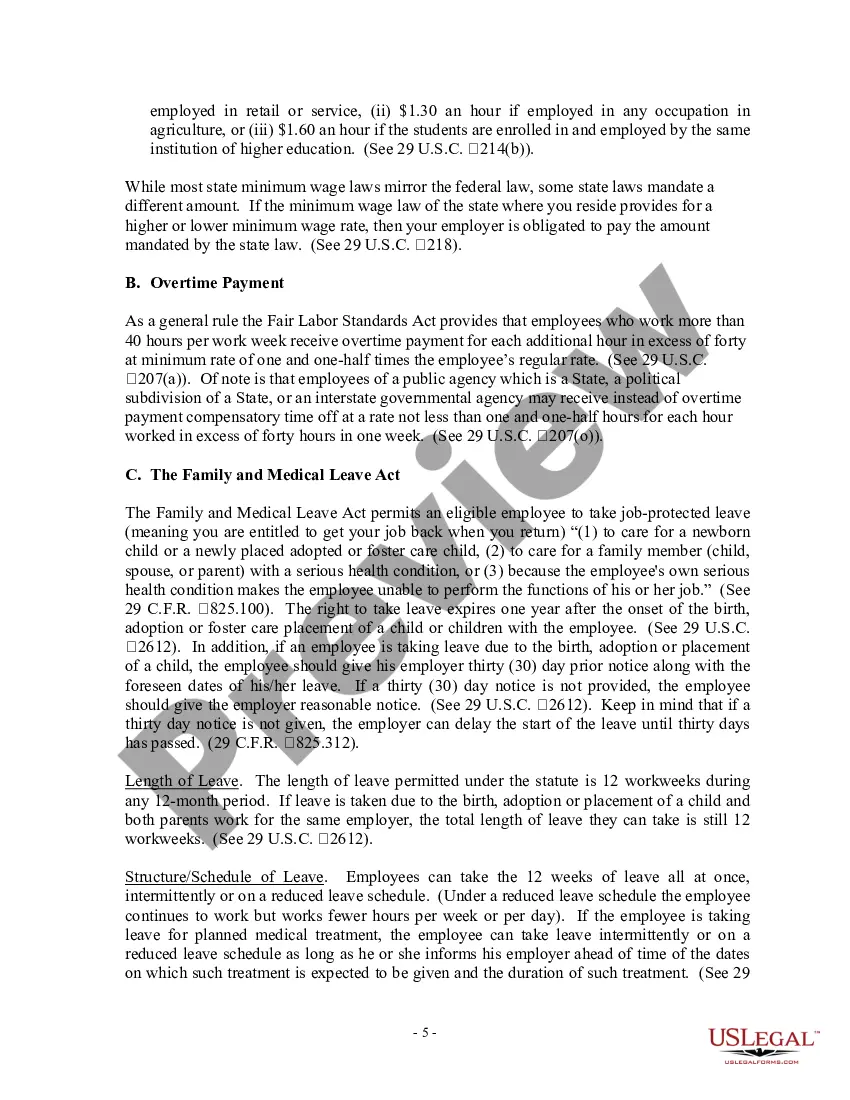
Compensation and Benefits This section should also detail a few employee benefits, such as health insurance, vacation and leave policies, and retirement plans. This area will also need to cover how employees achieve eligibility for raises, performance-based incentives, and other types of benefits.
If you don't have an employee handbook, opposing counsel will likely use the absence of a handbook to prove the absence of any consistent policies or procedures upon which employees are treated.
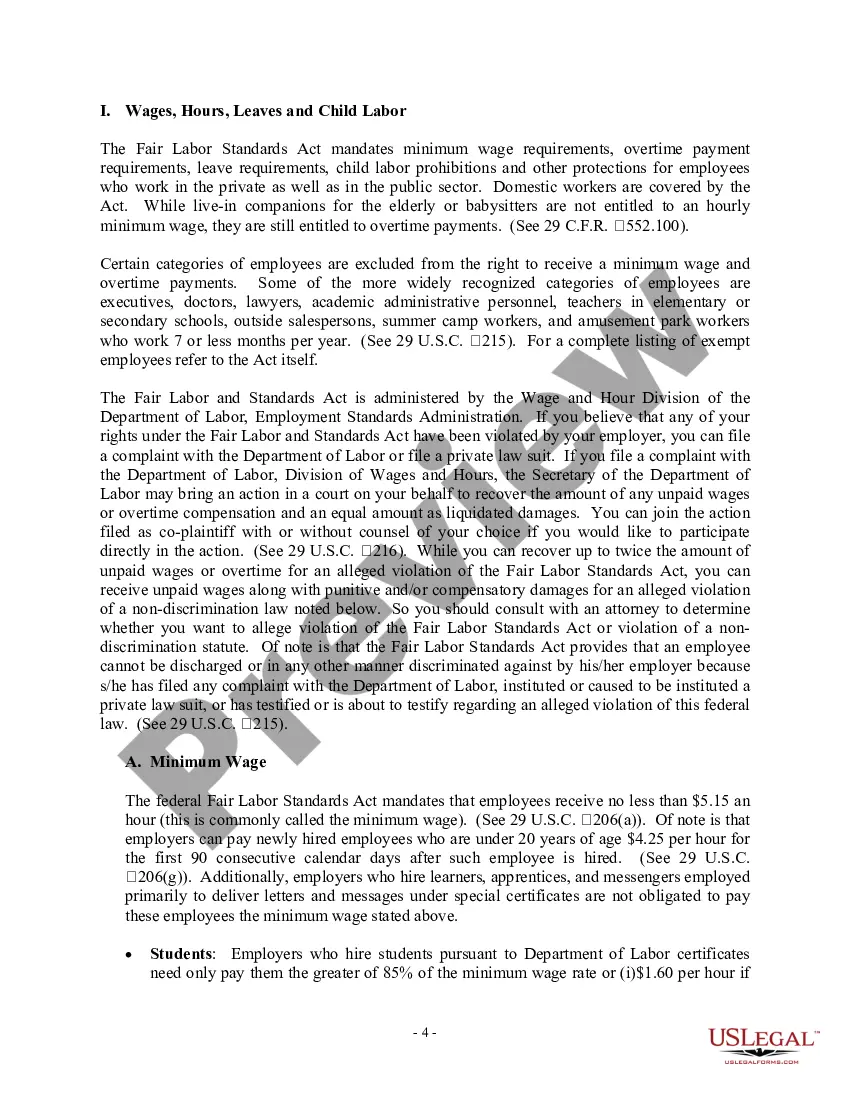
Social Security and Medicare. Unemployment insurance. Workers' compensation insurance. Family and Medical Leave Act (FMLA) protections.
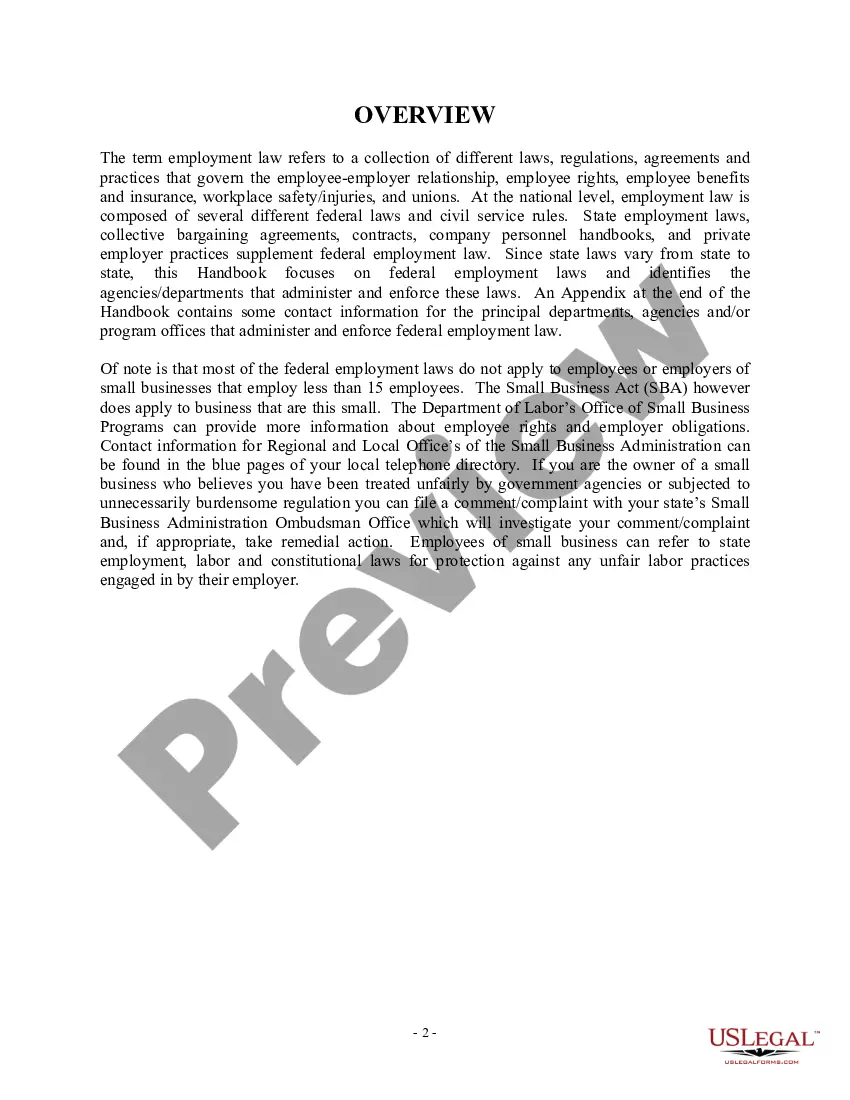
Very few employees read the Employee Handbook they get when they start a new job, but they should. An Employee Handbook can set the expectations for the employee and also what is required by law for the employer. It often clarifies various obligations the employer has both under the law and which it agrees to take on.
A handbook is a written document that describes the policies, procedures, and overall expectations of a program or a job. It is meant to serve as a reference and answer frequently asked questions. A handbook is meant to provide the groundwork for success.
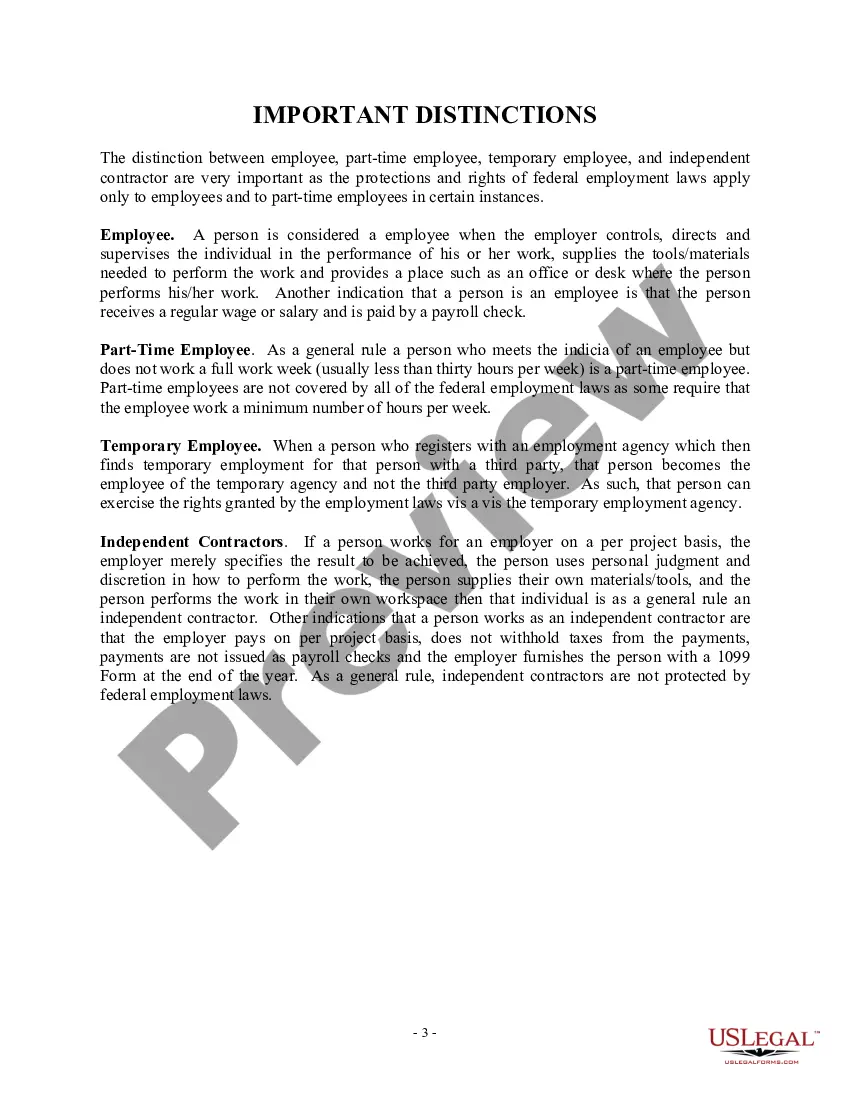
The employee handbook policy should include: Workplace policies: Descriptions of the workplace environment, including confidentiality, harassment prevention, and workplace safety. Code of conduct: Guidelines on employee behavior, including dress code, cyber security, conflict of interest, and workplace relationships.
Employee handbooks are not legally binding unless they explicitly state that they are. However, certain statements in the handbook can be interpreted as contractual promises if they are specific enough and imply mutual obligations between employer and employee.
Can You Fire Someone for Not Signing The Employee Handbook? No, an employee cannot be fired for not signing an employee handbook. However, employers may require employees to sign the handbook as a condition of employment and can take disciplinary action if they refuse to do so.
While there is no specific law on the federal level that requires employers to create an employee handbook, certain labor regulations may apply if you choose to create one.