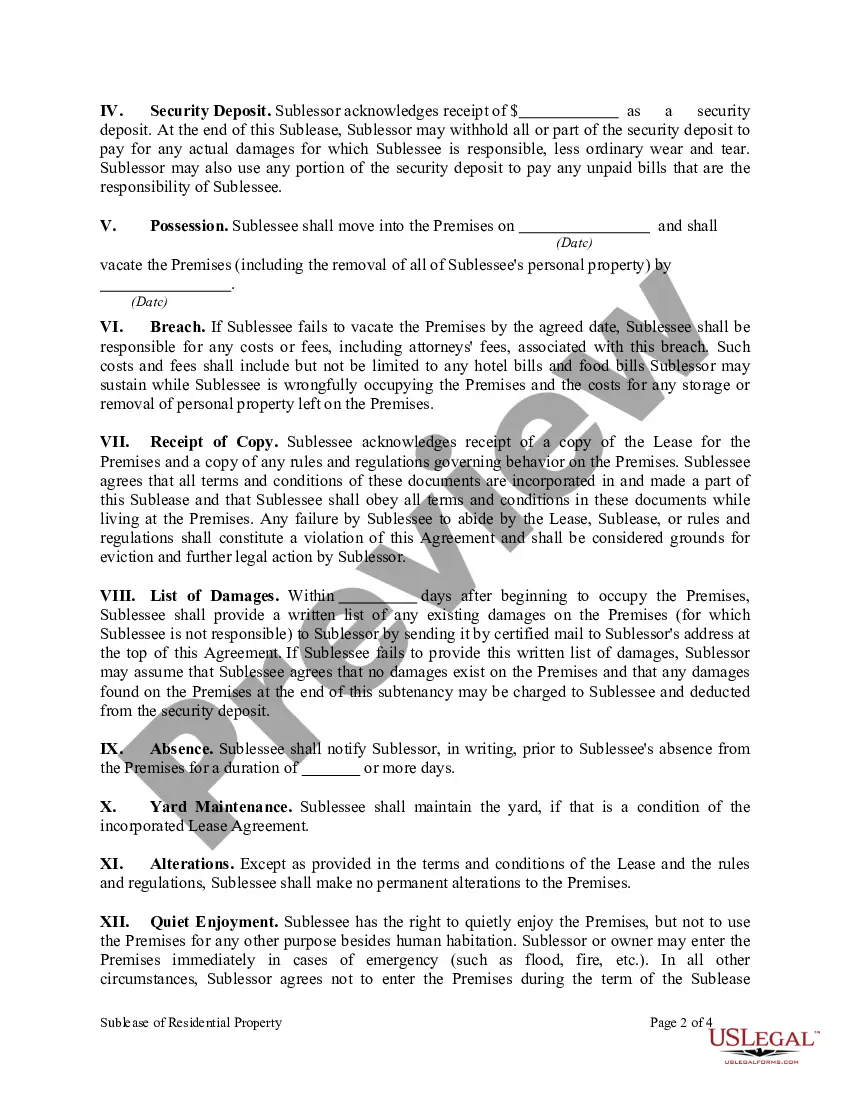
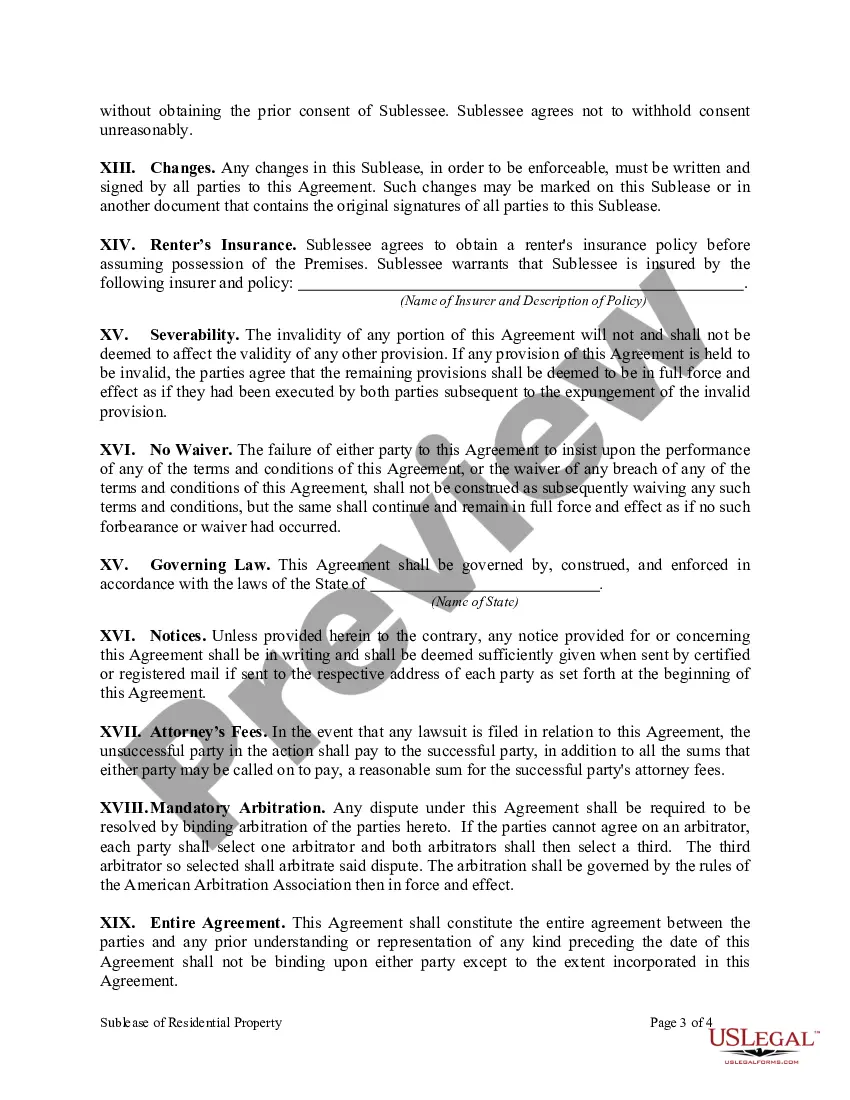
Sublease Property Agreement Without Landlord's Permission In Oakland
Description


Get your form ready online
Our built-in tools help you complete, sign, share, and store your documents in one place.
Make edits, fill in missing information, and update formatting in US Legal Forms—just like you would in MS Word.
Download a copy, print it, send it by email, or mail it via USPS—whatever works best for your next step.
Sign and collect signatures with our SignNow integration. Send to multiple recipients, set reminders, and more. Go Premium to unlock E-Sign.
If this form requires notarization, complete it online through a secure video call—no need to meet a notary in person or wait for an appointment.
We protect your documents and personal data by following strict security and privacy standards.

Make edits, fill in missing information, and update formatting in US Legal Forms—just like you would in MS Word.

Download a copy, print it, send it by email, or mail it via USPS—whatever works best for your next step.

Sign and collect signatures with our SignNow integration. Send to multiple recipients, set reminders, and more. Go Premium to unlock E-Sign.

If this form requires notarization, complete it online through a secure video call—no need to meet a notary in person or wait for an appointment.

We protect your documents and personal data by following strict security and privacy standards.
Looking for another form?

Form popularity
FAQ
Tenants in California must secure explicit written consent from their landlord to sublet their apartment or house. The lack of such approval can lead to complications or even eviction.
Only landlords are allowed to evict their tenants. A master tenant is considered a landlord in relation to his or her subtenant, meaning that a master tenant is able to evict a subtenant. Subtenants do not have the right to evict their master tenant or other subtenants or roommates.
A property owner must let an original tenant replace a roommate who was allowed under the lease. If the lease requires the property owner's approval of a sublet, the owner may object to a replacement tenant only if the property owner has a reasonable basis to do so.
Subletting is when the original renter (the “sublessor”) remains responsible for a lease, and either lives with a sublessee (the new tenant), or has a sublessee take their place living in the home.
30, 60, or 90 day notice. Any termination of tenancy (whether you are covered by Just Cause or not) must include the following: Must be in writing (on paper)
If your tenancy doesn't have a fixed end date you'll need your landlord's permission to sublet your whole home. If they say no, they don't have to give you a reason. If there's a fixed end date for your tenancy, you're allowed to sublet your whole home.
A person who formally allows someone else to rent from them all or part of a building that they are renting from the owner. (Definition of sublessor from the Cambridge Business English Dictionary © Cambridge University Press)
A subletter is someone who takes over the lease agreement from the original tenant, known as the sublessor. They essentially become a tenant of the property but with a temporary arrangement. 1. Definition: A subletter is an individual who temporarily takes over a lease from the original tenant, known as the sublessor.
Only landlords are allowed to evict their tenants. A master tenant is considered a landlord in relation to his or her subtenant, meaning that a master tenant is able to evict a subtenant. Subtenants do not have the right to evict their master tenant or other subtenants or roommates.
The original lessee, who is leasing the asset from the primary lessor, becomes the sublessor when they decide to lease the asset, or part of it, to another party. This new party is known as the sublessee.
