Sublease Property Agreement Without Landlord's Permission In Hillsborough
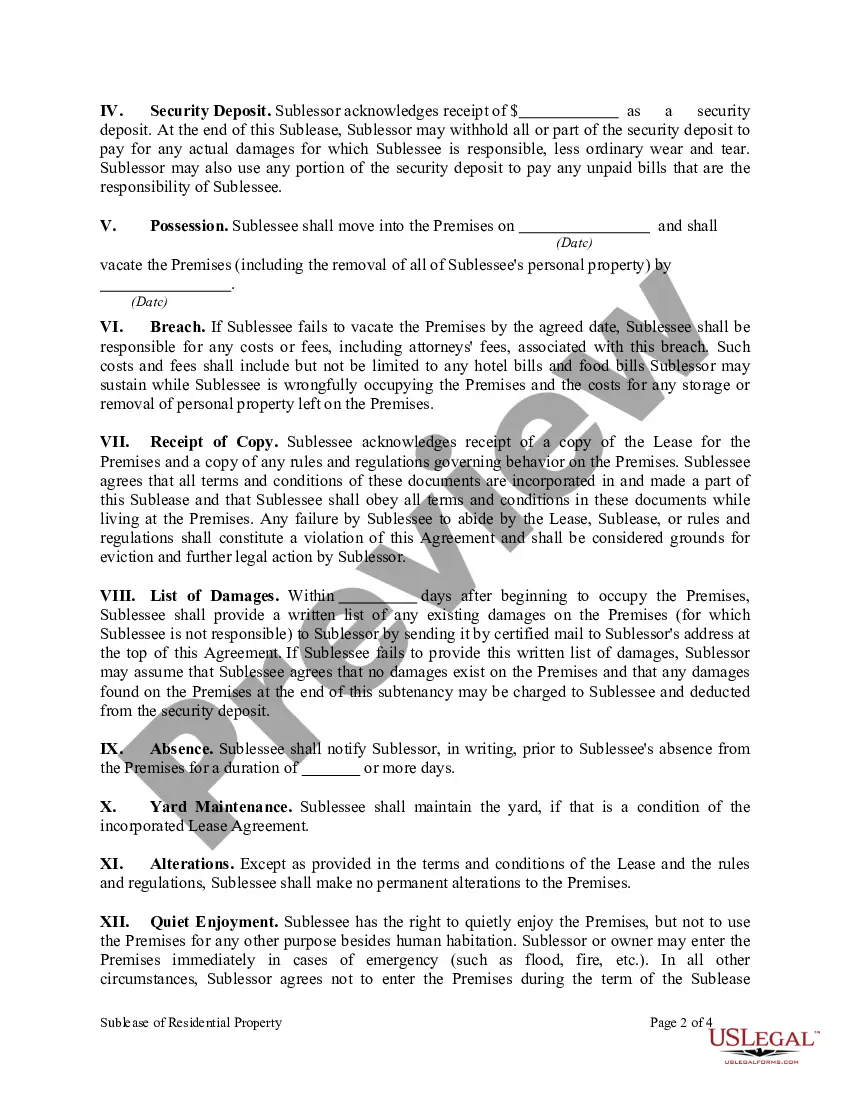
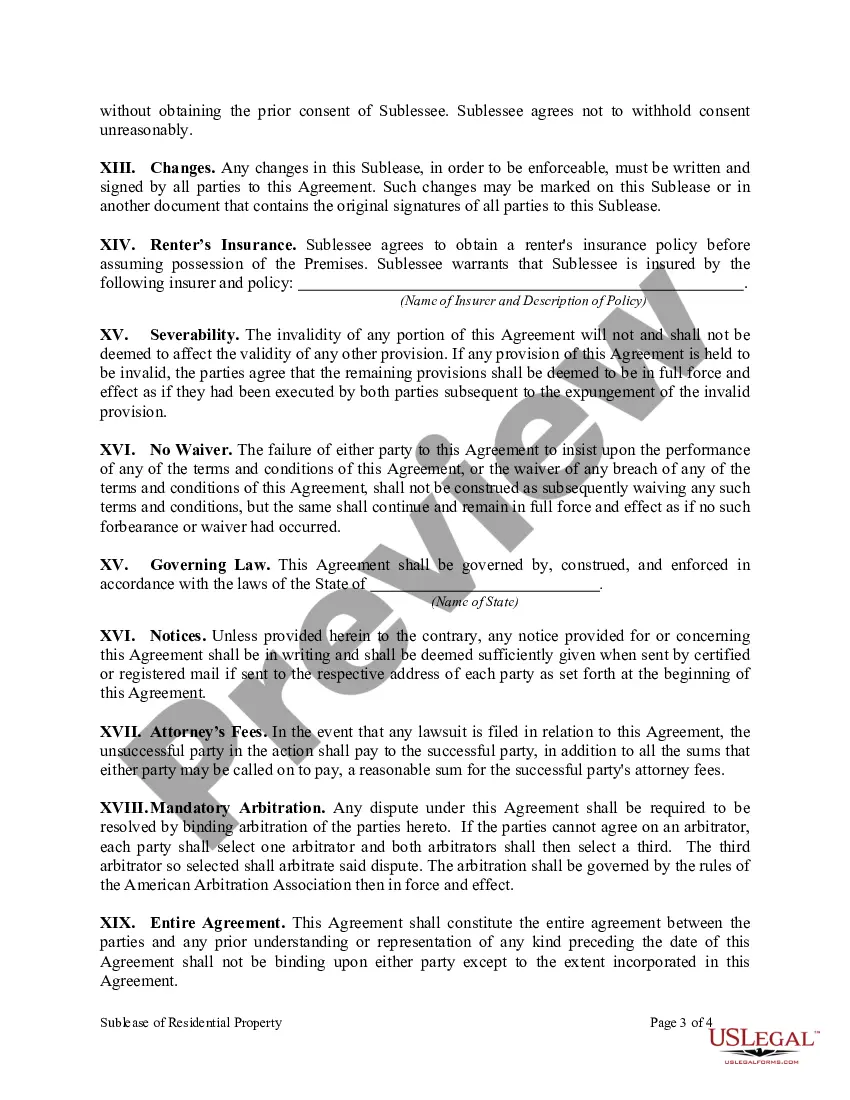
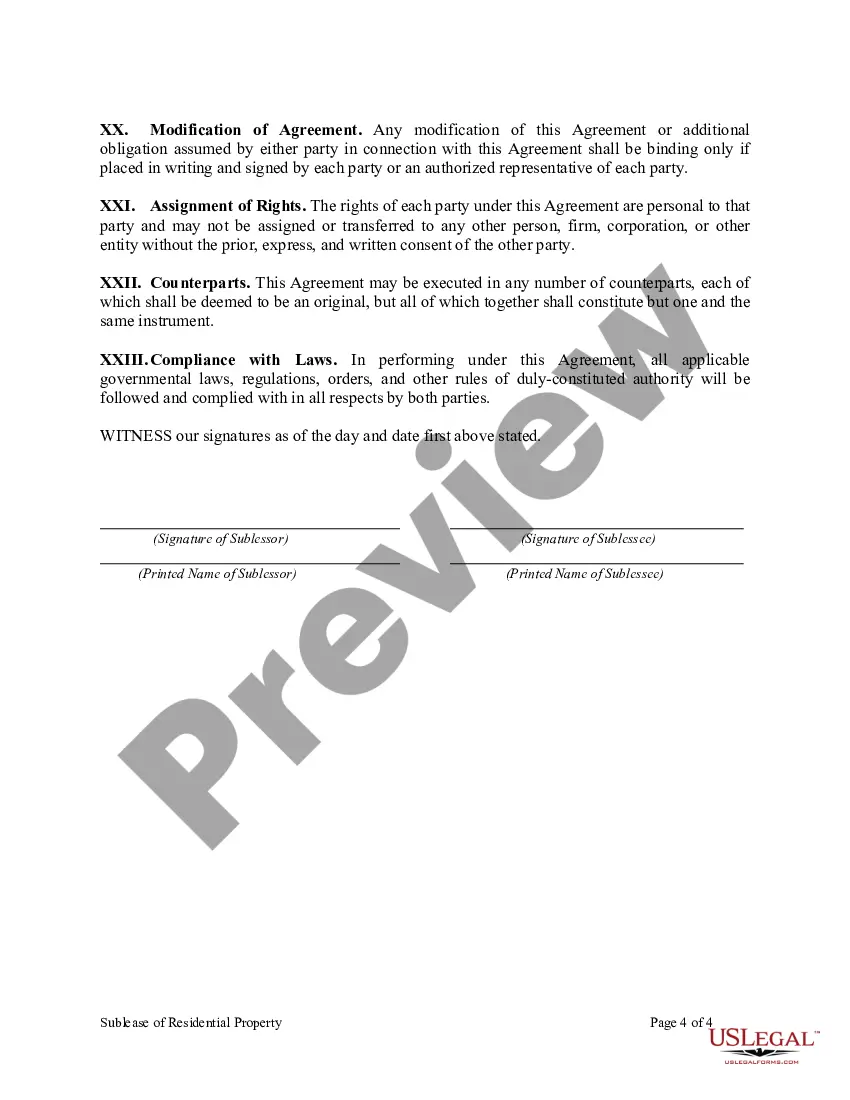
Description




Form popularity
FAQ
If your tenancy doesn't have a fixed end date you'll need your landlord's permission to sublet your whole home. If they say no, they don't have to give you a reason. If there's a fixed end date for your tenancy, you're allowed to sublet your whole home.
New York City law does not allow tenants that live in multiple dwellings (3 apartments or more) to sublet apartments for less than thirty days. Tenants must receive permission from their landlord in order to sublet their apartment by following a very technical procedure set forth by RPL 226-b.
Consent from the landlord A tenant must get a landlord's written permission to sub-let or transfer any part of the property. If a tenant does this without consent, they are breaching the terms of the tenancy agreement.
Subletting Can Impact Property Values Parking becomes difficult, there are higher utility costs, and the neighborhood won't be as appealing to prospective buyers.
If your tenant did not get your permission to sublet and you have a sublet clause in your lease, they have officially broken the lease. This means you can send out a notice to comply or vacate the property. Subletting without permission is cause for eviction, but you aren't required to evict the tenant.
Without the landlord's consent, any sublease might be unenforceable, potentially leading to legal disputes or eviction. Obtaining written permission helps protect all parties involved and ensures the sublease adheres to local laws and regulations.
Yes, they can. If you sublet your unit without your landlord's consent, they have the right to ask you to leave. Subletting without permission can be a violation of the lease agreement, and landlords have the authority to enforce the terms of the lease.
Real Property Law Section 226-b in conjunction with the Rent Stabilization Law gives tenants the right to sublease their apartment for a period of two out of every four years. In order to sublease an apartment, it is necessary that prior to the subleasing that the apartment be the tenants' primary residence.
If they do not leave, then you will need to evict them by filing suit. Your only other option is to vacate and then the landlord will have to evict them.
