Sublease Form Leases With Sublease Clause In Florida
Description


Get your form ready online
Our built-in tools help you complete, sign, share, and store your documents in one place.
Make edits, fill in missing information, and update formatting in US Legal Forms—just like you would in MS Word.
Download a copy, print it, send it by email, or mail it via USPS—whatever works best for your next step.
Sign and collect signatures with our SignNow integration. Send to multiple recipients, set reminders, and more. Go Premium to unlock E-Sign.
If this form requires notarization, complete it online through a secure video call—no need to meet a notary in person or wait for an appointment.
We protect your documents and personal data by following strict security and privacy standards.

Make edits, fill in missing information, and update formatting in US Legal Forms—just like you would in MS Word.

Download a copy, print it, send it by email, or mail it via USPS—whatever works best for your next step.

Sign and collect signatures with our SignNow integration. Send to multiple recipients, set reminders, and more. Go Premium to unlock E-Sign.

If this form requires notarization, complete it online through a secure video call—no need to meet a notary in person or wait for an appointment.

We protect your documents and personal data by following strict security and privacy standards.
Looking for another form?


Form popularity
FAQ
Landlord Consent To Sublease Or Assignment Of Rights Being Withheld From Tenant. In California, within the Business and Professions Code, Section 1995.260, the landlord cannot unreasonably withhold the consent of the tenant to assign or sublease the property.
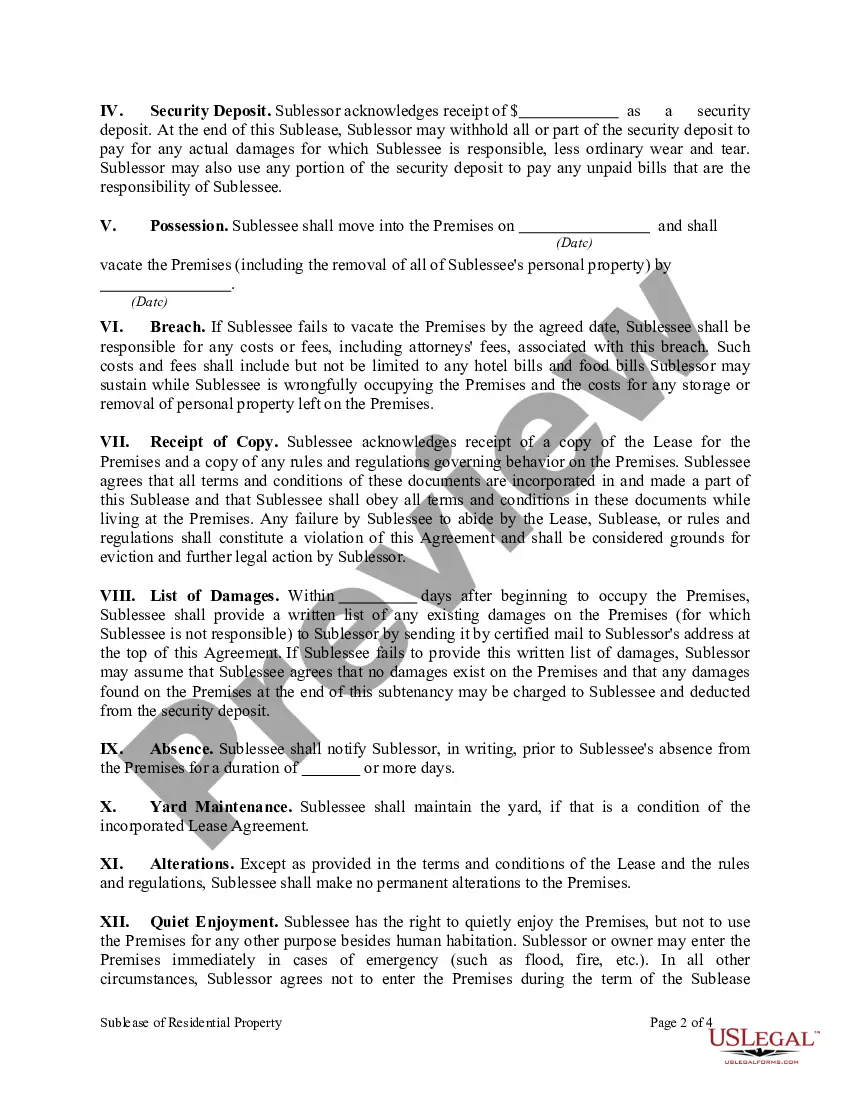
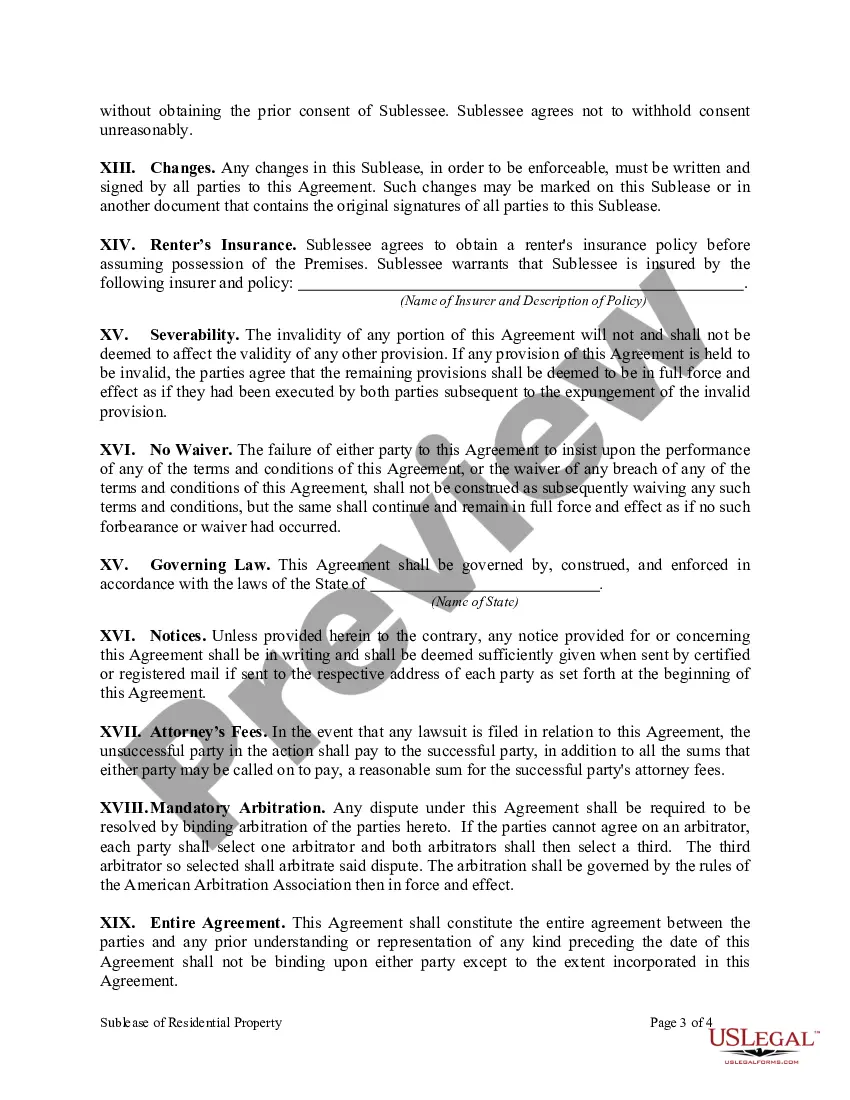
Subletting—also called subleasing—is when a current tenant rents out their apartment to another person (or people), who become their subtenants. In Florida, tenants are not banned from subletting unless there is a clause in their lease that says it's not allowed.
What rights do subtenants have in Florida when there isn't a written agreement? Subtenants without a written agreement can face challenges. They might lack legal protection and could be subject to eviction at any time. It's crucial for subtenants to ensure some form of agreement is in place, even if informal.
The basic framework: A sublease clause permits the tenant, with certain stipulations, to rent out either a portion or the entirety of their leased space to a third party, referred to as a subtenant.
Allowing subletting can sometimes leave landlords feeling like they've lost control over their property. You may not have a direct say in who your tenants choose to sublease to. This situation becomes complex when the agreement is not specific about the terms of subleasing.
Landlords can sign a Consent to Sublease form to give tenants official permission to sublease their rental unit. When subleasing, a tenant transfers some of their rights under a lease to a third party. In most cases, a tenant must have their landlord's approval before entering into a sublease agreement.
If your agreement doesn't say anything about subletting You don't need your landlord's permission but it's usually best to let them know. If they don't want you to sublet your home, your landlord can get a court order to end your tenancy, evict your subtenant and stop you from moving back in.
You would still need to go through the formal eviction process. You will need to provide proper notice. If the subtenant won't leave the premises, you will have to file an unlawful detainer action, wait for approval, and then if needed, get the sheriff's office to remove the subtenant.
Under California law, unless the lease specifically prohibits subletting, tenants may have the right to sublease their rental unit. In this case, you would not be able to unreasonably withhold consent.
