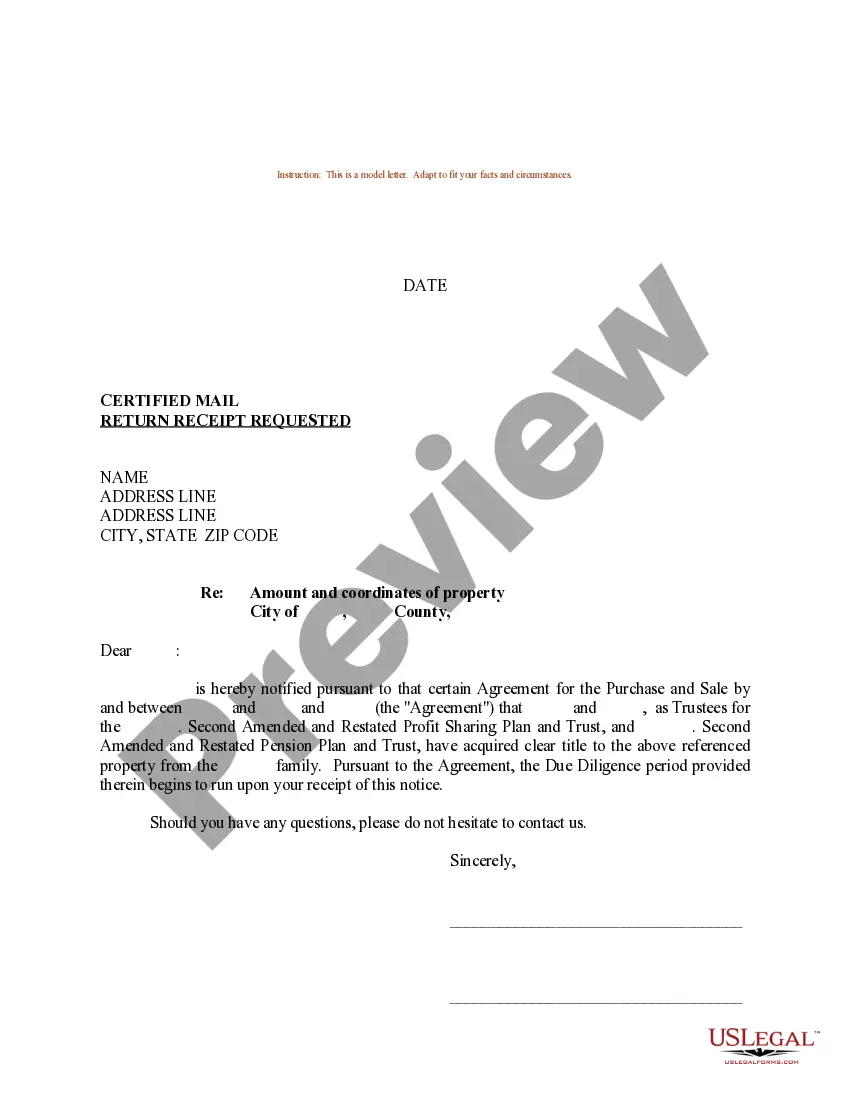
Offer To Sell Sample For Employee In Maryland
Description
Get your form ready online
Our built-in tools help you complete, sign, share, and store your documents in one place.
Make edits, fill in missing information, and update formatting in US Legal Forms—just like you would in MS Word.
Download a copy, print it, send it by email, or mail it via USPS—whatever works best for your next step.
Sign and collect signatures with our SignNow integration. Send to multiple recipients, set reminders, and more. Go Premium to unlock E-Sign.
If this form requires notarization, complete it online through a secure video call—no need to meet a notary in person or wait for an appointment.
We protect your documents and personal data by following strict security and privacy standards.

Make edits, fill in missing information, and update formatting in US Legal Forms—just like you would in MS Word.

Download a copy, print it, send it by email, or mail it via USPS—whatever works best for your next step.

Sign and collect signatures with our SignNow integration. Send to multiple recipients, set reminders, and more. Go Premium to unlock E-Sign.

If this form requires notarization, complete it online through a secure video call—no need to meet a notary in person or wait for an appointment.

We protect your documents and personal data by following strict security and privacy standards.
Looking for another form?
Form popularity
FAQ
A contract consists of a legally binding agreement or promise between parties. The agreement must be voluntary and made by competent parties. The promise or agreement must be supported by an exchange of something of value (e.g., goods or services). This exchange must be legal.
Quick general answer: Maryland law generally does not provide a cooling-off period for buyers to change their minds, ing to the state attorney general's website, .marylandattorneygeneral. State law sets out a few exceptions.
An agreement to buy or sell real property in Maryland must be in writing, and Buyers and Sellers of residential real estate typically use standardized form contracts to document the transaction. The Maryland Association of Realtors Residential Contract of Sale (the “Contract”) is the most used form contract.
In contract disputes, parol evidence is any agreement that is not contained within the written contract. Under the parol evidence rule, these agreements made outside of the contract are inadmissible in court u nless there is evidence of fraud , duress , or a mutual mistake .
Exceptions to the Parol Evidence Rule, where parol evidence can be admitted, include: clarification of ambiguous terms, correction of mistakes in the agreement, and the proof of fraud, duress, or illegality.
If a contract is “complete and unambiguous, parol evidence is inadmissible as a matter of substantive law to vary, alter or contradict it in the absence of fraud, accident or mutual mistake.” McLain v. Pernell, 255 Md.
Evidence can include the written contract, emails or communications between the parties, and any other documents that show the breach occurred. Once the evidence has been gathered, the non-breaching party can file a lawsuit in the appropriate court. In Maryland, breach of contract claims are often heard in civil court.
Once the plaintiff proves that a valid contract existed, they must show that they upheld their part. After that, the plaintiff must show that the defendant did not fulfill their obligations. And finally there must be evidence of actual damages that the plaintiff suffered as a result.
A breach of contract is when one party to the contract doesn't do what they agreed. Breach of contract happens when one party to a valid contract fails to fulfill their side of the agreement. If a party doesn't do what the contract says they must do, the other party can sue.

