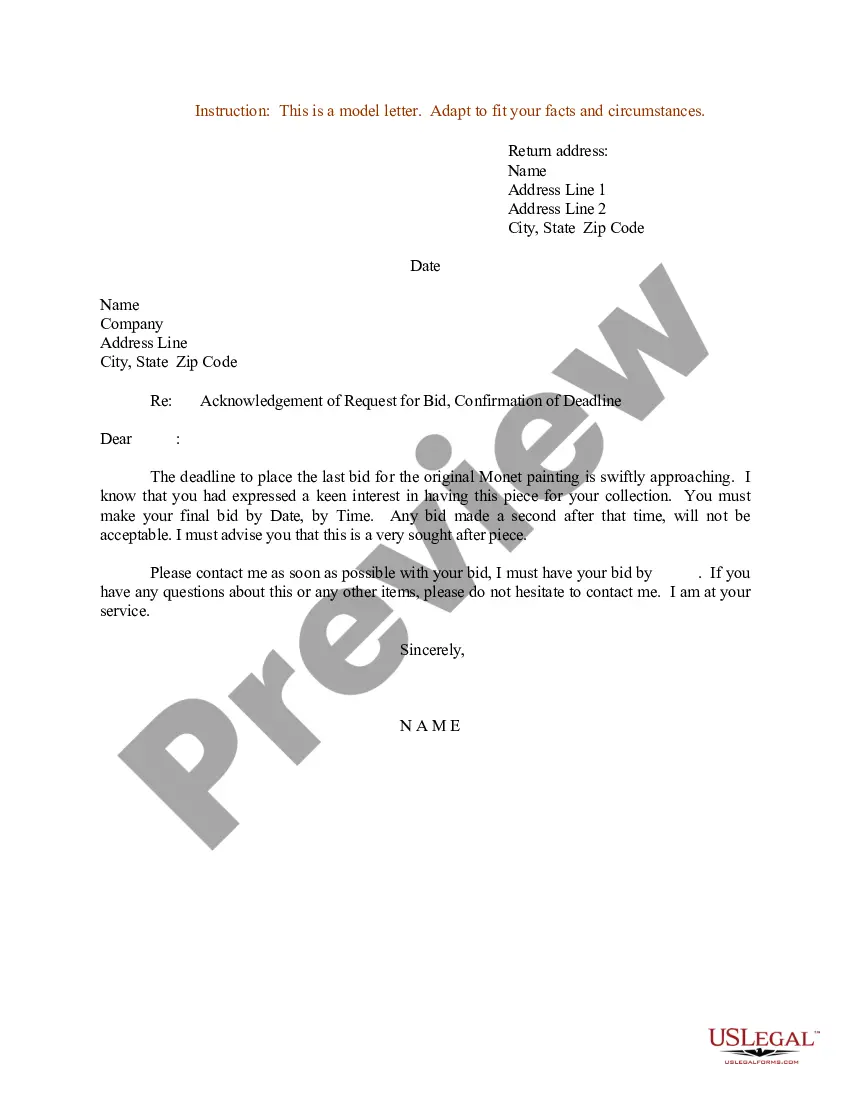
Request With Proposal In Washington
Description


Get your form ready online
Our built-in tools help you complete, sign, share, and store your documents in one place.
Make edits, fill in missing information, and update formatting in US Legal Forms—just like you would in MS Word.
Download a copy, print it, send it by email, or mail it via USPS—whatever works best for your next step.
Sign and collect signatures with our SignNow integration. Send to multiple recipients, set reminders, and more. Go Premium to unlock E-Sign.
If this form requires notarization, complete it online through a secure video call—no need to meet a notary in person or wait for an appointment.
We protect your documents and personal data by following strict security and privacy standards.

Make edits, fill in missing information, and update formatting in US Legal Forms—just like you would in MS Word.

Download a copy, print it, send it by email, or mail it via USPS—whatever works best for your next step.

Sign and collect signatures with our SignNow integration. Send to multiple recipients, set reminders, and more. Go Premium to unlock E-Sign.

If this form requires notarization, complete it online through a secure video call—no need to meet a notary in person or wait for an appointment.

We protect your documents and personal data by following strict security and privacy standards.
Looking for another form?






Form popularity
FAQ
(a) Requests for proposals (RFPs) are used in negotiated acquisitions to communicate Government requirements to prospective contractors and to solicit proposals.
Evaluation The last step of the RFP process is to review the vendor proposals, compare them and select a winner. It's crucial to engage stakeholders in this process to provide their perspective and expertise.
How to write a project proposal Write an executive summary. The executive summary serves as the introduction to your project proposal. Explain the project background. Present a solution. Define project deliverables and goals. List what resources you need. State your conclusion. Know your audience. Be persuasive.
What are the essential steps in the RFP process? Identify stakeholders. Collect RFP requirements. Create RFP. Evaluate RFP responses. Select winning vendor. Create vendor contract.
How to write an RFP in 7 steps. Introduce the company and project. Outline project background. Provide bid deadline and proposal timeline. Specify budget. Outline project scope. Express concerns or roadblocks. Explain evaluation criteria.
Sample RFPs A Request for Proposal (RFP) is a formal bidding document that describes a project and desired services in detail to ensure an effective competitive bidding process. If you use an RFP, you must submit it with your FCC Form 461 or Form 465 (Request for Services Form).
The documents are public at the conclusion of the scoring process whether or not an award is made. A letter to the Commission, dated August 10, 2016, requests confidentiality, arguing that, under the terms of the RFPs, the documents are confidential until after the announcement of the intent to award.
Steps to Initiating and Executing an RFP Design your project as best you can. Be as detailed as possible. Define the areas of the project that need to be contracted out. Create a RFP that clearly defines your project scope, requirements and deadlines. Create a list of potential contractors.
Government-wide contracts, bids, request for proposal (RFP, RFPs) and request for quotation (RFQ, RFQs) are available daily for review at .findrfp. This electronic government service also provides a direct link to the request. Find RFP is the source for companies wishing to thrive in government contracting.
An RFP is a document that a business, non-profit, or government agency creates to outline the requirements for a specific project. The RFP process helps solicit bids from vendors and identify which one is best qualified to complete the project.