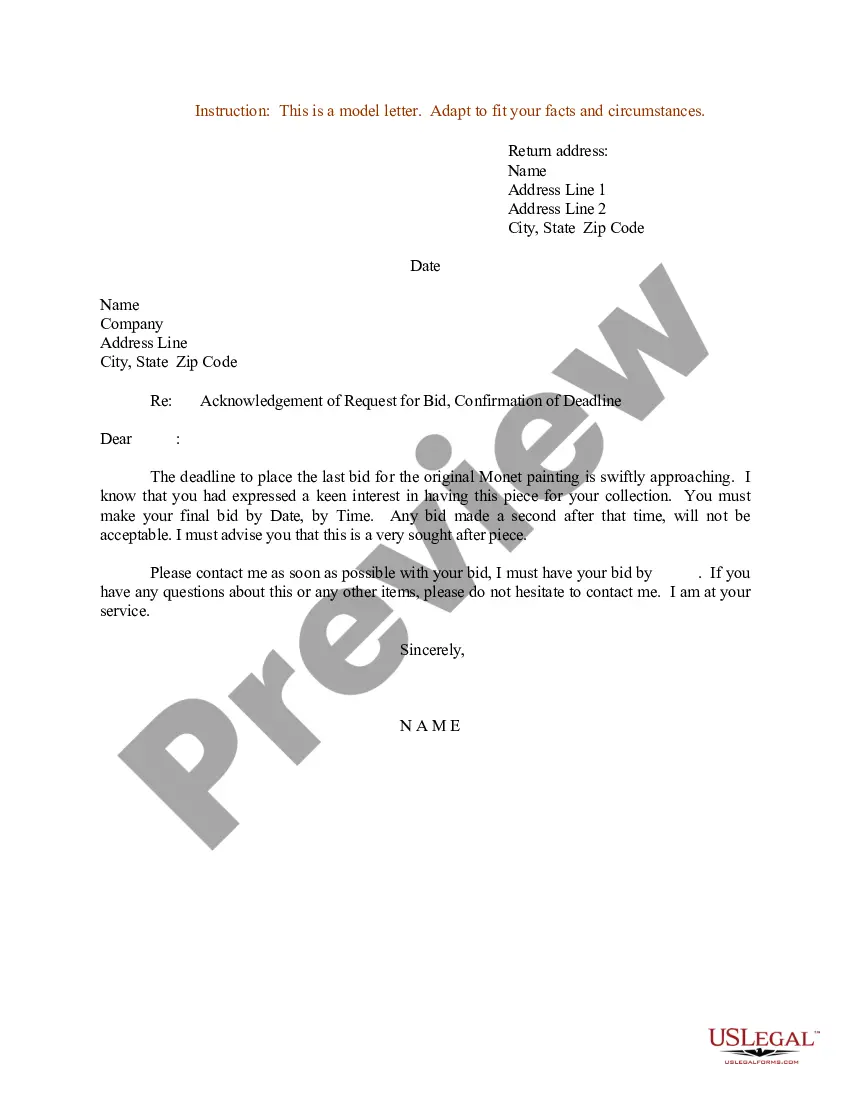
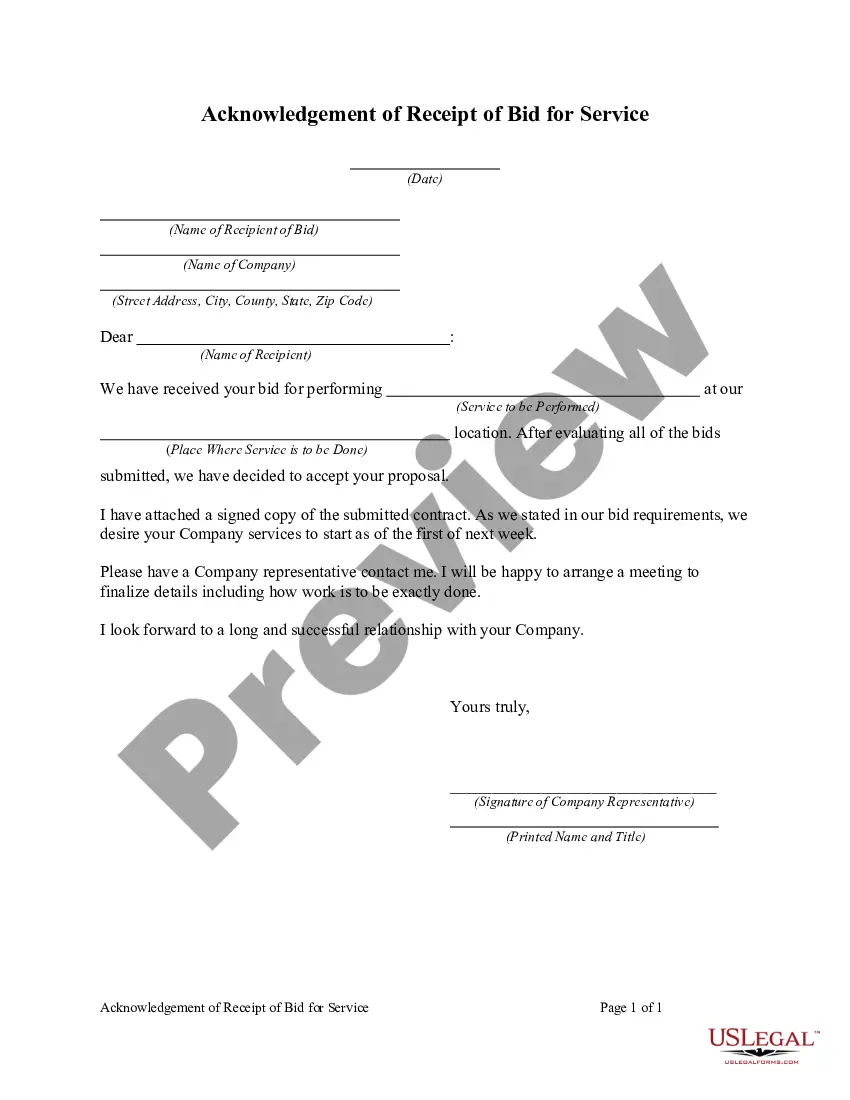
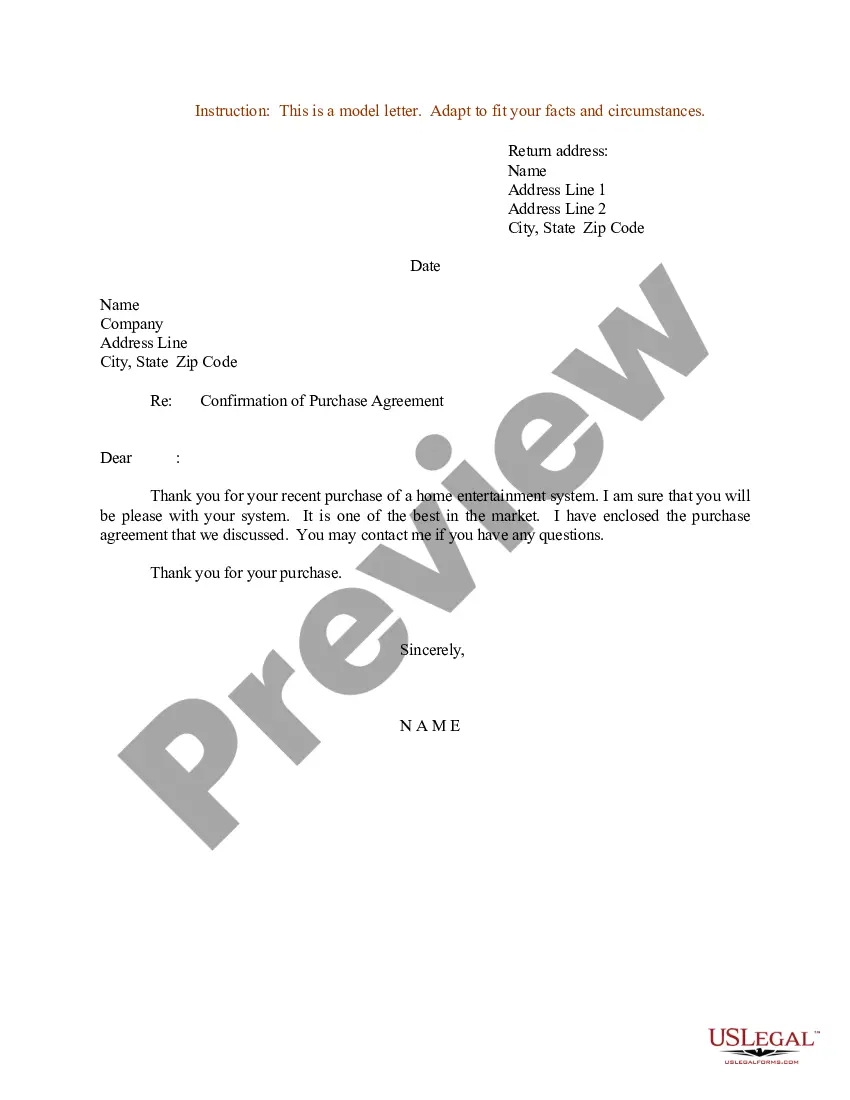
Request For Bid Example In Phoenix
Description


Get your form ready online
Our built-in tools help you complete, sign, share, and store your documents in one place.
Make edits, fill in missing information, and update formatting in US Legal Forms—just like you would in MS Word.
Download a copy, print it, send it by email, or mail it via USPS—whatever works best for your next step.
Sign and collect signatures with our SignNow integration. Send to multiple recipients, set reminders, and more. Go Premium to unlock E-Sign.
If this form requires notarization, complete it online through a secure video call—no need to meet a notary in person or wait for an appointment.
We protect your documents and personal data by following strict security and privacy standards.

Make edits, fill in missing information, and update formatting in US Legal Forms—just like you would in MS Word.

Download a copy, print it, send it by email, or mail it via USPS—whatever works best for your next step.

Sign and collect signatures with our SignNow integration. Send to multiple recipients, set reminders, and more. Go Premium to unlock E-Sign.

If this form requires notarization, complete it online through a secure video call—no need to meet a notary in person or wait for an appointment.

We protect your documents and personal data by following strict security and privacy standards.
Looking for another form?





Form popularity
FAQ
Subject: Use a clear and informative subject line, including the client's name and project/product details. Introduction: Start with a polite greeting and express gratitude for the opportunity. Attach Quotation: Attach the detailed quotation as a document or provide a link to an online version if available.
An effective proposal email includes all the important information a client or customer needs. In addition, it summarises the main talking points of your offer, including supporting evidence, timeline, key terms, any conditions, and the all-important costs.
How to write an RFP in 7 steps. Introduce the company and project. Outline project background. Provide bid deadline and proposal timeline. Specify budget. Outline project scope. Express concerns or roadblocks. Explain evaluation criteria.
The RFP bid process Opportunity Identification: Identify potential projects or services that require an RFP. Spend Analysis: Analyze past expenditures and the market value of similar projects to determine the budget.
Bids – Bids are more formalized versions of a proposal that are submitted when two or more contractors compete for a project. They should be detailed to allow clients to compare costs, timelines, and other deciding factors that allow them to locate the best partner for their unique needs.
The world of procurement is brimming with terms and abbreviations. Among them, 'Invitation To Tender' is a common phrase, most often abbreviated as ITT. It can also be known as 'Invitation To Bid' (ITB), a term used similarly but more prevalent in the US, while ITT is widely used in Europe.
A Request for Qualifications (RFQ) usually refers to the pre-qualification stage of the procurement process. Only those proponents who successfully respond to the RFQ and meet the qualification criteria will be included in the subsequent Request for Proposals (RFP) solicitation process.
The Request for Information is often the first step of a (strategic) sourcing event. Procurement uses an RFI when they are aware of a problem but not sure who is in the market to solve it. The aim is to screen the market for potential suppliers and their capabilities.
The Request for Proposal (RFP) is a two envelope procurement method that can be used for goods, services or works. It is used when suppliers, contractors or services providers are expected to propose a specific solution (methodology and workplan) to fulfilling a specific requirement.
Simple Steps to Tackle Your RFP Process Evaluate the Bidding Opportunity. Just because you receive an RFP doesn't mean you have to respond. Research the RFP for Key Insights. Plan Out Your RFP Response Strategy. Draft a Compelling Proposal. Respond & Submit a Winning Bid ?