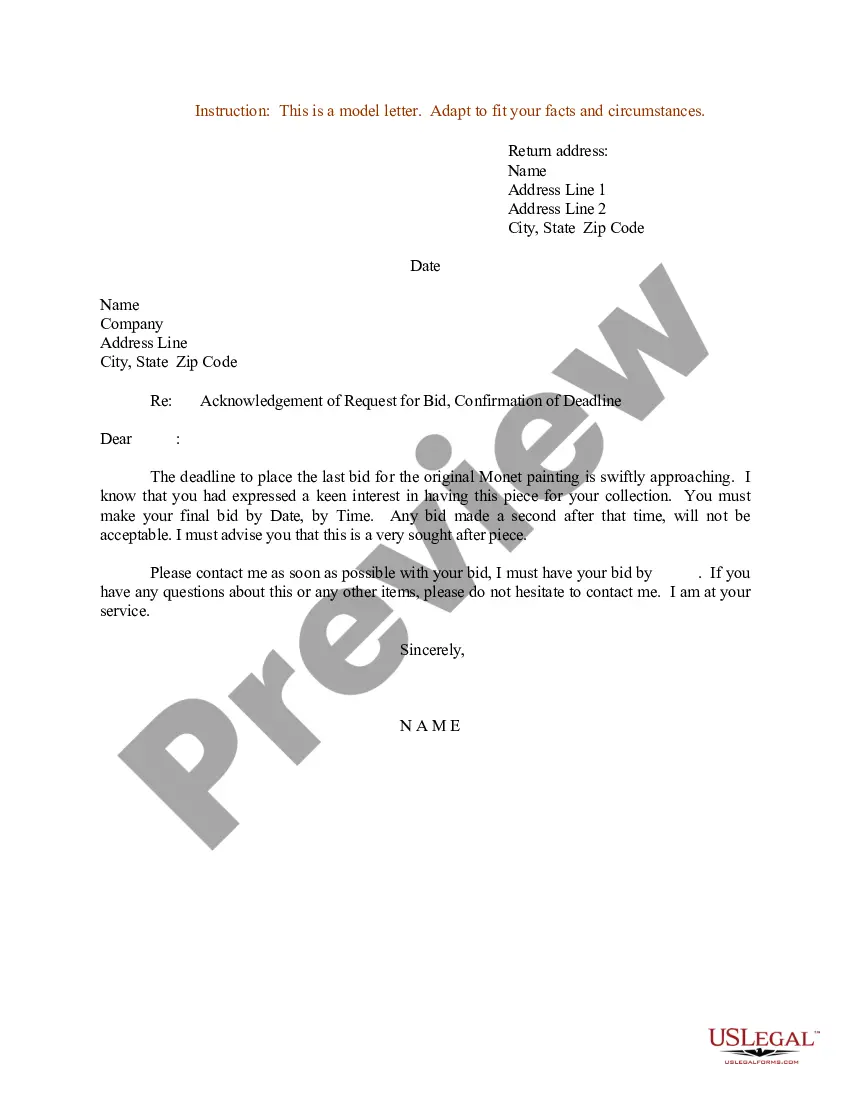
Request For Bid Rfb In Georgia
Description


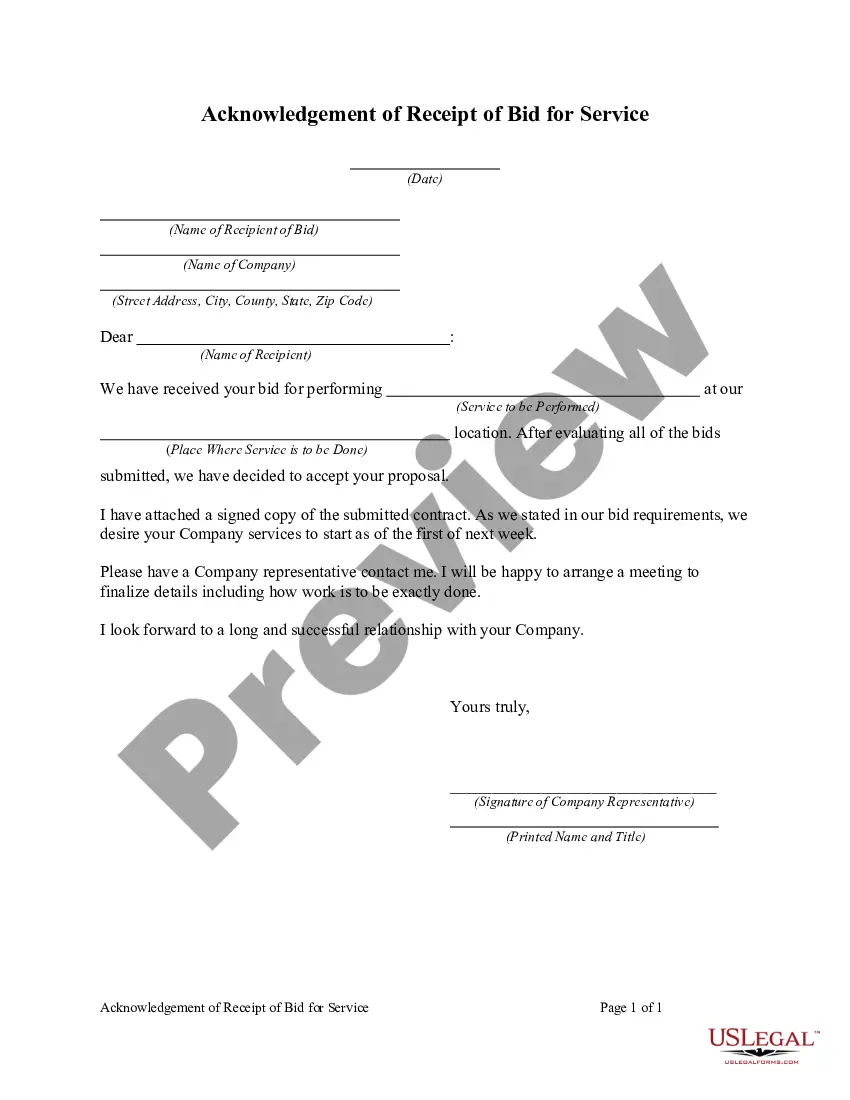
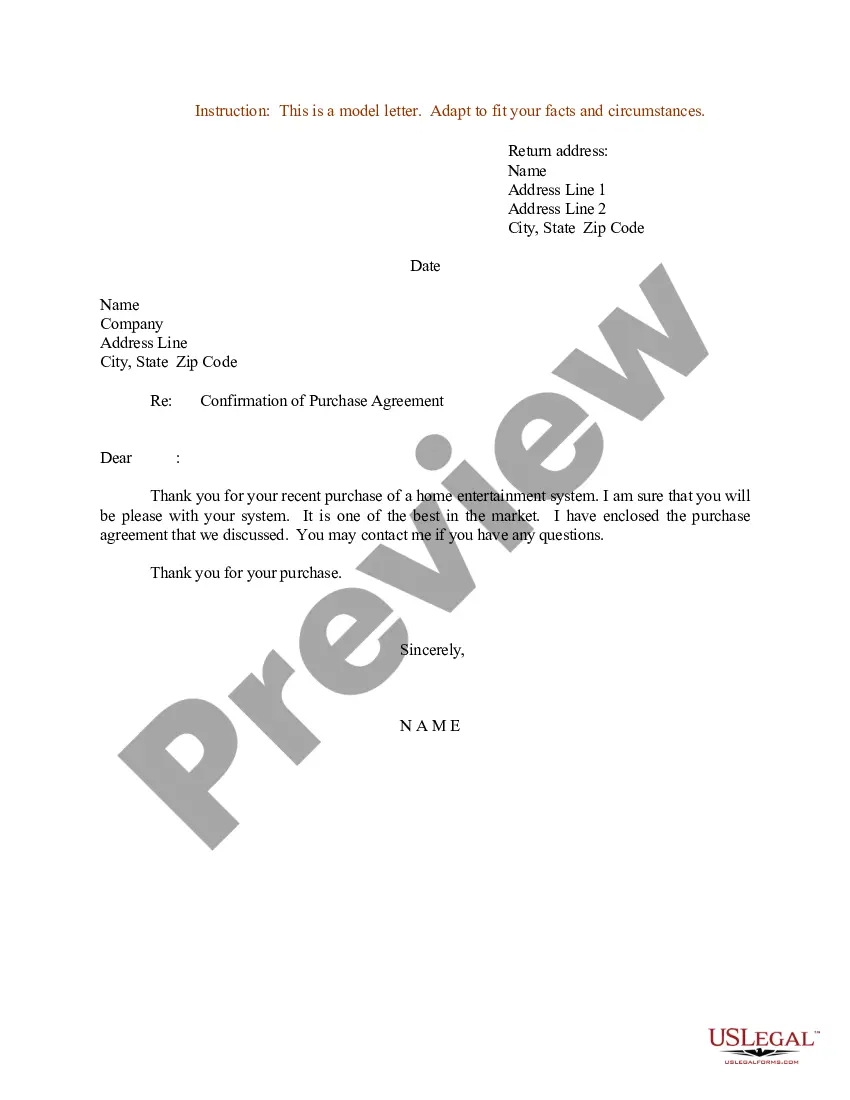
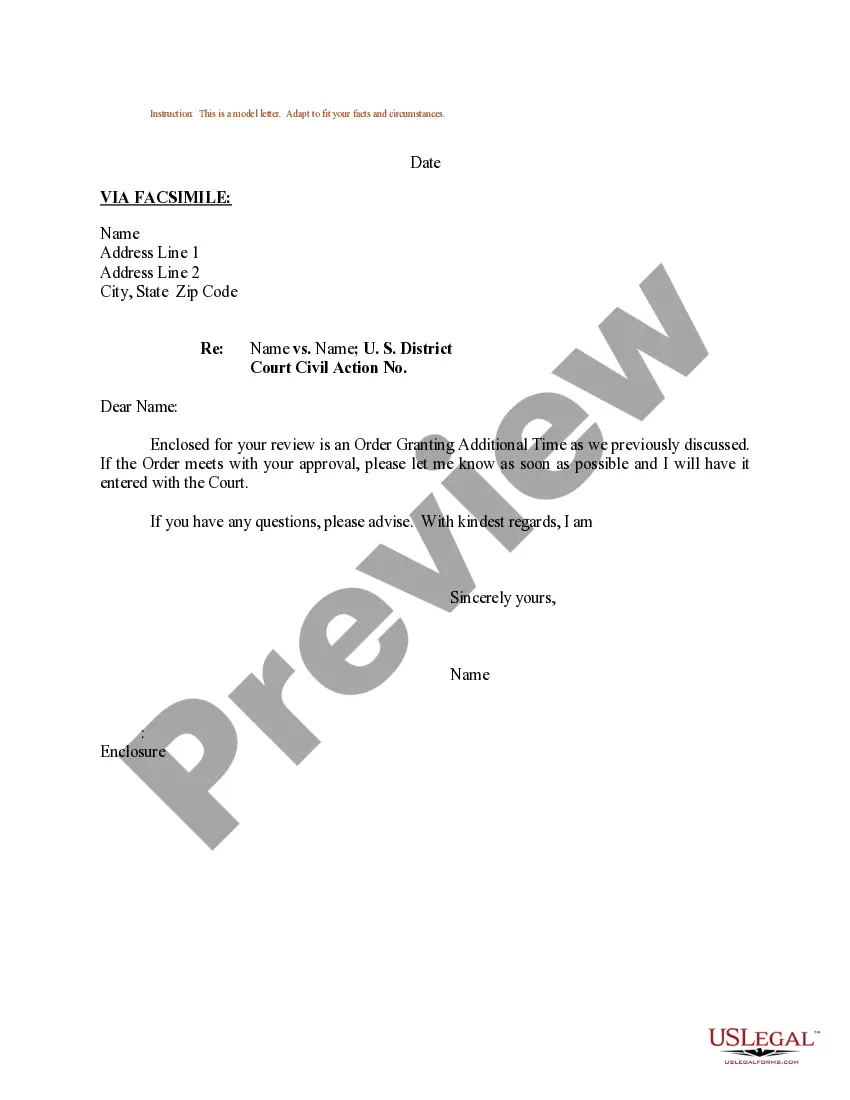
Get your form ready online
Our built-in tools help you complete, sign, share, and store your documents in one place.
Make edits, fill in missing information, and update formatting in US Legal Forms—just like you would in MS Word.
Download a copy, print it, send it by email, or mail it via USPS—whatever works best for your next step.
Sign and collect signatures with our SignNow integration. Send to multiple recipients, set reminders, and more. Go Premium to unlock E-Sign.
If this form requires notarization, complete it online through a secure video call—no need to meet a notary in person or wait for an appointment.
We protect your documents and personal data by following strict security and privacy standards.

Make edits, fill in missing information, and update formatting in US Legal Forms—just like you would in MS Word.

Download a copy, print it, send it by email, or mail it via USPS—whatever works best for your next step.

Sign and collect signatures with our SignNow integration. Send to multiple recipients, set reminders, and more. Go Premium to unlock E-Sign.

If this form requires notarization, complete it online through a secure video call—no need to meet a notary in person or wait for an appointment.

We protect your documents and personal data by following strict security and privacy standards.
Looking for another form?







Form popularity
FAQ
What are the 7 steps in writing an RFP? Introduce the company and project. Outline project background. Provide bid deadline and proposal timeline. Specify budget. Outline project scope. Express concerns or roadblocks. Explain evaluation criteria.
An RFB is used when you know precisely what you need and have precise requirements and specifications. The RFP is a hybrid of these documents. An RFP is used when you have a general idea with some specifications and/or it's a large, complex project with potential for multiple solutions.
Request for Bid (RFB) The Request for Bid (RFB) is a type of line item BP. RFBs are unique in that the business process requires participation from personnel outside your company.
Overview of the 3 main types of bidding TypeDefinition Open tendering Solicit bids from all interested contractors, typically on public projects. Selective tendering Solicit bids from a selected group of contractors. Negotiated tendering Negotiate contract amount with a pre-selected contractor.
A Request for Bid (RFB), also known as an Invitation to Bid (ITB), is a formal solicitation issued by a government agency or other organization inviting suppliers to submit bids for the provision of goods, services, or construction projects.
Request for Bid (RFB) Business Processes. The Request for Bid (RFB) feature allows companies to invite bids from vendors and suppliers.
Companies that need certain jobs performed may solicit vendors for them using two types of requests: a request for qualifications (or RFQ), which determines the best fit for a job based on the qualifications of the applying vendor, and a request for proposal (or RFP), which is a much more detailed document that may be ...
The purpose of a bid is to win a contract by offering a solution that meets the client's needs and requirements. On the other hand, a proposal is a document that outlines a solution to a problem or an opportunity.
The world of procurement is brimming with terms and abbreviations. Among them, 'Invitation To Tender' is a common phrase, most often abbreviated as ITT. It can also be known as 'Invitation To Bid' (ITB), a term used similarly but more prevalent in the US, while ITT is widely used in Europe.
The Request for Bid (RFB) is a type of line item BP. RFBs are unique in that the business process requires participation from personnel outside your company.