Federal Habeas Corpus Practice And Procedure In Texas
Description

Get your form ready online
Our built-in tools help you complete, sign, share, and store your documents in one place.
Make edits, fill in missing information, and update formatting in US Legal Forms—just like you would in MS Word.
Download a copy, print it, send it by email, or mail it via USPS—whatever works best for your next step.
Sign and collect signatures with our SignNow integration. Send to multiple recipients, set reminders, and more. Go Premium to unlock E-Sign.
If this form requires notarization, complete it online through a secure video call—no need to meet a notary in person or wait for an appointment.
We protect your documents and personal data by following strict security and privacy standards.

Make edits, fill in missing information, and update formatting in US Legal Forms—just like you would in MS Word.

Download a copy, print it, send it by email, or mail it via USPS—whatever works best for your next step.

Sign and collect signatures with our SignNow integration. Send to multiple recipients, set reminders, and more. Go Premium to unlock E-Sign.

If this form requires notarization, complete it online through a secure video call—no need to meet a notary in person or wait for an appointment.

We protect your documents and personal data by following strict security and privacy standards.
Looking for another form?




Form popularity
FAQ
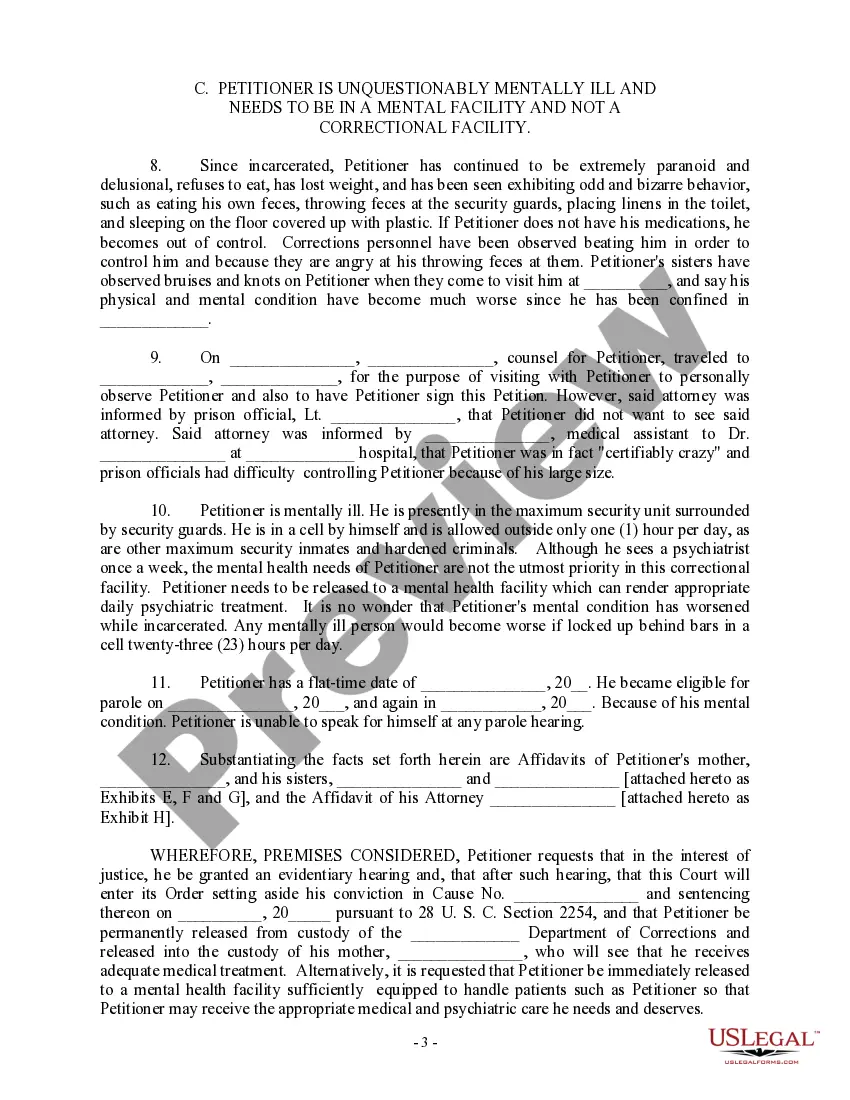
Federal habeas corpus is a procedure under which a federal court may review the legality of an individual's incarceration. It is most often the stage of the criminal appellate process that follows direct appeal and any available state collateral review. The law in the area is an intricate weave of statute and case law.
The following are some common grounds for writ of habeas corpus petitions: Introduction of new evidence that points to your innocence. Changes in the law. Incompetency during trial. Ineffective assistance of counsel. Conviction under unconstitutional law. Prosecutorial misconduct. No jurisdiction.
Federal habeas corpus is a procedure under which a federal court may review the legality of an individual's incarceration. It is most often the stage of the criminal appellate process that follows direct appeal and any available state collateral review. The law in the area is an intricate weave of statute and case law.
The following are some common grounds for writ of habeas corpus petitions: Introduction of new evidence that points to your innocence. Changes in the law. Incompetency during trial. Ineffective assistance of counsel. Conviction under unconstitutional law. Prosecutorial misconduct. No jurisdiction.
It is an order issued by a court or judge of competent jurisdiction, directed to any one having a person in his custody, or under his restraint, commanding him to produce such person, at a time and place named in the writ, and show why he is held in custody or under restraint.
If an inmate meets all the requirements to file a petition for writ of habeas corpus, they will file their petition in the superior court in the court of conviction. Within 60 days, the court will review the petition to determine if the inmate raised a prima facie case entitling them to relief.
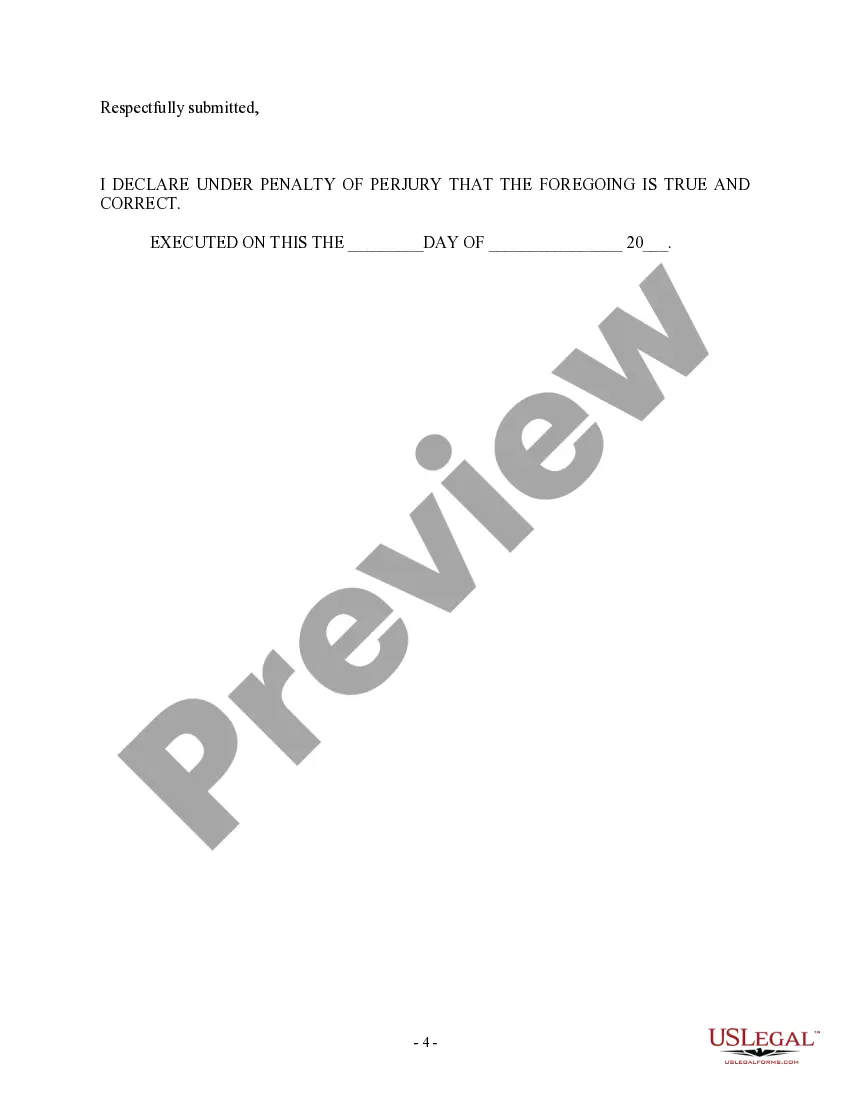
The Court of Criminal Appeals will review these recommendations and make the final decision about whether to deny or grant relief. If an application for a writ of habeas corpus is denied at the state level, the defendant may be able to apply for a federal writ and challenge this decision.
About 63% of issues raised in habeas corpus petitions by state court prisoners are dismissed on procedural grounds at the U.S. District Court level, and about 35% of those issues are dismissed based on the allegations in the petition on the merits (on the merits has a different meaning than what it's used for here).
What If the Petition is Denied? Suppose the court finds in favor of the government and denies your habeas corpus petition. In that case, you may still have alternative legal recourse before all remedies are exhausted—namely, you can file a similar habeas corpus petition in federal court.
The petition must be legibly handwritten or typewritten and signed and dated by the petitioner, under penalty of perjury. Any false statement of an important fact may lead to prosecution for perjury. Answer all questions in the proper space on the form.