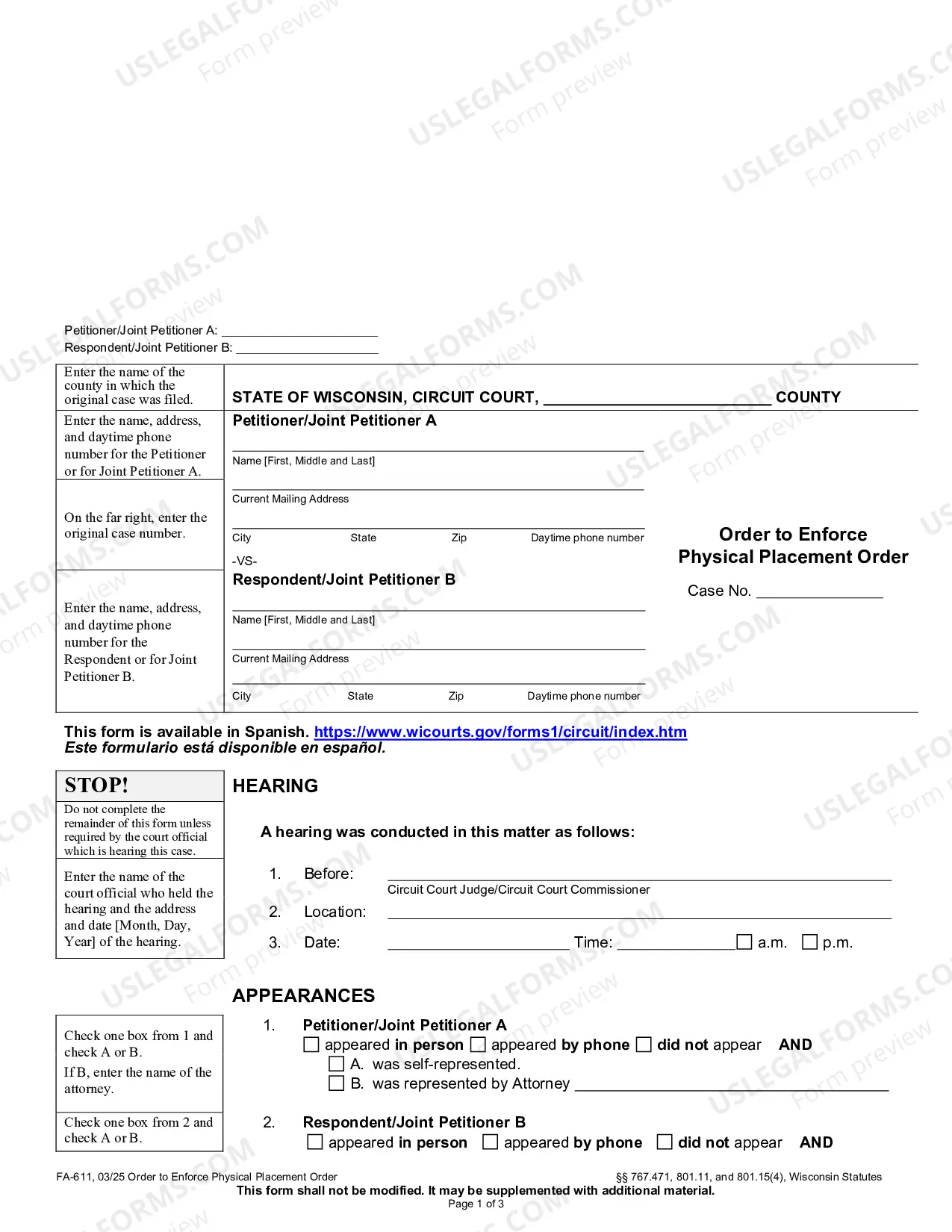
Petition Custody Form With Court In Queens
Description

Get your form ready online
Our built-in tools help you complete, sign, share, and store your documents in one place.
Make edits, fill in missing information, and update formatting in US Legal Forms—just like you would in MS Word.
Download a copy, print it, send it by email, or mail it via USPS—whatever works best for your next step.
Sign and collect signatures with our SignNow integration. Send to multiple recipients, set reminders, and more. Go Premium to unlock E-Sign.
If this form requires notarization, complete it online through a secure video call—no need to meet a notary in person or wait for an appointment.
We protect your documents and personal data by following strict security and privacy standards.

Make edits, fill in missing information, and update formatting in US Legal Forms—just like you would in MS Word.

Download a copy, print it, send it by email, or mail it via USPS—whatever works best for your next step.

Sign and collect signatures with our SignNow integration. Send to multiple recipients, set reminders, and more. Go Premium to unlock E-Sign.

If this form requires notarization, complete it online through a secure video call—no need to meet a notary in person or wait for an appointment.

We protect your documents and personal data by following strict security and privacy standards.
Looking for another form?
Form popularity
FAQ
A parent, grandparent or a person with a substantial connection or relationship with the child may file a petition in Family Court requesting that the court place the child in his or her custody.
Mothers historically have won more custody battles due to traditional roles and perceptions of mothers as the primary caregivers. However, this trend is changing as courts increasingly focus on the best interests of the child, considering many factors beyond traditional roles.
Custody cases heard in the supreme court typically take around three months from the preliminary conference until the actual trial. Family court tends to have a busier calendar so it may be longer than that from the preliminary conference to the trial.
Custody cases are usually started in Family Court. The petition should be filed in the county where the child lives. Sometimes, if the parents are married and getting a divorce, one of the parents file for custody as part of the divorce in Supreme Court. The custody order is part of the Divorce Judgment.
In contested divorce or custody cases in New York, the Court will ordinarily issue an Order appointing an attorney for your child, or children.
Good Words To Use In Custody Hearing Your Child is Not Property. The primary thing you must remember is that your child is not property. Best Interests of Child. With that in mind, you must always remember in Court, it is about your children. Status Quo. Child's Schedule. Co-Parenting. Flexibility. Step-Up Plan. Our Child.
Petitions MUST be signed in the presence of a Notary Public or a Family Court Clerk. Once your petition is completed and your signature notarized, you can either mail it to Family Court or submit it in person during our stated business hours. Paternity Petitions must be submitted with a copy of the Birth Certificate.
The affidavit should explicitly discuss how the arrangement aligns with the best interests of the child by protecting his or her health, safety and overall well-being. Supporting facts: details about the preferred arrangement and evidence or documentation proving the individual's ability to meet the child's needs.
Share examples that demonstrate how the parent cares for their child and supports their best interests. Highlight the parent's strengths, and show how they play an active role in their child's upbringing and overall well-being. Be specific, and focus on the parent–child relationship.
Filing online for child custody offers accessibility to individuals seeking resolutions in family law matters, as legal proceedings can be expensive and time-consuming. The state of California recognizes the need to adapt to such changes.
