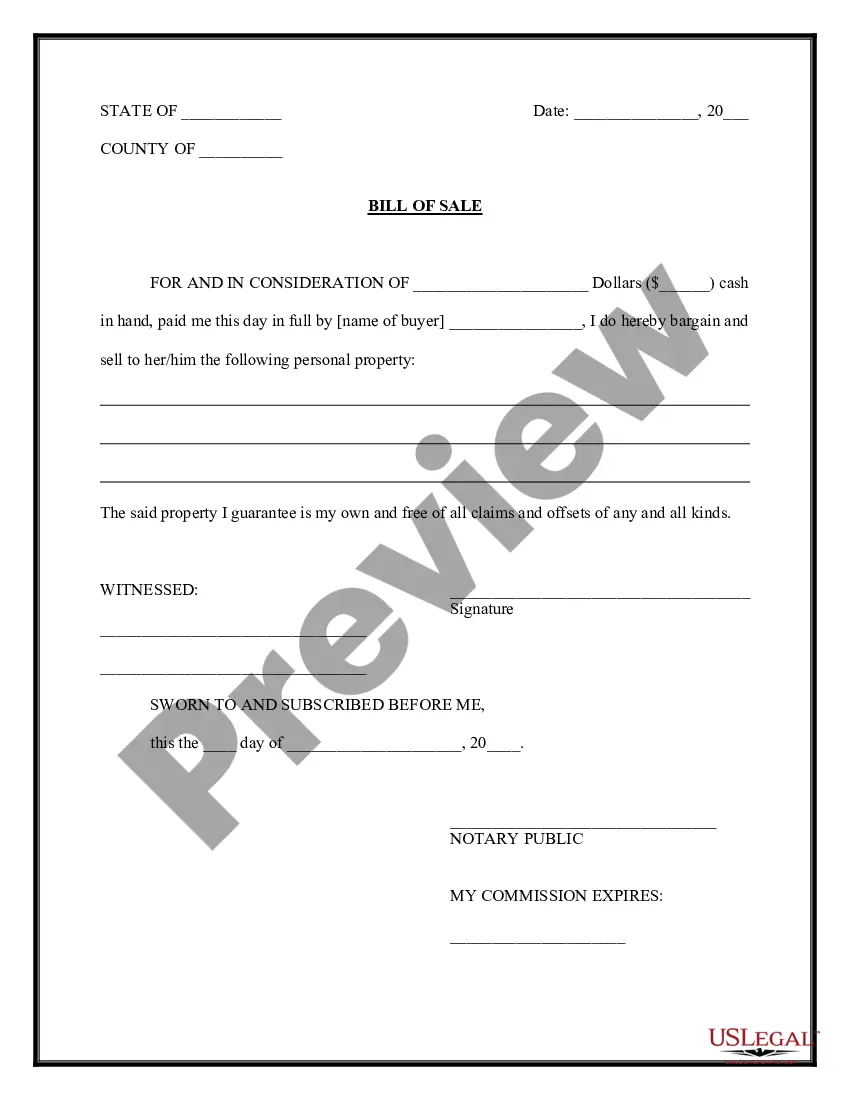
Federal Habeas Corpus Form 2255 In Michigan
Description

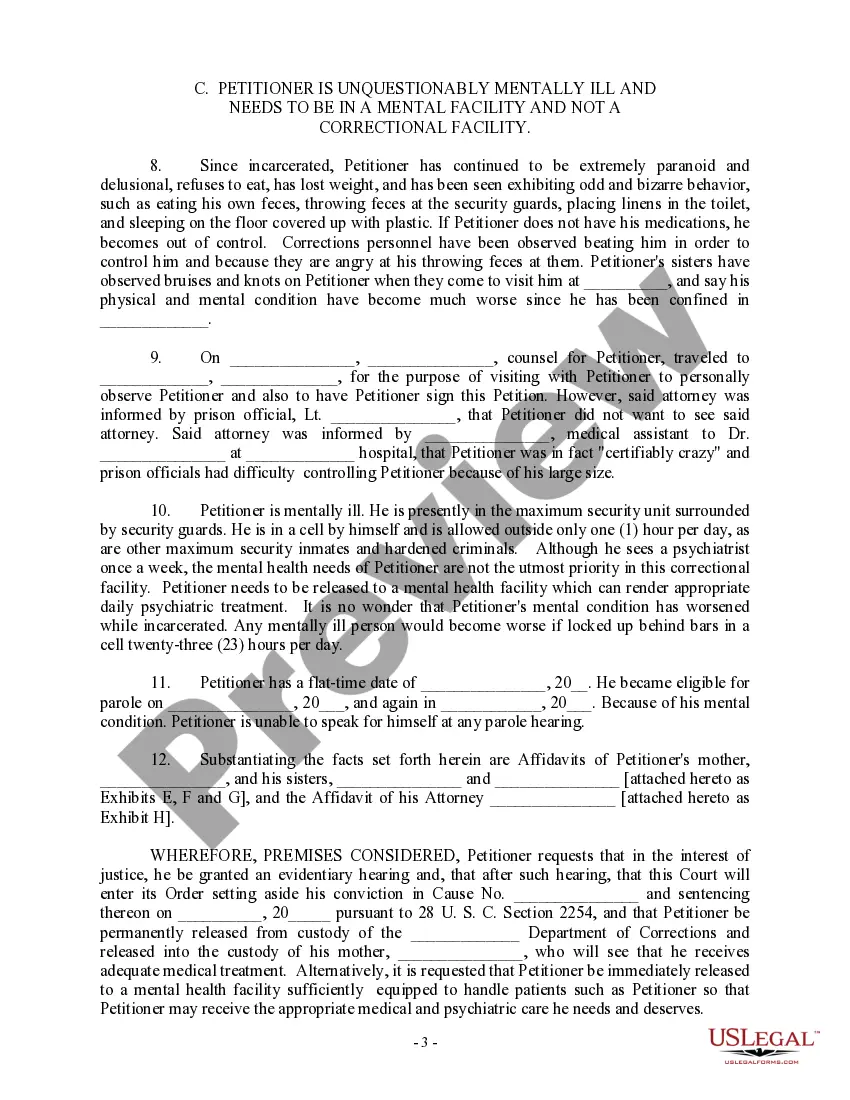
Get your form ready online
Our built-in tools help you complete, sign, share, and store your documents in one place.
Make edits, fill in missing information, and update formatting in US Legal Forms—just like you would in MS Word.
Download a copy, print it, send it by email, or mail it via USPS—whatever works best for your next step.
Sign and collect signatures with our SignNow integration. Send to multiple recipients, set reminders, and more. Go Premium to unlock E-Sign.
If this form requires notarization, complete it online through a secure video call—no need to meet a notary in person or wait for an appointment.
We protect your documents and personal data by following strict security and privacy standards.

Make edits, fill in missing information, and update formatting in US Legal Forms—just like you would in MS Word.

Download a copy, print it, send it by email, or mail it via USPS—whatever works best for your next step.

Sign and collect signatures with our SignNow integration. Send to multiple recipients, set reminders, and more. Go Premium to unlock E-Sign.

If this form requires notarization, complete it online through a secure video call—no need to meet a notary in person or wait for an appointment.

We protect your documents and personal data by following strict security and privacy standards.
Looking for another form?



Form popularity
FAQ
A Writ of Habeas Corpus is usually filed by submitting a Petition, a Memorandum of Points and Authorities, a Declaration from the defendant, and other evidence which supports the Writ of Habeas Corpus. The Memorandum of Points of Authorities is a legal memorandum, which contains the legal arguments of the defendant.
There is a time limit for filing a motion under §2255. You must file within one year of: The date on which the judgment of conviction against becomes final. This is after any appeals or other post-conviction motions have been finally decided, not right after sentencing.
The literal meaning of habeas corpus is "you should have the body"—that is, the judge or court should (and must) have any person who is being detained brought forward so that the legality of that person's detention can be assessed.
A Writ of Habeas Corpus challenges the legality of your incarceration. It seeks to find radical defects in your imprisonment and render a judgment or proceeding completely void. If the legal basis for incarceration is found to be invalid, then a judge must order your release from confinement.
A writ of habeas corpus is used to bring a prisoner or other detainee (e.g. institutionalized mental patient) before the court to determine if the person's imprisonment or detention is lawful. A habeas petition proceeds as a civil action against the State agent (usually a warden) who holds the defendant in custody.
Sec. 4385. (1) The judges of every court of record have the power to issue a writ of habeas corpus for the purpose of bringing before that court, or another court or body authorized to examine witnesses, any prisoner who may be detained in any jail or prison within this state, to be examined as a witness.
Ask the court for a writ of habeas corpus (a court order telling a public official, like a prison warden, to bring you to the court and show a legal reason for holding you) to challenge your criminal conviction or commitment to another facility or the conditions under which you are being held.
A 2255 petition may be filed by a person in federal custody to challenge a federal criminal conviction and/or sentence. Unlike a 2254 petition, which challenges a state-court conviction and/or sentence, a 2255 petition is not limited to federal constitutional claims.
A federal petition for writ of habeas corpus under 28 U.S.C. § 2254 is used by a (1) state prisoner (2) being held in state custody (3) to challenge the validity of a state criminal conviction or sentence (4) for the purpose of obtaining release from custody.