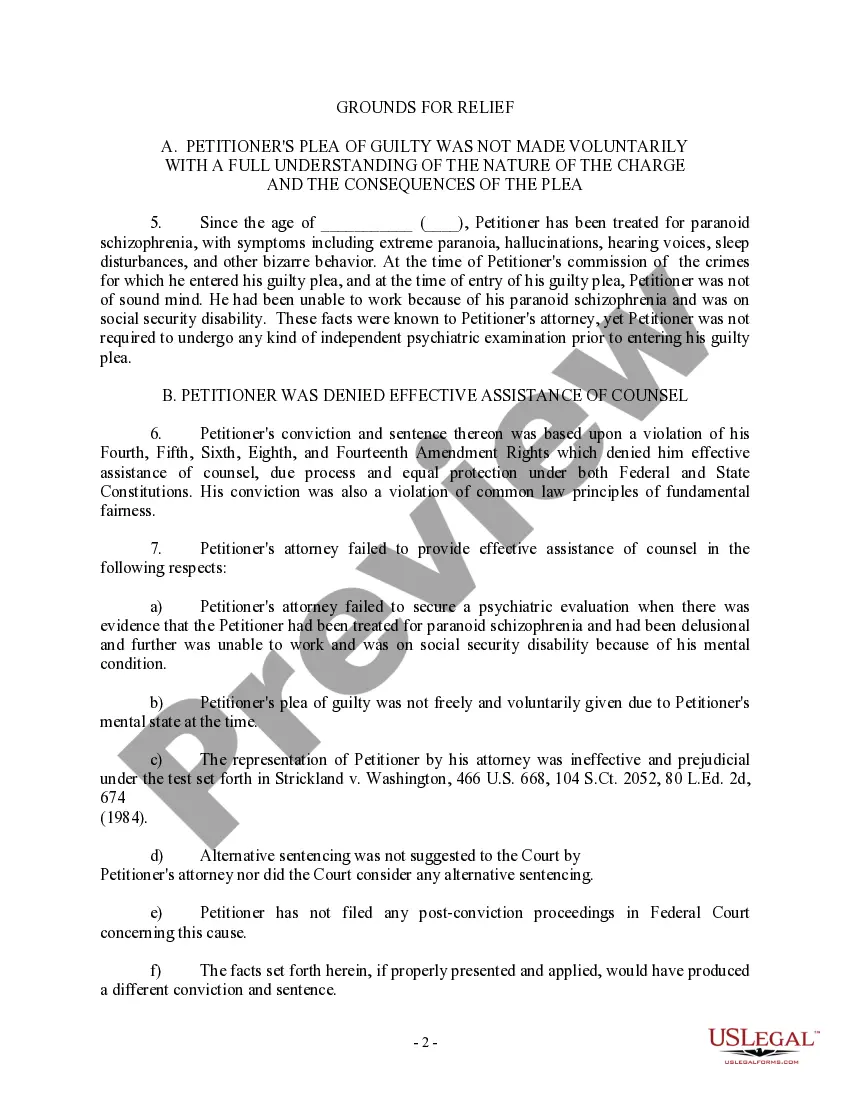
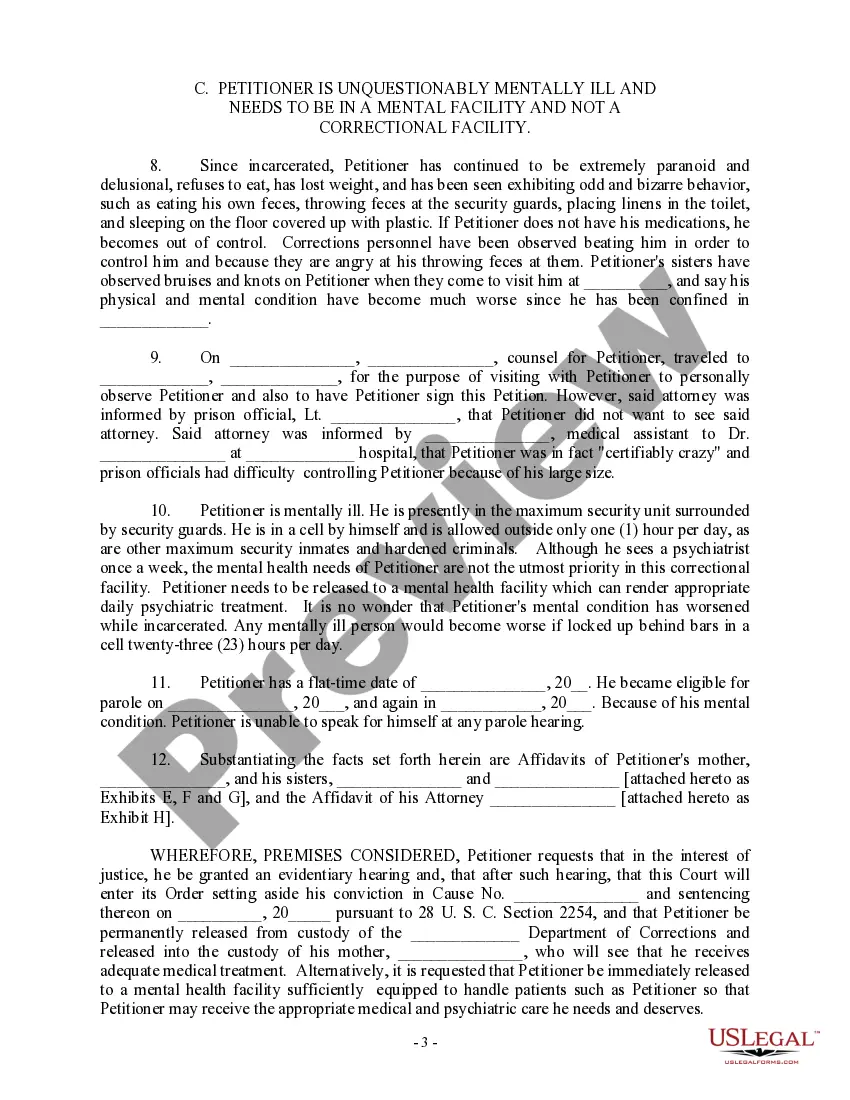
Federal Habeas Corpus Form 2255 In Fairfax
Description


Get your form ready online
Our built-in tools help you complete, sign, share, and store your documents in one place.
Make edits, fill in missing information, and update formatting in US Legal Forms—just like you would in MS Word.
Download a copy, print it, send it by email, or mail it via USPS—whatever works best for your next step.
Sign and collect signatures with our SignNow integration. Send to multiple recipients, set reminders, and more. Go Premium to unlock E-Sign.
If this form requires notarization, complete it online through a secure video call—no need to meet a notary in person or wait for an appointment.
We protect your documents and personal data by following strict security and privacy standards.

Make edits, fill in missing information, and update formatting in US Legal Forms—just like you would in MS Word.

Download a copy, print it, send it by email, or mail it via USPS—whatever works best for your next step.

Sign and collect signatures with our SignNow integration. Send to multiple recipients, set reminders, and more. Go Premium to unlock E-Sign.

If this form requires notarization, complete it online through a secure video call—no need to meet a notary in person or wait for an appointment.

We protect your documents and personal data by following strict security and privacy standards.
Looking for another form?



Form popularity
FAQ
A motion must be in writing unless the court permits otherwise. (2) Contents of a Motion. (A) Grounds and Relief Sought. A motion must state with particularity the grounds for the motion, the relief sought, and the legal argument necessary to support it.
A: Section 2255(a) specifically contemplates four types of section 2255 cognizable claims: (1) “that the sentence was imposed in violation of the Constitution or laws of the United States”; (2) “that the court was without jurisdiction to impose the sentence”; (3) “that the sentence was in excess of the maximum ...
How to File a 2255 Motion Complete the Motion Form. The section 2255 motion must state the grounds for relief and provide supporting, clear and convincing evidence. File the Motion. Submit the 2255 motion with the federal court where you were convicted. Government's Response. Evidentiary Hearing. Court's Decision. Appeal.
How to File a 2255 Motion Complete the Motion Form. The section 2255 motion must state the grounds for relief and provide supporting, clear and convincing evidence. File the Motion. Submit the 2255 motion with the federal court where you were convicted. Government's Response. Evidentiary Hearing. Court's Decision. Appeal.
28 U.S.C. 2255 Motion | 2255 Specify all the grounds for relief available to the moving party; State the facts supporting each ground; State the relief requested; Be printed, typewritten, or legibly handwritten; and. Be signed under penalty of perjury by the movant or by a person authorized to sign it for the movant.
A Section 2255 motion must be filed in the district where the prisoner was convicted and sentenced. The motion usually seeks to have the sentence or conviction vacated and may also request resentencing. As a general matter, Section 2255 is the proper vehicle for almost all federal prisoner collateral attacks.
Because the courts have many cases, a petition for habeas corpus can take a long time. In general, habeas petitions take at least 6 months, and in most cases you will not receive a final decision for at least 10 months.
A Writ of Habeas Corpus is usually filed by submitting a Petition, a Memorandum of Points and Authorities, a Declaration from the defendant, and other evidence which supports the Writ of Habeas Corpus.
A §2255 motion is a “collateral” or indirect challenge to the judgment or sentence against you attacking the conviction or sentence as unconstitutional or contrary to federal law; it is a proceeding separate from your criminal conviction or sentence that is used to challenge the conviction or sentence on certain ...
Section 2255 governs an action by a person in custody under federal law who is challenging the validity of his or her conviction or sentence. Section 2254 governs an action by a person in custody under state law who is challenging the validity of his or her conviction or sentence.