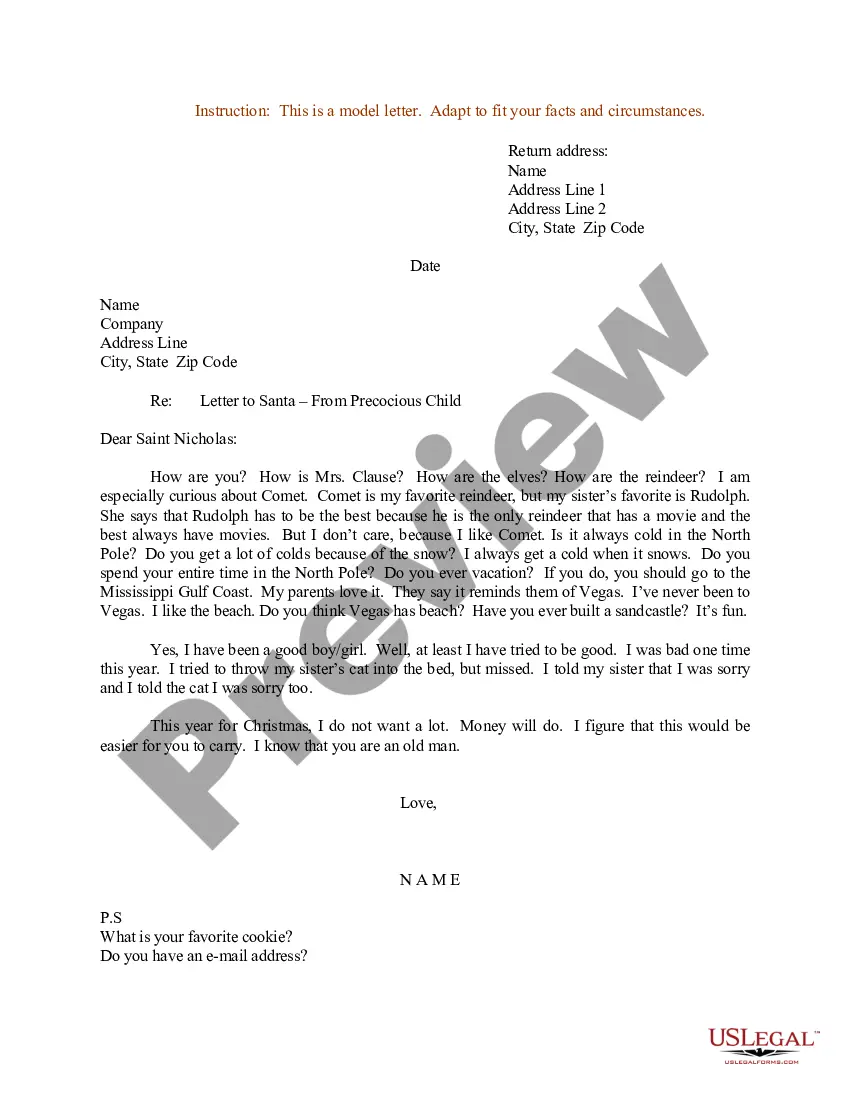
Santa Letter Examples For Naughty Child In Orange
Description

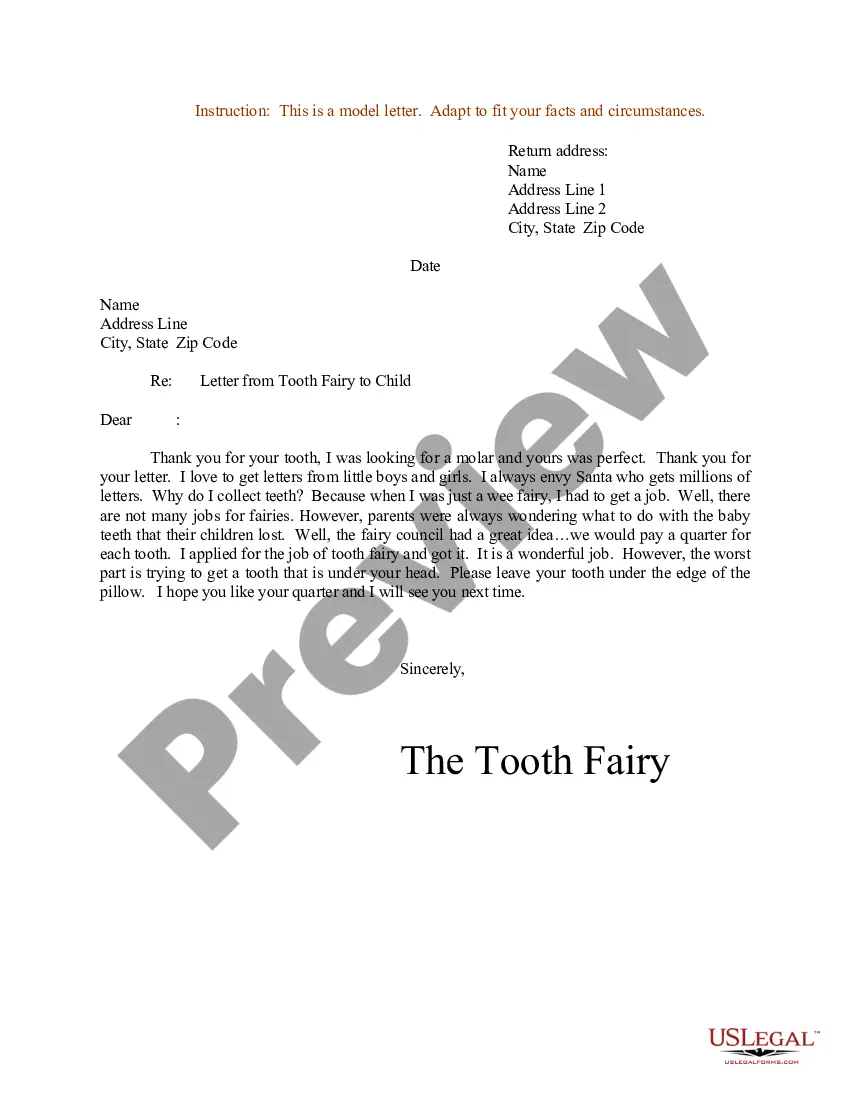
Get your form ready online
Our built-in tools help you complete, sign, share, and store your documents in one place.
Make edits, fill in missing information, and update formatting in US Legal Forms—just like you would in MS Word.
Download a copy, print it, send it by email, or mail it via USPS—whatever works best for your next step.
Sign and collect signatures with our SignNow integration. Send to multiple recipients, set reminders, and more. Go Premium to unlock E-Sign.
If this form requires notarization, complete it online through a secure video call—no need to meet a notary in person or wait for an appointment.
We protect your documents and personal data by following strict security and privacy standards.

Make edits, fill in missing information, and update formatting in US Legal Forms—just like you would in MS Word.

Download a copy, print it, send it by email, or mail it via USPS—whatever works best for your next step.

Sign and collect signatures with our SignNow integration. Send to multiple recipients, set reminders, and more. Go Premium to unlock E-Sign.

If this form requires notarization, complete it online through a secure video call—no need to meet a notary in person or wait for an appointment.

We protect your documents and personal data by following strict security and privacy standards.
Looking for another form?








Form popularity
FAQ
When responding as Santa, make the response as personal as possible by highlighting your child's accomplishments over the past year. For example, helping around the house, receiving good grades in a particular subject at school or participating in community service activities.
The tradition of giving coal to naughty children has found its place on the silver screen, from classic films that captured the hearts of generations to modern animated specials that continue to resonate with audiences.
Santa's a pretty giving guy, even when it comes to the naughty boys and girls… but do you know why coal is specifically the gift of choice for Jolly Old Saint Nicholas? While there are quite a few different theories on the origin of this tradition… to put it simply, Santa's sending these bad kids a message…
Legend has it, la Befana enters homes via the chimney and leaves small gifts placed in stockings hung from the mantel. However, for those undeserving of treats and candy, she leaves a lump of coal conveniently taken out of the fireplace as a reminder to naughty children that they must change their ways.
Calling the Santa Hotline is just a phone call away at 980-447-2682. You can call him anytime, not just during the holiday season. Remember, Santa Loves to Hear From You Santa and his team at the North Pole are always excited to hear from children all over the world.
In the 19th and 20th centuries, coal was commonly burned to heat homes, so when Santa Claus came to visit, it was convenient to grab a lump to leave for children on his "naughty" list. Of course, Santa would never give children lumps of coal for Christmas... unless they asked for it!
The tradition of giving coal to naughty children has found its place on the silver screen, from classic films that captured the hearts of generations to modern animated specials that continue to resonate with audiences.
The origins of the classic “gift” for those who made the naughty list are murky. The tradition of giving misbehaving children lumps of fossil fuel predates the Santa we know, and is also associated with St. Nicholas, Sinterklaas, and Italy's La Befana.
Let him believe until he figures it out. You can let him know that certain presents are from family members or friends and just a few are from Santa so in time he will realize that Santa is a fictional character. Let him enjoy the fantasy instead of trying to push reality down his throat.
What do we know about how, why and when children stop believing in Santa? The average age that children stop believing in Santa is eight. There's a huge amount of variation though — some kids will report it around four or five, some are closer to 12 or 13. So the average is eight, but each child's journey is different.