Accident With Injury In North Carolina
Description

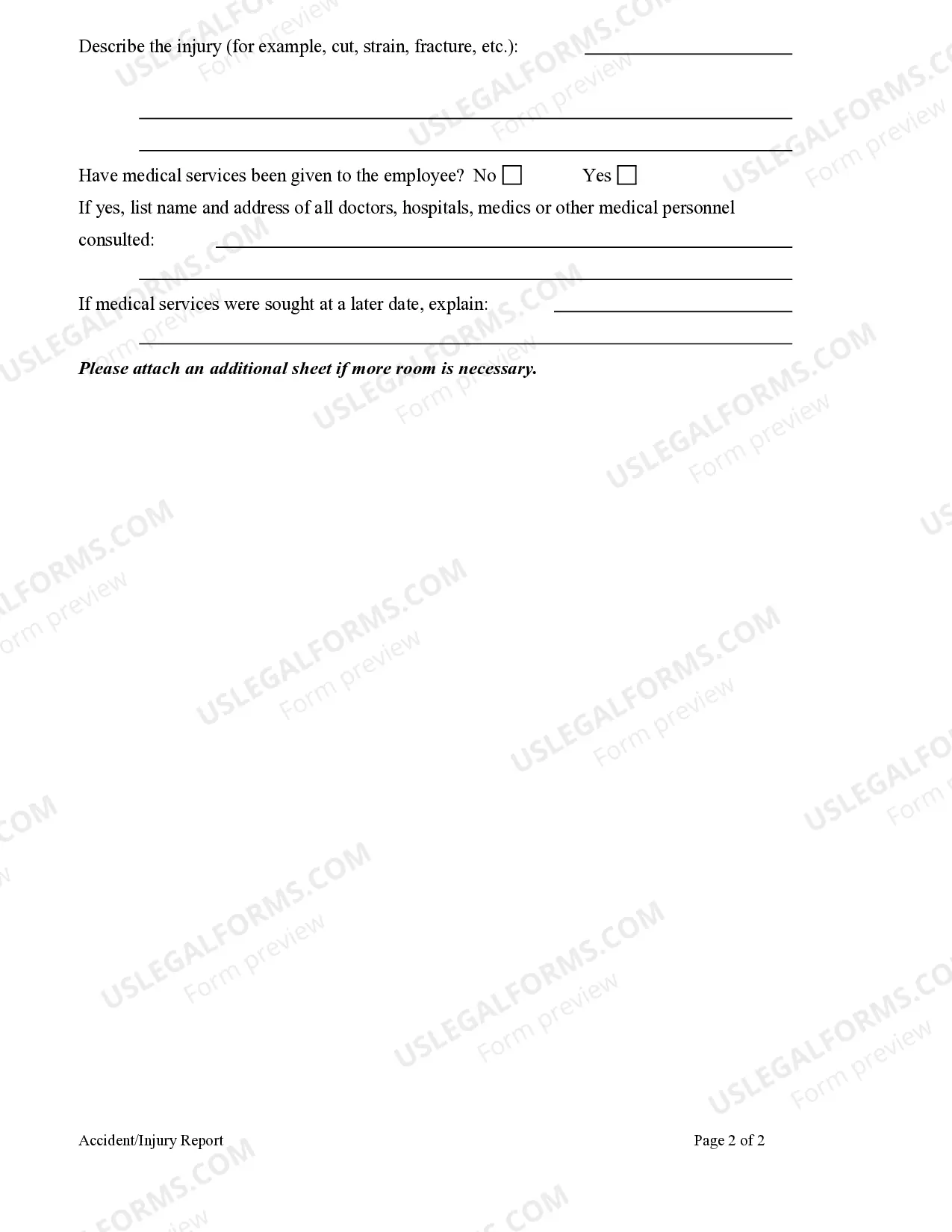
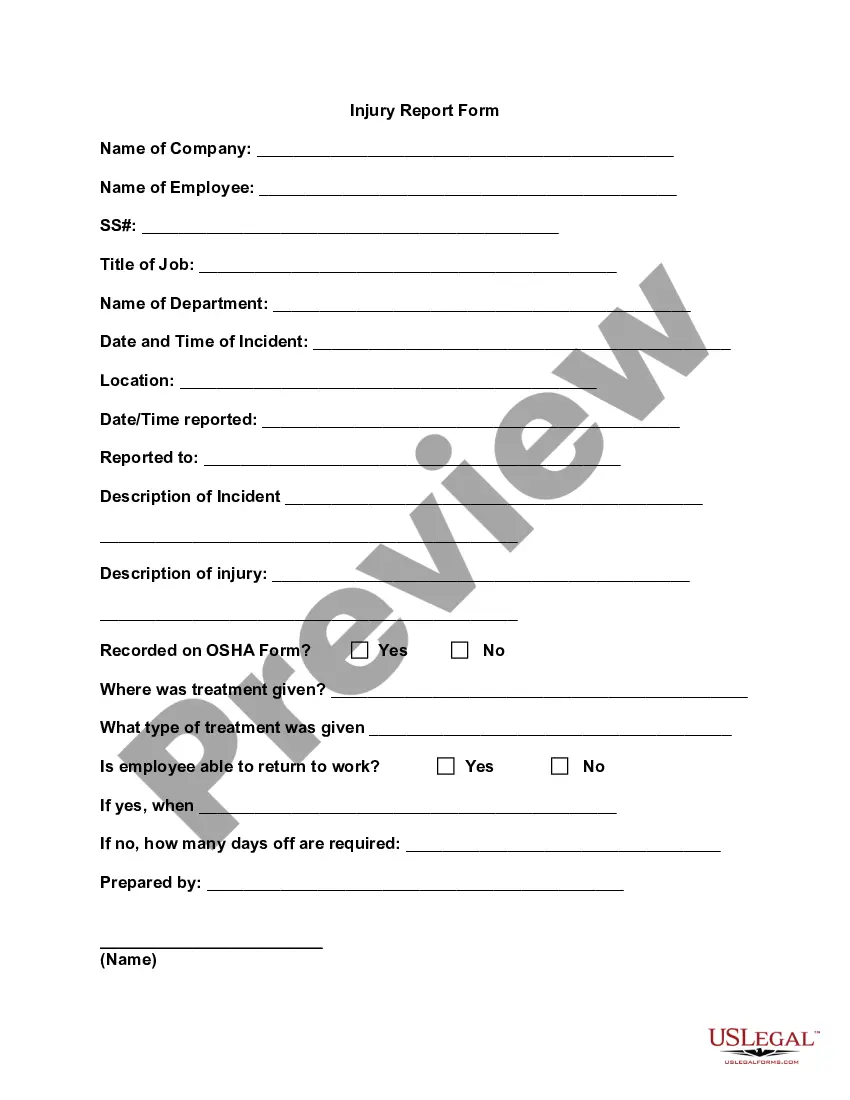
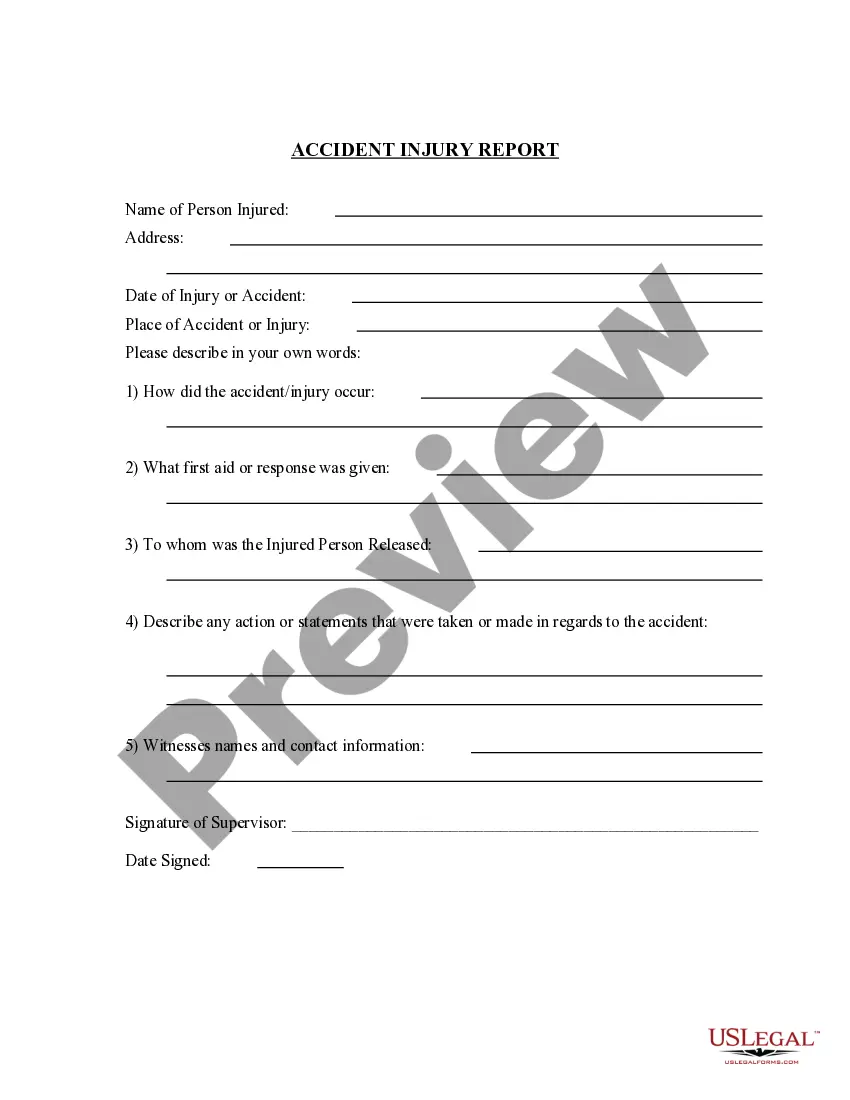
Get your form ready online
Our built-in tools help you complete, sign, share, and store your documents in one place.
Make edits, fill in missing information, and update formatting in US Legal Forms—just like you would in MS Word.
Download a copy, print it, send it by email, or mail it via USPS—whatever works best for your next step.
Sign and collect signatures with our SignNow integration. Send to multiple recipients, set reminders, and more. Go Premium to unlock E-Sign.
If this form requires notarization, complete it online through a secure video call—no need to meet a notary in person or wait for an appointment.
We protect your documents and personal data by following strict security and privacy standards.

Make edits, fill in missing information, and update formatting in US Legal Forms—just like you would in MS Word.

Download a copy, print it, send it by email, or mail it via USPS—whatever works best for your next step.

Sign and collect signatures with our SignNow integration. Send to multiple recipients, set reminders, and more. Go Premium to unlock E-Sign.

If this form requires notarization, complete it online through a secure video call—no need to meet a notary in person or wait for an appointment.

We protect your documents and personal data by following strict security and privacy standards.
Looking for another form?





Form popularity
FAQ
The North Carolina personal injury statute of limitations is generally three years, per G.S. §1-52. However, there are exceptions to this law. A personal injury lawyer can help you understand what the specific deadline is for your case.
The California statute of limitations sets specific deadlines for filing lawsuits. For personal injury cases like car accident lawsuits, you have two years from the date of the accident. If you're dealing with damage to your vehicle but no injuries, you have three years to file.
In North Carolina the statute of limitations for a personal injury claim resulting from a car accident is three (3) years from the date of injury. For example, if you were in a car accident on 3/5/2014, you must file a lawsuit or resolve your claim before 3/6/2017.
The California statute of limitations sets specific deadlines for filing lawsuits. For personal injury cases like car accident lawsuits, you have two years from the date of the accident. If you're dealing with damage to your vehicle but no injuries, you have three years to file.
North Carolina's “Fender Bender Law” The “Fender Bender Law” requires motorists to move vehicles to the shoulder of the road after any minor, non-injury crash in North Carolina. You can receive a $110 fine and court costs if you fail to do so.
Most personal injury lawsuits take several months to conclude. A case that goes to trial may take more than a year. If the facts don't clearly favor one side, then there's a better chance that the case will go to trial.
Time limits The most common claim in a personal injury case is negligence and the time limit for this is 3 years. This means that court proceedings must be issued within 3 years of you first being aware that you have suffered an injury.
In North Carolina, the statute of limitations for a car accident claim or lawsuit is three years from the date of the injury. This timeframe applies to various damages, including medical expenses, lost wages, pain and suffering, and property damage.
No. North Carolina is not considered a “no-fault” state when it comes to car accidents. North Carolina is an at-fault state, which means that the insurance company of the at-fault driver bears the primary responsibility for paying for your medical costs, lost wages, and other damages.
Is PIP Insurance Required in North Carolina? No, PIP insurance is not required by law in North Carolina. However, drivers should carefully consider their individual circumstances, preferences, and risk tolerance when deciding whether to add PIP coverage.
