Accident Report File Fort Worth In Illinois
Description

Get your form ready online
Our built-in tools help you complete, sign, share, and store your documents in one place.
Make edits, fill in missing information, and update formatting in US Legal Forms—just like you would in MS Word.
Download a copy, print it, send it by email, or mail it via USPS—whatever works best for your next step.
Sign and collect signatures with our SignNow integration. Send to multiple recipients, set reminders, and more. Go Premium to unlock E-Sign.
If this form requires notarization, complete it online through a secure video call—no need to meet a notary in person or wait for an appointment.
We protect your documents and personal data by following strict security and privacy standards.

Make edits, fill in missing information, and update formatting in US Legal Forms—just like you would in MS Word.

Download a copy, print it, send it by email, or mail it via USPS—whatever works best for your next step.

Sign and collect signatures with our SignNow integration. Send to multiple recipients, set reminders, and more. Go Premium to unlock E-Sign.

If this form requires notarization, complete it online through a secure video call—no need to meet a notary in person or wait for an appointment.

We protect your documents and personal data by following strict security and privacy standards.
Looking for another form?









Form popularity
FAQ
Illinois law gives injured people two years from the accident date to file a personal injury lawsuit seeking compensation. While that seems like plenty of time to get your ducks in a row, it can pass you by in the blink of an eye.
In Illinois, the statute of limitations for car accident claims is generally two years from the date of the accident, as outlined in the Illinois Compiled Statutes, section 735 ILCS 5/13-202.
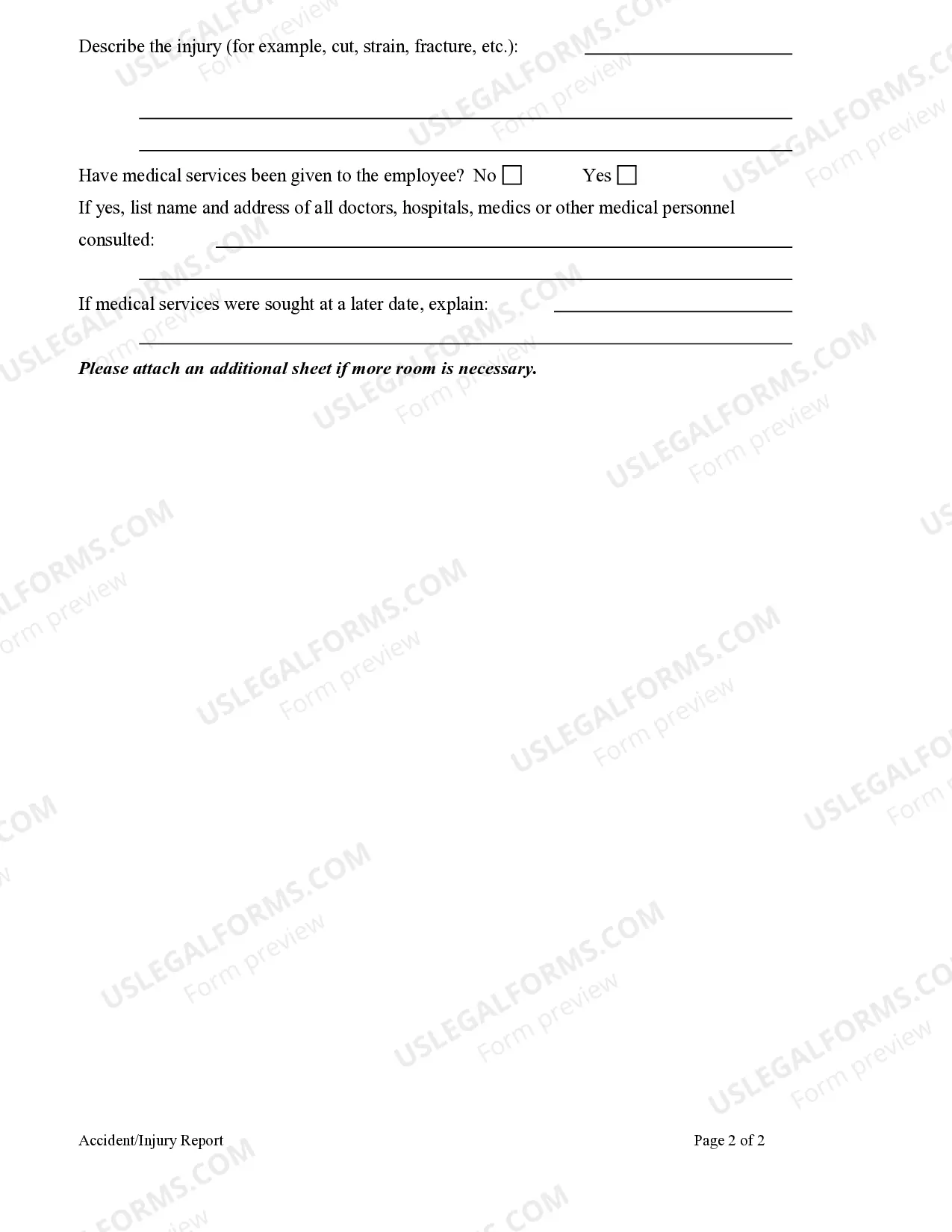
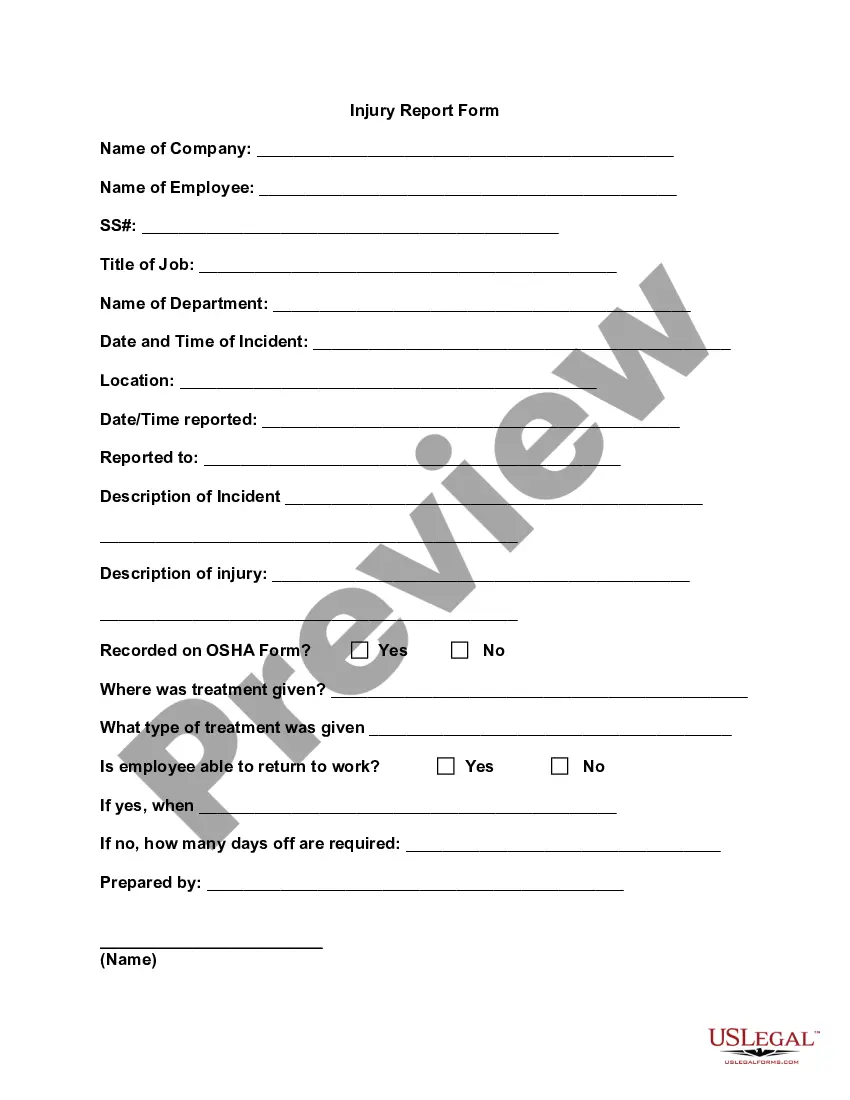
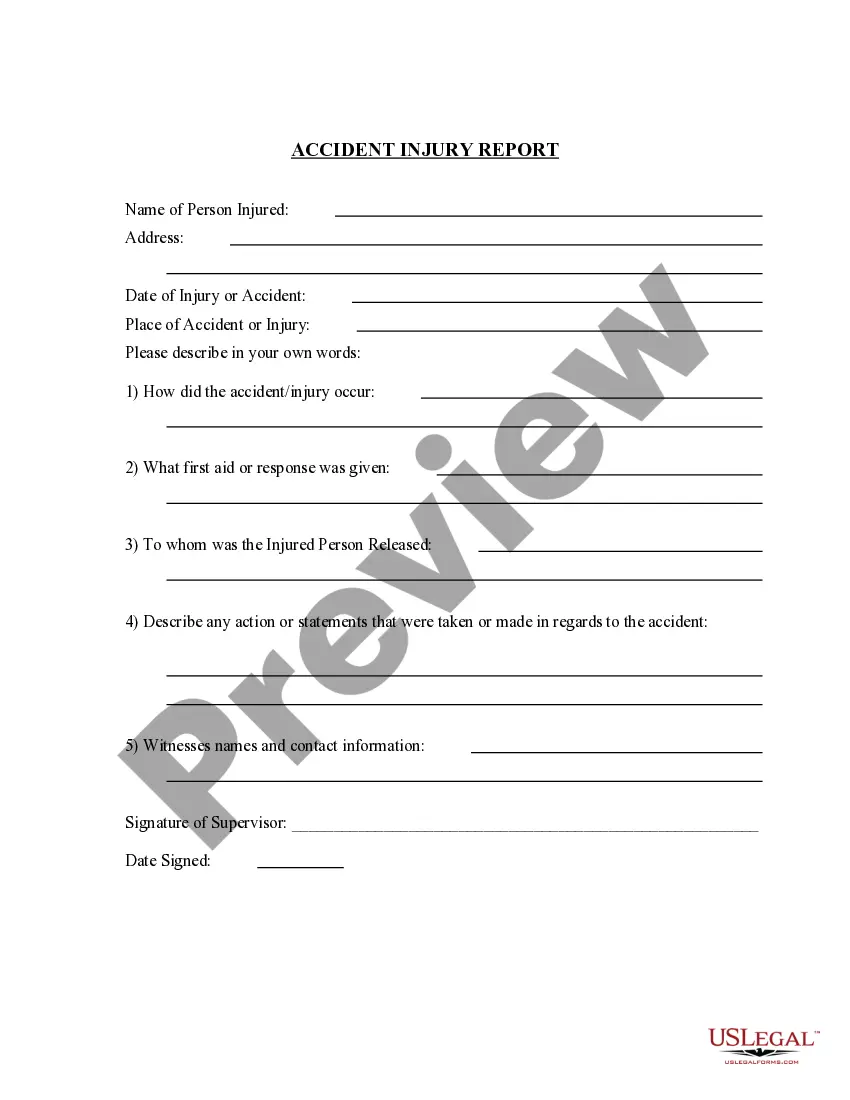
Items to review include: Date, time and specific location of incident. Names, job titles and department of employees involved and immediate supervisors. Names and accounts of witnesses. Events leading up to incident. Specifically what the employee was doing at the moment of the accident.
There are five key details of accidents legally required: Full name, address and occupation of the injured person (a) Date and time of the accident (b) Location of the accident (c) Cause and nature of the injury (d) Name, address and occupation of the person giving the notice, if other than the injured person (e).
In most cases in Illinois, you have two years from the date of your injury to file a civil personal injury lawsuit. As with most laws, there are exceptions to this two-year deadline.
Illinois statute (625 ILCS 5/11-408) requires that crash reports be submitted to the Department “…within 10 days after investigation of the motor vehicle accident.”
While Illinois law no longer requires you to report a car crash, you should still do so to protect your interests. You can file your car crash report with the Illinois DOT. You should immediately forward a copy of your crash report to the auto insurance company.
Insurance companies have varied timeline requirements for reporting an accident. Some companies may request to be notified within 24 hours, while other companies may give you a few days. Your car insurance company may have its own protocols for claims filing, too. Check your policy for details.
If you are involved in an accident in Illinois and you fail to report it, you could face a fine or even jail time. There are even stiffer penalties for those who leave the scene of an accident. When there is a failure to report an accident in Illinois, you could end up with a hefty $2,500 fine, or a year of jail time.
