Annual General Meeting Corporate Governance Checklist For Shareholders In Kings
Description



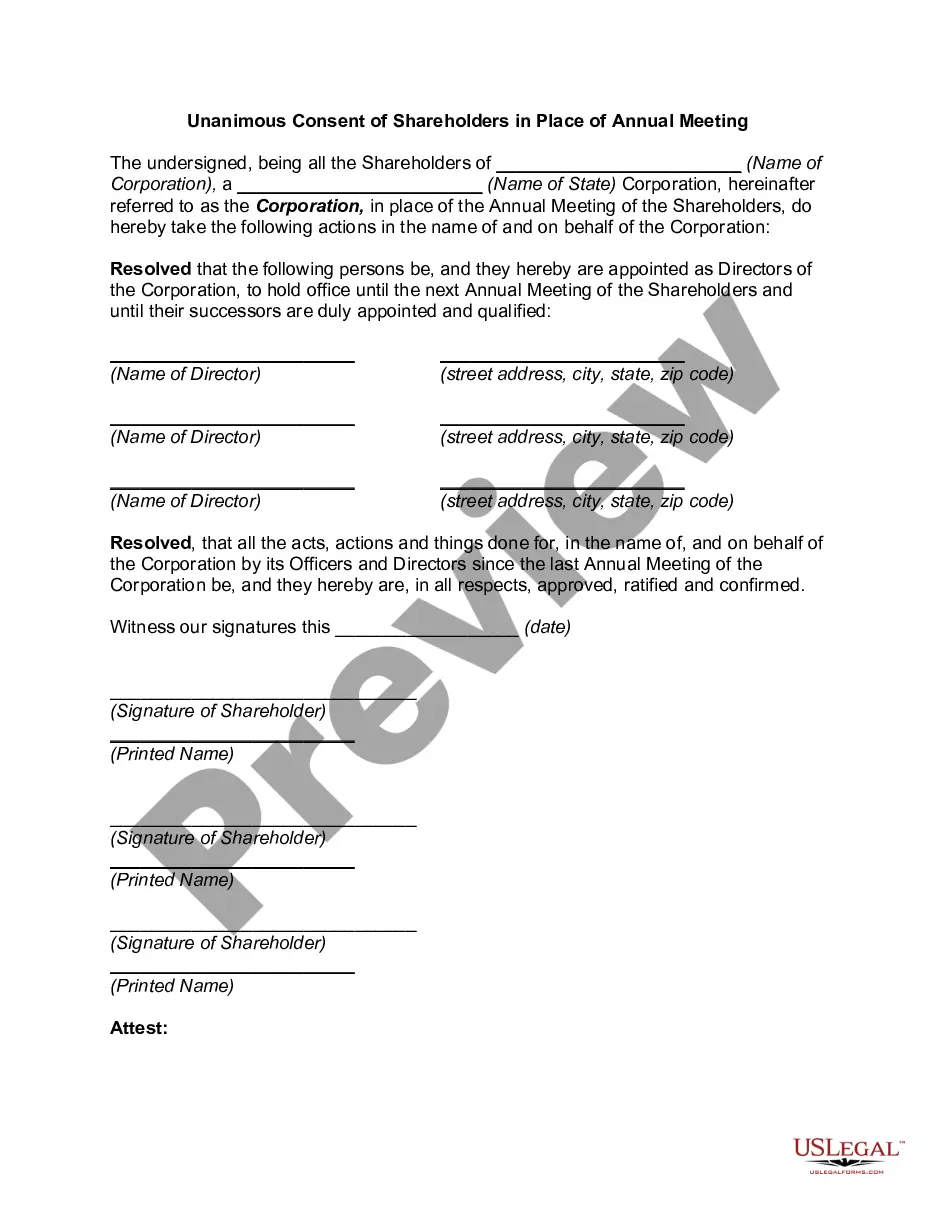
Get your form ready online
Our built-in tools help you complete, sign, share, and store your documents in one place.
Make edits, fill in missing information, and update formatting in US Legal Forms—just like you would in MS Word.
Download a copy, print it, send it by email, or mail it via USPS—whatever works best for your next step.
Sign and collect signatures with our SignNow integration. Send to multiple recipients, set reminders, and more. Go Premium to unlock E-Sign.
If this form requires notarization, complete it online through a secure video call—no need to meet a notary in person or wait for an appointment.
We protect your documents and personal data by following strict security and privacy standards.

Make edits, fill in missing information, and update formatting in US Legal Forms—just like you would in MS Word.

Download a copy, print it, send it by email, or mail it via USPS—whatever works best for your next step.

Sign and collect signatures with our SignNow integration. Send to multiple recipients, set reminders, and more. Go Premium to unlock E-Sign.

If this form requires notarization, complete it online through a secure video call—no need to meet a notary in person or wait for an appointment.

We protect your documents and personal data by following strict security and privacy standards.
Looking for another form?




Form popularity
FAQ
What is the Agenda of an AGM? The matters discussed or business transacted in an AGM consists of: Consideration and adoption of the audited financial statements. Consideration of the Director's report and auditor's report.
For example, an annual general meeting (AGM) provides an opportunity for the board of directors and shareholders to come together, review the company's performance, and discuss its future direction.
The general meeting is the organ of authority of the Company, and is responsible for deciding on the Company's operational policies and investment plans, electing, removing and replacing directors and supervisors who represent the shareholders and deciding on matters relating to their remunerations, deciding on the ...
At a general meeting, members discuss important company affairs and make decisions through resolutions. Resolutions are voted on by the members via a show of hands or poll in ance with their voting rights.
An AGM (also known as an annual shareholder meeting) is a yearly meeting between shareholders and board members where they gather to: Discuss business matters. Review financial statements. Address resolutions.
Your board can meet as often as it needs to. Some nonprofits hold monthly board meetings while others hold board meetings quarterly. The board usually holds at least one meeting before the Annual General Meeting AGM to approve financial statements. And it holds another one after the AGM to appoint officers.
Tips for Planning a Productive AGM Find a Reliable AGM Venue. Choose a Compliant Date & Time. Provide Sufficient AGM Notice. Audit Necessary Accounts. Outline a Clear AGM Agenda. Assign Roles & Designate Tasks. Decide on an Efficient Voting Format.
In many companies, every shareholder or guarantor can attend and vote at general meetings.
(a) every Member of the company, legal representative of any deceased Member or the assignee of an insolvent Member; Page 12 GUIDANCE NOTE ON GENERAL MEETINGS 12 (b) the Auditor or Auditors of the company; and (c) every Director of the company.
AGMs are mandatory for both public and private companies. All shareholders are legally obligated to receive an invitation to these meetings. The board of directors should also be represented. An auditor may also be present if the organization is subject to an audit requirement.

