Artist Management Salary In Wake
Description









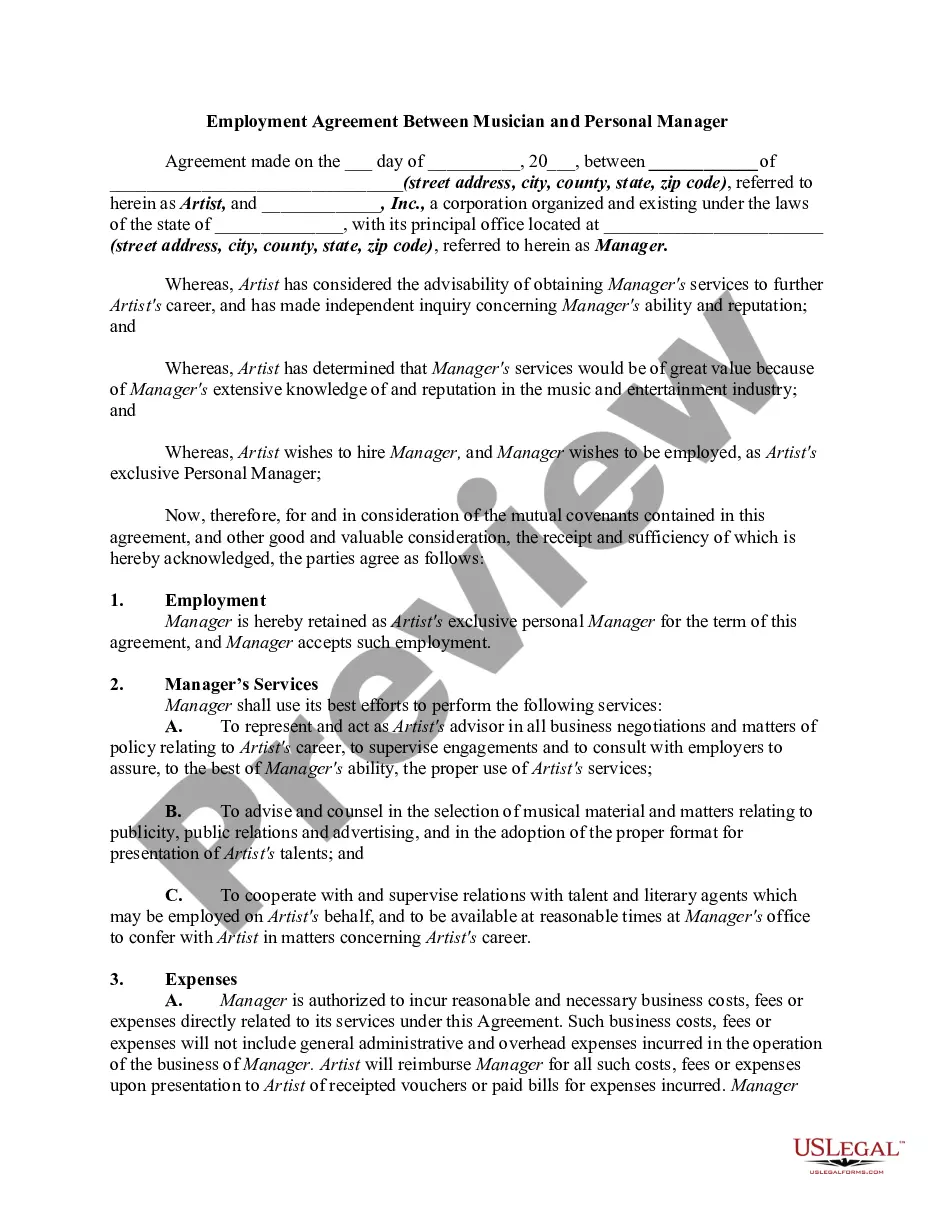


Get your form ready online
Our built-in tools help you complete, sign, share, and store your documents in one place.
Make edits, fill in missing information, and update formatting in US Legal Forms—just like you would in MS Word.
Download a copy, print it, send it by email, or mail it via USPS—whatever works best for your next step.
Sign and collect signatures with our SignNow integration. Send to multiple recipients, set reminders, and more. Go Premium to unlock E-Sign.
If this form requires notarization, complete it online through a secure video call—no need to meet a notary in person or wait for an appointment.
We protect your documents and personal data by following strict security and privacy standards.

Make edits, fill in missing information, and update formatting in US Legal Forms—just like you would in MS Word.

Download a copy, print it, send it by email, or mail it via USPS—whatever works best for your next step.

Sign and collect signatures with our SignNow integration. Send to multiple recipients, set reminders, and more. Go Premium to unlock E-Sign.

If this form requires notarization, complete it online through a secure video call—no need to meet a notary in person or wait for an appointment.

We protect your documents and personal data by following strict security and privacy standards.
Looking for another form?










Form popularity
FAQ
How to become an art gallery manager? To reach this position, it is recommended to obtain a graduate degree in arts management, art business, museum studies or arts administration. As the position involves marketing and management tasks, taking classes of those two fields can also help you better qualify for the job.
In California, the average yearly salary for an Art Manager is $127,749.
Studies in fields such as Business Administration, Arts Management, Communications, or Entertainment Law provide a solid foundation for the business and legal aspects of the profession.
Some start by managing artists or groups they already know, while others apply for positions at management companies, found their own, or join an artist's team in a different capacity—as a business manager, agent, or personal assistant—before taking over management duties.
Education: Considering music managers are responsible for all the legal and business aspects of an artist's career, they usually must have a bachelor's degree in the music business (or business in general). Several schools offer music management or business management degrees.
Steps To Starting An Artist Management Company Build Your Artist Roster. Sign A Contract. Don't Quit Your Day Job Just Yet. Draft an Artist Management Company Business Plan. Make a Name for Yourself. Get Organized. Work With an Entertainment Accountant. Hire an Entertainment Lawyer.
Artist Manager Salary Annual SalaryHourly Wage Top Earners $400,000 $192 75th Percentile $400,000 $192 Average $246,250 $118 25th Percentile $92,500 $44
Most managers receive a percentage of the artist's gross income, typically between 15-30 percent. Before signing a management contract, artists should thoroughly review the terms and consider seeking legal advice. It's crucial to understand what you're agreeing to, as this contract can significantly impact your career.
As a general rule, managers take a percentage of all income generated by the artist in exchange for their management services. Commission rates typically range from 15-25% of the artist's gross income from: Recording royalties: Sales, streaming and licensing of recorded music.
Some start by managing artists or groups they already know, while others apply for positions at management companies, found their own, or join an artist's team in a different capacity—as a business manager, agent, or personal assistant—before taking over management duties.
