Artist Agreement Form Statement Within In Queens
Description

Get your form ready online
Our built-in tools help you complete, sign, share, and store your documents in one place.
Make edits, fill in missing information, and update formatting in US Legal Forms—just like you would in MS Word.
Download a copy, print it, send it by email, or mail it via USPS—whatever works best for your next step.
Sign and collect signatures with our SignNow integration. Send to multiple recipients, set reminders, and more. Go Premium to unlock E-Sign.
If this form requires notarization, complete it online through a secure video call—no need to meet a notary in person or wait for an appointment.
We protect your documents and personal data by following strict security and privacy standards.

Make edits, fill in missing information, and update formatting in US Legal Forms—just like you would in MS Word.

Download a copy, print it, send it by email, or mail it via USPS—whatever works best for your next step.

Sign and collect signatures with our SignNow integration. Send to multiple recipients, set reminders, and more. Go Premium to unlock E-Sign.

If this form requires notarization, complete it online through a secure video call—no need to meet a notary in person or wait for an appointment.

We protect your documents and personal data by following strict security and privacy standards.
Looking for another form?





Form popularity
FAQ
Ok, good. This week, major labels banded together to unveil a revolutionary new type of record deal: the 720 deal. It follows the same basic principles as the 360 deal, but with one groundbreaking twist: record labels are now also allowed to take a cut out of the incomes of family members of signed musicians.
A common split of the profit is an equal 50/50 split between the label and artist, but a higher split may be agreed in favour of either party. The label will traditionally cover all or most costs upfront.
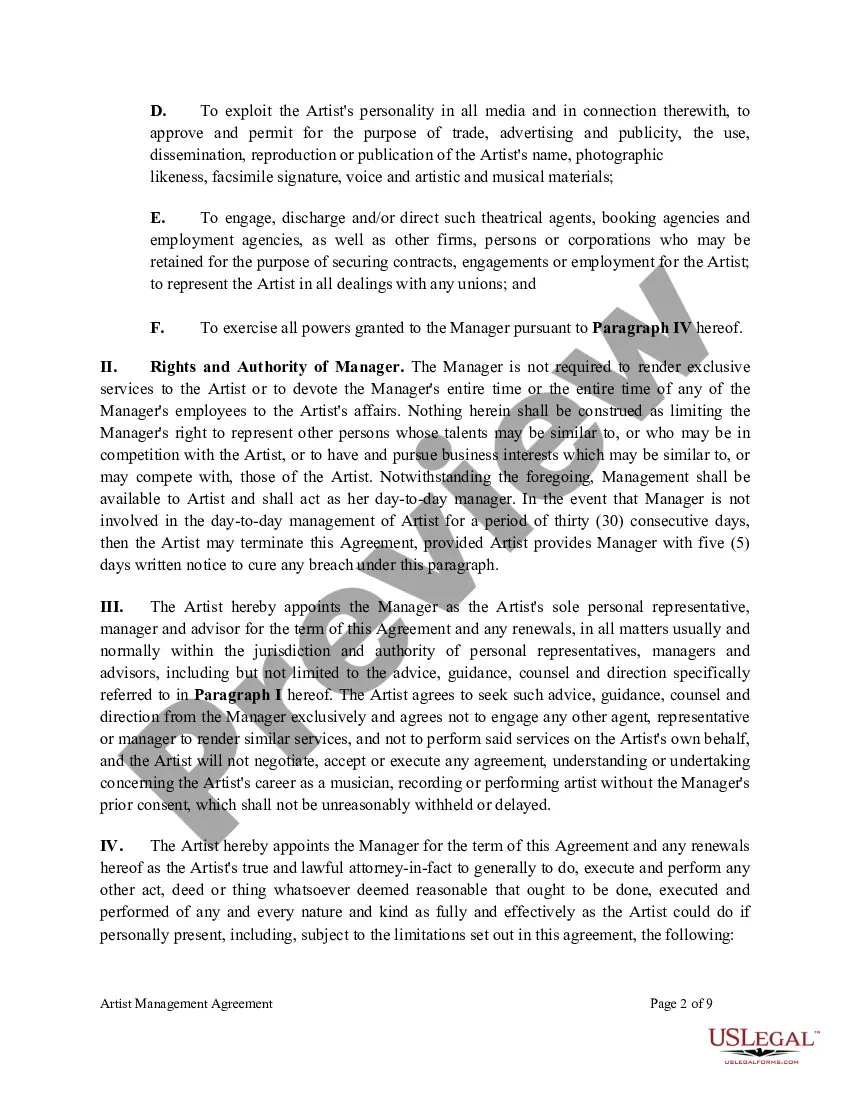
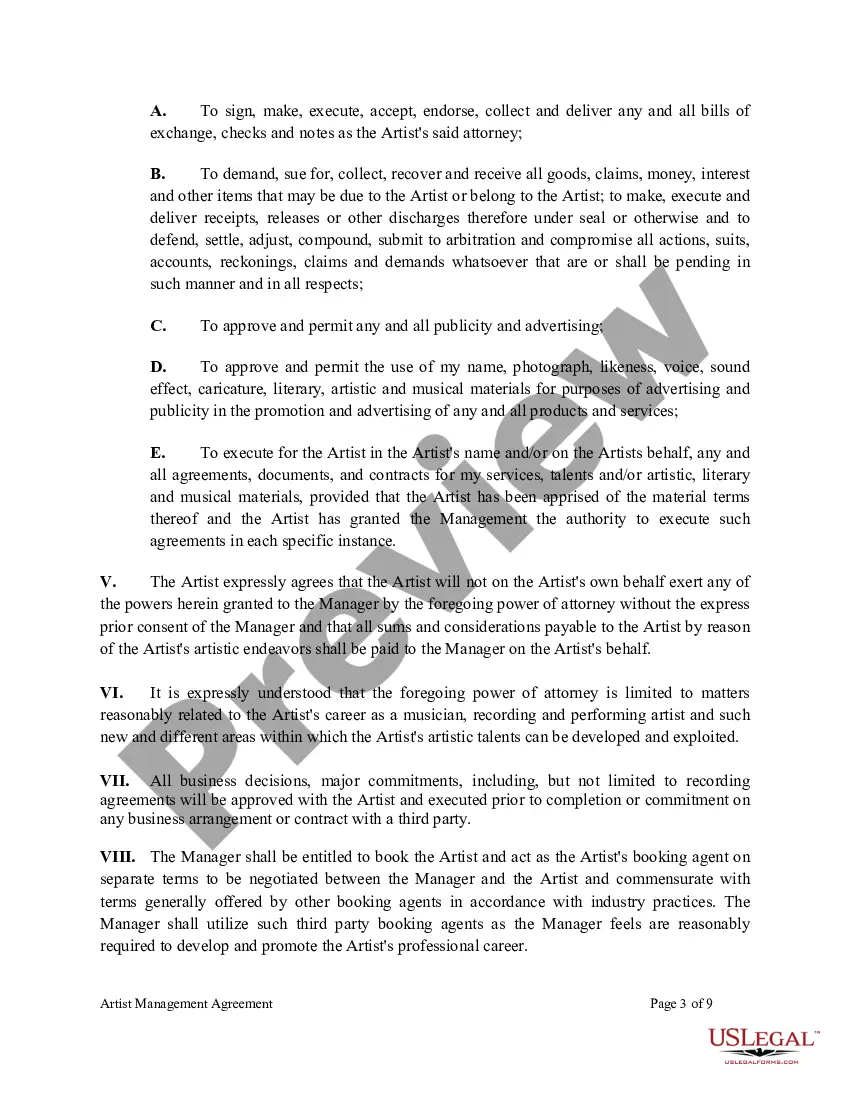
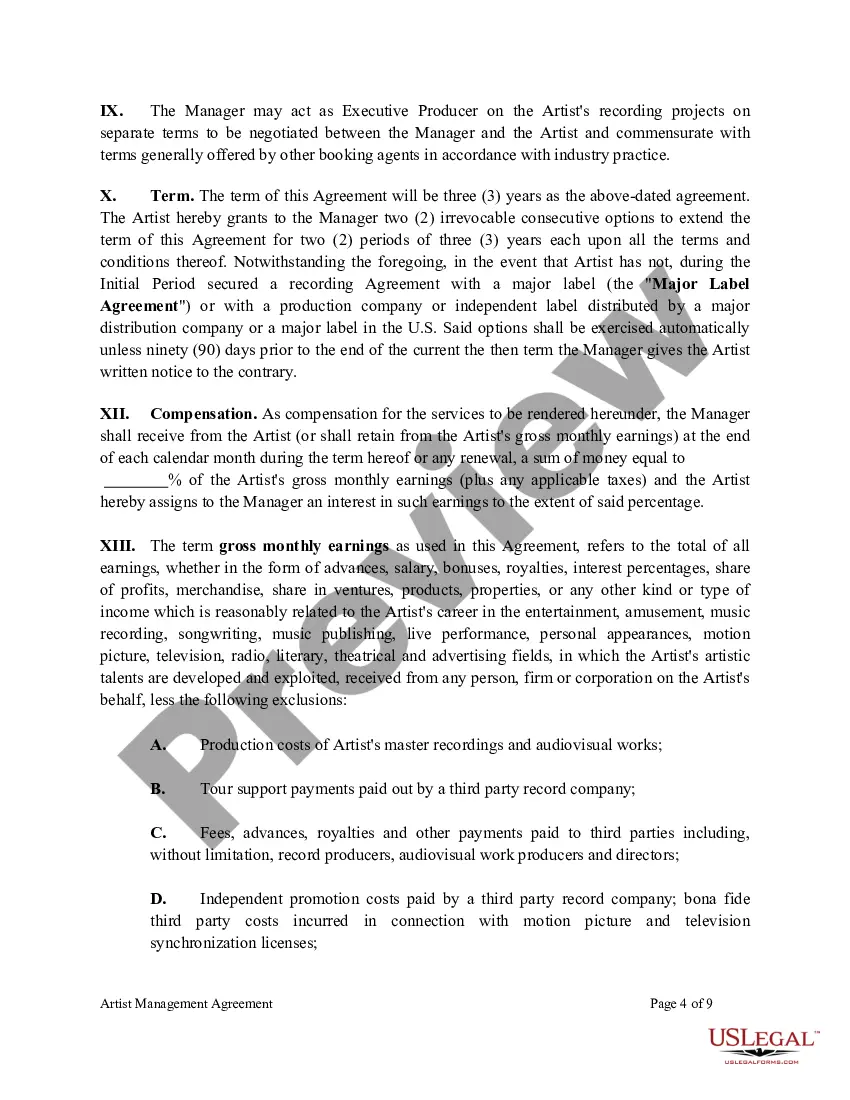
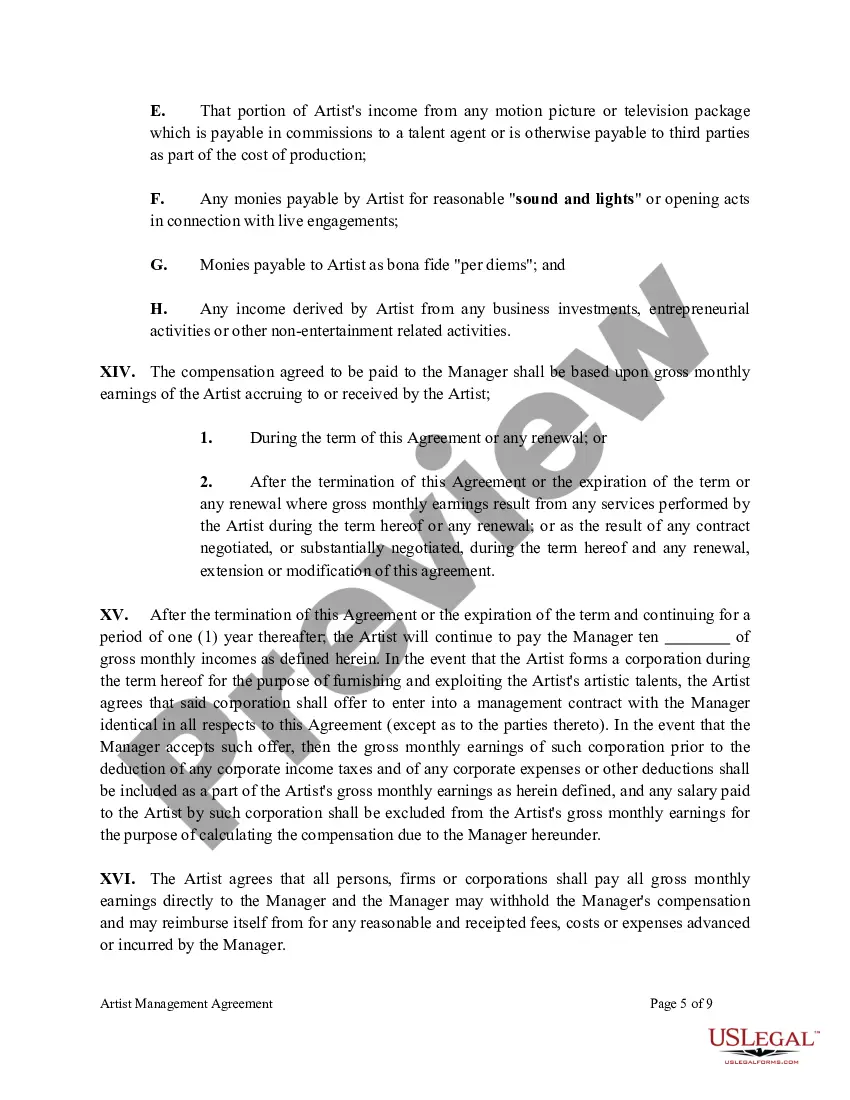
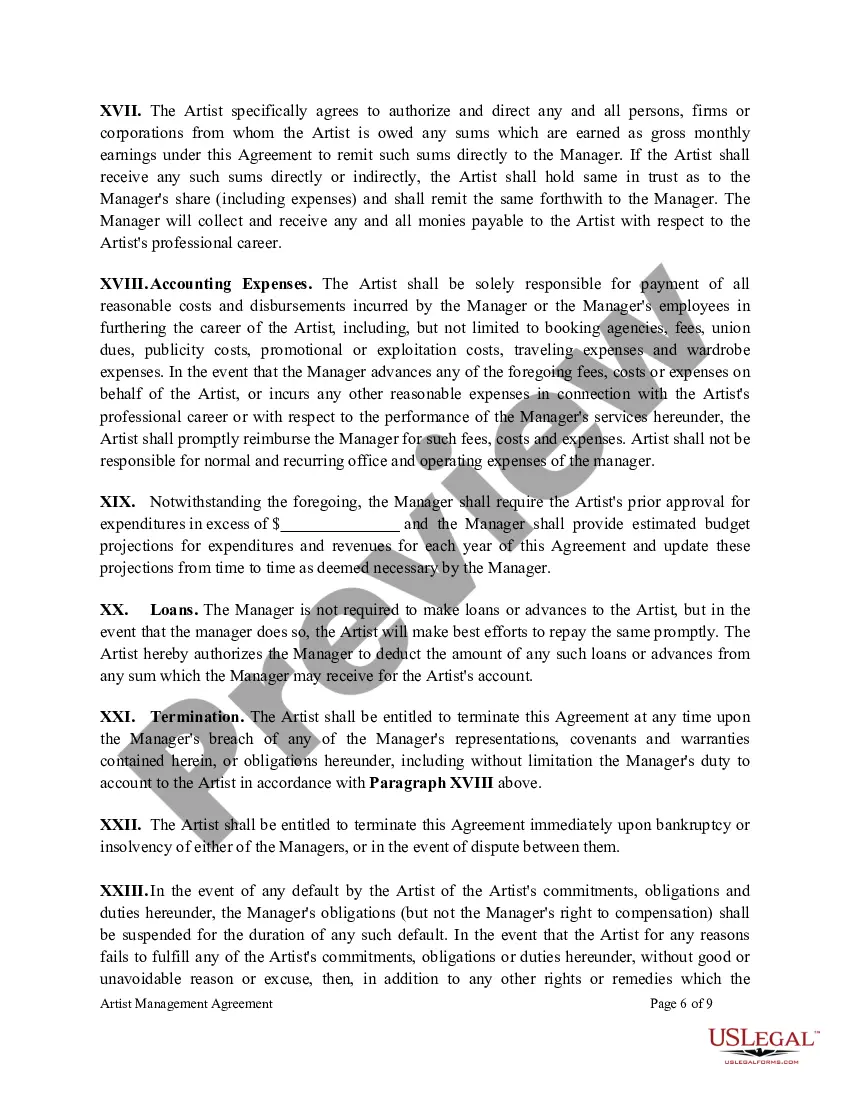
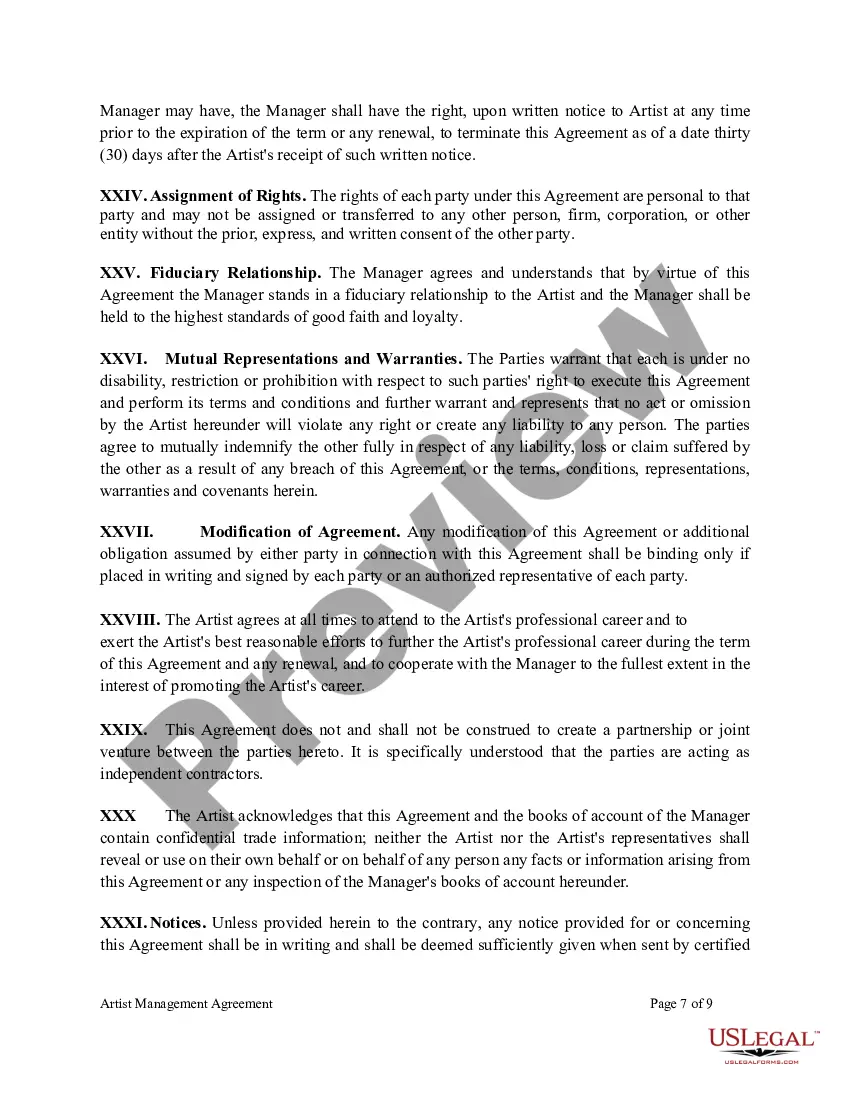
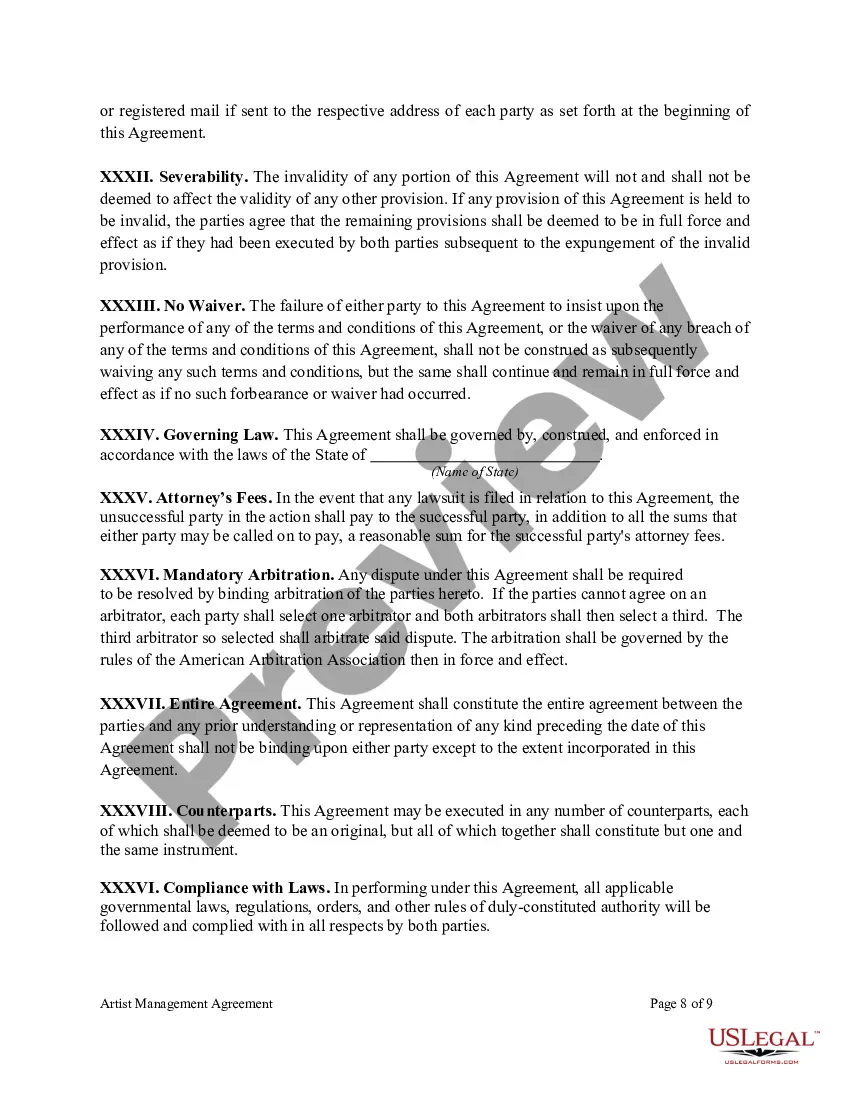
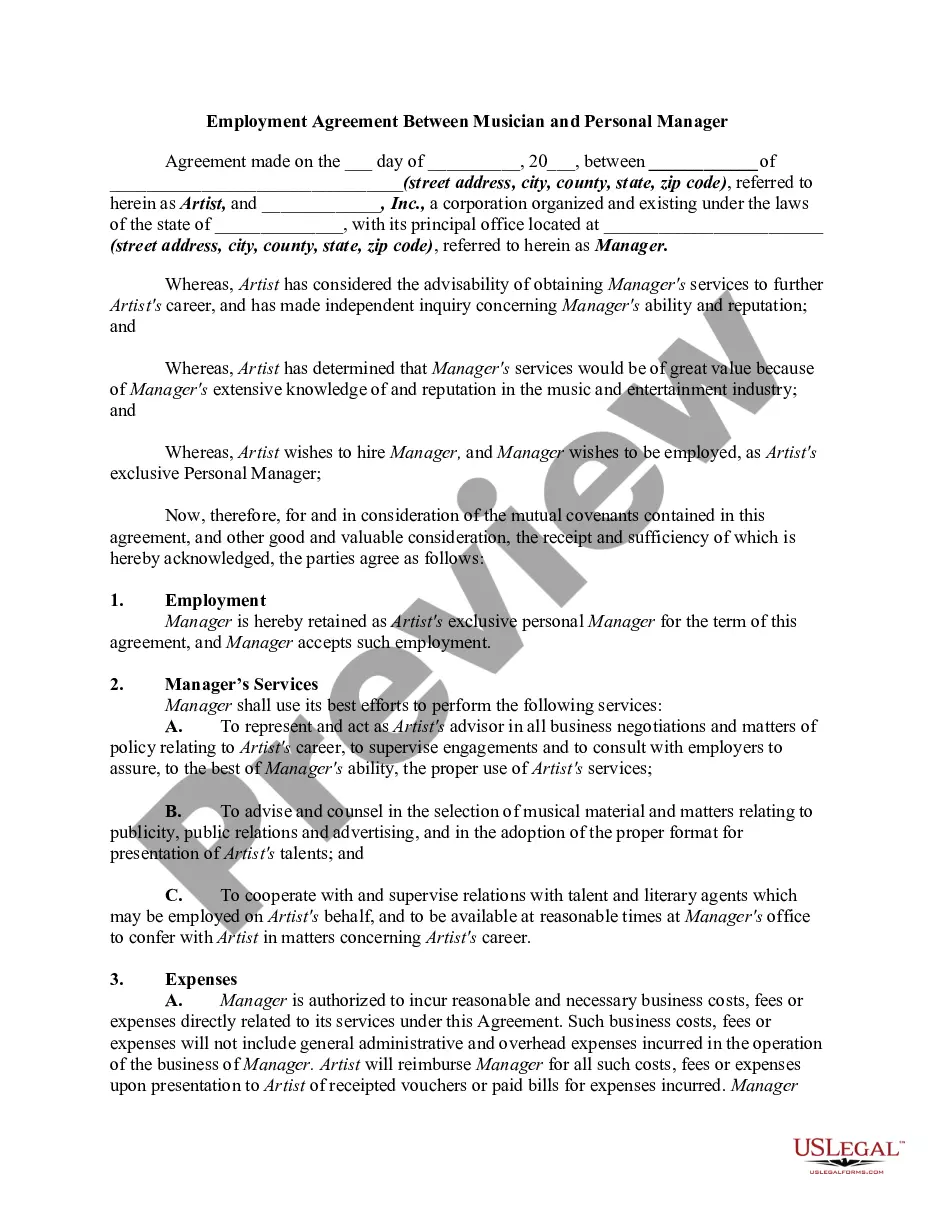
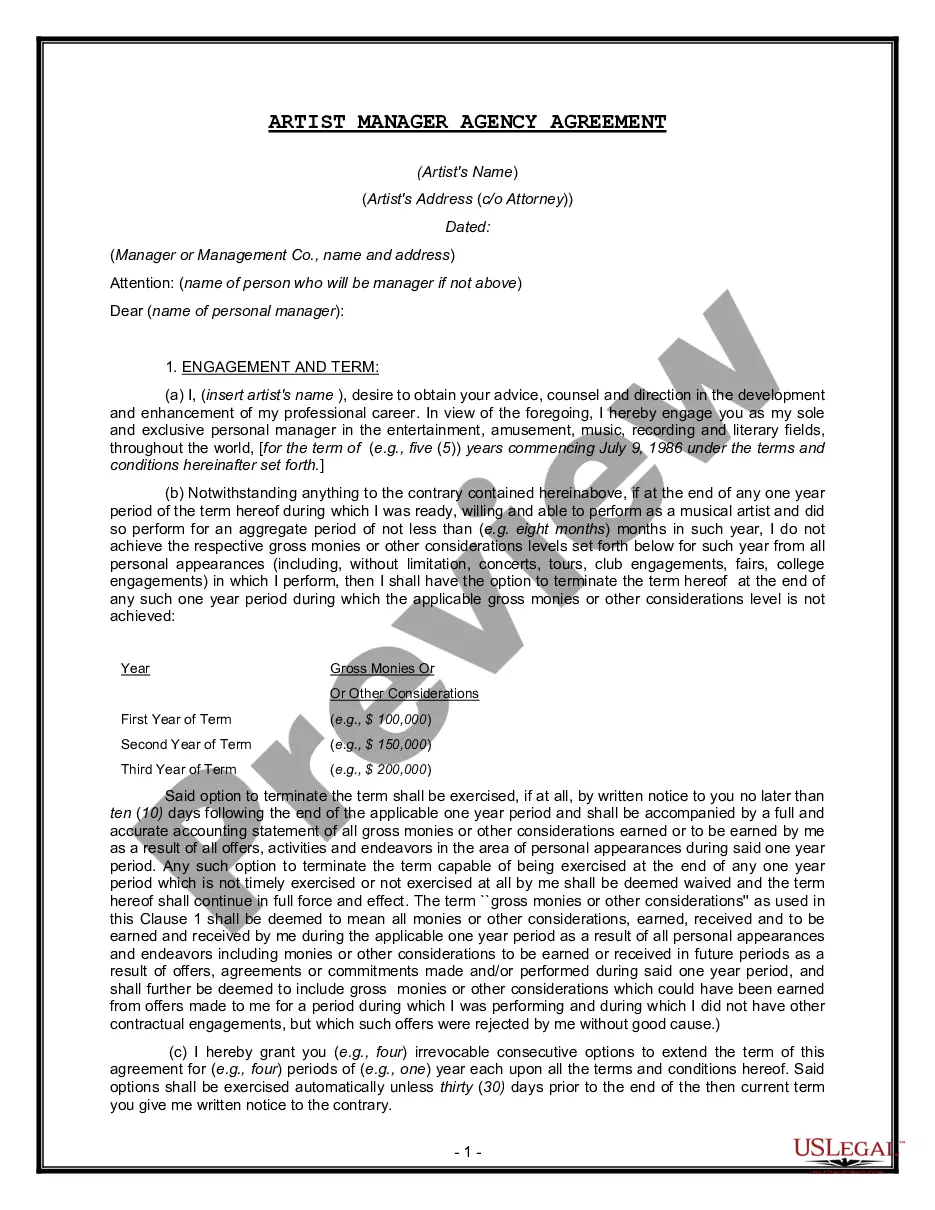
Contracts like an artist agreement help avoid miscommunications and confusion over the rights and responsibilities of both parties involved. Artist agreements typically include availability expectations, performance markers, and licensing or ownership rights of the works created during the partnership.
Your artist statement is an introduction to your work and should be no more than 100 -150 words. The opening sentence should be distinct and captivating and draw the readers in. Begin with a short paragraph about the basic premise behind your work, artistic style, and vision. What do you want to say with your art?
Writing an Artist's Statement? Start with These Questions What does your work look like? What are its physical properties? How does it exist in space? Where do we see it? Is your work temporal? How are you making this work? Why do you make this work? How do viewers experience your work?
Example: “My body of work combines (the how) photography and original writing (the what) to investigate themes of time and memory (the why).”
What information does an artist's statement need to include? There are three elements to consider: the “how,” the “what,” and the “why.” There should be enough information in your artist statement that someone can begin to imagine the art that you make without having it in front of them.
Your artist's statement is about you as an artist. It should include your aspirations, what inspires you now, what drives your spirit to paint and how you approach your work. A paragraph or two is often enough not too much longer.
I created… First I used <art supply> to… Then I added… At first I was going to do this, but then I changed my mind and...
The Producer And Artist Production Agreement is used when a producer enters into a contract with an artist to produce one or more of the artist's recordings. This agreement works whether the artist will own and release the recordings or if the artist is signed to a record label.
